






Plot Explained Spoilers guaranteed!
Plot Explained

Browse by genre

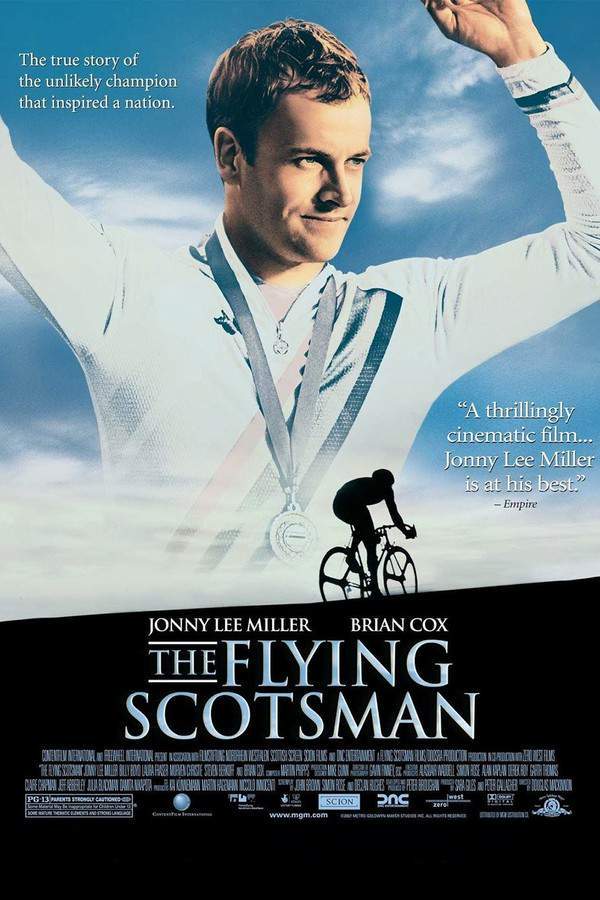
The Flying Scotsman (2006) movie poster

Plot Summary

The Flying Scotsman (2006) Plot Summary Explained

Release, runtime and language
2006 · 96 min · English
Directed by
Douglas MacKinnon
Starring
Brian Cox, Jonny Lee Miller, Laura Fraser

Graeme Obree, a bike shop owner facing financial difficulties, embarks on a remarkable quest for glory in the world of competitive cycling. Driven by a fierce determination and supported by his family, he designs and builds his own unique bicycle, nicknamed "Old Faithful." His journey is a compelling blend of personal triumph and perseverance, as he battles mental health challenges and strives to overcome significant obstacles to achieve his dream of cycling success.

On this page (6)
  1. 1 Where to watch
  2. 2 What happens: full plot
  3. 3 Plot questions answered
  4. 4 Movie threads
  5. 5 Movies like The Flying Scotsman
  6. 6 Every angle

Where to watch

Where to Watch The Flying Scotsman (2006)

Where can you watch The Flying Scotsman? Stream, rent or buy it in the US, including on Tubi TV, YouTube Free and Apple TV Store: current JustWatch availability with up-to-date prices.

Streaming availability powered by JustWatch

Full plot summary · contains spoilers

What Happens in The Flying Scotsman: Full Plot Summary

The whole story of The Flying Scotsman (2006) explained, from the opening scene to the final frame: every key event, every twist and what it all adds up to. Read it as a quick recap before the sequel, to check a scene you missed, or to finally understand what really happened.

Graeme Obree, portrayed by Jonny Lee Miller, finds himself on the brink of despair as he cycles into a secluded woods, contemplating taking his own life. Yet, this moment is juxtaposed with vivid flashbacks to his tumultuous childhood, during which bullying inflicted deep psychological wounds on him. A poignant turning point arrives when Obree receives a bicycle, offering him an escape route from his tormentors.

As an adult, Obree juggles the responsibilities of being a husband and father while struggling to keep his cycle shop afloat, supplementing his income by working as a courier. His life takes an unexpected turn when he forms a friendship with Baxter, a former minister turned boatyard owner, played by Brian Cox. This friendship ignites a spark of determination in Obree; he decides he’s going to attempt to bike the hour record, a challenge that seems monumental given his limited resources and lack of sponsorship.

Undeterred, Obree ingeniously constructs a bicycle he names Old Faithful—designed for ultimate efficiency and built from discarded materials, including parts scavenged from a washing machine. With the support of his friend Malky McGovern, who takes on the role of his manager, Obree ventures to Norway to undertake his world record attempt. Initial failure does not dampen his spirit; on his second try, he shatters the record, only to face the cruel reality that his achievement is fleeting. Just a week later, his record is eclipsed by Chris Boardman, prompting cycling authorities to alter the rules in an attempt to impede Obree's unconventional approach.

The film deeply delves into Obree's mental health struggles, revealing how the thrill of breaking records is often overshadowed by crippling depression, exacerbated when he encounters someone from his past who tormented him. After triumphantly winning the Individual Pursuit World Championship in 1993, the cycling authorities once again change the rules, leading to a catastrophic crash due to his inability to adjust to new riding positions. This incident propels his mental state into a downward spiral, threatening him to once again consider suicide in the desolate woods from the beginning.

However, fortune smiles upon him when he escapes death, aided by his wife, Laura Fraser, and Baxter, who encourage him to seek treatment for his struggles. Ultimately, the narrative showcases Obree's remarkable comeback as he reclaims his world title, signifying both a personal and professional resurrection.

Last updated: November 03, 2024 at 21:40

Was this helpful?

Plot questions answered

The Flying Scotsman Plot Explained: Your Questions Answered

The questions people ask most about The Flying Scotsman (2006): what happens in the confusing scenes, why the characters do what they do, the twists, hidden details and what the ending means. Each answer contains spoilers.

Q1

Why did Graeme Obree decide to attempt the hour record?

Obree decided to attempt the hour record after forming a friendship with Baxter, a former minister turned boatyard owner. Baxter's encouragement sparked a determination in Obree to pursue this monumental challenge despite his limited resources and lack of sponsorship. The friendship rekindled his ambition and gave him the motivation to push beyond his financial struggles and personal doubts.

Foreshadowing: Earlier scenes show Obree struggling to keep his cycle shop afloat, working as a courier to supplement income, establishing the desperation that makes this ambitious goal significant.

  • hour record
  • baxter
  • cycling
  • ambition
  • motivation
Q2

How did Obree build Old Faithful?

Obree ingeniously constructed Old Faithful using discarded materials, including parts scavenged from a washing machine. He designed the bicycle for ultimate efficiency, focusing on aerodynamics and minimal drag rather than following conventional cycling designs. This unconventional approach showcased his resourcefulness and innovative spirit.

Foreshadowing: The timeline shows Obree as a cycle shop owner with limited financial resources, forcing him to be creative with materials.

  • old faithful
  • bicycle
  • construction
  • washing machine
  • innovation
Q3

Why did cycling authorities keep changing the rules after Obree's records?

Cycling authorities changed the rules specifically to impede Obree's unconventional approach to competitive cycling. His innovative riding position and handmade bicycle challenged traditional cycling standards, so authorities altered regulations in an attempt to level the playing field. This happened twice, first after his hour record was broken by Chris Boardman, and again after his 1993 World Championship victory.

Foreshadowing: Obree's record was eclipsed just one week after he set it, prompting authorities to intervene.

  • cycling authorities
  • rules
  • record
  • boardman
  • competition
Q4

What triggered Obree's mental health struggles throughout the film?

Obree's mental health struggles stemmed from multiple sources: lingering psychological wounds from childhood bullying, the immense pressure of competitive cycling, and encounters with people from his past who had tormented him. The film shows how his cycling triumphs were often overshadowed by crippling depression, particularly when ghosts from his past returned to haunt him.

Foreshadowing: The film opens with flashbacks to Obree's tumultuous childhood and the intense bullying he experienced.

  • depression
  • mental health
  • bullying
  • childhood
  • anxiety
Q5

Why did Obree crash during the World Championship?

Obree crashed during the World Championship because cycling authorities changed the rules after his 1993 victory, requiring him to adjust to new riding positions. Unable to adapt to these unfamiliar positions in time, he suffered a catastrophic crash that severely impacted his mental health and pushed him toward contemplating suicide once again.

Foreshadowing: The film establishes that authorities had previously changed rules to stifle his innovative approach, setting up this pattern.

  • crash
  • world championship
  • 1993
  • rules
  • injury
Q6

Why did Obree contemplate suicide in the woods?

Obree contemplated suicide twice, once at the beginning of the film and again after his catastrophic crash following the rule changes. Both instances occurred during his deepest periods of depression, exacerbated by his struggles with mental health, the pressures of competitive cycling, and reminders of his traumatic childhood bullying. The desolate woods represented a place where his internal turmoil reached its darkest point.

Foreshadowing: The opening scene directly shows this moment of despair, while the timeline reveals it repeats after his 1993 crash.

  • suicide
  • woods
  • depression
  • despair
  • mental crisis
Q7

How did Baxter influence Obree's cycling career?

Baxter, a former minister turned boatyard owner, became a crucial supportive figure in Obree's life. His friendship with Obree ignited the spark of determination that prompted Obree to attempt the hour record in the first place. Later, Baxter along with Obree's wife Laura encouraged him to seek treatment for his mental health struggles, which was pivotal in his recovery and eventual comeback.

Foreshadowing: The timeline notes that their friendship 'ignites a spark of determination' in Obree.

  • baxter
  • friend
  • support
  • encouragement
  • mentor
Q8

Why was Obree's record broken so quickly by Chris Boardman?

Obree shattered the hour record on his second attempt in Norway, achieving a remarkable feat. However, just one week later, Chris Boardman eclipsed his record, making Obree's success fleeting. This rapid replacement prompted cycling authorities to change the rules in an attempt to impede Obree's unconventional style, highlighting the competitive nature of record-breaking and the challenges he faced from the establishment.

Foreshadowing: Timeline item 11 shows the record was eclipsed within a week, leading to rule changes.

  • chris boardman
  • record
  • broken
  • week
  • hour record
Q9

How did Obree's wife help him recover?

Obree's wife, Laura Fraser, played a vital role in his recovery by providing crucial support during his darkest moments. When Obree contemplated suicide after his crash, both Laura and Baxter encouraged him to seek professional treatment for his mental health struggles. Their intervention helped him begin the journey toward recovery and ultimately enabled his remarkable comeback to reclaim his world title.

Foreshadowing: Timeline item 15 shows this support immediately follows his lowest point in the woods.

  • wife
  • laura fraser
  • support
  • recovery
  • treatment
Q10

Why was Obree's bicycle design so unusual?

Obree's bicycle Old Faithful was unconventional because he designed it for ultimate efficiency rather than following standard cycling conventions. He built it from discarded materials, including washing machine parts, and focused on aerodynamics and minimal drag. This innovative approach challenged traditional cycling design and ultimately prompted authorities to change competition rules to restrict his methods.

Foreshadowing: Timeline item 7 emphasizes his 'ingenious' construction methods using discarded materials.

  • bicycle design
  • aerodynamic
  • efficiency
  • washing machine
  • parts
Q11

How did childhood bullying influence Obree's later struggles?

Obree's childhood was marked by intense bullying that inflicted deep psychological wounds, shaping his ongoing battle with self-worth and mental health. The film uses flashbacks to show how these early experiences contributed to his vulnerability to depression later in life. When he encountered people from his past who had tormented him, it exacerbated his mental health struggles significantly.

Foreshadowing: The opening scenes juxtapose his suicide contemplation with flashbacks to childhood bullying.

  • bullying
  • childhood
  • trauma
  • psychological
  • flashbacks
Q12

What motivated Obree to make a comeback after his lowest point?

After receiving support from his wife and Baxter and deciding to seek treatment for his mental health, Obree found the strength to make a remarkable comeback. He reclaimed his world title, representing both a personal and professional resurrection. The motivation came from overcoming his inner demons with proper treatment and the unwavering support of his loved ones, allowing him to return to competitive cycling with renewed purpose.

Foreshadowing: Timeline item 15 shows support and treatment preceded his comeback in item 16.

  • comeback
  • redemption
  • world title
  • recovery
  • triumph

Movie threads

More Movies Like The Flying Scotsman, by Mood & Story

Curated lists built around what makes The Flying Scotsman tick: the same mood, the same kind of story or the same emotional payoff. Each list explains why these movies belong together.

Innovative Underdog Stories like The Flying Scotsman

True stories of outsiders who build their own path to victory. If you liked The Flying Scotsman's story of an outsider building his own bicycle to achieve greatness, you'll enjoy these movies about real-life innovators and underdogs. Discover similar dramas where determination and creativity triumph over adversity and institutional barriers.

  • underdog spirit
  • triumphant
  • determined
  • persevering
  • innovative
  • against the odds
  • Tone: hopeful, determined
  • Pacing: steady, focused
Why these movies?

The story pattern: The narrative follows a protagonist facing significant disadvantages—financial, social, or psychological—who refuses to accept the status quo. The core of the story is their process of innovation, often building a unique solution from scratch, which becomes a physical manifestation of their resilience. The journey is marked by setbacks and personal struggles, culminating in a triumphant validation of their unconventional methods.

Why they belong together: Movies are grouped here for their shared focus on the 'build' phase of an underdog's journey. They blend the thrill of creation with the emotional weight of personal battles, creating a specific feeling of rooting for someone not just to win, but to prove a whole new way is possible.
Movies About Triumph Over Mental Health Struggles like The Flying Scotsman

Stories of great achievement born from a battle with mental health. For viewers who appreciated The Flying Scotsman's honest portrayal of cycling success intertwined with mental health battles. Explore similar emotionally heavy dramas about athletes, artists, and professionals achieving greatness while grappling with inner darkness like bipolar disorder and depression.

  • melancholic
  • triumphant
  • urgent
  • dark moments
  • emotional rollercoaster
  • cathartic
  • Tone: hopeful, melancholic
  • Pacing: steady, urgent
Why these movies?

The story pattern: These narratives follow a brilliant but troubled individual on their path to a significant public achievement. The story interweaves scenes of intense focus and triumph with raw, unflinching depictions of mental health crises, such as deep depression or contemplation of suicide. The central conflict is as much internal as external, and the ultimate victory feels earned precisely because the personal cost was so high.

Why they belong together: These films are grouped by their specific emotional mix: the urgency of high-stakes competition combined with the heavy, melancholic weight of mental illness. They create a powerful, cathartic experience where victory is meaningful precisely because it was almost lost to inner turmoil.

If you liked this

Movies Like The Flying Scotsman

Similar movies to The Flying Scotsman: the same genre, themes or kind of story. Each one comes with its own plot summary, timeline and ending explained.

Browse all movie summaries

Every angle

The Flying Scotsman (2006) Explained: Plot, Timeline & Characters

Everything about The Flying Scotsman in one place: what happens in the plot summary, the timeline in chronological order, the characters and meaning and a spoiler-free summary. What's After the Movie adds the cast, box office and post-credit scenes.

Coming soon on iOS and Android

The Plot Explained Movie Summary App

Plot summaries, endings explained and timelines on your phone. Catch up on any movie in minutes, save your favorites and never miss a twist again.

Be the first to know when we launch. Your email stays private, always.

Learn more about the app