Plot Explained Spoilers guaranteed!
Plot Explained

Browse by genre

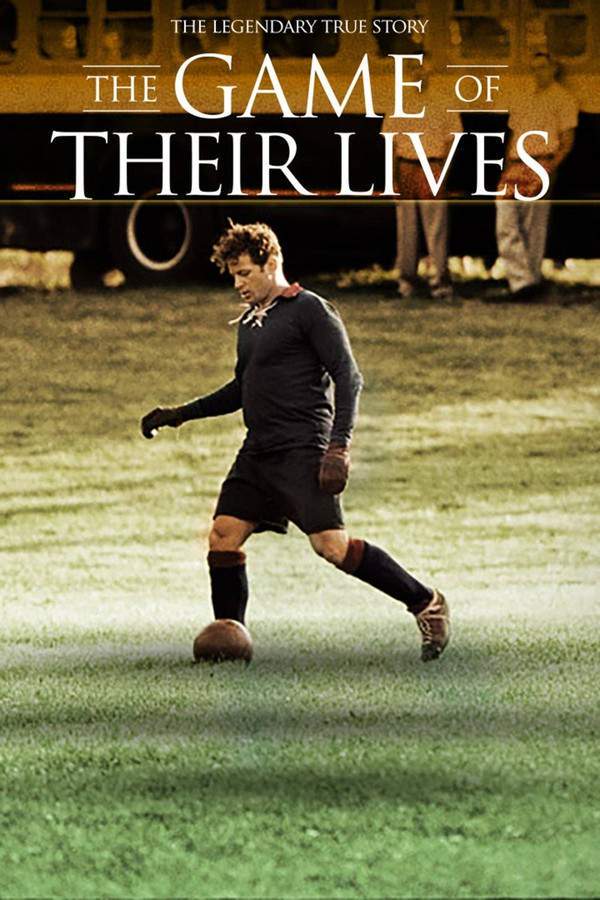
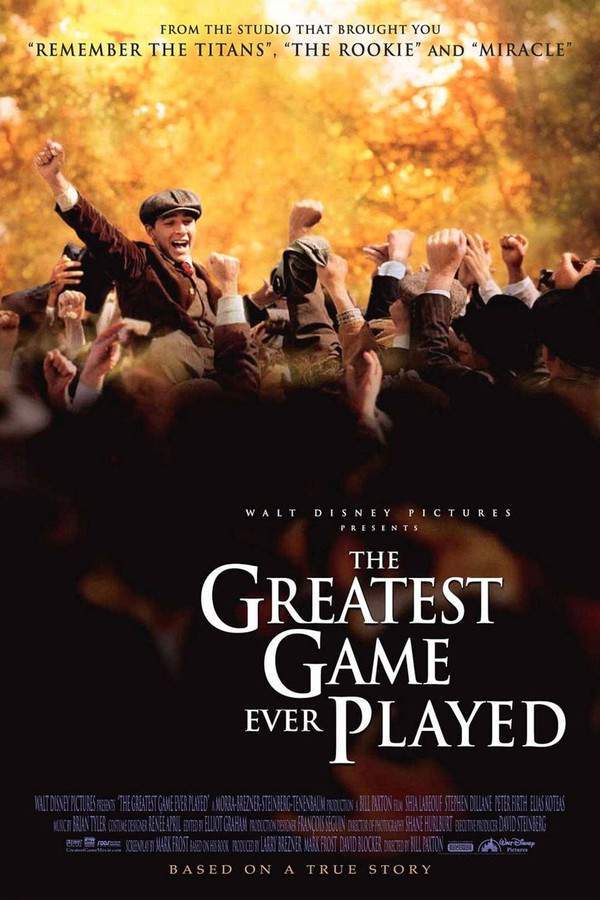
The Greatest Game Ever Played (2005) movie poster

Plot Summary

The Greatest Game Ever Played (2005) Plot Summary Explained

Release, runtime and language
2005 · 120 min · English
JustWatch #10,045 15
Starring
Elias Koteas, Stephen Dillane

A determined young caddie named Francis Ouimet overcomes social obstacles to compete against the established elite in the 1913 U.S. Open. Rising from humble beginnings, he displays remarkable talent and perseverance, ultimately challenging the celebrated British golfer Harry Vardon in a historic championship match. The film portrays his inspiring journey from obscurity to contender.

On this page (6)
  1. 1 Where to watch
  2. 2 What happens: full plot
  3. 3 Plot questions answered
  4. 4 Movie threads
  5. 5 Movies like The Greatest Game Ever Played
  6. 6 Every angle

Where to watch

Where to Watch The Greatest Game Ever Played (2005)

Where can you watch The Greatest Game Ever Played? Stream, rent or buy it in the US, including on Disney Plus, Amazon Video and Apple TV Store: current JustWatch availability with up-to-date prices.

Streaming availability powered by JustWatch

Full plot summary · contains spoilers

What Happens in The Greatest Game Ever Played: Full Plot Summary

The whole story of The Greatest Game Ever Played (2005) explained, from the opening scene to the final frame: every key event, every twist and what it all adds up to. Read it as a quick recap before the sequel, to check a scene you missed, or to finally understand what really happened.

In 1879, a young boy named Harry Vardon witnessed a group of affluent gentlemen inspecting lands near his cottage in England, with the hopes of constructing a golf course. Fast forward to 1913, where Francis Ouimet (Shia LeBeouf) makes history as the first amateur to clinch victory at the U.S. Open. At this time, golf was predominantly a sport for the wealthy elite, while Francis came from a humble immigrant family, deeply rooted in the working class.

As we rewind to 1900, Francis, merely a 7-year-old, is captivated by an exhibition featuring the legendary British golfer Harry Vardon (Stephen Dillane), who has already secured three British Open titles and previously won the U.S. Open. During Harry's exhibition in Boston, Francis seizes the opportunity to volunteer when Harry calls for assistance, resulting in a pivotal moment where Harry corrects Francis's grip on the golf club.

Back in England, Harry receives an invitation from Lord Northcliffe to join the prestigious Gentleman's Golf Club, an honor for someone from his working-class beginnings; however, much to his dismay, he discovers that Northcliffe merely desires Harry's labor at a wage. Meanwhile, Francis embarks on his journey as a caddie at the opulent The Country Club in Brookline, Massachusetts. As he befriends other caddies, he dedicates himself to improving his golf skills, amassing a personal collection of clubs with the help of the Club Caddiemaster, and even engaging in late-night putting practice in his room. His hard work pays off when he triumphs in the Massachusetts Schoolboy Championship.

Living with his parents, Arthur (Elias Koteas) and Mary (Marnie McPhail), both of whom come from working-class backgrounds, Francis faces challenges when his father expresses his disapproval of golf, insisting that Francis should pursue a "real job." Nevertheless, after a chance encounter with a gentleman named Mr. Hastings, Francis earns the chance to play at The Country Club, showcasing his talent with a respectable round of 81 despite some hurdles. Anxiously, he prepares to enter the U.S. Amateur tournament, but first, he must secure a sponsor and cover the $50 entry fee, which leads him to make a pact with his father that he will abandon golf if he fails to qualify.

At a club dinner prior to the qualifying round, Francis encounters Sarah Willis (Peyton List) and impressively defends her from the unwanted advances of Phillip Wainwright (Nicolas Wright). The following day, during the 18th hole, Francis faces a critical three-foot putt to qualify but falters under the gaze of his father, narrowly missing the opportunity.

As Harry faces his own trials, he is tasked by the British Golf Association to spearhead a campaign for the U.S. Open, promoting the idea that winning the prestigious title will affirm British superiority in the sport. Choosing his assistant from the working class, Harry brushes aside the objections of wealthier club members, eager to prove his worth on his own terms.

At 20 years old, Francis is still committed to his promise to his father, working in a sporting goods store while trying to fend off the taunts of the affluent. However, fate takes a turn when the president of the United States Golf Association personally invites Francis to the U.S. Open after witnessing his prowess on the course. Following considerable persuasion, he gains entry into the tournament, impressively stringing together six consecutive birdies to demonstrate his readiness.

With a challenging tournament ahead, Francis learns that he must find accommodation post-Open and receives steadfast support from his mother. As the U.S. Open unfolds at The Country Club, he faces off against acclaimed British golfers, including Harry Vardon and Ted Ray (Stephen Marcus). The atmosphere is charged with the expectation that either Vardon or Ray must emerge victorious to uphold British dominance in golf.

During the playoff, amid tension and intensity, Francis finds himself competing closely alongside Vardon and Ray. The stakes rise as he leads by a single stroke entering the final hole. With calculated composure and encouragement from his young caddie, Eddie Lowery (Josh Flitter), Francis sinks the decisive putt, claiming victory in the U.S. Open amid jubilant celebrations, further highlighted by the touching moment when he graciously accepts only one bill from his proud father.

Afterwards, in a display of sportsmanship, Vardon extends his warm congratulations to Francis, hinting at their future camaraderie on the green. As Francis and Eddie take pride in bringing home the U.S. Open trophy, their paths diverge yet remain interwoven, with Vardon continuing to achieve success in his own right, while Francis secures further victories in amateur championships and pursues a successful business career, with Eddie thriving as a multi-millionaire, maintaining their lifelong friendship.
Last updated: November 02, 2024 at 12:57

Was this helpful?

Plot questions answered

The Greatest Game Ever Played Plot Explained: Your Questions Answered

The questions people ask most about The Greatest Game Ever Played (2005): what happens in the confusing scenes, why the characters do what they do, the twists, hidden details and what the ending means. Each answer contains spoilers.

Q1

Why does Francis Ouimet's father disapprove of golf?

Arthur Ouimet views golf as an idle pursuit for the wealthy and wants his son to pursue a "real job" rather than a sport that offers no practical career prospects. As a working-class immigrant, Arthur believes Francis should focus on stable employment rather than wasting time on a game reserved for the elite. This creates significant tension between father and son throughout the film, especially when Francis demands a $50 entry fee and makes a pact to quit golf if he fails to qualify for the U.S. Amateur.

Foreshadowing: Earlier scenes show Francis spending his free time practicing golf instead of working, which worries his father who sees it as a distraction from finding legitimate employment.

  • arthur ouimet
  • father
  • golf
  • class
  • working class
  • disapproval
Q2

How did Francis qualify for the U.S. Open after missing the qualifying putt?

Francis initially fails to qualify for the U.S. Amateur after missing a critical three-foot putt under pressure from his father's watching gaze. However, the president of the United States Golf Association personally invites Francis to the U.S. Open after witnessing his exceptional talent on the course. This invitation comes as a surprise and gives Francis another opportunity to compete at the highest level, which he seizes by impressively stringing together six consecutive birdies to prove himself.

Foreshadowing: Francis's earlier victory in the Massachusetts Schoolboy Championship demonstrates his genuine talent, which catches the attention of golf officials.

  • qualification
  • u.s. open
  • invitation
  • birdies
  • talent
Q3

Why did Harry Vardon come to the 1913 U.S. Open?

Harry Vardon was tasked by the British Golf Association to lead their campaign at the 1913 U.S. Open. The British association wanted Vardon or fellow Brit Ted Ray to win in order to affirm British superiority in golf, which was seen as a matter of national pride. Despite his working-class origins, Vardon was chosen to represent Britain and restore honor to the sport where British golfers traditionally dominated.

Foreshadowing: The film establishes that Vardon has already won the U.S. Open before, making him a strong favorite to win again.

  • british
  • harry vardon
  • u.s. open
  • campaign
  • supremacy
Q4

How did Francis Ouimet win against Harry Vardon and Ted Ray?

Francis won the 1913 U.S. Open through exceptional composure under pressure. During the playoff, he found himself leading by a single stroke as he approached the final hole. With calculated calm and encouragement from his young caddie Eddie Lowery, Francis sank the decisive putt to secure victory. His win was historic not only because he was an amateur competing against professional legends, but also because he became the first amateur to ever win the U.S. Open.

Foreshadowing: Throughout the film, Francis demonstrates remarkable mental toughness, particularly in high-pressure situations, which pays off in the final moments of the tournament.

  • victory
  • playoff
  • eddie lowery
  • putt
  • u.s. open champion
Q5

Why did Francis miss the three-foot putt during U.S. Amateur qualifying?

Francis missed the critical three-foot putt primarily due to the immense pressure of performing in front of his father, who was watching closely from the sidelines. The weight of his father's expectations and the stakes of the pact they had made where Francis would quit golf if he failed to qualify created psychological pressure that affected his focus. This moment represents the peak of the tension between Francis's passion for golf and his father's disapproval.

Foreshadowing: Earlier scenes show Francis playing confidently when alone or with supportive figures, but struggling when under direct scrutiny from authority figures.

  • qualifying
  • putt
  • pressure
  • father
  • nerves
  • failure
Q6

What was the significance of Francis Ouimet being an amateur?

Francis Ouimet's victory made him the first amateur to ever win the U.S. Open, which was remarkable given that golf at the time was dominated by wealthy elites and professional players. Coming from a humble working-class immigrant family while competing against the celebrated British professionals Harry Vardon and Ted Ray, Francis's win challenged the social hierarchy of the sport. The expectation was that the British professionals would easily win to maintain their dominance, making Francis's triumph both a sporting upset and a social breakthrough.

Foreshadowing: Throughout the film, the class divide is constantly highlighted, with wealthy players looking down on caddies and working-class golfers.

  • amateur
  • first
  • u.s. open
  • working class
  • elite
  • underdog
  • historic
Q7

Why did Harry Vardon help young Francis with his golf grip in 1900?

When 7-year-old Francis volunteered during Harry Vardon's exhibition in Boston in 1900, Vardon took notice of the enthusiastic young boy and personally corrected his grip on the golf club. This moment was significant because it represented the passing of knowledge from the legendary golfer to the future champion. Vardon, himself from working-class origins, saw potential in Francis and provided this crucial instruction that would help shape Francis's future career.

Foreshadowing: This early connection between Vardon and Francis foreshadows their later rivalry and eventual friendship on the course.

  • harry vardon
  • childhood
  • grip
  • teaching
  • boston
  • exhibition
Q8

What happened between Francis Ouimet and Harry Vardon after the tournament?

After Francis won the 1913 U.S. Open, Harry Vardon demonstrated excellent sportsmanship by personally congratulating the young winner. This moment marked the beginning of a lasting friendship between the two golfers, who would remain friends throughout their lives despite their different backgrounds and the competitive nature of their rivalry. Vardon's gesture showed his respect for Francis's talent and character.

Foreshadowing: The film shows moments of mutual respect between the two players throughout the tournament, setting up this reconciliation.

  • sportsmanship
  • friendship
  • congratulation
  • respect
  • vardon
Q9

Why did Francis's father only give him one dollar after winning?

After Francis won the U.S. Open, his father Arthur gave him money, but Francis graciously accepted only one bill instead of taking all of it. This touching moment symbolized the emotional reconciliation between father and son after years of conflict over Francis's pursuit of golf. It demonstrated that despite their disagreements, Arthur was proud of his son's achievement and Francis appreciated his father's support, however modest.

Foreshadowing: This moment fulfills the emotional arc of the father-son relationship, which has been strained throughout the film due to Arthur's initial disapproval.

  • father
  • money
  • reconciliation
  • emotional
  • pride
  • family
Q10

What was Lord Northcliffe's invitation to Harry Vardon really about?

Lord Northcliffe invited Harry Vardon to join the prestigious Gentleman's Golf Club, which would have been a significant honor for someone from Vardon's working-class background. However, Vardon soon discovered that Northcliffe was only interested in exploiting his labor rather than offering genuine membership. This experience highlighted the class barriers that working-class golfers faced, even when they achieved tremendous success in the sport.

Foreshadowing: This disappointment fuels Vardon's determination to prove himself on his own terms.

  • lord northcliffe
  • gentleman's golf club
  • class
  • exploitation
  • invitation

Movie threads

More Movies Like The Greatest Game Ever Played, by Mood & Story

Curated lists built around what makes The Greatest Game Ever Played tick: the same mood, the same kind of story or the same emotional payoff. Each list explains why these movies belong together.

Inspiring Underdog Movies like The Greatest Game Ever Played

Ordinary individuals overcome great odds to achieve extraordinary victories. If you enjoyed the triumphant journey of Francis Ouimet in The Greatest Game Ever Played, you'll love these movies. This collection features similar stories of underdogs overcoming obstacles in sports, academia, or life, all delivering a hopeful and motivational viewing experience.

  • inspiring
  • underdog
  • triumphant
  • motivational
  • hopeful
  • dramatic
  • Tone: hopeful, triumphant
  • Pacing: steady, linear
Why these movies?

The story pattern: Narratives in this thread typically follow a straightforward, linear path. A protagonist from a disadvantaged background faces a formidable challenge, often against a powerful establishment or a celebrated rival. Through a series of tests and setbacks, their character is forged, culminating in a climactic victory that is both personal and public, validating their hard work and spirit.

Why they belong together: These films are grouped together because they share a core inspirational arc, a hopeful tone, and a focus on personal victory against adversity. They provide a consistent emotional payoff, making them perfect for viewers seeking motivational and uplifting stories.

Historical Character Dramas Similar to The Greatest Game Ever Played

Personal stories of ambition and growth set against a detailed historical backdrop. Fans of The Greatest Game Ever Played will appreciate these character-focused historical dramas. Explore movies that blend a rich period setting with a compelling personal journey, often involving class dynamics, ambition, and coming-of-age themes, all presented with steady pacing and emotional resonance.

  • historical
  • dramatic
  • nostalgic
  • character-driven
  • hopeful
  • perseverance
  • Tone: hopeful, dramatic
  • Pacing: steady, deliberate
Why these movies?

The story pattern: The narrative pattern focuses on a protagonist navigating the rules and hierarchies of their time. The historical world isn't just a backdrop but an active force that creates conflict, often around class, gender, or tradition. The story follows the character's steady progression as they find their place, challenge norms, and achieve a form of recognition or personal fulfillment.

Why they belong together: These movies share a balanced mix of historical detail and intimate character study. They have a steady, deliberate pace that allows for both world-building and emotional development, resulting in a fulfilling and often hopeful experience centered on human resilience.

If you liked this

Movies Like The Greatest Game Ever Played

Similar movies to The Greatest Game Ever Played: the same genre, themes or kind of story. Each one comes with its own plot summary, timeline and ending explained.

Browse all movie summaries

Every angle

The Greatest Game Ever Played (2005) Explained: Plot, Timeline & Characters

Everything about The Greatest Game Ever Played in one place: what happens in the plot summary, the timeline in chronological order, the characters and meaning and a spoiler-free summary. What's After the Movie adds the cast, box office and post-credit scenes.

Coming soon on iOS and Android

The Plot Explained Movie Summary App

Plot summaries, endings explained and timelines on your phone. Catch up on any movie in minutes, save your favorites and never miss a twist again.

Be the first to know when we launch. Your email stays private, always.

Learn more about the app