Plot Explained Spoilers guaranteed!
Plot Explained

Browse by genre

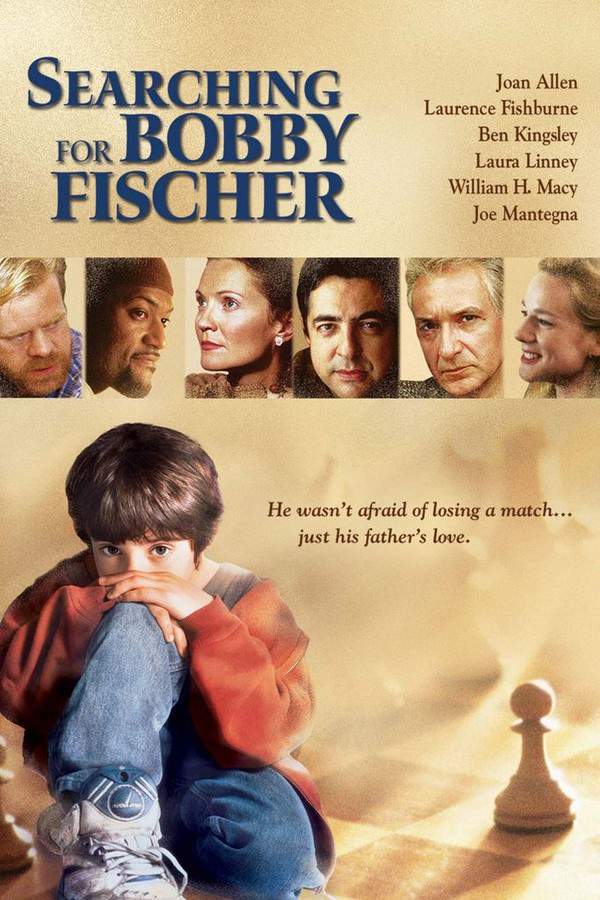
Searching for Bobby Fischer (1993) movie poster

Plot Summary

Searching for Bobby Fischer (1993) Plot Summary Explained

Release, runtime and language
1993 · 109 min · English
Directed by
Steven Zaillian
Starring
Joan Allen, Laurence Fishburne, Ben Kingsley, Joe Mantegna, Robert Stephens, David Paymer

A young chess prodigy, Josh Waitzkin, rises to prominence after a surprising victory over his father. As he advances in the competitive chess scene, his talent is honed by a resourceful hustler and later guided by a renowned coach. Josh must reconcile differing training philosophies while facing the intense pressure and ruthless nature of elite competition, ultimately discovering the boundaries of his own abilities and the importance of maintaining his integrity.

On this page (6)
  1. 1 Where to watch
  2. 2 What happens: full plot
  3. 3 Plot questions answered
  4. 4 Movie threads
  5. 5 Movies like Searching for Bobby Fischer
  6. 6 Every angle

Where to watch

Where to Watch Searching for Bobby Fischer (1993)

Where can you watch Searching for Bobby Fischer? Stream, rent or buy it in the US, including on Hoopla, YouTube Free and Amazon Video: current JustWatch availability with up-to-date prices.

Streaming availability powered by JustWatch

Full plot summary · contains spoilers

What Happens in Searching for Bobby Fischer: Full Plot Summary

The whole story of Searching for Bobby Fischer (1993) explained, from the opening scene to the final frame: every key event, every twist and what it all adds up to. Read it as a quick recap before the sequel, to check a scene you missed, or to finally understand what really happened.

As seven-year-old Josh Waitzkin becomes captivated by the chess players at Washington Square Park in New York City, his mother, Bonnie, initially feels apprehensive due to the park's notorious reputation for gambling and homelessness. Nonetheless, she eventually embraces Josh's passion and allows him to participate in a match with a scruffy opponent who charges $5 per game, even after he experiences a loss. Bonnie is taken aback by Josh's remarkable understanding of the chess rules, which he seems to have absorbed effortlessly. A chance meeting between Bonnie and Vinnie Livermore, a veteran player in the park, ignites her curiosity regarding her son’s exceptional talent.

Fred, Josh's father, becomes aware of his son’s abilities but unintentionally stirs trouble by challenging him to a game. Although Josh initially falls short, it becomes evident that he played poorly on purpose to protect his father's pride. A rematch showcases his true potential as Josh confidently defeats Fred, signaling the emergence of his skills.

A mentorship forms between Josh and Vinnie, who teaches him unconventional strategies honed from years of battling opponents in the park. However, the dynamics shift when Fred hires Bruce Pandolfini as Josh's formal chess tutor. Initially impressed by Josh's innate abilities, Bruce becomes critical of many of his unorthodox tactics, which he associates with Vinnie's influence. Specifically, Bruce disapproves of Josh's tendency to deploy his queen too soon, warning Fred that such impulsive choices could jeopardize Josh's performance in more formal tournaments.

Ignoring Bruce's caution, Fred enrolls Josh in a chess tournament where Josh walks away victorious, triggering a series of triumphs. As Fred becomes increasingly obsessed with his son’s chess career, the family dynamic begins to suffer, creating rifts among Fred, Bonnie, and Josh's schoolteacher. Sensing his father's fixation, Josh starts to falter in tournaments, which intensifies the existing tension.

In a bid to rectify this situation, Fred places Josh entirely under Bruce's guidance, cutting off any further contact with Vinnie. Consequently, the relationship between Bruce and Josh grows strained and overly critical, as Bruce seeks to toughen Josh's competitive edge by withholding praise. When Bruce resorts to belittling Josh with "meaningless Xeroxes" of a certificate, Bonnie can no longer tolerate it and decides to show him the exit.

After this ordeal, Fred and Josh come to terms with each other, with Fred emphasizing his unconditional love for his son, regardless of his chess abilities. The reappearance of Vinnie rekindles Josh’s passion for the game, allowing him to rediscover the joy of playing chess for the love of the game rather than the relentless pursuit of victory.

As the National Chess Championship approaches its peak, Josh finds himself back in the presence of Bruce, their previous differences set aside in light of the tournament's stakes. During this intense showdown, Josh faces off against Jonathan Poe, a rival prodigy whose remarkable talent has long loomed over him. The match unfolds as a masterclass in strategic play, with each competitor deploying daring maneuvers that keeps everyone on edge.

Inspired by Vinnie's bold tactics, Josh's unconventional style initially gives him an upper hand; however, he soon shifts to a series of strategic counterplays, leading to the capture of Jonathan's queen and a solid advantage. The game builds up to a riveting climax as both players navigate an intricate endgame, diligently searching for each other’s weaknesses.

Just when victory seems within reach for Josh, he channels the wisdom shared by Bruce, opting for a disciplined, measured approach that contrasts his earlier recklessness. With Jonathan's unwarranted overconfidence acting as the trigger, Josh recognizes a critical moment to strike decisively. Instead of pressing his advantage, he offers Jonathan a draw, sparing both of them from the anguish of defeat.

However, Jonathan reacts with disdain, flatly rejecting the offer in favor of continuing the fight, unaware of the precarious position he has created for himself. Seizing the initiative once more, Josh executes a stunning combination that ultimately leads him to victory, prompting a roaring applause from the enthusiastic crowd after this exceptional battle of intellects.

Last updated: November 22, 2024 at 14:47

Was this helpful?

Plot questions answered

Searching for Bobby Fischer Plot Explained: Your Questions Answered

The questions people ask most about Searching for Bobby Fischer (1993): what happens in the confusing scenes, why the characters do what they do, the twists, hidden details and what the ending means. Each answer contains spoilers.

Q1

Why did Josh intentionally lose to his father in their first chess match?

Josh deliberately played poorly to protect his father's pride and feelings. He understood that defeating Fred would hurt his father's ego, so he chose to lose intentionally. However, when Fred challenged him to a rematch, Josh revealed his true abilities by defeating his father decisively, showing that his previous loss was a conscious choice.

Foreshadowing: This early act of emotional intelligence foreshadows Josh's mature decision to offer Jonathan a draw at the championship.

  • josh waitzkin
  • fred
  • father
  • chess
  • emotional intelligence
  • pride
Q2

Why did Fred stop Josh from seeing Vinnie?

Fred made the drastic decision to cut off Josh's contact with Vinnie after hiring Bruce Pandolfini as Josh's formal tutor. Fred believed that Bruce's more disciplined, classical approach would better prepare Josh for formal tournaments. Additionally, Bruce had criticized Vinnie's unorthodox teaching methods, specifically warning that Josh's impulsive queen deployments could harm his competitive future. Fred chose to fully commit to Bruce's training at the expense of losing Vinnie.

Foreshadowing: This decision creates the tension that leads to Bonnie's eventual confrontation with Bruce.

  • fred
  • vinnie livermore
  • chess tutor
  • training
  • mentorship
Q3

Why did Bonnie force Bruce Pandolfini to leave?

Bonnie intervened after Bruce resorted to belittling Josh with what she describes as "meaningless Xeroxes" of a certificate, a trivial, dismissive gesture that showed no genuine appreciation for Josh's efforts. This moment symbolized how Bruce's coaching had become excessively critical and emotionally damaging. Bonnie prioritized her son's wellbeing over his chess career, telling Bruce to leave.

Foreshadowing: This confrontation marks the turning point where Josh's family chooses his happiness over competitive success.

  • bonnie
  • bruce pandolfini
  • xeroxes
  • criticism
  • parenting
Q4

Why did Josh offer a draw to Jonathan when he was winning?

During the National Chess Championship, Josh recognized that continuing to press for victory would likely result in Jonathan's devastating defeat. Drawing would spare both players the anguish of loss, but more importantly, Josh was channeling Bruce's wisdom about discipline and measured play. Rather than pursuing ruthless victory, he chose compassion and sportsmanship, embodying the lesson that integrity matters more than winning.

Foreshadowing: This mirrors Josh's earlier decision to lose intentionally to protect his father's feelings.

  • jonathan poe
  • draw
  • championship
  • sportsmanship
  • compassion
  • victory
Q5

Why did Bruce Pandolfini become so critical of Josh's chess style?

Initially, Bruce was impressed by Josh's natural talent and intuitive understanding of the game. However, he grew increasingly critical of Josh's unorthodox tactics, particularly his tendency to deploy the queen too early, a strategy Bruce associated with Vinnie's street-smart but mathematically unsound influence. Bruce believed these impulsive choices would backfire in formal tournaments against disciplined opponents. His criticism intensified as he tried to mold Josh into a more conventional, calculating player.

Foreshadowing: This tension between unorthodox intuition and formal discipline becomes central to Josh's championship performance.

  • bruce pandolfini
  • queen
  • tactics
  • criticism
  • chess style
Q6

Why did Josh start losing tournaments after his early success?

Josh's performance declined as his father Fred became increasingly obsessed with his chess career. The mounting pressure created a tense home environment that affected Josh emotionally and mentally. Fred's fixation on victory and championship titles caused stress across the entire family, and Josh began to falter under the weight of expectations. The pressure to satisfy his father's ambitions distracted him from enjoying the game.

Foreshadowing: This struggle sets up the eventual reconciliation between Fred and Josh, where Fred learns to appreciate his son regardless of chess outcomes.

  • fred
  • pressure
  • tournaments
  • family tension
  • performance anxiety
Q7

How did Josh blend Vinnie's and Bruce's teaching during the championship?

In the climactic match against Jonathan Poe, Josh demonstrated growth by drawing from both mentors' philosophies. He initially employed Vinnie's bold, unconventional tactics to gain an advantage, then shifted to Bruce's disciplined, patient approach when the position required precision. This synthesis showed Josh had developed his own strategic identity rather than strictly following either mentor's methods. He used Vinnie's aggression to create opportunities and Bruce's discipline to execute the winning combination.

Foreshadowing: This integration reflects Josh's maturity in reconciling competing philosophies.

  • vinnie
  • bruce
  • strategy
  • championship
  • integration
  • chess style
Q8

Why did Jonathan refuse Josh's draw offer?

Jonathan Poe rejected the draw because of overconfidence and pride. Having been portrayed as a prodigious talent throughout the film, Jonathan believed he could still win despite being in a precarious position. His refusal demonstrated the ruthlessness and competitive intensity that Bruce had tried to instill in Josh. Jonathan's arrogance became the catalyst for Josh to seize the initiative and execute the winning combination, as Jonathan had underestimated the position's dangers.

Foreshadowing: This moment underscores the film's theme that integrity and humility triumph over ambition.

  • jonathan poe
  • draw
  • rejection
  • overconfidence
  • pride
Q9

What rekindled Josh's love for chess after Bruce's departure?

Josh's passion was revitalized when Vinnie returned to his life. After the painful period under Bruce's overly critical guidance and the family reconciliation with Fred, Vinnie's reappearance reminded Josh why he fell in love with chess in the first place, the joy of playing, not the burden of winning. Vinnie's philosophy emphasized playing for the game's beauty rather than relentless competition, which freed Josh from the psychological pressure that had been stifling his performance.

Foreshadowing: This renewal directly contributes to Josh's balanced approach in the championship.

  • vinnie
  • passion
  • joy
  • rediscovery
  • love of game
Q10

What changed in Fred's attitude toward Josh after the conflict with Bruce?

After witnessing the negative impact of his ambition on Josh and experiencing the confrontation with Bruce, Fred underwent a significant shift. He reconciled with Josh and explicitly stated that his love was unconditional, regardless of Josh's chess abilities or tournament results. This emotional reconciliation freed Josh from the pressure of needing to perform to earn his father's approval, allowing him to return to chess with a healthier mindset.

Foreshadowing: This unconditional acceptance enables Josh to play freely in the championship.

  • fred
  • unconditional love
  • reconciliation
  • father
  • acceptance

Movie threads

More Movies Like Searching for Bobby Fischer, by Mood & Story

Curated lists built around what makes Searching for Bobby Fischer tick: the same mood, the same kind of story or the same emotional payoff. Each list explains why these movies belong together.

Movies about child prodigies like Searching for Bobby Fischer

Stories of gifted youth navigating the high-stakes pressure of their extraordinary abilities. If you liked the story of Josh Waitzkin in Searching for Bobby Fischer, you'll find similar films about young talents facing intense pressure. These movies explore the themes of mentorship, parental expectations, and the personal cost of greatness, featuring compelling coming-of-age journeys in competitive worlds.

  • inspiring
  • heartfelt
  • competitive
  • thoughtful
  • familial
  • pressure-filled
  • Tone: hopeful, thoughtful, pressure-filled
  • Pacing: steady, character-driven
Why these movies?

The story pattern: The narrative typically follows a young, naturally gifted individual discovered by adults who recognize their potential. The story charts their rise through a competitive environment, often clashing different philosophies of training (joy vs. ruthless ambition), leading to a climax where the prodigy must define success on their own terms, prioritizing personal integrity over mere victory.

Why they belong together: Movies are grouped here because they share a central focus on the unique pressures faced by exceptionally talented children. They commonly explore themes of mentorship, the burden of expectation, and the conflict between nurturing talent and preserving a child's spirit, resulting in heartfelt and often thoughtful dramas.

Movies with bittersweet victories like Searching for Bobby Fischer

Journeys where success is achieved, but the true triumph is a personal lesson. Fans of the nuanced ending in Searching for Bobby Fischer will appreciate these films where characters achieve success but learn a more important personal lesson. These stories often involve moral choices that redefine victory, blending hopeful outcomes with thoughtful reflection on the journey's cost.

  • bittersweet
  • hopeful
  • introspective
  • triumphant
  • thoughtful
  • heartfelt
  • Tone: bittersweet, hopeful, introspective
  • Pacing: steady, linear
Why these movies?

The story pattern: The plot follows a linear path toward a clear external goal, such as winning a competition. The climax, however, is subverted by an internal victory—an act of integrity, compassion, or personal realization. The resolution acknowledges the achievement but emphasizes that the protagonist's character growth is the more significant outcome, creating a layered, bittersweet feeling.

Why they belong together: These films are grouped by their distinctive emotional conclusion. They share a pattern where the narrative payoff is not just the external success but the internal, moral development of the character. This creates a specific viewing experience that is uplifting yet deeply thoughtful, avoiding a simplistic happy ending.

If you liked this

Movies Like Searching for Bobby Fischer

Similar movies to Searching for Bobby Fischer: the same genre, themes or kind of story. Each one comes with its own plot summary, timeline and ending explained.

Browse all movie summaries

Every angle

Searching for Bobby Fischer (1993) Explained: Plot, Timeline & Characters

Everything about Searching for Bobby Fischer in one place: what happens in the plot summary, the timeline in chronological order, the characters and meaning and a spoiler-free summary. What's After the Movie adds the cast, box office and post-credit scenes.

Coming soon on iOS and Android

The Plot Explained Movie Summary App

Plot summaries, endings explained and timelines on your phone. Catch up on any movie in minutes, save your favorites and never miss a twist again.

Be the first to know when we launch. Your email stays private, always.

Learn more about the app