Plot Explained Spoilers guaranteed!
Plot Explained

Browse by genre

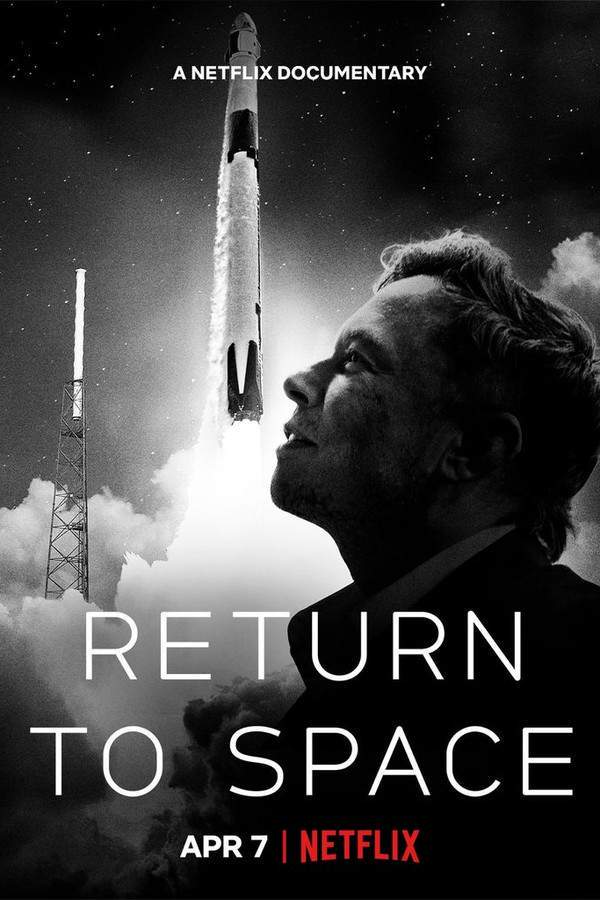
Return to Space (2022) movie poster

Plot Summary

Return to Space (2022) Plot Summary Explained

Release, runtime and language
2022 · 128 min · English
Echo score 59
JustWatch #28,016 2
Directed by
Elizabeth Chai Vasarhelyi, Jimmy Chin

This documentary follows the ambitious journey of SpaceX and Elon Musk’s efforts to revive American space travel. Through unprecedented access, the film chronicles the experiences of NASA astronauts Bob Behnken and Doug Hurley as they prepare for and undertake a historic mission. Viewers witness their rigorous training and the challenges they face, culminating in a thrilling launch, a journey to the International Space Station, and a remarkable splashdown. The film offers a captivating look at the dedication and innovation driving humanity’s return to space.

On this page (6)
  1. 1 Where to watch
  2. 2 What happens: full plot
  3. 3 Plot questions answered
  4. 4 Movie threads
  5. 5 Movies like Return to Space
  6. 6 Every angle

Where to watch

Where to Watch Return to Space (2022)

Where can you watch Return to Space? Stream, rent or buy it in the US, including on Netflix and Netflix Standard: current JustWatch availability with up-to-date prices.

Streaming availability powered by JustWatch

Full plot summary · contains spoilers

What Happens in Return to Space: Full Plot Summary

The whole story of Return to Space (2022) explained, from the opening scene to the final frame: every key event, every twist and what it all adds up to. Read it as a quick recap before the sequel, to check a scene you missed, or to finally understand what really happened.

For the first time, the Oscar-winning directors Elizabeth Chai Vasarhelyi and Jimmy Chin turn their focus skyward, documenting the inspiring ascent of SpaceX alongside Elon Musk's two-decade-long quest to revive America's ambitions in space travel. This compelling film provides rare insights into the very first crewed mission launched from U.S. soil since the Space Shuttle's retirement in 2011. It offers an intimate view of the engineers and astronauts selected for this momentous event.

Set against the backdrop of 2020, when the U.S. had not sent astronauts to the International Space Station (ISS) using American rockets for nine long years, Musk firmly believes that humanity must strive to become an interplanetary species. He warns that climate change, meteors, or even a potential global conflict could threaten life on Earth. Given that NASA hasn't returned to the moon since 1972, Musk founded SpaceX with the ambition of developing a reusable rocket system that would allow humanity to expand beyond our planet.

Among the brave astronauts selected by NASA for the maiden flight of the Dragon capsule to the ISS are Bob Behnken and Doug Hurley, who have trained together for two decades. With safety at the forefront of his mind, Musk recalls the Challenger disaster of 1986, knowing a similar failure could devastate the U.S. space program. Bob and Doug’s deep involvement with SpaceX over the past five years included collaboration in designing the spacecraft, including its abort system.

The film captures the tension of an uncrewed demonstration of the abort system, successfully showing how the capsule can safely separate from the rocket and descend with parachutes back to Earth. Having participated in the final shuttle flight in 2011, Doug Hurley reflects on the enormous risks and costs associated with relying on Russian launches, which had set the U.S. back $82 million per astronaut.

When President Obama called for a shift toward private sector-led space exploration by 2025, aimed at a Mars landing, the response was met with resistance from Congress, with figures like Neil Armstrong opposing such drastic change. Musk found himself moved to tears by Armstrong's testimony. SpaceX's VP of flight reliability, Hans Koenigsmann, remembers meeting Musk at an amateur rocket meet in 2002, leading them on a journey where they ultimately constructed the Falcon rocket.

Despite early setbacks—three failed attempts at launching Falcon 1—resilience prevailed; on their fourth try, SpaceX successfully reached orbit, marking the first triumph for a private enterprise in this domain and earning Musk a $1.5 billion contract from NASA. With commercial launches and satellite deployments accelerating in frequency, the space race intensified, notably with competitors like Jeff Bezos entering the fray through Blue Origin.

Amid Musk’s perceived eccentricity—marked by unpredictable tweets and the infamous marijuana use on camera—he remained steadfast in his pursuit of reusability for rockets. After investing $350 billion since the Apollo missions and sending 350 people to space, a paradigm shift became essential. SpaceX's engineers worked tirelessly to innovate rocket landings with the Falcon 9, eventually reducing launch costs to a remarkable $4,000 per kilogram.

As the anticipated Demo-2 launch to the ISS approached, both of Bob's and Doug's wives, who are also astronauts, shared in the excitement. The pressures rose as a successful static fire test took place five days prior, followed by a weather struggle that threatened launch schedules—remnants of a 2016 explosion still fresh in everyone’s minds. The superstitious practices of the SpaceX team heightened the excitement, ensuring they were ready for any eventualities.

On May 30th, with weather conditions finally improving, the crew successfully launched into space amidst the global challenges posed by COVID-19. After adjusting to life in microgravity, Bob celebrated his 50th birthday on the ISS, where they conducted critical upgrades and experiments before preparing for their return in the Dragon capsule, which executed a flawless re-entry and splashdown.

Elon's passion for space travel, inspired by the Saturn V rocket, remains undeterred as SpaceX transitions into human launches post-80 successful flights. Looking ahead, plans to conquer Mars would necessitate a base on the moon, illustrating a bright future for interplanetary exploration. Just a year later, the very same capsule transported four astronauts to the ISS for a six-month mission, including Bob's wife Megan, as SpaceX continues its ambitious journey with the development of the Starship aimed at lunar exploration.
Last updated: November 15, 2024 at 18:44

Was this helpful?

Plot questions answered

Return to Space Plot Explained: Your Questions Answered

The questions people ask most about Return to Space (2022): what happens in the confusing scenes, why the characters do what they do, the twists, hidden details and what the ending means. Each answer contains spoilers.

Q1

Why did Elon Musk start SpaceX?

Elon Musk founded SpaceX in 2002 because he believed humanity must become an interplanetary species to survive long-term. He was concerned about threats like climate change, meteors, and potential global conflicts that could end life on Earth. With NASA not having returned to the moon since 1972 and no American crewed launches since 2011, Musk wanted to develop reusable rocket technology that would make space travel more affordable and enable exploration beyond Earth.

Foreshadowing: The documentary opens with Musk's vision of humanity spreading across the solar system, establishing the motivation behind every SpaceX milestone.

  • elon musk
  • spacex founding
  • mars colony
  • reusable rockets
  • space exploration
Q2

What made the Demo-2 mission so historic?

Demo-2 marked the first crewed launch from U.S. soil since the Space Shuttle retired in 2011. For nine years, America had relied on Russian Soyuz rockets to reach the International Space Station, costing $82 million per astronaut. The May 30, 2020 launch of astronauts Bob Behnken and Doug Hurley aboard SpaceX's Dragon capsule restored America's independent human spaceflight capability.

Foreshadowing: The film establishes early that the U.S. had not sent astronauts from American soil in nearly a decade, making the mission a watershed moment.

  • demo-2
  • first crewed launch
  • dragon capsule
  • spacex
  • nasa astronauts
Q3

How did SpaceX overcome its early failures with Falcon 1?

SpaceX experienced three consecutive failed launch attempts with the Falcon 1 rocket. Rather than giving up, the team analyzed each failure, made necessary improvements, and succeeded on their fourth attempt in 2008. This fourth launch successfully reached orbit, making SpaceX the first private company to achieve orbital launch capability. This breakthrough earned them a landmark $1.5 billion contract from NASA.

Foreshadowing: Early in the documentary, Musk emphasizes the importance of resilience in space exploration after early setbacks.

  • falcon 1
  • failed launches
  • spacex early years
  • nasa contract
  • orbital launch
Q4

Why was the Dragon capsule's abort system test critical?

The uncrewed abort system demonstration proved the Dragon capsule could safely separate from its rocket in case of emergency during launch. The test successfully showed the capsule could separate and descend safely using parachutes back to Earth. This was essential for gaining NASA approval to carry astronauts, as the abort system represents the primary safety mechanism protecting crew lives.

Foreshadowing: Musk recalls the Challenger disaster, emphasizing that any failure could devastate the U.S. space program, highlighting why this test mattered.

  • abort system
  • dragon capsule
  • safety test
  • crew dragon
  • nasa approval
Q5

What challenges threatened the Demo-2 launch?

The Demo-2 launch faced multiple obstacles, including a 2016 SpaceX explosion that still haunted the team's psychology and a weather scrub that forced a one-day delay. The launch also occurred during the global COVID-19 pandemic, adding logistical complexity. Additionally, a static fire test five days before launch created tension, as any anomaly could postpone the mission further. The team superstitiously prepared for all contingencies to ensure success.

Foreshadowing: The film builds tension around the weather and technical challenges, contrasting them with the historical significance of the mission.

  • demo-2 launch
  • weather delay
  • covid-19 pandemic
  • static fire test
  • launch challenges
Q6

Why did NASA award SpaceX a $1.5 billion contract?

NASA awarded SpaceX the $1.5 billion contract after the company successfully reached orbit with Falcon 1, becoming the first private company to achieve this milestone. The contract was part of NASA's Commercial Crew Program, aimed at restoring America's ability to launch astronauts from U.S. soil. NASA needed a reliable commercial partner to transport crew to the International Space Station after years of dependence on Russian launches.

Foreshadowing: The documentary shows the growing partnership between NASA and SpaceX, setting up the contract as a turning point.

  • nasa contract
  • 1.5 billion
  • commercial crew program
  • spacex partnership
  • falcon 9
Q7

What was significant about Bob Behnken's birthday on the ISS?

Bob Behnken celebrated his 50th birthday aboard the International Space Station during the Demo-2 mission, marking a personal milestone within this historic achievement. While in microgravity, the astronauts conducted critical upgrades and scientific experiments on the ISS, demonstrating the practical value of the mission beyond the symbolic return of crewed spaceflight from American soil.

Foreshadowing: The film contrasts the personal moments of the astronauts with the technical achievements, humanizing the mission.

  • bob behnken
  • 50th birthday
  • iss experiments
  • microgravity
  • astronaut life
Q8

How did SpaceX manage to reduce launch costs so dramatically?

SpaceX achieved dramatic cost reduction through its pioneering work on rocket reusability. By successfully landing and recovering the first stage of the Falcon 9 rocket, SpaceX could reuse these expensive components instead of losing them in the ocean. This innovation reduced launch costs to approximately $4,000 per kilogram, a fraction of previous expenses and making space travel far more economically viable.

Foreshadowing: Musk's vision from the beginning focused on making space accessible through reusability, a concept that took years to perfect.

  • launch costs
  • reusability
  • falcon 9 landing
  • spacex innovation
  • affordable space travel
Q9

Why does Elon Musk want to establish a Mars colony?

Musk believes establishing a human presence on Mars is essential for humanity's long-term survival. He argues that existential threats like climate change, asteroid impacts, or global conflict could wipe out civilization on Earth. By becoming a multi-planetary species, humanity would have a backup plan for civilization. His long-term vision requires developing massive rockets like Starship and eventually establishing a base on the Moon as a stepping stone to Mars.

Foreshadowing: The documentary opens with Musk's philosophical views on humanity's future and the necessity of space exploration.

  • mars colony
  • interplanetary species
  • starship
  • moon base
  • musk vision
Q10

What role do competitors like Blue Origin play in the modern space race?

Competitors like Jeff Bezos' Blue Origin represent a new era of commercial space competition, with multiple private companies now pursuing space access. While SpaceX has led in orbital launches and crewed missions, Blue Origin's development of suborbital and lunar landing technology creates industry-wide innovation. This competition mirrors the original Space Race but now involves private enterprise rather than just national programs, driving faster technological advancement.

Foreshadowing: The documentary briefly mentions Bezos' Blue Origin as Musk's competitor, showing the broader commercial space landscape.

  • blue origin
  • jeff bezos
  • space race competition
  • commercial space
  • new space era
Q11

How did the Challenger disaster influence SpaceX's approach?

Elon Musk explicitly references the 1986 Challenger disaster as a constant reminder of the stakes involved in human spaceflight. He knew that any similar failure could devastate the U.S. space program and set back commercial spaceflight for decades. This awareness drove SpaceX's intensive safety protocols and the development of robust abort systems. The documentary shows Musk using this historical tragedy to motivate the team toward uncompromising safety standards.

Foreshadowing: Early in the film, Musk's reflection on Challenger establishes the gravity that permeates the entire mission preparation.

  • challenger disaster
  • spacex safety
  • nasa history
  • risk management
  • crew safety

Movie threads

More Movies Like Return to Space, by Mood & Story

Curated lists built around what makes Return to Space tick: the same mood, the same kind of story or the same emotional payoff. Each list explains why these movies belong together.

Real-World Innovation Documentaries Like Return to Space

Documentaries that follow real teams achieving breakthroughs against high stakes. If you were captivated by the high-stakes journey of SpaceX in 'Return to Space', explore these movies that chronicle real teams pushing the boundaries of technology and human capability. Discover similar documentaries about daring missions, ambitious engineering, and triumphant breakthroughs.

  • tense
  • inspiring
  • ambitious
  • determined
  • high-stakes
  • triumphant
  • Tone: hopeful, tense, determined
  • Pacing: steady, methodical
Why these movies?

The story pattern: Narratives in this thread follow a linear, chronological build from a bold vision through development, training, and a final, high-stakes test. The drama is inherent in the real-world risks and the potential for failure, leading to a cathartic, successful climax.

Why they belong together: These films are grouped by their focus on real-world ambition, the methodical pacing of documenting a process, and the medium-to-high intensity generated by high-stakes missions. They share a hopeful tone rooted in tangible human achievement.

Hopeful Sci-Fi and Documentaries Like Return to Space

Inspiring stories, real or fictional, about humanity reaching for the stars. Fans of the optimistic spirit and space-age ambition in 'Return to Space' will enjoy these films. Find both documentaries and science fiction stories that share a hopeful tone about technology, exploration, and the future of humanity.

  • hopeful
  • inspiring
  • ambitious
  • optimistic
  • forward-looking
  • triumphant
  • Tone: hopeful, inspiring, ambitious
  • Pacing: steady, building
Why these movies?

The story pattern: The narrative journey typically involves overcoming significant obstacles—technical, political, or personal—to achieve a goal that represents a leap forward for humanity. The conflict is external and logistical, rather than internal and morally ambiguous, resulting in a fulfilling, hopeful conclusion.

Why they belong together: Movies are grouped here primarily by their dominant hopeful tone and uplifting themes of progress and perseverance. They share a medium emotional weight, balancing serious challenges with an ultimately optimistic outlook.

If you liked this

Movies Like Return to Space

Similar movies to Return to Space: the same genre, themes or kind of story. Each one comes with its own plot summary, timeline and ending explained.

Browse all movie summaries

Every angle

Return to Space (2022) Explained: Plot, Timeline & Characters

Everything about Return to Space in one place: what happens in the plot summary, the timeline in chronological order, the characters and meaning and a spoiler-free summary. What's After the Movie adds the cast, box office and post-credit scenes.

Coming soon on iOS and Android

The Plot Explained Movie Summary App

Plot summaries, endings explained and timelines on your phone. Catch up on any movie in minutes, save your favorites and never miss a twist again.

Be the first to know when we launch. Your email stays private, always.

Learn more about the app