Plot Explained Spoilers guaranteed!
Plot Explained

Browse by genre

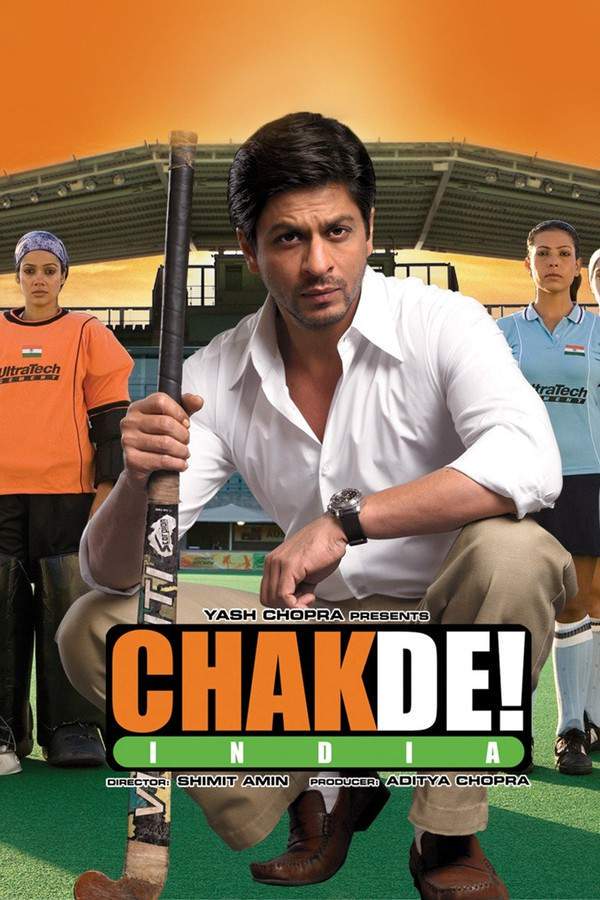
Chak De India! (2007) movie poster

Plot Summary

Chak De India! (2007) Plot Summary Explained

Release, runtime and language
2007 · 153 min · Hindi
JustWatch #12,100 11
Directed by
Shimit Amin

Kabir Khan, a disgraced former national hockey champion, is given a chance at redemption when he’s unexpectedly hired to coach the Indian Women's National Hockey team. The team is a diverse group of players, each with their own personal motivations and struggles, who have lost their passion for the sport and are more focused on personal gain than national pride. Khan must inspire them to rediscover their love of the game and fight for a chance at international glory, confronting both their individual challenges and the systemic issues within the sport.

On this page (6)
  1. 1 Where to watch
  2. 2 What happens: full plot
  3. 3 Plot questions answered
  4. 4 Movie threads
  5. 5 Movies like Chak De India!
  6. 6 Every angle

Where to watch

Where to Watch Chak De India! (2007)

Where can you watch Chak De India!? Stream, rent or buy it in the US, including on Netflix, Netflix Standard and Apple TV Store: current JustWatch availability with up-to-date prices.

Streaming availability powered by JustWatch

Full plot summary · contains spoilers

What Happens in Chak De India!: Full Plot Summary

The whole story of Chak De India! (2007) explained, from the opening scene to the final frame: every key event, every twist and what it all adds up to. Read it as a quick recap before the sequel, to check a scene you missed, or to finally understand what really happened.

Chak De! India begins amidst the thrilling final moments of a fictional Hockey World Cup clash between Pakistan and India, where Pakistan holds a precarious lead of 1-0. In a pivotal moment, Indian team captain Kabir Khan (Shah Rukh Khan) decides to take a penalty stroke after being fouled. Unfortunately, his attempt soars above the goal, leading to a devastating defeat for India.

In the aftermath, a photograph surfaces of Khan shaking hands with the captain of the Pakistan team, which sparks a widespread smear campaign. Accusations fly, suggesting that Khan, being a Muslim, might have intentionally thrown the game out of sympathy for his rivals. This societal prejudice forces both him and his mother, Joyoshree Arora, out of their ancestral home, plunging them into exile.

Seven years later, Mr. Tripathi (Anjan Srivastav), head of India's Hockey Association, finds himself in a meeting with Khan's friend and hockey enthusiast Uttamaji (Mohit Chauhan). They discuss the prospects of the Indian women's hockey team, with Tripathi expressing his skepticism about its potential, claiming that women's roles are primarily to "cook and clean." However, Uttamaji reveals that Kabir Khan, who has remained out of the public eye for seven years, is willing to take the helm as their coach. Tripathi, after some hesitation, agrees.

Thus, Khan steps into the challenge of coaching a diverse group of sixteen young women, each hailing from different parts of India, each grappling with their individual rivalries and biases. Among them, Komal Chautala (Chitrashi Rawat) from Haryana clashes with Preeti Sabarwal (Sagarika Ghatge) from Chandigarh. Meanwhile, Punjab's fiery Balbir Kaur (Tanya Abrol) bullies Rani Dispotta (Seema Azmi) and Soimoi Kerketa (Nisha Nair), who come from remote villages in Jharkhand. Mary Ralte (Kimi Laldawla) from Mizoram and Molly Zimik (Masochon "Chon Chon" Zimik) from Manipur face discrimination, being treated as "foreigners" by their peers, and experiencing repeated harassment. The dynamic captain, Vidya Sharma (Vidya Malvade), finds herself torn between her passion for hockey and the expectations of her husband Rakesh (Nakul Vaid)'s family, while Preeti's fiancé, Abhimanyu Singh (Vivan Bhatena), feels threatened by her dedication to the team.

Khan quickly realizes that forging unity among the girls will require them to embrace teamwork and discipline. Early on, he decides to bench several players, including the seasoned Bindia Naik (Shilpa Shukla). This decision ignites a rebellion led by Bindia, prompting Khan to resign in frustration. As a peace offering, he invites team manager Sukhlal (Javed Khan) and the players to a farewell lunch, where a raucous brawl with some boys fosters a newfound camaraderie among the girls. Impressed by their teamwork, Khan agrees to coach them further.

However, their hard-won unity faces a setback when Tripathi announces that the women’s team will not participate in the upcoming World Championship in Australia. Determined, Khan challenges him to a match against the men's team, asserting that if the girls win, they should be allowed to go. Although they lose the match, their resilience and skill garner praise from the men's team, compelling Tripathi to reconsider and permit their trip to Australia.

During the World Cup, the girls face formidable teams like the Hockeyroos (Australia), the Black Sticks Women (New Zealand), the Las Leonas (Argentina), and the South Korean squad. Battling through their differences, they eventually transform into a cohesive unit, clinching the Championship title. In their victory, they not only shatter the biases that divided them but also prove to their families and the nation the significance of women's hockey. In the end, Khan manages to restore his honor and returns home with his mother, greeted warmly by former adversaries.
Last updated: November 03, 2024 at 22:12

Was this helpful?

Plot questions answered

Chak De India! Plot Explained: Your Questions Answered

The questions people ask most about Chak De India! (2007): what happens in the confusing scenes, why the characters do what they do, the twists, hidden details and what the ending means. Each answer contains spoilers.

Q1

Why did Kabir Khan miss the penalty stroke in the World Cup final?

Kabir Khan missed the penalty stroke due to the immense pressure of the moment. As the Indian team captain during the tense final moments against Pakistan, he attempted a risky shot that sailed above the goal. This miss cost India the match and became the catalyst for the tragic events that followed, including the baseless accusations of match-fixing.

  • penalty stroke
  • missed shot
  • world cup final
  • pressure
  • kabir khan
Q2

Why was Kabir Khan accused of intentionally throwing the match?

After the loss, a photograph emerged of Kabir Khan shaking hands with the Pakistani team captain. Media and public figures used this image combined with Khan's Muslim identity to speculate that he had thrown the game out of sympathy for Pakistan. This baseless accusation sparked a smear campaign that led to Khan and his mother being forced out of their ancestral home.

  • accusation
  • match fixing
  • muslim
  • prejudice
  • media backlash
Q3

Why did Kabir Khan agree to coach the women's hockey team?

After seven years in exile, Kabir Khan was given an opportunity to restore his reputation through hockey. When Uttamaji suggested he could coach the women's team, Khan saw it as a chance to return to the sport he loved and potentially redeem himself. He accepted the challenge despite the low expectations placed on women's hockey in India.

  • coach
  • redemption
  • women's team
  • uttamaji
  • kabir khan
Q4

Why did Bindia Naik lead a rebellion against Kabir Khan?

Bindia Naik, a seasoned player, rebelled when Khan benched her and several other senior players early in his coaching tenure. She saw this as a disrespect to her experience and status on the team. Her rebellion represented the broader resistance Khan faced in establishing discipline and unity among players who were accustomed to doing things their own way.

  • bindia naik
  • rebellion
  • bench
  • discipline
  • senior player
Q5

What was the significance of the farewell lunch brawl?

When Kabir Khan organized a farewell lunch after deciding to resign, the situation escalated into a brawl with local boys. This unexpected confrontation forced the players to work together as a team, abandoning their personal rivalries to fight a common enemy. The experience became a turning point that fostered genuine camaraderie among the girls and changed Khan's mind about continuing as coach.

Foreshadowing: Earlier rivalries between players from different regions had prevented true teamwork.

  • farewell lunch
  • brawl
  • team bonding
  • unity
  • kabir khan
Q6

Why did Tripathi initially refuse to send the women's team to the World Championship?

Mr. Tripathi, head of India's Hockey Association, refused because he held stereotypical views about women's roles in society, believing they should focus on domestic duties rather than sports. He also doubted the team's ability to compete at an international level, expressing explicit skepticism about women's potential in hockey.

  • tripathi
  • world championship
  • refusal
  • sexism
  • hockey association
Q7

What was the importance of the match against the men's hockey team?

After Tripathi refused to send the women's team to the World Championship, Kabir Khan challenged the men's team to a match, betting that a victory would earn the women their spot. Though they lost, their resilience and skill impressed the men's team, leading them to advocate for the women. This convinced Tripathi to permit their participation in the tournament.

  • men's team
  • challenge
  • tripathi
  • world championship
  • impress
Q8

Why were Mary Ralte and Molly Zimik treated as foreigners?

Mary Ralte from Mizoram and Molly Zimik from Manipur faced discrimination from their teammates who viewed them as outsiders due to their Northeast Indian heritage. They were called "foreigners" and experienced repeated harassment, reflecting broader societal prejudice against people from India's Northeastern states. This created an additional barrier to team unity that Kabir Khan had to address.

  • mary ralte
  • molly zimik
  • discrimination
  • northeast
  • harassment
Q9

How did the diverse group of players finally unite as a team?

  • unity
  • teamwork
  • transformation
  • diversity
  • regional bias
Q10

How did Kabir Khan restore his honor after the accusations?

By leading the women's hockey team to victory at the World Championship in Australia, Kabir Khan proved his dedication to Indian hockey. The historic win silenced doubters, transformed public perception, and demonstrated that his loyalty to India had never wavered. His success was so impactful that former adversaries greeted him warmly upon his return, signifying complete restoration of his reputation.

  • honor
  • reputation
  • victory
  • world championship
  • redemption
Q11

Why did Komal Chautala and Preeti Sabarwal constantly clash?

Komal Chautala from Haryana and Preeti Sabarwal from Chandigarh represented the deep regional rivalries within India. Their constant conflict symbolized the broader divisions between different states, with each player initially viewing the other as inferior or as competition rather than a teammate. This rivalry was emblematic of the larger challenge Kabir Khan faced in creating unity.

  • komal chautala
  • preeti sabarwal
  • rivalry
  • regional conflict
  • haryana
Q12

Why was Vidya Sharma torn between hockey and her family?

Captain Vidya Sharma struggled with the expectations of her husband Rakesh's family, who likely disapproved of her dedication to professional sports. Her internal conflict represented the broader societal pressure women face choosing between family duties and career ambitions. Despite her passion for hockey, she felt compelled to balance the expectations of her marital family with her own dreams.

  • vidya sharma
  • husband
  • family expectations
  • marital pressure
  • hockey

Movie threads

More Movies Like Chak De India!, by Mood & Story

Curated lists built around what makes Chak De India! tick: the same mood, the same kind of story or the same emotional payoff. Each list explains why these movies belong together.

Underdog Team Redemption Stories like Chak De India!

Misfit teams unite against the odds to achieve an impossible victory. If you enjoyed watching the Indian women's hockey team overcome adversity in Chak De India!, you'll love these movies about unlikely teams finding their purpose. Discover similar inspiring sports dramas and stories of groups bonding against the odds to achieve glory.

  • underdog
  • triumphant
  • teamwork
  • inspiring
  • redemption
  • energetic
  • Tone: hopeful, triumphant
  • Pacing: steady, building
Why these movies?

The story pattern: The narrative follows a classic structure: a disgraced or unlikely leader takes charge of a dysfunctional group. The story progresses through a phase of conflict and failure, leading to a crucial turning point where the team unites. The final act is a high-stakes challenge where their newfound cohesion is tested, resulting in a hard-earned victory that serves as redemption for all.

Why they belong together: These films are grouped by their shared focus on collective growth, the power of teamwork, and the intensely satisfying arc of rising from the bottom. They blend high-stakes competition with heartfelt character development, creating an uplifting and energetic viewing experience.

Movies about Inspiring Coaches like the one in Chak De India!

A determined mentor guides a struggling group to find their strength and purpose. Fans of Kabir Khan's coaching journey in Chak De India! will appreciate these stories about mentors who shape their teams. Explore similar dramas where a coach's guidance and personal redemption are key to the team's inspiring success and transformation.

  • inspiring
  • determined
  • mentorship
  • redemption
  • focused
  • transformative
  • Tone: hopeful, determined
  • Pacing: steady, procedural
Why these movies?

The story pattern: The narrative is driven by the dual arc of the coach and the team. The coach, seeking personal redemption, must earn the trust of a skeptical or disillusioned group. The story unfolds through training sequences and personal breakthroughs, where the coach's philosophy and methods are proven right. The climax validates both the team's talent and the coach's leadership, resolving their intertwined journeys.

Why they belong together: These movies share a core dynamic: the relationship between a mentor and their team. The emotional core comes from watching the coach's methods inspire growth and unity. They consistently feature a steady pace that builds towards a validation of the coach's belief system, creating a profoundly hopeful and satisfying arc.

If you liked this

Movies Like Chak De India!

Similar movies to Chak De India!: the same genre, themes or kind of story. Each one comes with its own plot summary, timeline and ending explained.

Browse all movie summaries

Every angle

Chak De India! (2007) Explained: Plot, Timeline & Characters

Everything about Chak De India! in one place: what happens in the plot summary, the timeline in chronological order, the characters and meaning and a spoiler-free summary. What's After the Movie adds the cast, box office and post-credit scenes.

Coming soon on iOS and Android

The Plot Explained Movie Summary App

Plot summaries, endings explained and timelines on your phone. Catch up on any movie in minutes, save your favorites and never miss a twist again.

Be the first to know when we launch. Your email stays private, always.

Learn more about the app