Plot Explained Spoilers guaranteed!
Plot Explained

Browse by genre

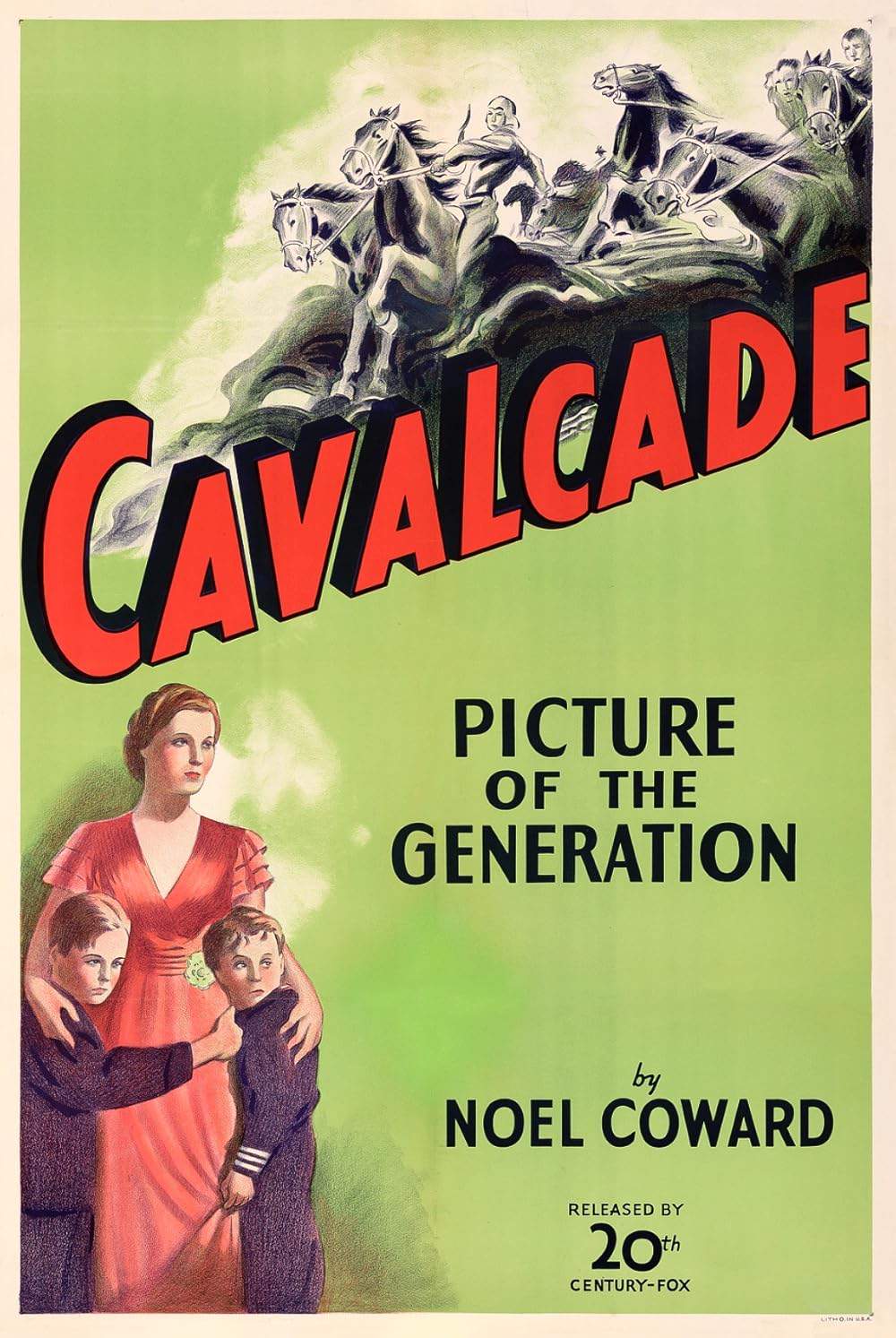
Cavalcade (1933) movie poster

Plot Summary

Cavalcade (1933) Plot Summary Explained

Release, runtime and language
1933 · 112 min
Directed by
Frank Lloyd
Starring
Una O'Connor, Herbert Mundin, Clive Brook, Frank Lawton, Beryl Mercer, Diana Wynyard

Across a period of twenty-five years, the lives of two English families—the wealthy Marryots and the less fortunate Bridgeses—are intertwined by the major events of a changing world. Beginning with the Victorian era, they experience the excitement and optimism of the early 1900s, the devastation of World War I, and the social changes of the interwar period. The narrative explores their personal journeys through love, loss, and the enduring strength of the human spirit as they adapt to a rapidly evolving society.

On this page (6)
  1. 1 Where to watch
  2. 2 What happens: full plot
  3. 3 Plot questions answered
  4. 4 Movie threads
  5. 5 Movies like Cavalcade
  6. 6 Every angle

Where to watch

Where to Watch Cavalcade (1933)

Where can you watch Cavalcade? Stream, rent or buy it in the US, including on Amazon Video, Apple TV Store and Fandango At Home: current JustWatch availability with up-to-date prices.

Streaming availability powered by JustWatch

Full plot summary · contains spoilers

What Happens in Cavalcade: Full Plot Summary

The whole story of Cavalcade (1933) explained, from the opening scene to the final frame: every key event, every twist and what it all adds up to. Read it as a quick recap before the sequel, to check a scene you missed, or to finally understand what really happened.

Throughout the film, the passage of time is marked by title cards featuring dates, accompanied by a Medieval cavalcade in the background. On New Year's Eve 1899, the affluent couple Jane (Diana Wynyard) and Robert Marryot (Clive Brook) arrive home at their London townhouse to uphold their tradition of toasting the new year. Jane expresses her worries as Robert, who has signed up to be an officer in the City of London Imperial Volunteers (CIV), is set to depart for the Second Boer War, where her brother is already engaged in battle. Their loyal butler, Alfred Bridges (Herbert Mundin), is also leaving for war as a private, prompting concern from his wife, Ellen (Una O'Connor), and her mother, Mrs. Snapper (Tempe Pigott), who fear for the well-being of Ellen and their infant daughter, Fanny. Despite the impending dangers, Alfred remains optimistic. At the stroke of midnight, the Marryots and Bridges families raise their glasses to welcome the new century.

Following this, Jane and Ellen share tearful goodbyes with their husbands as they embark on the same ship. Keeping Jane company is Margaret Harris (Irene Browne), who provides support while Robert is away. During a night at the opera, excitement breaks out as the relief of Mafeking is declared from the stage, leading to an uproar of applause. Upon their return, Robert is knighted for his service. With his newfound fortune, Alfred shocks everyone by announcing that he has purchased a pub—his and Ellen's ticket out of service life, marking a new chapter for them and their family.

Fast forward to 1908, the story tightens as Alfred's struggle with alcoholism spirals, leading to the mismanagement of their pub, all while he squanders the family's rent money on drinks. Ellen and Fanny ([Bonita Granville]) are left to bear the weight of Alfred's disgrace. To regain some dignity, Ellen meticulously orchestrates a gathering with the Marryots, who are now eager to visit. Despite planning to keep Alfred in the dark about the occasion, chaos ensues when he drunkenly bursts in, vandalizing Jane’s gift to Fanny—a cherished doll. In a heart-wrenching turn, Fanny flees outdoors, and Alfred’s reckless pursuit results in a tragic accident involving a horse-drawn fire engine, claiming his life.

On July 25, 1909, while at the seaside, Ellen and Fanny happen upon the Marryots. Ellen shares how she has taken over the pub and that Fanny, now blossoming into a remarkable dancer and singer, supports their endeavors. Meanwhile, Edward, now attending the University of Oxford, is smitten with his childhood companion, Edith Harris ([Margaret Lindsay]). The families witness the historic victory as Louis Blériot completes his groundbreaking flight across the English Channel.

As the timeline progresses to April 1912, Edward and Edith have wed and are luxuriating on their honeymoon aboard the ill-fated RMS Titanic, a fate only hinted at later in the dialogue. The scene shifts again with the onset of World War I in 1914, as both Robert and Joe ([Frank Lawton]) enlist, naïvely believing that the conflict will resolve swiftly. During his leave, Joe reconnects with Fanny ([Ursula Jeans]), who is captivating audiences in a nightclub. Their relationship flourishes amid the chaos and danger of war, culminating in Joe’s heartfelt proposal, but Fanny’s hesitation stems from their stark class differences.

The conflict escalates, leading to an agonizing moment in 1918 when Jane is struck by the news of Joe’s death in battle, just as Ellen confronts her about Joe's relationship with Fanny, beseeching her to ensure they marry. Racked with grief, Jane wanders through the armistice celebrations in Trafalgar Square, overwhelmed by loss.

The film concludes with a montage showcasing the upheaval of daily life and the shifting social order, as voices rise calling for peace. The final scene brings us to New Year's Day 1933, where an elderly Jane and Robert continue the cherished tradition of toasting the new year, reflecting on their past and hopeful for the future.

Last updated: October 25, 2024 at 08:32

Was this helpful?

Plot questions answered

Cavalcade Plot Explained: Your Questions Answered

The questions people ask most about Cavalcade (1933): what happens in the confusing scenes, why the characters do what they do, the twists, hidden details and what the ending means. Each answer contains spoilers.

Q1

Why did Alfred Bridges buy a pub after returning from the Boer War?

Alfred purchased the pub as his and Ellen's ticket out of service life. Having served as a butler for the Marryots, he wanted to become his own master and achieve independence. The purchase represented a significant class transition and a hopeful new chapter for the Bridges family, funded by the fortune Robert earned from being knighted for his military service.

Foreshadowing: The film earlier shows Alfred expressing optimism about the future as he leaves for war, establishing his desire for a better life beyond servitude.

  • alfred bridges
  • pub purchase
  • boer war
  • class mobility
  • independence
Q2

What led to Alfred Bridges' alcoholism in 1908?

The film does not explicitly state what triggered Alfred's alcoholism, but by 1908 his drinking has become severe enough to cause the mismanagement of their pub. He squanders the family's rent money on drinks, leading to financial distress for Ellen and young Fanny. Ellen is left to bear the consequences of his disgrace while trying to maintain dignity for the family.

  • alfred bridges
  • alcoholism
  • 1908
  • pub failure
  • family decline
Q3

Why did Fanny hesitate to accept Joe's marriage proposal?

Fanny's hesitation stemmed from the stark class differences between them. Though their relationship blossomed during Joe's WWI leave and he made a heartfelt proposal, Fanny was acutely aware of the social divide. Coming from the working-class Bridges family while Joe was connected to the wealthy Marryots through employment, she feared the complications such a marriage would bring.

  • fanny bridges
  • joe marryot
  • marriage proposal
  • class differences
  • social barriers
Q4

What happened to Edward and Edith after their Titanic honeymoon?

The film only hints at their fate rather than showing it directly. When Edward and Edith board the RMS Titanic for their honeymoon in April 1912, the dialogue only suggests they are luxuriating aboard. The film does not explicitly confirm whether they survived or perished, leaving this historical tragedy as an implied offscreen event that shapes the narrative's sense of precariousness.

Foreshadowing: The Titanic scene is deliberately positioned as a joyful moment before the darker events of World War I, creating dramatic irony for viewers aware of the ship's fate.

  • edward marryot
  • edith
  • titanic
  • honeymoon
  • 1912
Q5

Why did Robert and Joe enlist for World War I thinking it would be short?

Both Robert and Joe enlisted in 1914 with the naïve belief that the conflict would resolve swiftly. This was a common sentiment at the war's outbreak, as many thought it would be over by Christmas. Their optimism reflects the widespread ignorance about the modern industrial warfare that would characterize the Great War, leading to devastating consequences.

  • robert marryot
  • joe
  • world war i
  • enlistment
  • 1914
  • naivety
Q6

How did Ellen manage to support Fanny after Alfred's death?

After Alfred died in the tragic horse-drawn fire engine accident in 1908, Ellen took over running the pub herself. By 1909, she reveals to the Marryots at the seaside that she has been managing the establishment, while Fanny has grown into a talented dancer and singer who performs to support their endeavors. This shows Ellen's resilience in overcoming tragedy and providing for her daughter.

  • ellen bridges
  • fanny
  • pub management
  • alfred death
  • independence
Q7

What does the medieval cavalcade represent in the film?

The medieval cavalcade appearing on title cards throughout the film serves as a visual motif marking the passage of time across the 25-year span. It symbolizes the historical sweep and the march of time, connecting the personal narratives of the two families to the broader flow of history. The cavalcade runs continuously behind the dated title cards, reinforcing how individual lives are caught in the current of historical change.

  • medieval cavalcade
  • title cards
  • passage of time
  • symbolism
  • historical motif
Q8

How did Joe Bridges die and what was the timing?

Joe Bridges was killed in battle during World War I in 1918. The news reaches Jane Marryot just as she is confronting Ellen about Joe's relationship with Fanny, with Ellen pleading for Jane to ensure they marry. The tragic timing means Joe dies before he and Fanny can resolve their class differences, and Jane receives the devastating news during the armistice celebrations in Trafalgar Square.

  • joe bridges
  • death 1918
  • world war i
  • fanny
  • trafalgar square
Q9

Why does the film show the Mafeking Relief celebration at the opera?

During an opera performance, the relief of Mafeking is declared from the stage, causing an uproar of applause. This 1900 event during the Second Boer War provided a moment of national joy and relief for the British audience, including the Marryots. It serves as a brief respite from war concerns while also grounding the film in historical accuracy, showing how the war back home affected ordinary citizens.

  • mafeking relief
  • 1900
  • opera
  • boer war
  • celebration
Q10

Why does the film end with the 1933 New Year's toast?

The final scene returns to where the film began - an elderly Jane and Robert Marryot toasting the new year on New Year's Day 1933. This bookend structure emphasizes the passage of time and the endurance of their relationship through 25 years of change, loss, and historical upheaval. The tradition they started in 1899 continues, symbolizing hope and resilience despite experiencing the deaths of loved ones and profound social changes.

  • 1933
  • new years toast
  • final scene
  • tradition
  • endurance
  • resolution
Q11

Why was Robert Marryot knighted after the Boer War?

Robert Marryot was knighted for his service and bravery during the Second Boer War. Upon his return, he received this honor which brought him a fortune. This knighthood not only elevated his social status but also provided the financial means that indirectly enabled Alfred Bridges to purchase his pub, showing how the war's outcomes rippled through both families.

  • robert marryot
  • knighthood
  • boer war
  • honor
  • fortune

Movie threads

More Movies Like Cavalcade, by Mood & Story

Curated lists built around what makes Cavalcade tick: the same mood, the same kind of story or the same emotional payoff. Each list explains why these movies belong together.

Decades-Spanning Family Epics Like Cavalcade

Stories that trace families across decades against the backdrop of major world events. Explore movies like Cavalcade that chronicle the lives of families across generations. These historical dramas capture personal stories set against major world events, perfect for viewers who enjoy sweeping, emotionally resonant sagas about love, loss, and the passage of time.

  • historical
  • nostalgic
  • somber
  • epic
  • reflective
  • generational
  • Tone: reflective, melancholic, nostalgic
  • Pacing: variable, episodic
Why these movies?

The story pattern: These narratives typically unfold in a linear or episodic fashion, using time jumps to mark significant historical milestones. The central conflict often arises from the friction between personal desires and the unstoppable force of societal change, with characters navigating love, loss, and resilience as the world transforms around them.

Why they belong together: This thread groups films that share a structural and thematic core: using a multi-generational family lens to explore history. They create a specific, reflective mood by blending intimate personal drama with a grand, chronological scope.

Somber Period Romance Stories Like Cavalcade

Period pieces where poignant romance is shadowed by the inevitability of grief. Find movies similar to Cavalcade that blend historical settings with bittersweet stories of love and loss. If you liked the film's melancholic romance set against a backdrop of war and social change, this collection offers more poignant and reflective dramas.

  • romantic
  • grieving
  • somber
  • historical
  • tragic
  • resigned
  • Tone: melancholic, tragic, resigned
  • Pacing: steady, reflective
Why these movies?

The story pattern: The stories often follow a central romance that is profound but challenged, sometimes ending in separation or death. The narrative journey is one of cherished memories contrasted with the pain of absence, emphasizing the enduring impact of love even in the face of profound loss.

Why they belong together: These films are grouped by their shared melancholic atmosphere and thematic focus on the fragility of happiness. They combine a historical setting with a heavy emotional weight, creating a specific vibe of nostalgic sadness and resigned reflection.

If you liked this

Movies Like Cavalcade

Similar movies to Cavalcade: the same genre, themes or kind of story. Each one comes with its own plot summary, timeline and ending explained.

Browse all movie summaries

Every angle

Cavalcade (1933) Explained: Plot, Timeline & Characters

Everything about Cavalcade in one place: what happens in the plot summary, the timeline in chronological order, the characters and meaning and a spoiler-free summary. What's After the Movie adds the cast, box office and post-credit scenes.

Coming soon on iOS and Android

The Plot Explained Movie Summary App

Plot summaries, endings explained and timelines on your phone. Catch up on any movie in minutes, save your favorites and never miss a twist again.

Be the first to know when we launch. Your email stays private, always.

Learn more about the app