Plot Explained Spoilers guaranteed!
Plot Explained

Browse by genre

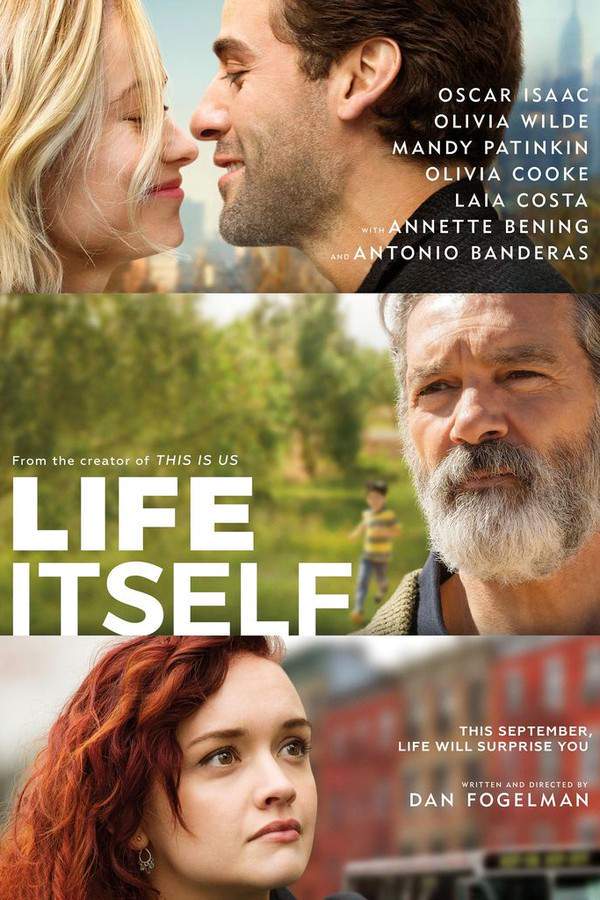
Life Itself (2018) movie poster

Plot Summary

Life Itself (2018) Plot Summary Explained

Release, runtime and language
2018 · 117 min · English
Echo score 36
JustWatch #2,405 17
Directed by
Dan Fogelman
Starring
Samuel L. Jackson, Oscar Isaac, Antonio Banderas, Olivia Wilde, Annette Bening, Mandy Patinkin
Budget
$10M

A couple experiences the joys and challenges of love, marriage, and raising a family while living in New York City. Their personal journey intertwines with the stories of others across different times and places, creating a moving portrait of human connection and the shared experiences that shape our lives. Through moments of happiness and hardship, the film explores the enduring power of relationships and the intricate ways we are all linked.

On this page (6)
  1. 1 Where to watch
  2. 2 What happens: full plot
  3. 3 Plot questions answered
  4. 4 Movie threads
  5. 5 Movies like Life Itself
  6. 6 Every angle

Where to watch

Where to Watch Life Itself (2018)

Where can you watch Life Itself? Stream, rent or buy it in the US, including on Amazon Prime Video, Amazon MX Player and Amazon Prime Video Free: current JustWatch availability with up-to-date prices.

Streaming availability powered by JustWatch

Full plot summary · contains spoilers

What Happens in Life Itself: Full Plot Summary

The whole story of Life Itself (2018) explained, from the opening scene to the final frame: every key event, every twist and what it all adds up to. Read it as a quick recap before the sequel, to check a scene you missed, or to finally understand what really happened.

The film begins with a narration by Samuel L. Jackson introducing us to the central character, a charming gay man named Henry, portrayed by Jake Robinson. As Henry engages in a conversation with his therapist, Dr. Cait Morris played by Annette Bening, Jackson's narrator seems unimpressed and shifts his attention to Cait. A moment later, as Cait strolls down the street with a smile of gratitude in response to a compliment from Will Dempsey played by Oscar Isaac, tragedy strikes when she is unexpectedly hit by a bus.

This scene serves as a peculiar setup for an "unreliable Samuel L. Jackson narrator" script that Will is crafting. Will's day takes a turn as he indulges in coffee laced with alcohol and Xanax, leading him to sing obnoxiously in public. His therapy sessions with Cait reveal a tumultuous past following his wife Abby played by Olivia Wilde leaving him.

Through flashbacks, we unravel their life together, marked by Abby's love for Bob Dylan and their beloved dog, whimsically named Fuckface. Will recounts their earlier days, detailing Abby's tragic childhood filled with loss and abuse, culminating in a brave moment when she stands up to her uncle. They bond over a Halloween party, where Will, dressed as Vincent Vega, proposes to Abby.

In therapy, Will reflects on his relationship with Abby and questions how everything fell apart. A particularly painful memory resurfaces as Will describes the day they were expecting their daughter—a moment shattered when Abby is struck by a bus right after expressing joy about having a girl. As he attempts to revive her, tragedy befalls him as well, with heartbreaking consequences that lead to a desperate decision.

As we transition to Dylan Dempsey, their daughter played by Olivia Cooke, we witness the shadows of her parents' past following her. Growing up amidst loss, Dylan grapples with her relationship with her grandfather, Irwin played by Mandy Patinkin, after losing her grandmother Linda portrayed by Jean Smart. On her 21st birthday, conflicts arise as she navigates her emotions through music, leading to violent confrontations at a gig, while still haunted by visions of her mother.

Meanwhile, across the ocean in Spain, Vincent Saccione played by Antonio Banderas becomes entangled in the story, alongside Javier González portrayed by Sergio Peris-Mencheta. Saccione's troubled history unfolds contrasting with Javier's affection for his girlfriend Isabel Diaz played by Laia Costa and their son Rodrigo. Saccione’s misguided attempts to bond with Rodrigo lead to a heartbreaking sequence of events, echoing the theme of grief.

As Rodrigo matures, he faces his own challenges, including dealing with a tumultuous relationship which leaves him overwhelmed. Isabel, aware of her illness, becomes a poignant figure in his life, culminating in a scene filled with emotional weight as he receives news of her passing.

In the poignant finale, we meet Elena played by Lorenza Izzo, the daughter of Rodrigo and Dylan, who shares a touching account of her family's legacy and the lessons she carries from her parents and grandmothers. She reflects on how these interconnected lives shape her existence.

The film closes with Will reminiscing over a moment with a pregnant Abby, tying together the threads of life, love, and the impact of choices.
Last updated: November 03, 2024 at 15:03

Was this helpful?

Plot questions answered

Life Itself Plot Explained: Your Questions Answered

The questions people ask most about Life Itself (2018): what happens in the confusing scenes, why the characters do what they do, the twists, hidden details and what the ending means. Each answer contains spoilers.

Q1

Why does the narrator shift from Henry to Cait after criticizing his session?

The narrator (Samuel L. Jackson) deliberately presents himself as unreliable by growing bored with Henry's therapy session and choosing to focus on Dr. Cait Morris instead. This meta-narrative device establishes that the narrator is crafting a story rather than objectively presenting events, foreshadowing the film's exploration of perspective and memory. The shift also directly leads to the pivotal moment where Cait is hit by a bus after receiving a compliment from Will Dempsey.

Foreshadowing: The narrator's arbitrary choice to follow Cait sets the tragedy in motion, showing how seemingly small decisions can have devastating consequences.

  • samuel l jackson narrator
  • unreliable narrator
  • therapy scene
  • cait morris
Q2

Why does Abby leave Will despite their apparent connection?

The film reveals that Abby's decision to leave stems from her traumatic childhood filled with loss and abuse. Though she loved Will deeply and even accepted his proposal at a Halloween party, her unresolved emotional wounds made it impossible for her to maintain stability. The flashbacks show her bravely standing up to her uncle, indicating a pattern of escaping painful situations. Her departure triggers Will's descent into grief and substance abuse.

Foreshadowing: Early scenes hint at Abby's emotional fragility through her reaction to her uncle and the significance she places on Bob Dylan lyrics about searching for something that may not exist.

  • abby leaving
  • will and abby relationship
  • abby childhood trauma
Q3

How does Abby die and what leads to that moment?

Abby dies when she is struck by a bus on a New York City street. The tragedy occurs immediately after she and Will leave a doctor's office where they learned they were expecting a daughter. In a cruel narrative coincidence mirroring the opening scene, Abby is hit by a bus right after expressing joy about having a girl. Will attempts to revive her but suffers devastating consequences himself, setting up the film's exploration of random tragedy.

Foreshadowing: The opening scene establishes the bus accident motif when Cait is hit by a bus, making Abby's later death feel like a deliberate narrative echo of chance and loss.

  • abby death
  • bus accident
  • tragic death
  • will daughter
Q4

What happens to Will after Abby's death?

After Abby's death, Will spirals into alcoholism and prescription drug abuse. He mixes alcohol with Xanax and engages in erratic public behavior, including singing loudly in a cafe. His grief manifests through his therapy sessions with Dr. Cait Morris, where he repeatedly examines his failed marriage and the traumatic day Abby died. The film suggests he struggles to recover from this loss throughout his life.

Foreshadowing: Will's substance abuse patterns are hinted at during the pregnancy reveal scene, where his emotional instability begins to surface.

  • will grief
  • alcoholism
  • substance abuse
  • depression
Q5

How are the Spain and American storylines connected?

The two storylines connect through the characters' shared experiences of loss, grief, and the generational impact of trauma. In Spain, Vincent Saccione's troubled relationship with his son Rodrigo echoes Will's own parental struggles. Both narratives explore how personal tragedies and poor choices affect the next generation. The connection becomes explicit when Dylan and Rodrigo meet and have a daughter named Elena, literally linking the American and Spanish family lines.

Foreshadowing: The parallel themes of father-son relationships and loss run throughout both storylines, suggesting these universal experiences transcend geography.

  • spain storyline
  • rodrigo
  • javier
  • family connection
Q6

Who is Elena and what is her connection to Will and Abby?

Elena is the daughter of Rodrigo (from the Spanish storyline) and Dylan (Will and Abby's daughter), making her the grandchild of both Will and Abby. She represents the culmination of the film's interconnected themes, carrying forward the legacy of both families. In the finale, Elena reflects on how the lives of her parents and grandmothers have shaped her existence, embodying the film's message about how our connections to others define who we become.

Foreshadowing: The generational theme is established early through Will's desire to have a child and the naming of Dylan after Bob Dylan's son.

  • elena
  • dylan
  • rodrigo
  • family legacy
  • granddaughter
Q7

Why does Rodrigo lose Isabel and how does it affect him?

Rodrigo loses Isabel because she is terminally ill. Isabel is aware of her impending death and this knowledge shapes Rodrigo's emotional journey throughout the Spanish storyline. Her illness represents another instance of tragic loss in the film, adding to the cumulative weight of grief experienced by the characters. The death of Isabel leaves Rodrigo overwhelmed and mirrors the kind of loss Will experienced with Abby.

Foreshadowing: The illness theme runs through multiple storylines, suggesting death and impermanence are inescapable parts of the human experience the film explores.

  • rodrigo
  • isabel illness
  • death
  • grief spain
Q8

Why does the film end with Will remembering a pregnant Abby?

The ending returns to a memory of Will and Abby before her death, specifically when they learned they were expecting a daughter. This final scene circles back to the film's beginning, creating a sense of completion. It represents the idea that despite all the tragedy and loss that follows, there was a moment of pure hope and love. The memory captures the joy that existed before everything fell apart, reinforcing the film's theme that our lives are shaped by both the joy and pain we experience.

Foreshadowing: The pregnancy reveal is the last happy moment before Abby's death, making it the perfect emotional anchor for the film's conclusion.

  • ending scene
  • pregnant abby
  • will memory
  • hope despite tragedy
Q9

What makes the narrator unreliable in Life Itself?

The narrator is unreliable because he openly admits to choosing which story to tell based on his own interest rather than objectivity. He literally abandons Henry's therapy session mid-conversation to follow Dr. Cait Morris, then frames events in a way that suggests he's crafting a narrative rather than presenting facts. This device raises questions about whether what we see is accurate or the narrator's interpretation, adding layers of meaning to the already complex non-linear structure.

Foreshadowing: The narrator's opening critique of Henry's session establishes early on that he prioritizes entertainment over completeness.

  • unreliable narrator
  • samuel l jackson
  • narrative device
  • meta fiction
Q10

Why does Dylan struggle with her parents' legacy?

Dylan grows up as the daughter of two parents who both experienced tremendous tragedy - Will lost his wife Abby, and Dylan herself never got to know her mother. Raised by her grandfather Irwin after her grandmother Linda's death, Dylan is haunted by visions of her mother and grapples with the weight of inherited grief. Her 21st birthday triggers violent emotional outbursts at a music gig, showing how unresolved trauma from previous generations continues to affect her.

Foreshadowing: Dylan's struggle is foreshadowed by Will's grief-filled therapy sessions and the traumatic circumstances surrounding her birth.

  • dylan
  • parent trauma
  • generational grief
  • music gig

Movie threads

More Movies Like Life Itself, by Mood & Story

Curated lists built around what makes Life Itself tick: the same mood, the same kind of story or the same emotional payoff. Each list explains why these movies belong together.

Movies with Interwoven Lives Like Life Itself

Complex narratives linking diverse characters and timelines through shared trauma. If you liked the interconnected, multigenerational storytelling of Life Itself, you'll find similar narrative tapestries here. These movies, often dramas with complex structures, explore how separate lives and timelines are powerfully linked by fate, love, or trauma.

  • interconnected
  • reflective
  • nonlinear
  • tragic
  • multigenerational
  • melancholic
  • Tone: melancholic, reflective
  • Pacing: variable, contemplative
Why these movies?

The story pattern: These stories typically unfold through a non-chronological structure, jumping between past and present to reveal the hidden connections between seemingly disparate characters. The narrative pattern emphasizes cause and effect, showing how a single event can echo across decades and shape multiple destinies.

Why they belong together: Movies are grouped here for their shared narrative architecture: a complex, mosaic-like structure that prioritizes thematic and emotional connections over linear plot. They create a reflective experience focused on the intricate web of human relationships.

Heavy Dramas About Grief and Loss Like Life Itself

Stories that navigate the devastating yet connective power of loss. For viewers seeking movies like Life Itself that delve deeply into themes of grief, loss, and healing. These emotionally heavy dramas portray the raw, challenging journey of coping with tragedy while finding resilience and meaning.

  • grieving
  • tragic
  • melancholic
  • devastating
  • heartbreaking
  • lonely
  • Tone: melancholic, tragic, bittersweet
  • Pacing: variable, with intense peaks
Why these movies?

The story pattern: The narrative journey often begins with a sudden, tragic incident that shatters the characters' world. The plot then follows the arduous, non-linear process of grieving—encompassing denial, anger, despair, and eventually, a bittersweet acceptance—while examining the impact on relationships and personal identity.

Why they belong together: These films share a core focus on the emotional weight and complex process of mourning. They are united by a melancholic tone, high emotional intensity, and a commitment to portraying grief with raw honesty, often culminating in a bittersweet resolution.

If you liked this

Movies Like Life Itself

Similar movies to Life Itself: the same genre, themes or kind of story. Each one comes with its own plot summary, timeline and ending explained.

Browse all movie summaries

Every angle

Life Itself (2018) Explained: Plot, Timeline & Characters

Everything about Life Itself in one place: what happens in the plot summary, the timeline in chronological order, the characters and meaning and a spoiler-free summary. What's After the Movie adds the cast, box office and post-credit scenes.

Coming soon on iOS and Android

The Plot Explained Movie Summary App

Plot summaries, endings explained and timelines on your phone. Catch up on any movie in minutes, save your favorites and never miss a twist again.

Be the first to know when we launch. Your email stays private, always.

Learn more about the app