Plot Explained Spoilers guaranteed!
Plot Explained

Browse by genre

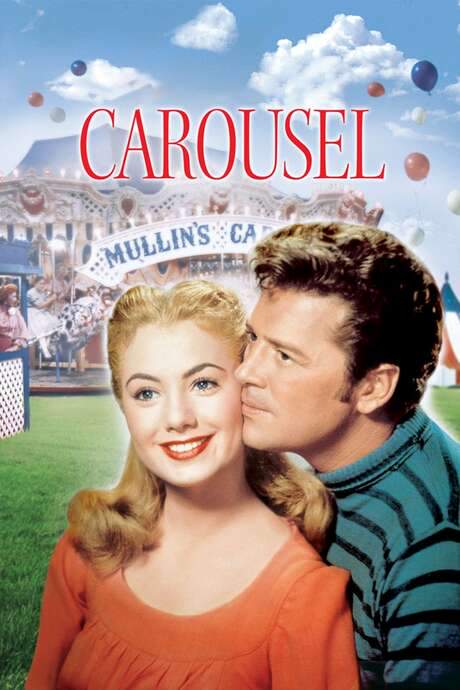
Carousel (1956) movie poster

Plot Summary

Carousel (1956) Plot Summary Explained

Release, runtime and language
1956 · 128 mins · English
Directed by
Henry King
Starring
Cameron Mitchell, Barbara Ruick, Audrey Christie, Gene Lockhart, Jacques d'Amboise, John Dehner

Billy Bigelow, dead for 15 years, wanders outside the pearly gates. After relinquishing his chance to return to Earth for a day, he learns his wife Julie (née Jordan) and his unseen child are in trouble. He seeks the gatekeeper’s permission to go back, telling his story as a plea. The film adapts Rodgers and Hammerstein’s classic Broadway musical.

On this page (6)
  1. 1 Where to watch
  2. 2 What happens: full plot
  3. 3 Plot questions answered
  4. 4 Movie threads
  5. 5 Movies like Carousel
  6. 6 Every angle

Where to watch

Where to Watch Carousel (1956)

Where can you watch Carousel? Stream, rent or buy it in the US, including on Amazon Video, Apple TV Store and Fandango At Home: current JustWatch availability with up-to-date prices.

Streaming availability powered by JustWatch

Full plot summary · contains spoilers

What Happens in Carousel: Full Plot Summary

The whole story of Carousel (1956) explained, from the opening scene to the final frame: every key event, every twist and what it all adds up to. Read it as a quick recap before the sequel, to check a scene you missed, or to finally understand what really happened.

In Boothbay Harbor, Maine, Billy Bigelow, a rough-talking carousel barker, and Julie Jordan, a young mill worker, find themselves falling in love against the odds. Their romance turns rocky when they lose their jobs: Billy is fired after paying too much attention to Julie, riling the jealous carousel owner Mrs. Mullin, and Julie is dismissed for bending the curfew set by the wealthy mill owner Mr. Bascombe. Yet their bond grows stronger as they imagine a different life together.

They marry and settle at the seaside spa and restaurant run by Julie’s cousin, Cousin Nettie. The couple tries to build a home amid financial strain and uncertainty. Julie reveals that she is pregnant, a revelation that brings both joy and fear about what the future might hold. While Billy initially seems hopeful, the pressure of finding steady work pushes him toward temptation. He quietly agrees to join his friend Jigger Craigin in a desperate plan to rob [Mr. Bascombe], hoping to secure a future for their growing family.

The attempted robbery erupts at a clambake on a nearby island. Bascombe—normally unarmed—carries a pistol, and the plan unravels quickly. Jigger makes a swift exit, leaving Billy at the mercy of the pursuing authorities. Trapped amid shipping crates that topple around him, Billy is mortally wounded, dying after sharing a final, intimate moment with Julie. Her heartbreak is profound, but a fierce love for him endures, even as she grapples with what his choices have cost them.

Fifteen years pass, and the story shifts to a otherworldly space—perhaps Purgatory, or the back door of Heaven—where Starkeeper explains that Billy can return to earth for one day to try to make amends. He returns not to reclaim his old life, but to reach the daughter he left behind. He finds Louise Bigelow emotionally scarred by taunts tied to her father’s past, and he carefully avoids revealing his true identity at first. Instead, he offers comfort and a glimmer of hope, even presenting her with a star he stole from Heaven. Louise, frightened at first, rejects the star at first glance, yet a moment later, a kiss seems to replace the sting of the slap she feels in her heart.

Julie senses that something more is at play and that Billy’s presence is not only about easing Louise’s pain but about healing their family as a whole. Billy struggles to remain unseen, yet Julie catches a fleeting glimpse, recognizing that his return carries a purpose beyond forgiveness. The film’s final movement shifts toward the future, as Billy asks his heavenly guide for permission to attend Louise’s high school graduation. In that quiet, transformative moment, he grants both Louise and Julie renewed confidence and the knowledge that, despite everything, his love for Julie endures. As he steps back toward the heavens, the chorus rises, signaling a poignant close to a life marked by longing, sacrifice, and enduring love.

Last updated: October 09, 2025 at 10:44

Was this helpful?

Plot questions answered

Carousel Plot Explained: Your Questions Answered

The questions people ask most about Carousel (1956): what happens in the confusing scenes, why the characters do what they do, the twists, hidden details and what the ending means. Each answer contains spoilers.

Q1

Why does Billy agree to help Jigger rob Mr. Bascombe?

Billy agrees to the robbery because he desperately needs money to support his pregnant wife Julie and their unborn child. After losing his job at the carousel and struggling to find steady work, he sees the robbery as the only way to give his family a secure future. His motivation stems from a genuine desire to be a good provider, even though he chooses a criminal path.

Foreshadowing: Earlier financial pressures and job losses create the desperation that leads Billy to consider crime.

  • billy bigelow
  • jigger
  • robbery
  • money
  • desperation
  • fatherhood
Q2

Why does Mr. Bascombe have a gun during the clambake?

Mr. Bascombe is not normally armed, which makes his possession of a pistol during the clambake unexpected. The surprise gun is what causes the robbery plan to fail so catastrophically. This moment underscores how the heist was poorly planned and how Billy underestimated the risks involved.

  • mr bascombe
  • gun
  • clamberke
  • robbery fails
  • surprise
Q3

How does Billy die in Carousel?

Billy dies after the robbery goes wrong. As he tries to escape from authorities on Bascombe's property, he becomes trapped among shipping crates that collapse around him. He falls on his own knife during the chaos and is mortally wounded. He dies after a final intimate moment with Julie, who rushes to his side.

Foreshadowing: The failed robbery plan and Billy's lack of experience with crime set this tragic outcome in motion.

  • billy death
  • knife
  • robbery
  • police
  • tragic ending
Q4

Why does Billy get to return to Earth for one day?

Billy is allowed to return to Earth for one day because he died without making amends for his actions. The Starkeeper, who oversees the heavenly waypoint where Billy wanders, explains that this chance at redemption is granted to help Billy find peace and to provide comfort to the family he left behind. The purpose is not to reclaim his old life but to heal the emotional wounds he caused.

Foreshadowing: The film frames Billy's entire story as a flashback from this celestial space, establishing the afterlife premise early.

  • heaven
  • return
  • redemption
  • atonement
  • starkeeper
  • one day
Q5

Why does Louise reject the star Billy gives her?

Louise rejects the star because she is frightened by the sudden appearance of a mysterious stranger (her father Billy). She has been emotionally scarred by taunts from peers about her father's criminal past and death, making her wary of any attention from unknown figures. Her initial reaction is fear rather than wonder, which is why she slaps the star away.

Foreshadowing: The film establishes early that Louise carries shame about her father's reputation.

  • louise bigelow
  • star
  • rejection
  • fear
  • father wound
  • emotional scarring
Q6

What does the kiss mean when Billy slaps Louise's hand?

When Billy's hand makes contact with Louise's as she rejects the star, she describes the sensation not as a slap but as a kiss. This moment symbolizes a breakthrough in Louise's emotional healing, she experiences her father's touch as an act of love rather than violence. It represents the beginning of her ability to remember her father with love instead of shame.

Foreshadowing: Billy's desperate attempt to connect with Louise creates this pivotal moment of emotional reconciliation.

  • kiss
  • louise
  • healing
  • father daughter
  • billy touch
  • emotional breakthrough
Q7

Why does Billy slap Louise when trying to give her the star?

Billy doesn't intend to slap Louise, he tries to give her the star he stole from Heaven as a gift. When Louise recoils in fear and slaps it away, Billy's hand makes contact with hers in the chaos. This touch, though accidental, becomes the emotional turning point where Louise feels her father's love despite his rough approach.

  • billy
  • louise
  • star
  • slap
  • connection
  • unintended contact
Q8

How does Julie sense Billy's presence during his return?

Julie senses that something supernatural is happening and recognizes that Billy's presence is not merely about easing Louise's pain but about healing their family as a whole. While Billy remains mostly unseen, Julie catches a fleeting glimpse of him and understands his purpose. Her deep connection to Billy allows her to perceive what others cannot.

Foreshadowing: The bond between Billy and Julie remains strong even after his death, suggesting a spiritual connection.

  • julie
  • billy
  • recognition
  • spiritual connection
  • presence
  • sensing
Q9

What happens at Louise's graduation in the film?

At Louise's high school graduation, Billy asks his heavenly guide for permission to attend unseen. He stands invisibly among the crowd, and his presence gives both Louise and Julie the courage and reassurance that his love for Julie endured. Though he remains invisible, this moment provides closure for the family as Billy successfully offers comfort from beyond.

Foreshadowing: Billy's entire purpose in returning is to reach Louise and provide healing to his family.

  • graduation
  • louise
  • julie
  • billy
  • unseen
  • closure
  • blessing
Q12

Why is Julie fired from working at the mill?

Julie is fired for violating the curfew set by the wealthy mill owner Mr. Bascombe. As her relationship with Billy deepens and she begins staying out later, she breaks the strict rules that Bascombe enforces over his female workers. This termination adds to the couple's financial struggles.

  • julie
  • job
  • mill
  • fired
  • curfew
  • bascombe

Movie threads

More Movies Like Carousel, by Mood & Story

Curated lists built around what makes Carousel tick: the same mood, the same kind of story or the same emotional payoff. Each list explains why these movies belong together.

Movies about afterlife redemption like Carousel

Stories where spirits return to mend broken bonds and find peace. If you liked the bittersweet journey of Carousel, explore more movies where departed souls return to offer closure, guidance, or redemption. These films blend supernatural elements with deep emotional drama, often focusing on themes of love, regret, and healing across the boundary between life and death.

  • supernatural
  • melancholic
  • hopeful
  • reflective
  • poignant
  • dramatic
  • Tone: bittersweet, melancholic, hopeful
  • Pacing: steady, reflective
Why these movies?

The story pattern: The narrative typically begins with a character who has died, often with unresolved regrets. They are granted an opportunity to return to the world of the living, usually to help a loved one or to correct a past mistake. The story unfolds as they navigate their ghostly state, interact with the living who may or may not perceive them, and ultimately achieve a sense of peace or resolution, leading to a bittersweet but hopeful conclusion.

Why they belong together: Movies in this thread are united by their central premise of posthumous intervention and their focus on emotional healing. They share a melancholic yet hopeful tone, using the supernatural framework to explore deeply human feelings of love, loss, and the desire for redemption, often culminating in a cathartic and bittersweet resolution.

Bittersweet musical dramas similar to Carousel

Musicals where soaring songs meet stories of love, loss, and regret. Fans of Carousel will appreciate these musicals that, like it, use song and dance to tell deeply emotional stories of romance, hardship, and redemption. These films masterfully blend dazzling vocal performances with poignant narratives, resulting in a experience that is both entertaining and thought-provoking.

  • melancholic
  • romantic
  • dramatic
  • nostalgic
  • poignant
  • hopeful
  • Tone: bittersweet, dramatic, poignant
  • Pacing: steady, character-driven
Why these movies?

The story pattern: These musicals often follow a romantic or personal journey that is marked by significant challenges, such as tragedy, economic hardship, or moral failings. The musical numbers provide emotional depth and character insight, sometimes offering a respite from the drama or heightening its impact. The story arcs tend to be character-driven, leading to conclusions that are satisfying but not purely happy, acknowledging the scars and lessons of the journey.

Why they belong together: These films are grouped together because they share the unique alchemy of the musical format with a dramatic, often sad, core. The emotional power comes from the juxtaposition of expressive song and dance with narratives dealing with loss, sacrifice, and the complexities of love, creating a cohesive vibe of beautiful sadness.

If you liked this

Movies Like Carousel

Similar movies to Carousel: the same genre, themes or kind of story. Each one comes with its own plot summary, timeline and ending explained.

Browse all movie summaries

Every angle

Carousel (1956) Explained: Plot, Timeline & Characters

Everything about Carousel in one place: what happens in the plot summary, the timeline in chronological order, the characters and meaning and a spoiler-free summary. What's After the Movie adds the cast, box office and post-credit scenes.

Coming soon on iOS and Android

The Plot Explained Movie Summary App

Plot summaries, endings explained and timelines on your phone. Catch up on any movie in minutes, save your favorites and never miss a twist again.

Be the first to know when we launch. Your email stays private, always.

Learn more about the app