Plot Explained Spoilers guaranteed!
Plot Explained

Browse by genre

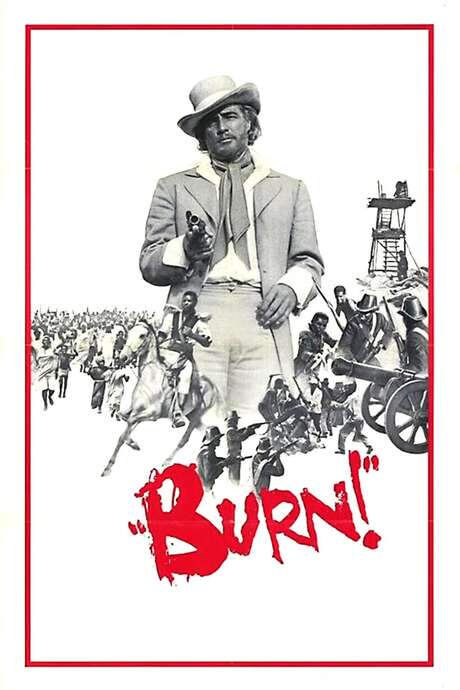
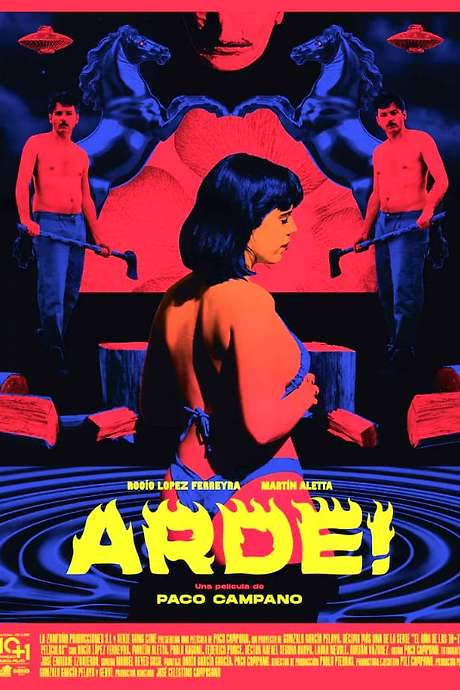
Burn! (2022) movie poster

Plot Summary

Burn! (2022) Plot Summary Explained

Release, runtime and language
2022 · 73 mins · Spanish
Directed by
Paco Campano
Starring
Martín Aletta, Pablo Ragoni, Rocío López Ferreyra, Federico Ponce

A mysterious girl appears, seemingly born from the confluence of two people and the powerful Iguazú Falls, with no memory of her origins. She must navigate a disturbing and perilous world, driven by an insatiable desire that threatens to consume everything in its path.

On this page (4)
  1. 1 What happens: full plot
  2. 2 Plot questions answered
  3. 3 Movie threads
  4. 4 Every angle

Full plot summary · contains spoilers

What Happens in Burn!: Full Plot Summary

The whole story of Burn! (2022) explained, from the opening scene to the final frame: every key event, every twist and what it all adds up to. Read it as a quick recap before the sequel, to check a scene you missed, or to finally understand what really happened.

In 1844, the British Admiralty sends Sir William Walker, an agent provocateur, to the island of Queimada (literally "Burned" or "Burnt"), a Portuguese colony in the Lesser Antilles. The British government seeks to open the island to economic exploitation by the Antilles Royal Sugar Company, and Walker’s task is to ignite an uprising of enslaved Africans that will topple the Portuguese regime and replace it with a government that is pliant to white planters. From the moment he lands, he works to destabilize the old order and to create a situation where his employers can profit under a new regime.

When he arrives in Queimada, Walker befriends the charismatic José Dolores, whom he entices to lead the slave rebellion, and he nudges influential landowners to reject Portuguese rule. Dolores’ rebellion quickly gathers momentum, the island’s passions are stirred, and a nighttime coup follows as Walker arranges the assassination of the Portuguese governor. In the wake of the coup, he establishes a puppet regime beholden to the Antilles Company, led by the idealistic but ineffectual revolutionary Teddy Sanchez. Walker then convinces Dolores to recognize the new regime and to surrender his arms, promising the abolition of slavery in exchange for peace. Having achieved his objective, he departs for his next assignment in Indochina, leaving Queimada under a new order that he believes will serve imperial interests.

In 1848, Dolores' discontent with the collaboration between the new regime and the Antilles Company drives a second uprising, a renewed effort to expel British influence and reclaim true sovereignty for Queimada. Over six years of conflict, the island remains a flashpoint of competing powers and interests, as local leaders and foreign interests clash over the future of the colony. In 1854, the Company summons Walker back—found in Plymouth, England—and irrefutably stamps its authority by returning him to Queimada with the Admiralty’s consent to quell the renewed revolt and pacify the island. President Sanchez resists this external meddling, is ousted, and is executed in a coup engineered by Walker, who installs a regime wholly dependent on the company’s will. British forces, guided by Walker, arrive and swiftly crush the rebellion, capturing Dolores.

Walker’s attempt to intervene on Dolores’ behalf reveals the deep rift between personal loyalty and a hard-won freedom; Dolores rejects his help, insisting that liberty must be earned rather than handed over. The government executes Dolores by hanging, a brutal end to a symbol of resistance. As Walker prepares to depart Queimada, he is confronted by a final, accusatory gaze from the port’s poor—a mirror of the crowd he once sought to win over, now turned against him. A man steps forward and stabs him, a fitting close to a man whose career was built on manipulation and power. As he dies, the world around him seems to close in with a chorus of judgment from the very people he aimed to mold into compliant subjects, leaving a stark meditation on guilt, accountability, and the price of empire.
Last updated: October 01, 2025 at 10:23

Was this helpful?

Plot questions answered

Burn! Plot Explained: Your Questions Answered

The questions people ask most about Burn! (2022): what happens in the confusing scenes, why the characters do what they do, the twists, hidden details and what the ending means. Each answer contains spoilers.

Q1

Why does Walker choose José Dolores to lead the slave rebellion?

Walker needs a charismatic leader who can unite the enslaved population and give the uprising legitimacy. José Dolores is already a respected figure among the enslaved Africans, making him the ideal figurehead for a rebellion that Walker can then manipulate from behind the scenes. By installing Dolores as the rebellion's leader, Walker creates a veneer of indigenous autonomy while maintaining actual control for British imperial interests.

Foreshadowing: Walker's earlier conversations with Dolores reveal his skill at identifying and exploiting charismatic leaders for political purposes.

  • josé dolores
  • william walker
  • slave rebellion
  • queimada
  • leader
Q2

Why does Walker convince Dolores to surrender his weapons after the coup?

Walker convinces Dolores to lay down arms by promising the abolition of slavery in exchange for peace. This is a calculated move to disarm the rebellion and consolidate the new puppet regime's control. Walker knows that as long as Dolores retains his military power, the revolutionary threat remains alive. By convincing Dolores to accept a political solution rather than continue fighting, Walker effectively neutralizes the rebellion while appearing to offer a genuine concession.

Foreshadowing: Walker's earlier promises to the enslaved population contain deliberate ambiguities that serve his ultimate goal of corporate control.

  • surrender weapons
  • dolores
  • abolition slavery
  • puppet regime
  • walker
Q3

Why does Walker return to Queimada in 1854?

The Antilles Royal Sugar Company summons Walker back because their puppet government under Teddy Sanchez has failed to suppress Dolores's second uprising. The Company obtains Admiralty permission to restore order, and Walker, having created the original situation, is seen as the only person capable of quelling the revolt. His return represents the British Empire hardening its stance against colonial resistance, using the same man who created the initial instability to now impose strict control.

Foreshadowing: Walker's departure in 1844 was always intended as a transition from rebel agitation to corporate domination, making his return a predictable consequence of that model.

  • william walker
  • return 1854
  • antilles company
  • dolores uprising
Q4

Why does Dolores refuse Walker's help before his execution?

Dolores rejects Walker's attempt to intervene because he believes true freedom cannot be handed over by the oppressor, it must be earned through struggle. By refusing Walker's help, Dolores maintains his integrity as a revolutionary leader and makes a final statement that liberty granted by those who enslaved the population is meaningless. This rejection haunts Walker, exposing the moral bankruptcy of his entire enterprise.

Foreshadowing: Dolores's earlier willingness to accept Walker's promises reveals his initial trust, which makes his later rejection all the more powerful.

  • dolores execution
  • walker help refused
  • freedom earned
  • revolutionary ideals
Q5

What triggers Dolores's second uprising in 1848?

Dolores launches the second uprising because the new regime, installed by Walker, immediately collaborates with the Antilles Company to exploit the island's resources. The promise of abolition never materializes, and the enslaved population finds themselves under even more direct economic oppression. Dolores's disillusionment with the puppet government drives him to resume armed resistance to expel British influence and achieve true sovereignty.

Foreshadowing: Walker's departure in 1844 already signaled that the revolution had been co-opted, making the 1848 uprising a predictable consequence of betrayal.

  • second uprising 1848
  • dolores
  • betrayal
  • antilles company
  • queimada
Q6

Why does Walker orchestrate a coup against President Sanchez?

Walker removes Teddy Sanchez because the president resists the Company's demands to fully open the island to corporate exploitation. Sanchez, though idealistic and ineffectual, still harbors genuine revolutionary aspirations and refuses to be entirely pliant to the Antilles Company. Walker sees him as an obstacle to total corporate control and engineers his ousting and subsequent execution to install a regime that serves the Company's interests without reservation.

Foreshadowing: Sanchez's ineffectual nature throughout Walker's first visit already suggested he would eventually be discarded when he ceased to be useful.

  • teddy sanchez coup
  • walker
  • antilles company
  • queimada regime
Q7

Why is Walker killed at the port at the end of the film?

Walker is stabbed by a man from the port's poor population as he prepares to leave Queimada. The attacker imitates the same greeting that Dolores once gave Walker upon his arrival, symbolizing how the islanders now see Walker as the enemy. This violent end represents the consequences of Walker's manipulation, he created the conditions for exploitation, betrayed the revolution, and ultimately faces judgment from the very people he sought to control.

Foreshadowing: Walker's earlier manipulation of the port crowds to support the rebellion creates the ironic reversal of those same crowds turning against him.

  • walker killed
  • port stabbing
  • queimada ending
  • judgment
Q8

Why does the government execute Dolores despite Walker's intervention?

Dolores is executed because he has become the symbol of resistance against the Company's control, and his continued existence threatens to inspire further uprisings. Although Walker attempts to intervene, the Company's hardliners view Dolores's death as necessary to crush the rebellion definitively. The execution serves as a public demonstration that resistance will be met with lethal force, regardless of Walker's personal loyalties.

Foreshadowing: The Company's earlier willingness to use Walker to create chaos suggests they are equally willing to use extreme violence to restore order.

  • dolores execution
  • hanging
  • queimada
  • company control
Q9

What causes Walker's guilt in the final moments?

Walker's guilt stems from realizing he has destroyed any possibility of genuine liberation for Queimada while enriching only the colonial enterprise. His manipulation of Dolores, first recruiting him, then betraying him, then failing to save him, represents his complete moral collapse. The accusatory gaze of the port's poor, and the symbolic imitation of Dolores's greeting by his killer, crystallize Walker's recognition of his role as an architect of suffering.

Foreshadowing: Walker's internal conflict becomes visible during his interactions with Dolores, particularly as the power dynamics shift in later years.

  • walker guilt
  • remorse
  • queimada
  • colonialism
  • moral collapse
Q10

Why does the British Admiralty use an agent like Walker for Queimada?

The British Admiralty uses Walker, a covert operative, because direct military intervention would invite diplomatic conflict with Portugal. By orchestrating a local slave uprising, Britain can feign neutrality while installing a regime pliant to the Antilles Royal Sugar Company. This strategy of using proxy forces to create plausible deniability allows imperial expansion without the political cost of overt colonization.

Foreshadowing: Walker's history as an agent provocateur suggests the British government routinely uses such figures to advance economic interests abroad.

  • british admiralty
  • agent provocateur
  • imperialism
  • antilles company
  • queimada
Q11

What role does the Antilles Royal Sugar Company play in the story?

The Antilles Royal Sugar Company is the economic engine driving British involvement in Queimada. The Company seeks to control the island's sugar production and open it to unrestricted exploitation. All of Walker's actions, destabilizing Portugal, installing a puppet government, suppressing rebellion, serve the Company's ultimate goal of unchecked economic access to the island's resources.

Foreshadowing: The Company's mention in Walker's initial briefing establishes their primacy from the very beginning of the mission.

  • antilles royal sugar company
  • colonial exploitation
  • queimada
  • economy
Q12

Why does the Portuguese regime fall so quickly in Queimada?

The Portuguese regime falls quickly because Walker systematically undermines it from within, convincing key landowners to reject Portuguese rule, orchestrating the enslaved population to rebel, and arranging the governor's assassination during the nighttime coup. Without the support of the local elite and facing armed revolt, the Portuguese have no foundation to maintain control. Walker's coordination ensures the transition appears as a local revolution rather than foreign intervention.

Foreshadowing: Walker's early conversations with landowners establish the fragility of Portuguese authority before the rebellion begins.

  • portuguese regime
  • queimada
  • colonel coup
  • governor assassination

Movie threads

More Movies Like Burn!, by Mood & Story

Curated lists built around what makes Burn! tick: the same mood, the same kind of story or the same emotional payoff. Each list explains why these movies belong together.

Political Dramas of Betrayal and Revolution like Burn!

Stories where idealism is crushed by the grim mechanics of power and betrayal. If you liked the cynical political landscape and fatalistic ending of Burn!, explore more movies like it. This collection features intense historical and political dramas centered on revolution, moral compromise, and the heavy personal toll of ideological struggles.

  • political
  • tense
  • grim
  • fatalistic
  • accusatory
  • oppressive
  • Tone: dark, cynical, tense
  • Pacing: steady, deliberate
Why these movies?

The story pattern: The narrative follows a character, often an outsider or agent, who becomes entangled in a political struggle or revolution. Their initial intentions, whether noble or self-serving, are eroded by the brutal realities of power, leading to betrayal, violence, and a bleak conclusion that underscores the cyclical nature of oppression.

Why they belong together: Movies are grouped here for their shared focus on the dark side of political ambition, the futility of certain revolutions, and the heavy emotional weight of witnessing moral corruption unfold. They share a tense, oppressive mood and a steady, deliberate pacing that allows the tragic consequences to resonate fully.

Bleak Historical Epics with Heavy Themes like Burn!

Intense period pieces where characters are broken by the weight of their environment. For viewers who appreciated the oppressive atmosphere and themes of imperialism in Burn!, this list suggests similar movies. Discover other heavy dramas with a steady pace that explore dark chapters of history, moral corruption, and the high personal cost of resistance within a brutal world.

  • oppressive
  • melancholic
  • grim
  • fatalistic
  • tense
  • heavy
  • Tone: dark, melancholic, grim
  • Pacing: steady, methodical
Why these movies?

The story pattern: Stories unfold within a powerfully oppressive setting that acts as a primary antagonist. Characters navigate this world, their personal desires and morals clashing violently with the systemic injustices around them. The journey is typically one of gradual disillusionment or destruction, rather than triumph, emphasizing the overwhelming power of the corrupt world.

Why they belong together: These films are connected by their immersive, grim atmospheres and their unflinching exploration of heavy themes like slavery, colonialism, and guilt. They share a high intensity, a dark tone, and a melancholic, fatalistic mood that makes the viewing experience emotionally taxing yet intellectually compelling.

Every angle

Burn! (2022) Explained: Plot, Timeline & Characters

Everything about Burn! in one place: what happens in the plot summary, the timeline in chronological order, the characters and meaning and a spoiler-free summary. What's After the Movie adds the cast, box office and post-credit scenes.

Coming soon on iOS and Android

The Plot Explained Movie Summary App

Plot summaries, endings explained and timelines on your phone. Catch up on any movie in minutes, save your favorites and never miss a twist again.

Be the first to know when we launch. Your email stays private, always.

Learn more about the app