Plot Explained Spoilers guaranteed!
Plot Explained

Browse by genre

Brave New World (1980) movie poster

Timeline

Brave New World (1980) Timeline Explained – Every Event in Order

Release, runtime and language
1980 · 180 mins · English
Directed by
Burt Brinckerhoff
Starring
Keir Dullea, Peter Elbling, Dick Anthony Williams, Ron O'Neal, Carole Mallory, Bud Cort

Raised in a primitive community, he teaches himself through Shakespeare’s works, gaining a literary foundation that sets him apart. When he finally gains permission to enter the advanced, authoritarian civilization of his parents, he finds its strict, repressive customs alien and struggles to reconcile his humanist ideals with their rigid control.

On this page (5)
  1. 1 Events in order (12)
  2. 2 Timeline questions answered
  3. 3 Movie threads
  4. 4 Movies like Brave New World
  5. 5 Every angle

12 events in order · contains spoilers

Brave New World Timeline: Events in Chronological Order

Every key event of Brave New World (1980) in order, scene by scene, with when and where it takes place. Use it to untangle flashbacks, time jumps and parallel storylines, to refresh your memory before the sequel or to find the exact scene you are thinking of.

  1. World-building: The dystopian order

    In this future society, pregnancy is outlawed and citizens must engage in loveless sex while narcotics are used to ensure happiness. Babies are created in laboratories, and every child's future is predestined to one of five social classes. The World State maintains strict control over reproduction, emotions, and personal choice.

    When
    Future
    Where
    World State
  2. Hatcheries overseen by Grahmbell

    Thomas Grahmbell is a supervisor of human hatcheries, responsible for producing citizens and enforcing the state's rules. He embodies the system's efficiency and emotional detachment. His role underscores how personal autonomy is sacrificed for social stability.

    Where
    Hatcheries
  3. Dissent begins

    Bernard Marx, a malcontent, begins to voice doubts about the happiness-for-all doctrine. Lenina Disney, his partner, remains more compliant, highlighting tensions between conformity and personal desire. Their unease foreshadows the coming disruptions.

    Where
    World State / City
  4. Trip to the reservation

    Bernard and Lenina visit a primitive reservation that clings to 20th-century values. The encounter with the Savage John exposes them to beliefs and ways of life the World State forbids. The trip plants seeds of curiosity and rebellion.

    Where
    Primitive Reservation
  5. Meeting John the Savage

    On the reservation they meet John, known as the Savage, a native raised outside the World State. John carries education and rage against the system's emptiness. He challenges their assumptions with his own perspective.

    Where
    Reservation
  6. John returns to civilization

    Bernard and Lenina bring John back to civilization, thrusting him into the center of social attention. His arrival unsettles the World State's equilibrium as his different background clashes with societal norms. He becomes a focal point for critique and fascination.

    Where
    World State / Civilization
  7. John becomes a celebrity

    In civilization, John becomes a celebrity due to his exotic origins, treated as a freak by the public. The media and citizens scrutinize him while he stands as a symbol of otherness. This exposure intensifies his alienation.

    Where
    City
  8. John's forbidden attraction

    John develops romantic feelings for Lenina, which are deemed highly inappropriate and obscene by World State standards. His reaction to Lenina's beauty and society's sexual norms creates a personal conflict. He struggles to reconcile his desires with the rules he cannot accept.

    Where
    City
  9. Shakespeare and social mores clash

    John educates himself with banned works such as Shakespeare, discovering moral and sexual mores that clash with the World State's values. He realizes that his cherished codes are antiquated in this modern society. This knowledge deepens his sense of isolation.

    Where
    Library / Education Center
  10. A request for solitude

    Feeling overwhelmed, John asks to be assigned a solitary posting away from mainstream life. He seeks a place that might honor his beliefs, away from crowds and expectations. The request marks his decisive step toward isolation.

    Where
    World State
  11. Lighthouse exile

    John mans the lighthouse alone, attempting to isolate himself, yet he cannot escape the memories of Lenina that haunt him. The loneliness underscores the impossibility of reconciling his ideals with the World State. Even in solitude, memories haunt him.

    Where
    Lighthouse
  12. Collision of worlds

    John's presence continues to challenge conventional wisdom, forcing others to confront the limits of their happiness-focused society. The clash between his ideals and the state’s order exposes a hollow core to their culture. The story ends with John's isolation and unresolved conflict.

    Where
    World State / City

Last updated: February 18, 2026 at 23:45

Was this helpful?

Timeline questions answered

Brave New World Timeline Explained: Your Questions Answered

When does it happen, and why in that order? The questions people ask about the chronology of Brave New World (1980): time jumps, flashbacks, cause and effect between scenes and the correct order of events, each answered with spoilers.

Q1

Why is pregnancy outlawed in the World State?

Pregnancy is outlawed to maintain social stability and control. The World State eliminates natural reproduction to ensure every child is conceived in laboratories and assigned to one of five predetermined social classes from birth. This removes personal choice in family planning and locks in social roles before birth, preventing the unpredictability of natural family bonds that could threaten the state's rigid hierarchy.

Foreshadowing: The hatcheries are introduced at the beginning as the foundation of the entire social order.

  • pregnancy
  • world state
  • reproduction control
  • social classes
  • hatcheries
Q2

Why does Bernard Marx become a rebel against the system?

Bernard Marx begins questioning the World State's happiness-for-all doctrine because he is perceptive and restless by nature. Unlike many citizens who accept the manufactured contentment through narcotics and loveless sex, Bernard senses something missing in this controlled existence. His dissatisfaction marks the first visible dissent within the otherwise compliant society.

Foreshadowing: The timeline notes that whispers of dissent grow louder, with Bernard as a key voice.

  • bernard marx
  • rebellion
  • dissent
  • world state
  • happiness doctrine
Q3

Why does John become a celebrity in the city?

John becomes a celebrity because he is a living contradiction to World State values. Born and raised on a primitive reservation, he represents everything the society has suppressed, natural birth, emotional depth, and knowledge of forbidden literature. The public treats him as a freak and curiosity, fascinated by his exotic origins while simultaneously seeing him as a symbol of what they have lost or rejected.

Foreshadowing: The trip to the reservation is framed as an encounter that will disrupt the World State's equilibrium.

  • john the savage
  • celebrity
  • alienation
  • freak
  • world state society
Q4

Why are John's romantic feelings for Lenina considered inappropriate?

John's feelings for Lenina are deemed obscene because the World State prohibits romantic attachment and natural sexuality. Citizens engage in casual, loveless sex as a recreational activity without emotional investment. John's desire for a deep, romantic connection represents everything the state conditioning has eliminated, making his feelings biologically and socially unacceptable under World State standards.

Foreshadowing: John's education through Shakespeare introduces him to romantic ideals that clash with the society's sexual norms.

  • john
  • lenina
  • romance
  • forbidden love
  • world state values
  • sexual norms
Q5

Why does John ask to be assigned to a solitary post?

John requests a solitary posting because he cannot reconcile his moral framework with the World State's values. Overwhelmed by the clash between his ideals and the society's rigid control, he seeks a place where he might live according to his own beliefs, away from crowds and expectations that constantly force him to compromise his principles.

Foreshadowing: The timeline notes John realizes his moral framework is at odds with the modern world.

  • john
  • solitary posting
  • isolation
  • moral conflict
  • world state
Q6

Why does John choose the lighthouse for his exile?

John chooses the lighthouse seeking complete isolation from a society he finds morally repugnant. He believes solitude might allow him to preserve his values and find peace away from the World State's corruption. However, even in physical isolation, he cannot escape the psychological torment of his memories, particularly of Lenina, demonstrating the impossibility of truly escaping the conflict between his ideals and the world.

Foreshadowing: John's earlier request for solitude establishes his desperate need to distance himself from civilization's values.

  • john
  • lighthouse
  • isolation
  • exile
  • memories
  • lenina
Q7

Why does the World State use narcotics to control citizens?

The World State uses narcotics to ensure continuous happiness and social compliance. By providing citizens with mood-altering substances, the government eliminates dissatisfaction, rebellion, and individual thought. This chemical control maintains stability by removing the emotional capacity to question or challenge the established order.

Foreshadowing: The opening world-building establishes narcotics as a core component of the happiness enforcement system.

  • narcotics
  • drugs
  • happiness
  • control
  • world state
  • social stability
Q8

How was John educated in Shakespeare when books are banned?

John was raised on a primitive reservation, but his parents came from a technologically advanced part of the world. They brought with them knowledge of Shakespeare and other banned literary works. This exposure gave John a literary foundation and moral framework from a pre-World State era, making his perspective fundamentally different from citizens who knew only state-approved information.

Foreshadowing: The timeline notes John carries education from his parents' background.

  • john
  • shakespeare
  • education
  • banned books
  • reservation
  • parents
Q9

Why does John struggle to fit into the World State civilization?

John cannot fit into civilization because his moral foundation comes from Shakespeare and pre-World State values, which directly clash with the society's enforced emptiness. He desires genuine human connection, romantic love, and authentic emotion, all things the state has eliminated. His very existence exposes the hollowness of the World State's happiness, making coexistence impossible.

Foreshadowing: John's background with Shakespeare creates an inevitable conflict with modern values.

  • john
  • civilization
  • fitting in
  • values conflict
  • isolation
  • identity
Q10

What causes John's fundamental conflict with the World State?

John's conflict stems from possessing genuine human emotion, moral depth, and literary knowledge in a society that has eliminated all three. Unlike conditioned citizens, he experiences authentic feelings, desires meaningful relationships, and holds principles worth defending. The World State's systematic elimination of these qualities makes his very presence a walking accusation of their hollow happiness.

Foreshadowing: The film establishes early that John embodies a forbidden truth about humanity.

  • john
  • conflict
  • world state
  • human emotion
  • morality
  • authentic happiness
Q11

Why does the World State divide citizens into five social classes?

The five social classes are designed to maintain permanent social order by predetermining each citizen's role from birth. Children are conditioned and assigned to classes based on the state's needs, ensuring people accept their positions without question. This rigid stratification prevents social mobility and the instability that comes with choice or ambition.

Foreshadowing: The hatchery system's purpose is explicitly stated as locking in social roles from birth.

  • social classes
  • hierarchy
  • predestination
  • conditioning
  • social order
  • hatcheries
Q12

Why can't John escape his memories of Lenina even in isolation?

John cannot escape memories of Lenina because his emotional capacity makes genuine connection inescapable for him. Unlike World State citizens who engage in frictionless sexual encounters without attachment, John experiences love as all-consuming and permanent. His deep feeling makes physical distance irrelevant, the psychological bond remains, haunting him regardless of his physical location.

Foreshadowing: John's romantic feelings are established as sincere and profound, unlike the state's casual relationships.

  • john
  • lenina
  • memories
  • obsession
  • love
  • psychological torment
Q13

Why does John live on the primitive reservation if his parents were from the advanced world?

John lives on the reservation because his parents, originally from an advanced part of the world, chose to live among the primitive community. Despite their advanced origins, they remained in the reservation where John was raised. This unique upbringing gave John access to both worlds, primitive human values and forbidden literary knowledge, while remaining an outsider to both.

Foreshadowing: The timeline reveals John's parents came from a technologically advanced part of the world.

  • john
  • reservation
  • parents
  • background
  • primitive society
  • origins

Movie threads

More Movies Like Brave New World, by Mood & Story

Curated lists built around what makes Brave New World tick: the same mood, the same kind of story or the same emotional payoff. Each list explains why these movies belong together.

Dystopian alienation movies like Brave New World

Stories of outsiders crushed by oppressive, sterile societies. If you were fascinated by the psychological unease and outsider perspective in Brave New World, you'll find more movies like it here. This section features similar science fiction and drama films about characters struggling against rigid social control in dystopian settings.

  • dystopian
  • oppressive
  • alienated
  • melancholic
  • unsettling
  • thought-provoking
  • Tone: dark, melancholic, unsettling
  • Pacing: steady, contemplative
Why these movies?

The story pattern: These narratives typically follow an individual who enters or awakens to a repressive society that operates on principles antithetical to their own. The conflict is internal and external, as the protagonist's humanist ideals clash with the system's demands, leading to a journey of rebellion, disillusionment, and often a tragic or bleak resolution.

Why they belong together: Movies in this thread share a dark, thought-provoking tone, a steady pacing that allows for psychological exploration, and a heavy emotional weight. They are united by themes of social control, the outsider's perspective, and the unsettling feeling of being trapped in a world that has eliminated authentic emotion.
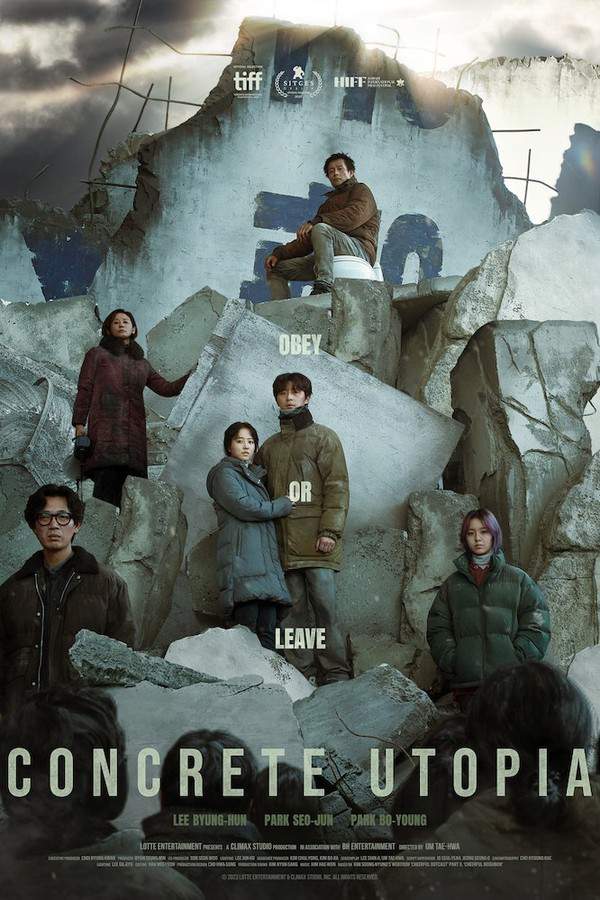
Movies about clashing values like Brave New World

Tragedies born from the irreconcilable conflict of fundamental beliefs. Viewers who appreciated the central conflict of values in Brave New World will enjoy these similar films. Discover more movies like this one, featuring protagonists whose humanist ideals lead them into direct, tragic conflict with the controlling structures around them.

  • thought-provoking
  • tragic
  • ideological
  • unrequited love
  • rebellion
  • melancholic
  • Tone: thought-provoking, dark, tragic
  • Pacing: steady, character-driven
Why these movies?

The story pattern: The plot follows a protagonist who carries a set of ideals—often rooted in art, literature, or humanism—into a world that operates on contradictory principles like efficiency, control, or hedonism. Their attempts to reconcile these differences or instigate change are met with resistance, leading to their emotional or physical isolation.

Why they belong together: These films are grouped by their exploration of profound thematic conflicts, a steady narrative pace that prioritizes ideas over action, and a consistently heavy emotional weight. They deliver a powerful, thought-provoking experience centered on the cost of maintaining one's identity in the face of overwhelming opposition.

If you liked this

Movies Like Brave New World

Similar movies to Brave New World: the same genre, themes or kind of story. Each one comes with its own plot summary, timeline and ending explained.

Browse all movie summaries

Every angle

Brave New World (1980) Explained: Plot, Timeline & Characters

Everything about Brave New World in one place: what happens in the plot summary, the timeline in chronological order, the characters and meaning and a spoiler-free summary. What's After the Movie adds the cast, box office and post-credit scenes.

Coming soon on iOS and Android

The Plot Explained Movie Summary App

Plot summaries, endings explained and timelines on your phone. Catch up on any movie in minutes, save your favorites and never miss a twist again.

Be the first to know when we launch. Your email stays private, always.

Learn more about the app