Plot Explained Spoilers guaranteed!
Plot Explained

Browse by genre

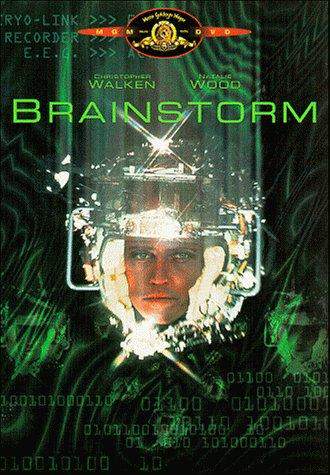
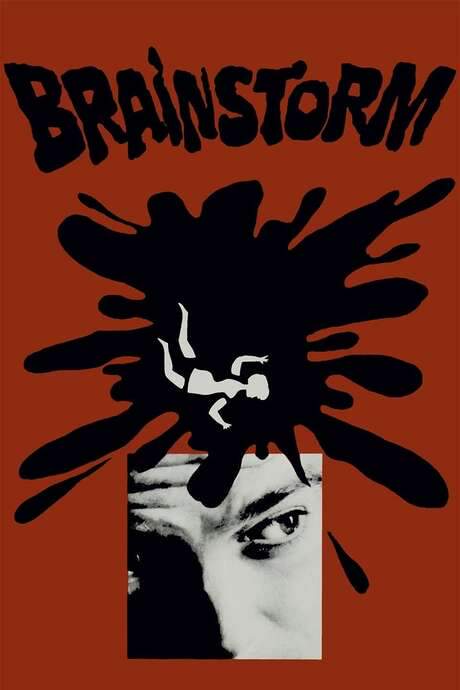
Brainstorm (1965) movie poster

Plot Summary

Brainstorm (1965) Plot Summary Explained

Release, runtime and language
1965 · 105 mins · English
JustWatch #3,009 14
Starring
Strother Martin, Dana Andrews, Byron Keith, Anne Francis, Leon Alton, Bill Quinn

The Most Fiendish Idea Ever Conceived By The Human Brain! Scientist Jim Grayam saves his boss’ wife from suicide but then falls in love with her.

On this page (6)
  1. 1 Where to watch
  2. 2 What happens: full plot
  3. 3 Plot questions answered
  4. 4 Movie threads
  5. 5 Movies like Brainstorm
  6. 6 Every angle

Where to watch

Where to Watch Brainstorm (1965)

Where can you watch Brainstorm? Stream, rent or buy it in the US, including on YouTube TV, Amazon Video and Apple TV Store: current JustWatch availability with up-to-date prices.

Streaming availability powered by JustWatch

Full plot summary · contains spoilers

What Happens in Brainstorm: Full Plot Summary

The whole story of Brainstorm (1965) explained, from the opening scene to the final frame: every key event, every twist and what it all adds up to. Read it as a quick recap before the sequel, to check a scene you missed, or to finally understand what really happened.

On a lonely highway, Jim Grayam, Jeffrey Hunter, spots a car stalled on a railroad crossing. Inside he finds a sleeping or unconscious woman with the doors locked. He smashes a window and pulls the car to safety just moments before a speeding train roars past.

Identifying her from a driver's license as Lorrie Benson, Anne Francis — the wife of Beverly Hills billionaire Cort Benson — he takes her to their sprawling mansion. Grayam is a respected systems analyst for Benson Industries, admired for his sharp mind and steady presence within the company. When she comes to, Lorrie makes it clear that she parked the car on the tracks on purpose as a suicide attempt, and she resents Grayam for saving her. Grayam, modest and unambitious about any reward, declines a $1,000 payout but finds himself drawn into the tangled web of her emotions.

Impressed that he didn’t rescue her for personal gain, the hard-drinking, impulsive Lorrie pulls Grayam into a scavenger hunt and soon begins a romantic affair with him. As their relationship grows more serious, Cort Benson, Dana Andrews, moves to undermine Grayam at work, insinuating that the once-promising employee is slipping into a nervous breakdown reminiscent of a past episode.

Dr. Elizabeth Larstadt, Viveca Lindfors, a psychoanalyst, is brought in to evaluate Grayam and concludes that he possesses a volatile personality beneath the surface. The tension between Lorrie and Cort intensifies as she contemplates leaving him, but Cort makes it clear he will not permit her to take their young child.

Driven by a dangerous plan, Grayam discusses murder and a cunning setup that would make any act of violence look like insanity. His aim is to kill Cort Benson, yet to do so in a way that he himself would be deemed unfit for trial and committed to a psychiatric institution rather than facing capital punishment.

The scheme appears to work. Dr. Larstadt’s testimony helps land Grayam in a sanatorium instead of a courtroom, and he begins to map out a slow, meticulous course to prove he can be released back into society. But as the weeks pass, the presence of other inmates erodes his composure; when Lorrie finally visits, he discovers she has found another man in her life, shaking the foundations of his carefully laid plan.

A desperate Grayam resolves to escape. He confides in Dr. Larstadt, now convinced she is the only one who truly understands him, and even declares his love for her. Yet the doctor is calculating, using his fragile state to confirm her assessment of his instability. As events spiral, hospital security guards ultimately carry him away.
Last updated: October 09, 2025 at 11:19

Was this helpful?

Plot questions answered

Brainstorm Plot Explained: Your Questions Answered

The questions people ask most about Brainstorm (1965): what happens in the confusing scenes, why the characters do what they do, the twists, hidden details and what the ending means. Each answer contains spoilers.

Q1

Why did Lorrie Benson try to kill herself on the railroad tracks?

Lorrie Benson parked her car on the railroad tracks intentionally as a suicide attempt. The exact reasons for her despair are tied to her unhappy marriage to the wealthy but controlling Cort Benson. When she wakes up after being rescued, she explicitly tells Jim Grayam that she resents him for saving her life, indicating she genuinely wanted to end her life rather than be rescued.

Foreshadowing: The summary hints at her dependency and emotional instability from the moment she awakens and resentfully rejects Grayam's rescue.

  • lorrie benson
  • suicide
  • railroad crossing
  • attempt
  • marriage
  • cort benson
Q2

Why did Jim Grayam fall in love with Lorrie after she was hostile toward him?

Grayam was drawn to Lorrie because he saw her as genuinely needing help, not for personal gain. When he declined the $1,000 reward and demonstrated selfless rescue, Lorrie became impressed and pursued him romantically through a scavenger hunt. Her vulnerability and the intensity of her emotions created a magnetic pull that Grayam couldn't resist, despite her initial hostility.

Foreshadowing: The rescue itself was the catalyst, Grayam's act of saving her without expectation of reward is what changed her perception of him.

  • jim grayam
  • lorrie benson
  • romance
  • affair
  • rescue
  • attraction
Q3

How did Cort Benson try to ruin Jim Grayam at work?

Cort Benson attempted to destroy Grayam's professional reputation by spreading rumors that he was having a nervous breakdown, referencing a past episode of instability. This smear campaign was designed to discredit Grayam both at Benson Industries and in any potential legal or psychological evaluation, making him appear mentally unfit rather than a wronged employee having an affair with his wife.

Foreshadowing: Cort's tactic of using Grayam's past psychological history against him sets up the later events where mental instability becomes central to Grayam's murder scheme.

  • cort benson
  • jim grayam
  • benson industries
  • smear campaign
  • reputation
  • nervous breakdown
Q4

What was Jim Grayam's plan to kill Cort Benson?

Grayam devised an elaborate scheme to murder Cort Benson while making it appear as an act of insanity. The purpose was to avoid the death penalty, instead of facing execution, he would be declared mentally unfit for trial and committed to a psychiatric institution. From there, he planned to slowly prove he was safe to release, essentially getting away with murder while serving minimal time.

Foreshadowing: Earlier, Dr. Larstadt's evaluation of Grayam as having a volatile personality, combined with Cort's claims about his nervous breakdown, gave Grayam the foundation to stage a fake psychotic break.

  • jim grayam
  • cort benson
  • murder
  • insanity
  • plan
  • psychiatric institution
  • sanatorium
Q5

Why was Jim Grayam sent to a sanatorium instead of prison?

Grayam's plan succeeded because Dr. Elizabeth Larstadt's testimony helped convince the court that he was mentally unstable. Rather than standing trial for murder, he was committed to a sanatorium. Grayam believed he could then work through the system to prove his sanity and be released, effectively escaping capital punishment while maintaining his freedom long-term.

Foreshadowing: Dr. Larstadt's earlier assessment of Grayam as having a volatile personality became the key evidence used against him in court.

  • jim grayam
  • sanatorium
  • prison
  • dr. larstadt
  • testimony
  • insanity
  • commitment
Q6

What happened when Lorrie visited Jim Grayam in the sanatorium?

When Lorrie finally visited Grayam in the sanatorium, he discovered she had found another man in her life. This betrayal shattered the foundations of his carefully laid plan, as his entire scheme was motivated by their relationship and his desire to be with her. The news compounded his desperation and isolation within the institution.

Foreshadowing: Earlier hints of Lorrie's emotional volatility and independence suggested she was not one to wait indefinitely for someone institutionalized.

  • lorrie benson
  • jim grayam
  • sanatorium
  • visit
  • betrayal
  • new man
Q7

Why did Dr. Larstadt listen to Grayam's confession of love?

Dr. Larstadt remained professionally detached while listening to Grayam's confession because she was testing his claim of mental imbalance. She used his vulnerable state to confirm her assessment of his instability and to determine whether he was safe to release. Her clinical distance was a strategic move to verify her diagnosis, not genuine emotional engagement.

Foreshadowing: Throughout the film, Dr. Larstadt's role as evaluator made her interactions with Grayam inherently clinical and calculated.

  • dr. larstadt
  • jim grayam
  • confession
  • love
  • clinical
  • assessment
  • motive
Q8

What happened to Jim Grayam at the end of the movie?

At the end of the movie, Jim Grayam attempts to escape from the sanatorium but is thwarted by hospital security guards who carry him away. His plans have completely backfired, he is trapped in the institution, betrayed by Lorrie, and his elaborate murder scheme has resulted in his own confinement rather than freedom.
Foreshadowing: The erosion of his composure from interactions with other inmates had been slowly building throughout his institutionalization, foreshadowing his breakdown and failed escape.

  • jim grayam
  • escape
  • sanatorium
  • security guards
  • caught
  • finale
  • ending

Movie threads

More Movies Like Brainstorm, by Mood & Story

Curated lists built around what makes Brainstorm tick: the same mood, the same kind of story or the same emotional payoff. Each list explains why these movies belong together.

Moral collapse thrillers like Brainstorm

Stories about ordinary people unraveling as their own schemes consume them. If you liked Brainstorm for its portrayal of a man destroyed by his own criminal scheme, you'll find similar movies here. These thrillers explore the psychological toll of manipulation and betrayal, often featuring bleak endings where characters are trapped by their own designs.

  • desperate
  • manipulative
  • unsettling
  • paranoid
  • anxious
  • claustrophobic
  • Tone: dark, paranoid
  • Pacing: steady, deliberate
Why these movies?

The story pattern: Narratives in this thread typically follow a linear but increasingly intense downward spiral. A character, often driven by desire or desperation, sets a deceptive plan in motion. The central conflict becomes internal as much as external, as guilt, paranoia, and the fear of exposure lead to their ultimate mental and emotional undoing.

Why they belong together: Movies are grouped here for their shared focus on a protagonist's self-inflicted psychological destruction. They share a dark tone, a steady pace that builds dread, and a heavy emotional weight stemming from themes of betrayal, manipulation, and the failure of a desperate gambit.

Gaslighting thrillers with bleak endings like Brainstorm

Tense stories where characters are gaslit and imprisoned by a fabricated reality. Movies like Brainstorm that feature themes of false accusations and psychiatric confinement. If you were captivated by the protagonist's desperate fight against a manufactured diagnosis, these similar stories of psychological entrapment and manipulation will resonate.

  • anxious
  • claustrophobic
  • unsettling
  • paranoid
  • desperate
  • manipulative
  • Tone: dark, unsettling
  • Pacing: steady
Why these movies?

The story pattern: The narrative pattern involves a protagonist being systematically isolated and discredited. An antagonist, or a systemic force, uses manipulation and deceit to frame the hero as unstable or guilty. The story generates tension from the protagonist's futile struggle to prove their sanity or innocence against overwhelming, fabricated evidence.

Why they belong together: These films are united by the core theme of gaslighting and institutional betrayal. They create an anxious, claustrophobic mood through the protagonist's helplessness and share a dark tone with heavy emotional weight, culminating in a sense of injustice or bleak resignation.

If you liked this

Movies Like Brainstorm

Similar movies to Brainstorm: the same genre, themes or kind of story. Each one comes with its own plot summary, timeline and ending explained.

Browse all movie summaries

Every angle

Brainstorm (1965) Explained: Plot, Timeline & Characters

Everything about Brainstorm in one place: what happens in the plot summary, the timeline in chronological order, the characters and meaning and a spoiler-free summary. What's After the Movie adds the cast, box office and post-credit scenes.

Coming soon on iOS and Android

The Plot Explained Movie Summary App

Plot summaries, endings explained and timelines on your phone. Catch up on any movie in minutes, save your favorites and never miss a twist again.

Be the first to know when we launch. Your email stays private, always.

Learn more about the app