Plot Explained Spoilers guaranteed!
Plot Explained

Browse by genre

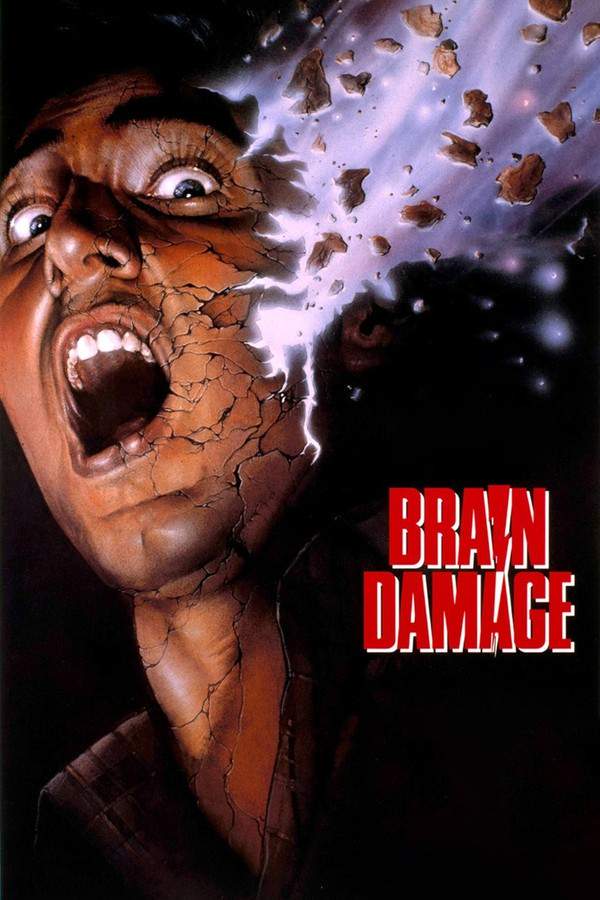
Brain Dead (1990) movie poster

Timeline

Brain Dead (1990) Timeline Explained – Every Event in Order

Release, runtime and language
1990 · 85 min · English
Loading streaming availability…
Directed by
Adam Simon
Starring
George Kennedy, Bill Pullman, Bill Paxton, Bud Cort, Brian Brophy, Nicholas Pryor

A group of survivors find themselves facing a terrifying threat when a mysterious force turns ordinary people into monstrous, brain-controlled zombies. Seeking refuge in a secluded fishing lodge, they struggle to survive against the relentless attacks of these grotesque, amoeba-like creatures. As the horde closes in, they must fight to protect themselves and uncover the source of this otherworldly invasion.

On this page (6)
  1. 1 Where to watch
  2. 2 Events in order (14)
  3. 3 Timeline questions answered
  4. 4 Movie threads
  5. 5 Movies like Brain Dead
  6. 6 Every angle
Loading streaming availability…

14 events in order · contains spoilers

Brain Dead Timeline: Events in Chronological Order

Every key event of Brain Dead (1990) in order, scene by scene, with when and where it takes place. Use it to untangle flashbacks, time jumps and parallel storylines, to refresh your memory before the sequel or to find the exact scene you are thinking of.

  1. Opening in Rex Martin's lab

    The film opens with Dr. Rex Martin entering his office as the lab equipment shows the 8 turned sideways into an infinity symbol. Berkovitch, his assistant, toys with a removed brain, mapping facial muscles while Martin takes over. Berkovitch accidentally knocks over Philip Montag's brain, and Martin quips that the place won't be the same without him.

    When
    Opening
    Where
    Martin's laboratory
  2. Jim Reston requests help to mind-link with Halsey

    Jim Reston, a high school friend and successful businessman, visits Martin and asks him to reach into the mind of John Halsey, a former genius mathematician now paranoid at a nearby asylum. Reston reveals that Eunice funding could give Martin the freedom to operate on Halsey. The request sets the central goal of the film: to alter a mind with unquenchable paranoia.

    When
    Early
    Where
    Martin's office
  3. Halsey the paranoid patient at the asylum

    Martin meets Halsey, who is convinced that Conklin is spying on him and intends to kill him. A series of tests confirms that Halsey is indeed paranoid and unraveling his grip on reality. The encounter makes clear the high stakes of the planned procedure.

    When
    During visit
    Where
    Asylum
  4. Eunice funding and the promise of a breakthrough

    Reston explains that Eunice is backing Martin's work, giving him room to operate on Halsey. The aim is to alter Halsey's mental attitude and potentially unlock the corporate secrets within his brain. The ethical line is blurred as money influences the pursuit of a cure.

    When
    Following the meeting
    Where
    Boardroom/Lab
  5. Martin carries a jarred brain home

    After a meeting, Martin leaves with a jarred brain, intent on bringing it home. A homeless man attacks him, convinced the jar contains his own brain. In the struggle, Martin loses his grip, and a car from Conklin Mattress Company strikes him, cracking the windshield.

    When
    After meeting
    Where
    City street
  6. Martin wakes up in the hallway

    Martin regains consciousness in his hallway and sees the infinity symbol now upright. He discovers his grant and lab funding have vanished, and he ejects the scientists from the facility. The chaos culminates as jars fall from the wall, scattering the preserved brains.

    When
    Right after the accident
    Where
    Lab hallway
  7. Halsey’s past murders revealed

    It is revealed that Halsey killed his wife, two children, and three research assistants, a revelation that casts doubt on the ethics and outcomes of the procedure. The information deepens the moral murk surrounding the project and Halsey himself. Martin absorbs this as the case becomes more complex.

    When
    During investigation
    Where
    Boardroom/office
  8. Planning the brain procedure

    Martin convinces Halsey to undergo the procedure, setting up the operation in a boardroom style montage. The plan is to stimulate the brain in a way that could reveal secrets or alter mental state in a controlled manner. The moment marks the transition from theory to a dramatic operation.

    When
    During planning
    Where
    Boardroom
  9. The surgery shows through Halsey’s eyes

    During the operation, the narrative shifts to Halsey's perspective, showing how each stimulation changes location, sounds, and people involved. The experience reveals the fragility of perception and how a mind can be redirected without overt dialogue. The process demonstrates the surgical premise of altering memory and mind state.

    When
    During surgery
    Where
    Surgical suite
  10. Surgery seems successful

    The procedure appears to restore Halsey's sanity and bring back his mathematical genius, at least temporarily. Martin believes the breakthrough has been achieved and the team breathes a sigh of relief. The moment also hints at the cost of meddling with a mind.

    When
    Post-surgery
    Where
    Surgical suite
  11. Martin's paranoid dreams begin

    After finishing the surgery, Martin starts experiencing the same paranoid dreams that haunted Halsey, seeing Conklin in the surgical room after the fact. The visions grow more intense, blurring the line between doctor and patient. He begins to doubt his own reality and the nature of his work.

    When
    After surgery
    Where
    Hospital/clinic
  12. Reality and identity blur

    The dreams escalate and it becomes unclear whether Martin is still the surgeon or has become the patient of his own creation. The plot intensifies as the narrative questions what is real and what is imagined. The hospital setting becomes a maze of paranoia.

    When
    Late in the sequence
    Where
    Hospital
  13. The twist: Martin dies and becomes a brain

    It is revealed that Martin died from injuries sustained in the car wreck earlier. The final implication is that his consciousness persists as a sentient brain in a jar. The twist reframes the entire story as a fate of a mind unmoored from the body. The final transition challenges the viewer's sense of reality.

    When
    Epilogue
    Where
    Lab
  14. Final image: brain in a jar

    The film closes with the image of the brain preserved in a jar, a stark reminder that a mind can outlive the body in unsettling fashion. The ending leaves questions about memory, identity, and the nature of consciousness. This final reveal ties back to the infinity symbol motif and the title's ominous implications.

    When
    End
    Where
    Lab

Last updated: November 22, 2025 at 15:58

Was this helpful?

Timeline questions answered

Brain Dead Timeline Explained: Your Questions Answered

When does it happen, and why in that order? The questions people ask about the chronology of Brain Dead (1990): time jumps, flashbacks, cause and effect between scenes and the correct order of events, each answered with spoilers.

Q1

Why does Rex Martin start having the same paranoid visions as John Halsey?

The film suggests that Martin's consciousness becomes entangled with Halsey's during the experimental brain procedure. When Martin stimulations Halsey's brain to alter his mental state, the boundary between doctor and patient blurs, Martin begins experiencing Halsey's paranoid delusions, particularly seeing Conklin in the surgical room. This shared consciousness may be a result of the experimental nature of the procedure, or it may hint that Martin has actually died and his mind is experiencing Halsey's reality.

Foreshadowing: Earlier scenes show the infinity symbol in Martin's lab, suggesting reality itself is fluid and cyclical.

  • rex martin
  • john halsey
  • paranoid visions
  • consciousness
  • mind procedure
Q2

What does Eunice Corporation want from John Halsey?

Eunice Corporation is funding Martin's research and wants him to unlock secrets allegedly buried in Halsey's brain. Halsey was once a mathematical genius who worked for or with Eunice, and the company believes his mind contains valuable corporate information, possibly formulas, algorithms, or other intellectual property. Jim Reston, a Eunice executive and Martin's friend, pushes for the procedure specifically to extract these secrets, making the experiment as much about corporate espionage as medical treatment.

Foreshadowing: Reston emphasizes that Eunice funding gives Martin 'freedom' to operate, hinting at ulterior motives beyond patient welfare.

  • eunice
  • john halsey
  • corporate secrets
  • jim reston
  • funding
Q3

What is the connection between the Conklin Mattress Company car and the plot?

The Conklin Mattress Company car that strikes Martin is a key plot device that raises questions about whether the accident is coincidence or conspiracy. John Halsey is paranoid about a man named Conklin spying on him and intending to kill him. The car appearing immediately after Martin's encounter with the homeless man creates suspicion that Conklin may have orchestrated the attack. However, the film leaves this ambiguous, it's never fully clarified whether Conklin is a real threat or purely a manifestation of Halsey's delusion.

Foreshadowing: Halsey's paranoid claims about Conklin gain weight when the car involved in Martin's accident belongs to Conklin Mattress Company.

  • conklin
  • car accident
  • john hasley
  • mattress company
  • conspiracy
Q4

Did Rex Martin actually die in the car accident?

Yes, the twist ending reveals Martin died from injuries sustained in the car accident earlier in the film. His consciousness persists as a sentient brain kept alive in a jar, which explains why his reality becomes increasingly unstable and dreamlike. The film reframes the entire second half as Martin's disembodied experience, blurring the line between his continued medical work and a posthumous existence.

Foreshadowing: After the accident, Martin sees the infinity symbol in his lab reset, and his funding mysteriously vanishes, suggesting a shift in the nature of his reality.

  • rex martin
  • death
  • twist ending
  • brain in jar
  • car accident
Q5

Why did John Halsey kill his family?

The film reveals that Halsey murdered his wife, two children, and three research assistants, but the exact motivation is left ambiguous. His paranoid delusion likely drove him to perceive his family and colleagues as threats, Halsey believed Conklin was spying on him and intended to kill him, so he may have acted preemptively against those closest to him. The murders establish Halsey as genuinely dangerous rather than simply misunderstood, raising ethical questions about whether the procedure should restore his genius.

Foreshadowing: During the asylum visit, Halsey's paranoia appears genuine and unsettling, hinting at deeper violence beneath the surface.

  • john halsey
  • murders
  • family
  • paranoia
  • violence
Q6

How does the experimental brain procedure work on Halsey?

The procedure involves electrically stimulating specific areas of Halsey's brain while he remains conscious, altering his mental state and perception. The film shows this from Halsey's perspective, each stimulation changes his environment: location, sounds, and even the people present. The goal is twofold: to reduce his dangerous paranoia and to potentially unlock corporate secrets stored in his mind. The surgery initially appears successful, restoring Halsey to a coherent mathematician.

Foreshadowing: Martin's earlier brain research with the disembodied face demonstrates the technology exists to map and manipulate neural activity.

  • brain surgery
  • halsey
  • procedure
  • stimulation
  • mind alteration
Q7

What does the brain in a jar ending signify?

The ending presents Martin's consciousness surviving his body after death, preserved artificially in a jar, a fate that mirrors the experiments he conducted on brains in his lab. This creates a dark irony: the researcher becomes the subject. It also ties to the infinity symbol motif, as Martin's mind now exists in an endless, disembodied loop. The image raises questions about whether consciousness can truly survive physical death, and whether Martin's work represents healing or a new form of captivity.

Foreshadowing: The opening shows Martin working with brains in jars, establishing this as his professional world before he becomes part of it.

  • brain in jar
  • ending
  • consciousness
  • immortality
  • irony
Q8

What is the significance of the infinity symbol in the film?

The infinity symbol (the number 8 turned sideways) appears on Martin's equipment at key moments, at the opening and after his accident. It represents the film's themes of looping reality, cyclical perception, and the blurred line between doctor and patient. When the symbol is sideways, reality is destabilized; when upright, things seem normal. This visual motif underscores the film's central question of whether what we're seeing is real or a constructed mental landscape.

Foreshadowing: The symbol's orientation changes after Martin's accident, signaling a fundamental shift in his perception of reality.

  • infinity symbol
  • motif
  • reality
  • loop
  • visual theme
Q9

What happens to John Halsey after the surgery?

Following the procedure, Halsey's paranoia appears to subside and his mathematical genius returns, at least temporarily. He becomes coherent and functional again, leading Martin to believe the surgery was a breakthrough. However, the long-term outcome remains unclear, and the film focuses more on Martin's deteriorating state than Halsey's fate. The moral cost of the procedure becomes questionable given Halsey's violent history.

Foreshadowing: The boardroom montage shows the procedure affecting Halsey's perception in real-time, shifting locations and people around him.

  • john halsey
  • surgery outcome
  • recovery
  • mathematics
  • fate

Movie threads

More Movies Like Brain Dead, by Mood & Story

Curated lists built around what makes Brain Dead tick: the same mood, the same kind of story or the same emotional payoff. Each list explains why these movies belong together.

Claustrophobic siege thrillers like Brain Dead

Trapped characters face a threat that attacks both their bodies and their sanity. If you liked the paranoid dread and confined setting of Brain Dead, this list features movies where characters are trapped and facing a threat that blurs the line between internal and external horror. Discover similar stories of psychological survival under siege.

  • claustrophobic
  • paranoid
  • unsettling
  • anxious
  • surreal
  • existential dread
  • Tone: dark, paranoid, tense
  • Pacing: variable, building tension
Why these movies?

The story pattern: Stories typically begin with a group seeking shelter, only to find their refuge becomes a trap. The narrative tension escalates from external threats to internal psychological breakdowns, where trust erodes and perception of reality becomes a key battleground for survival.

Why they belong together: These movies are grouped by their shared atmosphere of intense claustrophobia, a mix of physical and psychological danger, and a focus on how extreme stress reveals the fragility of the human mind. They deliver a potent cocktail of visceral fear and existential dread.


Mind-bending horror movies like Brain Dead

Stories where the line between hallucination, memory, and truth completely dissolves. Fans of Brain Dead's exploration of blurred reality and psychological disintegration will find more movies here that challenge perception. These films delve into themes of identity crisis, experimental science, and the terrifying fragility of the human mind.

  • surreal
  • unsettling
  • dreamlike
  • existential dread
  • psychological
  • identity crisis
  • Tone: dark, surreal, bleak
  • Pacing: variable, methodical with jarring bursts
Why these movies?

The story pattern: The narrative often follows a protagonist, frequently linked to science or medicine, whose investigation into a bizarre phenomenon leads to their own psychological undoing. The plot structure is typically complex, using surreal imagery and unreliable narration to mirror the character's mental fragmentation.

Why they belong together: They are united by a core theme of reality's dissolution, often exploring the dark consequences of tampering with the brain or consciousness. The viewing experience is defined by a persistent, unsettling ambiguity and a heavy emotional weight centered on the loss of self.

If you liked this

Movies Like Brain Dead

Similar movies to Brain Dead: the same genre, themes or kind of story. Each one comes with its own plot summary, timeline and ending explained.

Browse all movie summaries

Every angle

Brain Dead (1990) Explained: Plot, Timeline & Characters

Everything about Brain Dead in one place: what happens in the plot summary, the timeline in chronological order, the characters and meaning and a spoiler-free summary. What's After the Movie adds the cast, box office and post-credit scenes.

Coming soon on iOS and Android

The Plot Explained Movie Summary App

Plot summaries, endings explained and timelines on your phone. Catch up on any movie in minutes, save your favorites and never miss a twist again.

Be the first to know when we launch. Your email stays private, always.

Learn more about the app