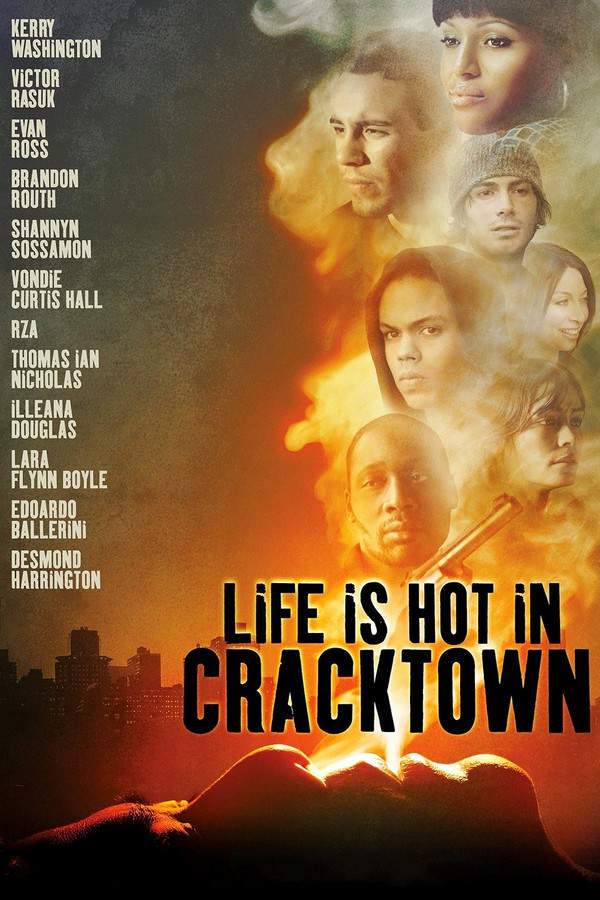
J, a former hair dresser, finds himself torn from the life he once knew. He has broken up with his wife and drifted into aimlessness, a habit of chasing drug highs that leads him through the neon-lit pulse of Times Square. He sustains his new existence by dealing drugs on the side for Vivian, a fierce and formidable dealer who runs a tight, intimidating operation. In his view, life should be about love and peace, but his days are a chaotic jumble of petty schemes and wrong turns. Along with his junkie friend Billy Dynamite, he hatches a plan to crack the safe behind a cashier’s back, hoping for a quick score. The plan collapses in a mess of panic and miscalculation, and the pair scatter in a frantic, disordered retreat.
One day, while trying to hot-wire the warmth of a car, J crosses paths with Parm, a free-spirited woman who takes an instant fondness for him. She invites him into her apartment, and despite J’s initial intent to raid what she has, the encounter blossoms into something warmer than he expected. As they grow closer, Parm’s curiosity about his life peels back the rough edges of J’s facade. Their growing bond is punctuated by a moment of intimacy where Parm notices a tattoo on J’s arm that reads “Born to Win.” The simple inscription becomes a mirror to J’s pride, a small beacon of self-affirmation in a life built on risk and deception.
Back in his routine, J’s habit takes on a heavier, more consuming shape. After delivering drugs to Stanley, a senior figure in Vivian’s supply chain, the couple’s next scheme is to reclaim stolen drugs from Stanley’s girlfriend. The plan lurches into danger when two dirty policemen appear, forcing J to choose between continued crime and a jail sentence. He consents to work as a narc, reporting back to the officers on Vivian’s operations, a compromise that taints his conscience and tightens Vivian’s grip on him.
Stanley closes in, and J barely slips away from his men, shaken but not broken. The couple heads beyond the city’s edge, making a delivery to an airport before slipping to a quiet beach on Long Island. There, for a brief moment, the world seems to soften—the salty air, the horizon, the ache of a romance that feels almost possible. Yet the return to the city brings with it the same relentless pressure: payments are due, tests are failing, and every hand’s turn threatens exposure. The detectives press J to arrange a meeting with Vivian, who smells a trap and refuses to strike a deal, leaving J suspended in a web of coercion and fear.
J finds a whisper of hope again when he reconnects with Billy. Billy speaks with a brutal honesty about the solace their chosen path provides—the certainty of purpose that comes with their dangerous lifestyle. The moment is short-lived, however. In a tense scene inside an office building, Billy injects himself with drugs that were meant for J, a deadly mistake that ends with Billy’s death. The sight of his friend’s lifeless body triggers panic, and J abandons Billy, leaving him behind in the elevator’s cold quiet.
Desperate and guilt-ridden, J and Parm attempt one last escape from the city, but the detectives reappear, planting drugs on Parm and pulling her into custody. With the trap closing in, J’s world continues to unravel. He spirals deeper into self-loathing, drifting into Vivian’s club where he is offered free drugs—an offer that feels perilously close to a fatal “hot shot.” As the danger tightens around him and his future becomes uncertain, J sits alone on a bench in Times Square, surrounded by massed lights and the hum of the city, contemplating what comes next and whether there can ever be a way out of the life he has chosen. In the end, the film leaves him in a suspended, fragile moment, a man on the brink with his fate as unsettled as the city that never stops moving.