Plot Explained Spoilers guaranteed!
Plot Explained

Browse by genre

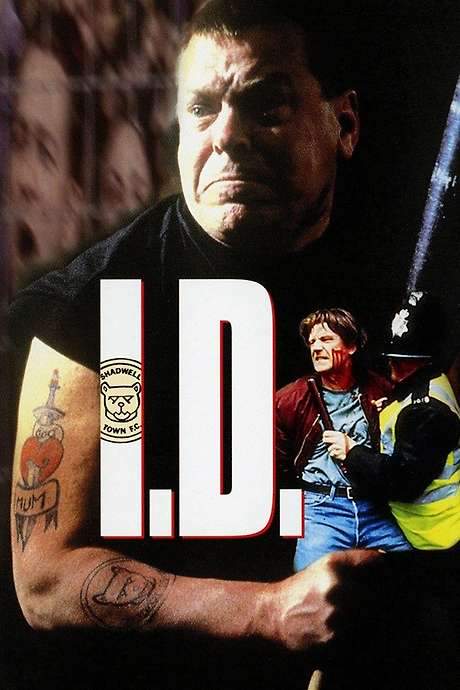
I.D. (1995) movie poster

Plot Summary

I.D. (1995) Plot Summary Explained

Release, runtime and language
1995 · 107 mins · English
Loading streaming availability…
Starring
Reece Dinsdale, Steve Toussaint, Richard Graham, Eric Allan, Lee Ross, Claire Skinner

When you go undercover, remember who you are. Four police officers infiltrate a football hooligan gang to locate its leaders. As the operation progresses, one officer finds the distinction between his duty and the violent lifestyle increasingly blurred.

On this page (6)
  1. 1 Where to watch
  2. 2 What happens: full plot
  3. 3 Plot questions answered
  4. 4 Movie threads
  5. 5 Movies like I.D.
  6. 6 Every angle
Loading streaming availability…

Full plot summary · contains spoilers

What Happens in I.D.: Full Plot Summary

The whole story of I.D. (1995) explained, from the opening scene to the final frame: every key event, every twist and what it all adds up to. Read it as a quick recap before the sequel, to check a scene you missed, or to finally understand what really happened.

Set in 1988, John, an ambitious young police officer in the Metropolitan Police, is sent undercover along with colleagues Trevor, Eddie and Charlie to join a violent football firm attached to Shadwell Town Football Club. Their mission is to track down the “generals” who orchestrate the violence. Posing as painters and decorators, John and Trevor begin frequenting the main hooligan pub, The Rock, at lunch and later on match days. After getting acquainted with barmaid Lynda and a few regulars, they start attending matches with hooligans Martin, Nik and Gumbo, Gumbo. A pub crawl turns into a clash with Arsenal fans, setting a brutal tone that will echo through the story.

When a bus of Midchester fans rolls by, John realizes the danger and rushes out, only to have the bus ambushed by the Shadwell firm that has trailed him from the pub. Firm leader Bob—initially wary of John—begins to see him as a weapon to wind up the other side, praising him for leading the charge against the away supporters. The culture surrounding the clashes—drinking, bravado, and the unchecked hunger for control—begins to pull John toward the adrenaline-fueled dark side he was supposed to expose.

As John becomes more enmeshed in the world of football violence, the line between officer and thug blurs. He and Trevor glean details about upcoming fights, and Trevor uses a payphone to alert the police. When the information reaches the wrong ears, arrests follow and the operation tightens. Martin grows suspicious, accusing John and Trevor of being undercover cops, while John works to maintain his cover—at one point even feigning illiteracy during a pub-quiz machine challenge to sell the deception. The pressure strains John’s marriage to Marie, Marie, and the trust of his colleagues. Their relationship fractures as John pulls away, leading to a violent confrontation when he tries to force an act of intimacy during a heated argument at home.

The next round of the FA Cup sees Shadwell travel to their local rivals, Wapping. Bob invites John and Trevor to move with the home fans, hoping to trigger another riot. Martin and Nik call them reckless and dangerous, while Trevor, alarmed by the danger around them, panics and withdraws from the plan. A fierce brawl erupts, and though John is briefly detained by police, he escapes and slips back into the Shadwell end, where he is greeted as a hero by his new brothers in arms. Marie plans a beach holiday, but the strain of John’s double life erupts into a standoff with her parents, and she returns to their care. John, embittered and falling deeper into the role he was supposed to dismantle, begins an affair with Lynda, the woman who first offered him a human connection amid the chaos.

In a subsequent match against Tyneburn, the tide turns violently. The stadium stands erupt into chaos as shards and darts fly into the crowd. Gumbo is hurt, and Martin and Nik attempt to scale the fence only to be brought down by police. After the game, the firm chases Tyneburn fans into a deserted market, where a lethal confrontation unfolds. With Shadwell outnumbered, John and Martin charge the armed mob, and the tragedy culminates when a Tyneburn fan is fatally stabbed. CCTV footage later reveals John’s involvement, though Trevor tampers with the tape to protect him.

Back at The Rock, Bob hints that a higher-level contact, Wynton, wants a word with John. The next morning, John returns to the investigation HQ to learn that the operation is being shut down. He and Trevor are commended for their work but must spend weeks doing beat duty. A licensing department official confirms that the evidence gathered has helped shut down The Rock. John returns to Lynda’s house, only to be confronted by her anger at the closure of the venue and the exposure of his undercover life.

Now a changed man, John struggles with sobriety as his marriage collapses. He is consumed by alcoholism and eventually descends into self-destructive behavior, trashing his home and turning to cocaine. The closing minutes pull the viewer into a haunting, unsettled space: a Neo-Nazi march snakes through the streets, and Trevor watches from the side. John, hollow and resolutely deep in his undercover persona, meets Trevor with a cool, impenetrable reticence. When Trevor asks what he’s doing, John replies that he is still working undercover. The final image is deliberately ambiguous: John stands at attention, performs a Nazi salute, and chants “>Sieg hiel” over and over, leaving the audience to question whether the man can ever escape the slope he has slid down or the method he chose to catch criminals that may have ultimately consumed him.

The film presents a stark, lucid portrait of how a person forged to infiltrate a violent world can become indistinguishable from the violence he seeks to expose. It threads together camaraderie, betrayal, and the frailty of identity, underscored by the era’s rough-edged culture and the moral ambiguity that accompanies undercover work. The tension remains constant as the audience watches how a duty-bound officer’s mission turns into a personal crisis, and how the pursuit of justice can morph into something unrecognizable, even when the goal appears to be admirable.

Last updated: October 09, 2025 at 09:18

Was this helpful?

Plot questions answered

I.D. Plot Explained: Your Questions Answered

The questions people ask most about I.D. (1995): what happens in the confusing scenes, why the characters do what they do, the twists, hidden details and what the ending means. Each answer contains spoilers.

Q1

Why did John become so consumed by the hooligan lifestyle?

John's transformation happened gradually through a combination of factors: the adrenaline and camaraderie of violence, his need to maintain his cover by proving himself to the firm, and the intoxicating escape from his mundane police duties. Bob's praise labeled him a hero after the bus ambush, which validated his violent actions within the gang. Over time, prioritizing match days and fights over his marriage and job became habitual, and the underground identity offered an escape from his actual life pressures. The mission's toll manifested in personal betrayals as he let the undercover role consume his original identity.

Foreshadowing: The brutal pub crawl brawl with Arsenal fans early on established the violent culture that would gradually pull John in.

  • john transformation
  • undercover cop
  • hooligan lifestyle
  • identity loss
  • psychological breakdown
Q2

What happened to the Tyneburn fan who was stabbed?

During the confrontation at Tyneburn Stadium, Shadwell hooligans chased Tyneburn fans into a deserted market area. A lethal confrontation unfolded where a Tyneburn fan was fatally stabbed. CCTV footage later revealed John's involvement in the stabbing. However, his colleague Trevor erased the tape to protect him from criminal conviction, allowing John to escape legal consequences despite the murder being caught on camera.

Foreshadowing: Earlier violence escalated progressively, from the pub crawl brawl to the bus ambush to the Wapping riot, building toward this lethal outcome.

  • tyneburn stabbing
  • fatal stabbing
  • cctv footage
  • john violence
Q3

Why did Trevor erase the CCTV footage of the stabbing?

Trevor erased the CCTV footage to protect John from being convicted of murder. Despite being colleagues in the same undercover operation, Trevor made the choice to cover for John's involvement in the fatal stabbing, prioritizing their partnership and loyalty over justice. This act of solidarity ultimately enabled John's continued freedom but also contributed to the moral ambiguity of the story's conclusion.

Foreshadowing: Trevor's earlier use of a payphone to alert police showed his commitment to the mission, making his later decision to protect John even more significant and morally complex.

  • trevor
  • cctv tape
  • cover up
  • loyalty
  • moral ambiguity
Q4

Did the undercover operation succeed or fail?

The operation achieved mixed results. The team successfully gathered enough evidence to shut down The Rock pub, the central hub of the Shadwell hooligan firm. However, the operation fundamentally failed in its purpose, John, the officer sent to expose the violent culture, became indistinguishable from the criminals he targeted. He was commended and returned to beat duty, but the mission consumed his identity. The closing scene showing John at a Nazi march demonstrated that while the police technically succeeded in shutting down one venue, they lost their officer to the very darkness he was meant to combat.

Foreshadowing: Bob's warning that any targets spotting the officers in uniform could kill them foreshadowed the incomplete nature of the operation's success.

  • undercover operation
  • success
  • failure
  • the rock shut down
  • police mission
Q5

Why did John begin an affair with Lynda?

John's affair with Lynda developed because she was the first person to offer him genuine human connection in the chaotic world he was inhabiting. As his marriage to Marie deteriorated due to his withdrawal and the strain of his double life, John sought comfort in the one place where he felt understood. The affair represented another layer of his identity collapse, lying to Lynda about his true profession while simultaneously betraying his wife. Lynda later revealed she always suspected he was a policeman, making their relationship a mutual deception from the start.

Foreshadowing: Lynda's initial warmth toward John at The Rock, offering him a human connection amid the chaos, planted the seeds for their later romantic involvement.

  • john affair
  • lynda
  • marriage collapse
  • betrayal
  • double life
Q6

Who is Wynton and what did he want from John?

Wynton was a higher-level criminal contact introduced to John by Bob at The Rock pub. Wynton hinted at wanting to use John in the underworld and handed him drugs, essentially offering him a role in broader criminal enterprises beyond football violence. This moment represented John's transition from infiltrating hooligans to being recruited by actual criminals, a dangerous escalation that further blurred the lines between his undercover persona and criminal activity.

Foreshadowing: Bob's earlier praise of John as a weapon to wind up other sides established John as valuable to criminal networks beyond just the hooligan firm.

  • wynton
  • drug offer
  • underworld
  • criminal network
  • bob
Q7

What does the final Nazi salute scene mean?

The final Nazi salute represents the complete destruction of John's identity. Whether John has genuinely become a Neo-Nazi or is still performing his undercover role remains deliberately ambiguous, the film never confirms which is true. The disturbing implication is that after months of immersion in violent far-right football culture, John can no longer distinguish between his true self and the persona he adopted. His hollow, repetitive "Sieg Heil" suggests either genuine ideological conversion or a man so deep in character that he may never escape it. The scene forces viewers to confront whether the methods used to catch criminals ultimately created something worse.

Foreshadowing: The football hooligan environment's far-right associations and xenophobic violence throughout the film established the ideological path leading to this moment.

  • nazi salute
  • ending ambiguous
  • identity loss
  • john transformation
  • neo-nazi march
Q8

Why did John's marriage to Marie fall apart?

John's marriage collapsed because his undercover work consumed his entire identity. He prioritized match days and fights over his relationship with Marie, withdrew emotionally, and became increasingly distant. The strain led to a violent confrontation where John tried to force intimacy during a heated argument, a moment that marked the complete breakdown of their relationship. Marie eventually left to live with her parents, and later rejected John's attempts at reconciliation. The marriage failure symbolized how thoroughly John had abandoned his previous life.

Foreshadowing: Early scenes showed John's obsession with the mission pulling him away from home life, setting the trajectory for complete marital breakdown.

  • marie
  • marriage collapse
  • john wife
  • family breakdown
Q9

Why did Bob trust and praise John?

Bob initially remained wary of John but began trusting him after the bus ambush incident. When John chased after a bus of Midchester fans and the Shadwell firm followed to attack it, Bob saw John's aggressive initiative as a valuable asset. Bob praised him as a hero and began viewing him as a weapon to use against rival factions. John's willingness to lead violent attacks and his hard-drinking, hard-fighting demeanor convinced Bob he was a genuine member of the firm rather than a police infiltrator.

Foreshadowing: John's participation in the brutal pub crawl brawl with Arsenal fans demonstrated his willingness to violence, which Bob later recognized in the bus ambush.

  • bob
  • john trust
  • bus ambush
  • hooligan leader
  • praise
Q10

Why was the undercover operation shut down?

The operation was officially wrapped up after the team gathered sufficient evidence to shut down The Rock pub and dismantle the hooligan network's central meeting place. An official from the licensing department confirmed the evidence led to The Rock's closure. The timing appeared successful, but the underlying reality was darker, John had become consumed by the lifestyle he was meant to expose. The team received commendations but were reassigned to beat duties, with Trevor warning that their targets recognizing them in uniform could mean death.

Foreshadowing: Trevor's earlier phone call to alert police about upcoming fights led to arrests that tightened the operation, showing the investigation's progress toward this conclusion.

  • operation shut down
  • evidence
  • the rock closure
  • undercover end
  • commendations

Movie threads

More Movies Like I.D., by Mood & Story

Curated lists built around what makes I.D. tick: the same mood, the same kind of story or the same emotional payoff. Each list explains why these movies belong together.

Undercover identity thrillers like I.D.

Stories where going undercover erases the line between duty and self. If you liked the tense psychological collapse in I.D., explore more movies about undercover agents losing their identity. These films share a gritty, high-stakes atmosphere where the line between cop and criminal horrifyingly blurs, leading to heavy moral dilemmas and bleak outcomes.

  • claustrophobic
  • anxious
  • gritty
  • unsettling
  • brutal
  • psychological
  • Tone: dark, tense, bleak
  • Pacing: steady, methodical
Why these movies?

The story pattern: These narratives typically follow a linear descent as a disciplined operative infiltrates a dangerous group. The central conflict is internal: the protagonist's values and sense of self are systematically eroded by the very lifestyle they are investigating, often leading to irreversible psychological damage or a complete role reversal.

Why they belong together: Movies are grouped here based on their shared focus on the psychological horror of deep undercover operations. They share a dark tone, high intensity, and a heavy emotional weight centered on themes of betrayal, moral ambiguity, and the fragile nature of identity.

Movies about descent into tribal violence like I.D.

A methodical unraveling within a brutal, insular subculture. For viewers who appreciated I.D.'s portrayal of football hooliganism, this section collects movies with a similar descent into a violent subculture. These stories feature a steady pacing, bleak tone, and explore how individuals are consumed by the group's brutal ethos.

  • gritty
  • brutal
  • bleak
  • unsettling
  • grim
  • tribal
  • Tone: grim, bleak, brutal
  • Pacing: steady, escalating
Why these movies?

The story pattern: The narrative pattern involves an outsider entering a closed, rule-bound society defined by aggression and loyalty. The initial investigation or observation gives way to a disturbing affinity, as the character is drawn to the primal belonging and power the group offers, leading to a point of no return.

Why they belong together: These films are linked by their immersive portrayal of dangerous subcultures and the protagonist's irreversible assimilation into them. They share a gritty, bleak aesthetic, a steady pacing that builds dread, and a focus on the addictive nature of violence and tribal identity.

If you liked this

Movies Like I.D.

Similar movies to I.D.: the same genre, themes or kind of story. Each one comes with its own plot summary, timeline and ending explained.

Browse all movie summaries

Every angle

I.D. (1995) Explained: Plot, Timeline & Characters

Everything about I.D. in one place: what happens in the plot summary, the timeline in chronological order, the characters and meaning and a spoiler-free summary. What's After the Movie adds the cast, box office and post-credit scenes.

Coming soon on iOS and Android

The Plot Explained Movie Summary App

Plot summaries, endings explained and timelines on your phone. Catch up on any movie in minutes, save your favorites and never miss a twist again.

Be the first to know when we launch. Your email stays private, always.

Learn more about the app