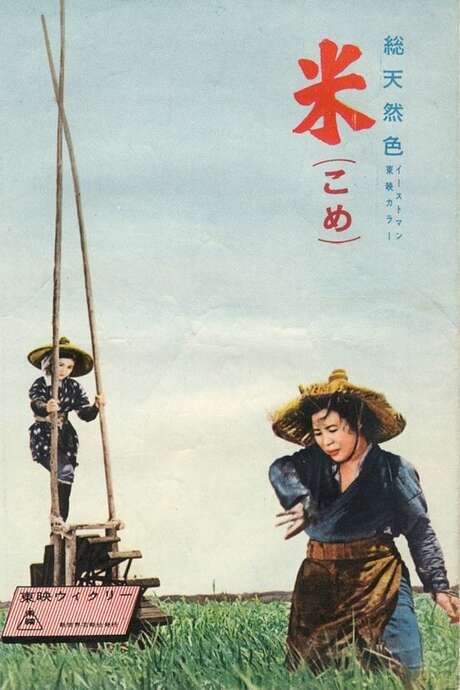
Two small-time thieves, Francesca Doris Dowling and Walter Vittorio Gassman, seek to escape the law by blending in with the crowds of female workers heading to the rice paddies in the Province of Vercelli, in the upper reaches of Piedmont along the Po Valley. As they strive to board the train bound for the fields, they cross paths with Silvana Silvana Mangano, a seasoned peasant rice worker. Francesca boards the train with Silvana, who introduces her to the planters’ way of life and the rhythms that govern their days. Francesca does not have a work permit, and she struggles to find a place among the other "illegals" who jockey for a foothold in the endless rows of swaying crops. After an initial pushback from documented workers and some of the bosses, the illegals are eventually allowed a place in the fields, joining the long line of laborers who migrate with the harvest season.
At work in the fields, Silvana and Francesca meet a soon-to-be-discharged soldier, Marco Raf Vallone, who makes a half-hearted effort to win Silvana’s attention but falls short. The routine of harvest and toil unfolds in patient detail, painting a picture of a community bound by shared labor and the precariousness of seasonal work. As the season progresses toward its end, Walter arrives at the rice farm and becomes entangled in a plot to steal a large quantity of rice. The lure of crime tempts Silvana, and she finds herself drawn to Walter, intrigued by the risk and the rush it promises. She even devises a diversion to aid him in the heist, a move that sets the stage for a confrontation that will test loyalties and judgment.
Francesca and Marco take action to thwart Walter and his accomplices, stepping into a dangerous moment with resolve. The narrative builds to a tense face-off: Francesca and Silvana confront each other, both gripping handguns, each weighing the consequences of their choices. Francesca makes clear that she has been manipulated by Walter, who has played on the ambitions and desires of those around him. In a decisive turn, Silvana turns her weapon on Walter and ends his life. The act plunges Silvana into deep guilt, and she soon after takes her own life. As the other rice workers begin to disperse from the fields, they honor Silvana’s memory in a quiet, poignant gesture, sprinkling rice across her body as a final tribute to a woman who navigated love, crime, and tragedy in a world defined by labor and restraint.