A washed-up actor, once famous for playing a superhero, attempts a comeback on Broadway with a bold new stage play. Battling inner demons and the pressures of a demanding production, he struggles with the blurred lines between reality and illusion. As he chases a desperate need for validation, he confronts his past failures and the complicated relationships with those around him, ultimately questioning his sense of self and the pursuit of artistic recognition.
Find where to stream, rent, or buy Birdman or (The Unexpected Virtue of Ignorance) (2014) in the US with current JustWatch availability, up-to-date pricing, and platform listings for subscription, rental, and digital purchase options.
Warning: spoilers below!
Haven’t seen Birdman or (The Unexpected Virtue of Ignorance) yet? This summary contains major spoilers. Bookmark the page, watch the movie, and come back for the full breakdown. If you're ready, scroll on and relive the story!
Read the complete plot breakdown of Birdman or (The Unexpected Virtue of Ignorance) (2014), including all key story events, major twists, and the ending explained in detail. Discover what really happened, and what it all means.
Riggan Thomson, portrayed by Michael Keaton, is a once-famous actor best known for his role as the superhero Birdman in a beloved trilogy spanning from 1989 to 1992. Haunted by the sardonic and critical voice of his former self, Riggan is tormented by visions of superhuman abilities, constantly grappling with the possibility that he might still be, in some sense, Birdman himself.
In an effort to reclaim his former glory, Riggan embarks on an ambitious project, writing, directing, and starring in a Broadway adaptation of Raymond Carver's poignant short story, What We Talk About When We Talk About Love. However, the insistent voice of Birdman seeks to pull him back into the realm of blockbuster films, insisting that Riggan’s identity is intertwined with the character. The voice taunts him, suggesting that actors like Robert Downey Jr., who may lack true talent, are thriving due to their involvement in the Marvel universe.
The media paints Riggan as a washed-up star who turned down a lucrative role in Birdman 4 twenty years prior, adding to his desperation. His close friend and attorney, Jake, is devotedly supporting the play, which also features Riggan's girlfriend, Laura, and rising Broadway talent Lesley. Riggan's daughter, Sam—a recovering substance abuser he struggles to connect with—assists him on this tumultuous journey.
The day before their highly anticipated first preview, disaster strikes when a stage light falls on Riggan's co-star, Ralph. Riggan confides in Jake, admitting he unintentionally caused the incident using his supposed superpowers. Faced with the prospect of financial ruin and with the press waiting to pounce, they decide against canceling the preview.
In a desperate move, Riggan agrees to replace Ralph with the volatile but talented method actor Mike Shiner, who is also Lesley’s boyfriend. Mike's energetic approach to acting excites Riggan, despite concerns about his costly influence on the production. Riggan, engaged in an affair with Laura, pushes forward, believing that Mike's presence will save the play.
However, the first previews unravel spectacularly. Mike's behavior results in chaos on stage, including a tantrum mid-performance and inappropriate actions directed toward Lesley. Riggan’s insistence on keeping Mike for ticket sales leads to mounting tension, forcing Riggan to weigh the financial implications against the artistic vision he holds dear.
In a heartfelt exchange with his ex-wife Sylvia, Riggan contemplates mortgaging his house, revealing the depths of his commitment to the play. As frustrations mount, Riggan copes with turbulent interactions, especially after a confrontation with Sam about his relevance in the modern world.
The final preview is fraught with anxiety when Riggan finds himself locked out of the theater in nothing but his underwear, inadvertently becoming a viral sensation on social media. While he embarks on an unexpected journey of self-exploration, Tabitha Dickinson, a sharp-tongued critic, threatens to annihilate the play before it even begins.
Despite the chaos, opening night dawns, and Riggan finds solace in the performance's success, sharing a moment of vulnerability with Sylvia. However, in a shocking climax, Riggan enacts his character's heartbreaking end by shooting himself on stage—his misfortunate act creating a standing ovation from the audience, mistakenly perceived as part of the performance.
Waking up in a hospital, Riggan learns that his suicide attempt has inadvertently brought positive reviews, as Tabitha misinterprets the event as a bold new acting technique. Sam visits with flowers, capturing the moment to bolster his online presence.
While Sam briefly leaves the room to find a vase, Riggan confronts his identity and future. He unravels the bandages revealing his reconstructed nose, bids farewell to Birdman, and in a moment of reckless abandon, climbs out the window to embrace the freedom he longs for. As Sam returns to find the room empty, a smile graces her face while she gazes up at the soaring birds above.
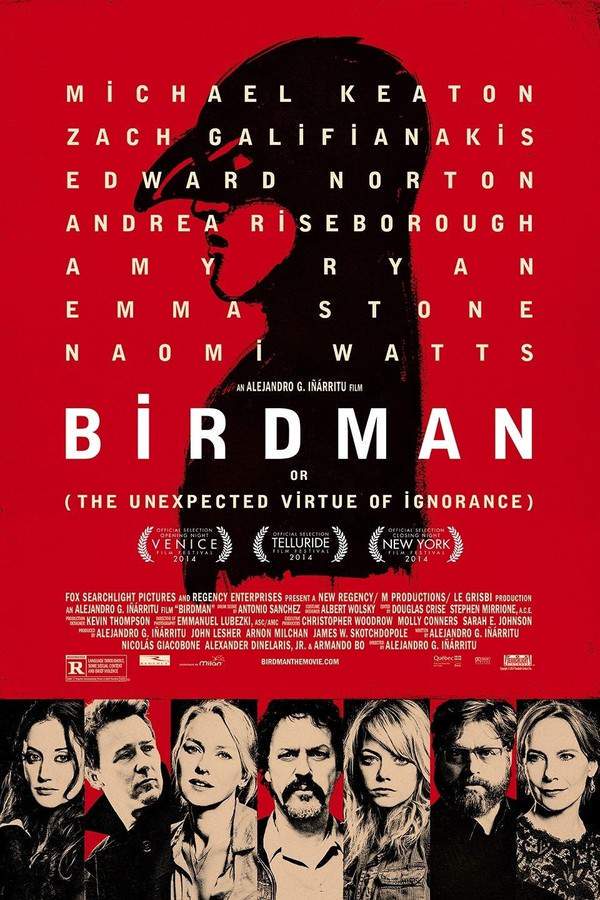
Last updated: October 24, 2024 at 09:22
Explore frequently asked questions about Birdman or (The Unexpected Virtue of Ignorance) (2014) with spoiler-rich answers covering the full plot summary, major story beats, character motivations, hidden details, and ending meaning. This movie summary FAQ helps explain confusing scenes, plot twists, and narrative decisions in clear, searchable detail.
The voice of Birdman represents Riggan's psychological struggle with his past identity. Having defined himself by the superhero role for decades, Riggan cannot escape the mental association between his self-worth and the character. The voice manifests his deep insecurity about being irrelevant in modern cinema, constantly taunting him about choosing artistic integrity over commercial success. This auditory hallucination blurs the line between reality and Riggan's fractured perception of himself.
The voice appears from the very first scene, establishing Riggan's mental instability early in the film.
Two decades before the film's present day, Riggan rejected a lucrative offer to reprise his role in Birdman 4, a decision the media and public viewed as the beginning of his downfall. The summary implies Riggan believed the role was beneath him and wanted to be taken seriously as an actor. This choice became the symbol of his failed attempt to transition from commercial star to legitimate artist, and the source of his bitterness about younger actors like Robert Downey Jr. thriving in the Marvel universe while he faded away.
This backstory establishes Riggan's hubris and sets up his desperate need to prove himself with the Broadway play.
When the stage light falls on co-star Ralph the day before the preview, Riggan confesses to his friend Jake that he believes he caused the accident using his imagined superpowers. However, the film presents this as a delusion rather than a literal supernatural event. Riggan's belief that his thoughts can manifest into reality reflects his deteriorating mental state and his desperate need to feel powerful and in control of something as his life spirals out of control.
The accident happens shortly after Birdman voice convinces Riggan he still has superpowers.
Riggan keeps Mike Shiner in the production because he represents everything Riggan believes a 'real' actor should be, passionate, unpredictable, and completely devoted to the craft. Despite Mike's tantrums, inappropriate behavior with Lesley, and professional chaos, Riggan is willing to sacrifice his play's coherence to validate his own artistic ambitions. Additionally, Mike's notoriety as a rising Broadway star promises ticket sales that Riggan desperately needs to avoid financial ruin.
Riggan's desperation to prove himself as a serious artist makes him willing to compromise his production.
Riggan's on-stage shooting is a real suicide attempt, not a planned performance piece. Overwhelmed by the pressure of the play, his fractured mental state, and a desperate need to escape his suffering, Riggan enacts his character's death scene with live ammunition. The tragic act stems from his belief that he has already lost everything, his career, his identity, and any chance of redemption. The horrific moment is tragically misinterpreted by the audience as an innovative acting choice, earning him a standing ovation.
Riggan's earlier conversations about the character's tragic ending foreshadow this climactic moment.
The audience gave Riggan a standing ovation, completely misinterpreting his real suicide attempt as a bold and innovative theatrical statement. The harsh critic Tabitha Dickinson, who had threatened to destroy the play before opening, praised the act as a revolutionary acting technique. The tragic irony is that Riggan's attempt to escape failure instead brought him the artistic validation he desperately sought, though he never gets to enjoy it consciously.
Tabitha's earlier threat to ruin the play makes her positive review even more讽刺.
Riggan's relationship with his daughter Sam is strained and complicated. As a recovering substance abuser, Sam struggles to forgive her father for being an absent parent focused on his career. She works on the play as his assistant but constantly questions his relevance and authenticity. Their interactions are filled with tension and mutual resentment, though Sam's final reaction, smiling at the birds, suggests some form of reconciliation or understanding of her father's desire for freedom.
Sam's confrontations with Riggan about his relevance hint at her deeper need for him to be honest about who he really is.
Riggan chooses Broadway as a desperate attempt to reinvent himself as a serious actor rather than a fading commercial star. The play represents everything the Birdman franchise was not, artistically meaningful, challenging, and respected by critics. By adapting Raymond Carver's short story, Riggan believes he can finally escape the shadow of his past and be judged as a legitimate artist. His entire identity crisis stems from needing to prove he has value beyond superhero movies.
Birdman's voice constantly mocks Riggan for abandoning blockbusters for 'pretentious' theater.
After his suicide attempt, Riggan wakes up in the hospital with a reconstructed nose and finally tells Birdman goodbye. He then climbs out the window in a moment of impulsive liberation. The film leaves his fate ambiguous, whether he falls to his death, escapes to a new life, or the act is another hallucination. The final shot of Sam looking up at birds with a smile suggests she believes her father has found the freedom he always sought, whether literally or metaphorically.
Throughout the film, Riggan associates flying with escape and transcendence from his earthly troubles.
The film deliberately leaves Riggan's fate ambiguous. He could have died from the fall, escaped to start a new life, or this could be another hallucination given his unstable mental state. The ambiguous ending reflects the film's central theme of blurred lines between reality and illusion. What matters thematically is that Riggan finally broke free from both his Birdman identity and the desperate need for external validation that consumed him.
The entire film questions what is real and what exists only in Riggan's mind.
Discover curated groups of movies connected by mood, themes, and story style. Browse collections built around emotion, atmosphere, and narrative focus to easily find films that match what you feel like watching right now.
Frenetic stories about creators on the verge of a breakdown.If you liked the high-pressure, fast-paced energy of Birdman, explore more movies like it. This collection features similar stories about creators on the brink, blending intense drama with a chaotic, anxious vibe. Find films with the same frenetic pacing and emotional unravelling.
Narratives in this thread typically follow a compressed timeline, often counting down to a high-stakes event like a premiere or deadline. The protagonist, usually a performer or artist, faces a series of escalating crises that test their sanity, forcing them to confront their ego, legacy, and the often-toxic pursuit of validation.
These films are grouped by their shared frenetic energy, high emotional intensity, and focus on the psychological unraveling of a creative mind. They create a claustrophobic, anxious atmosphere where the relentless pacing mirrors the protagonist's mental state.
Character dramas where perception and reality become indistinguishable.Movies like Birdman that masterfully blend reality and fantasy. If you enjoyed the mind-bending character study and ambiguous ending, this thread collects similar complex dramas. Discover films where the protagonist's perception is unreliable and the narrative keeps you guessing.
The narrative pattern involves a central character whose grip on reality is fragile. The story is told from their increasingly unreliable perspective, incorporating fantasy, hallucination, or magical realism elements. The central conflict is often internal, as the character grapples with identity, memory, or mental health, leading to an ambiguous resolution.
These films are united by their complex narrative structure that prioritizes a character's subjective experience over objective truth. They share a heavy emotional weight, an ambiguous feel, and a thematic focus on identity, perception, and the nature of reality itself.
Don't stop at just watching - explore Birdman or (The Unexpected Virtue of Ignorance) in full detail. From the complete plot summary and scene-by-scene timeline to character breakdowns, thematic analysis, and a deep dive into the ending - every page helps you truly understand what Birdman or (The Unexpected Virtue of Ignorance) is all about. Plus, discover what's next after the movie.
Track the full timeline of Birdman or (The Unexpected Virtue of Ignorance) with every major event arranged chronologically. Perfect for decoding non-linear storytelling, flashbacks, or parallel narratives with a clear scene-by-scene breakdown.
Discover the characters, locations, and core themes that shape Birdman or (The Unexpected Virtue of Ignorance). Get insights into symbolic elements, setting significance, and deeper narrative meaning - ideal for thematic analysis and movie breakdowns.
Get a quick, spoiler-free overview of Birdman or (The Unexpected Virtue of Ignorance) that covers the main plot points and key details without revealing any major twists or spoilers. Perfect for those who want to know what to expect before diving in.
Visit What's After the Movie to explore more about Birdman or (The Unexpected Virtue of Ignorance): box office results, cast and crew info, production details, post-credit scenes, and external links - all in one place for movie fans and researchers.
Discover movies like Birdman or (The Unexpected Virtue of Ignorance) that share similar genres, themes, and storytelling elements. Whether you’re drawn to the atmosphere, character arcs, or plot structure, these curated recommendations will help you explore more films you’ll love.
Birdman or (The Unexpected Virtue of Ignorance) (2014) Scene-by-Scene Movie Timeline
Birdman or (The Unexpected Virtue of Ignorance) (2014) Movie Characters, Themes & Settings
Birdman or (The Unexpected Virtue of Ignorance) (2014) Spoiler-Free Summary & Key Flow
Movies Like Birdman or (The Unexpected Virtue of Ignorance) – Similar Titles You’ll Enjoy
Buzzard (2015) Movie Recap & Themes
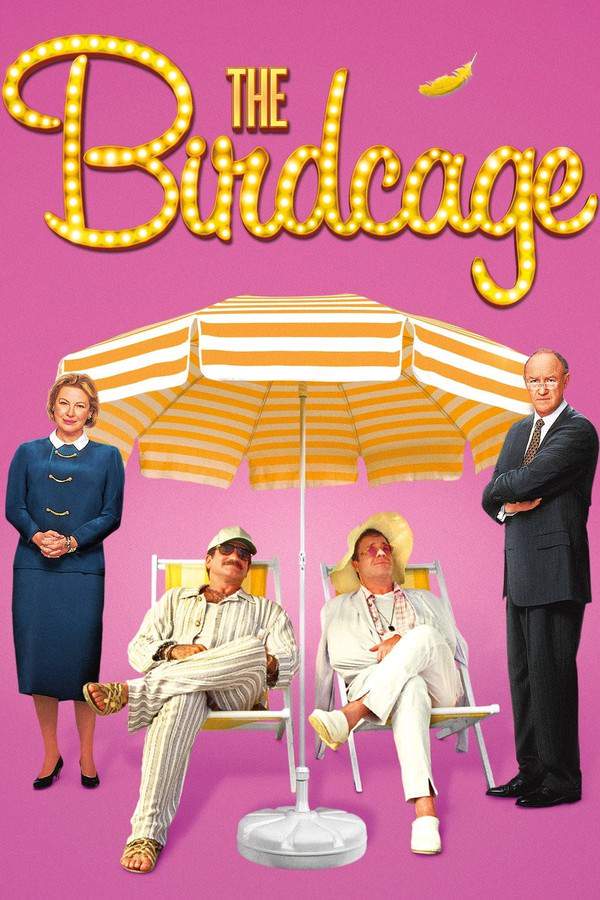
The Birdcage (1996) Full Movie Breakdown
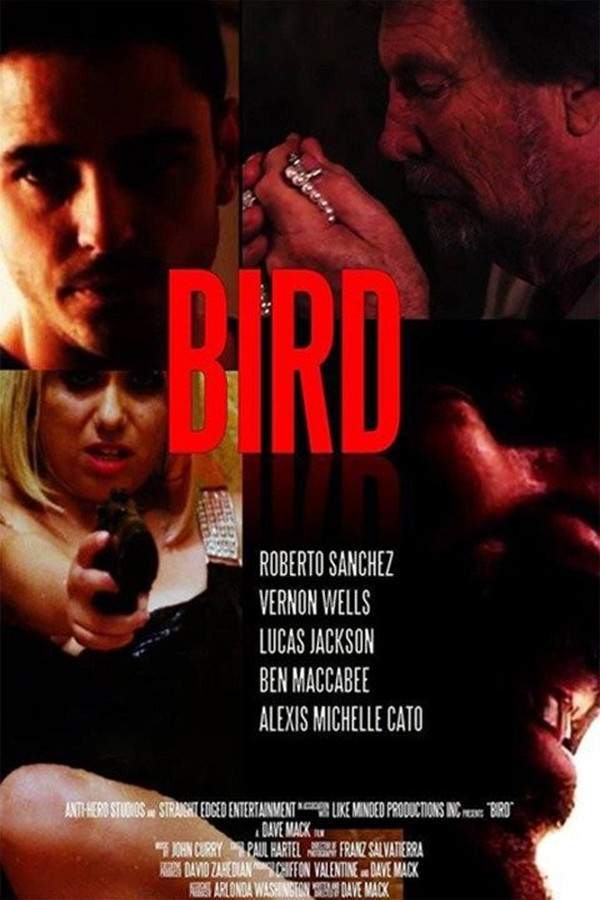
Bird (1988) Film Overview & Timeline
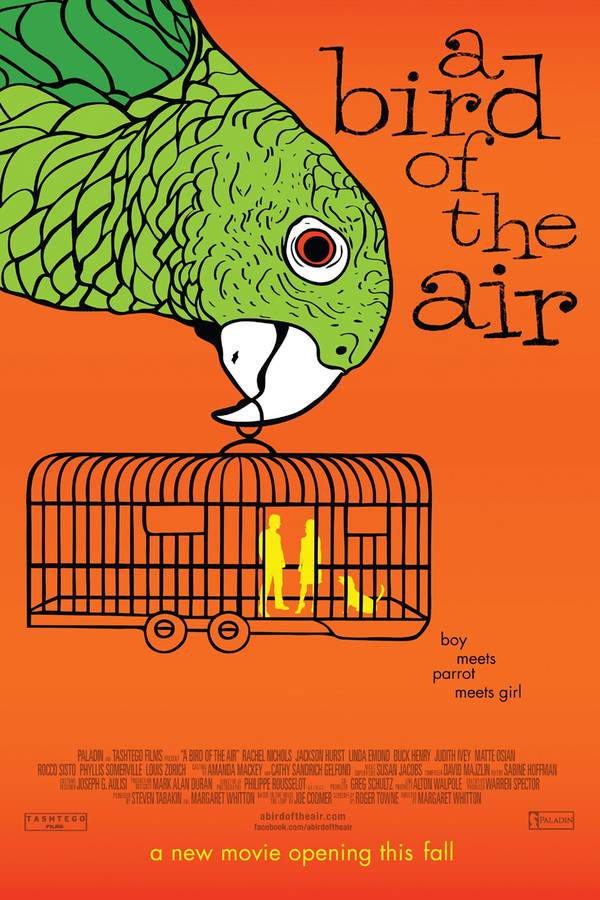
A Bird of the Air (2011) Story Summary & Characters
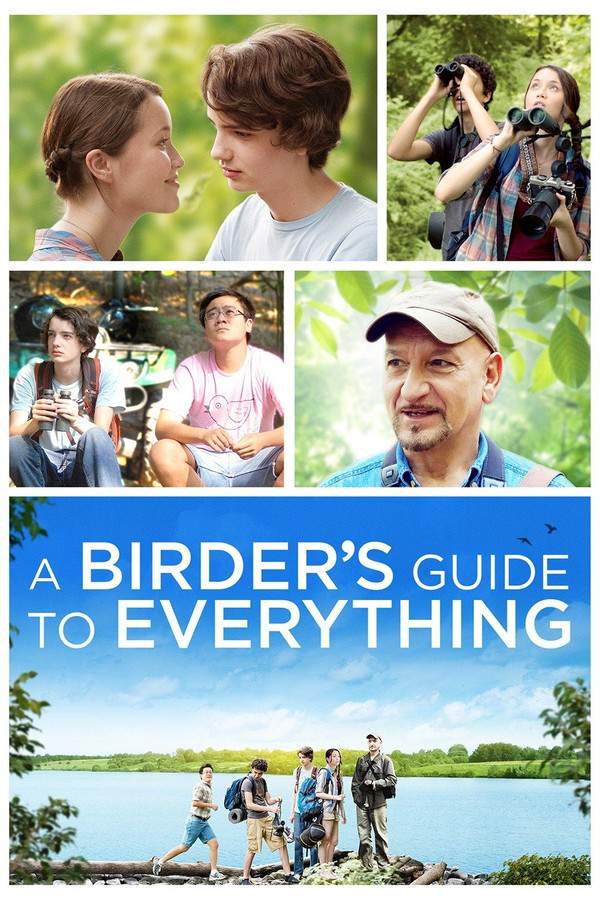
A Birder's Guide to Everything (2014) Full Summary & Key Details
Rare Birds (2003) Full Summary & Key Details
The Humbling (2015) Full Movie Breakdown
Sparrows Dance (2013) Film Overview & Timeline
The Actor (2025) Ending Explained & Film Insights
Birds Without Feathers (2018) Plot Summary & Ending Explained
Bye Bye Birdie (1963) Plot Summary & Ending Explained
Actors and Sin (1952) Full Summary & Key Details
Birds, Orphans and Fools (1969) Full Movie Breakdown
Birds of America (2008) Movie Recap & Themes
Earlybird (2023) Plot Summary & Ending Explained