Plot Explained Spoilers guaranteed!
Plot Explained

Browse by genre

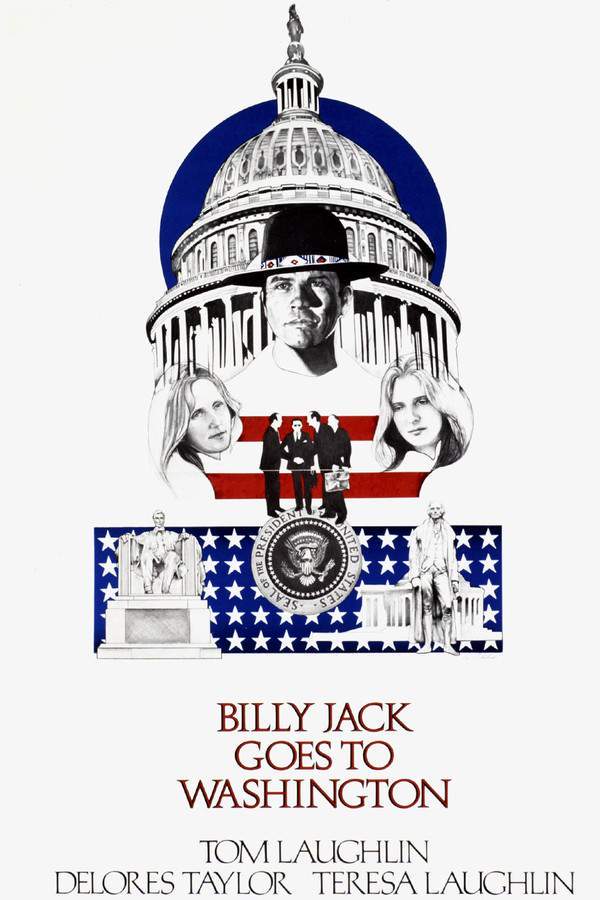
Billy Jack Goes to Washington (1977) movie poster

Timeline

Billy Jack Goes to Washington (1977) Timeline Explained – Every Event in Order

Release, runtime and language
1977 · 155 mins · English
Starring
Peter Donat, Pat O'Brien, Sam Wanamaker, E.G. Marshall, Delores Taylor, Teresa Kelly

After a senator dies while sealing an investigation into the nuclear power industry, the remaining senator and the governor need a pliable candidate to protect their shady deals. They select Billy Jack, who is currently incarcerated after his previous film’s climax, assuming he lacks influence yet will draw young voters to their party.

On this page (6)
  1. 1 Where to watch
  2. 2 Events in order (12)
  3. 3 Timeline questions answered
  4. 4 Movie threads
  5. 5 Movies like Billy Jack Goes to Washington
  6. 6 Every angle

Where to watch

Where to Watch Billy Jack Goes to Washington (1977)

Where can you watch Billy Jack Goes to Washington? Stream, rent or buy it in the US, including on Amazon Video, Apple TV Store and Fandango At Home: current JustWatch availability with up-to-date prices.

Streaming availability powered by JustWatch

12 events in order · contains spoilers

Billy Jack Goes to Washington Timeline: Events in Chronological Order

Every key event of Billy Jack Goes to Washington (1977) in order, scene by scene, with when and where it takes place. Use it to untangle flashbacks, time jumps and parallel storylines, to refresh your memory before the sequel or to find the exact scene you are thinking of.

  1. Billy Jack is appointed to the Senate

    Billy Jack is appointed to fill the remaining term of a late senator, stepping into the rough-and-tumble of Washington politics. It is hoped he will quietly vote with his party. His first major move is a proposal to fund a national youth camp on land that would also become the site of a proposed nuclear power plant.

    Where
    Capitol, Washington, D.C.
  2. Proposed youth camp bill near nuclear plant raises conflict

    The youth camp funding bill creates a land-use flashpoint with the adjacent nuclear project, triggering a political standoff in the Senate. The issue pits community interests against the energy plan and party pressures. Billy's proposal quickly becomes a focal point for opposition and leverage from powerful players.

    Where
    Capitol Hill, Senate Chambers
  3. Paine's graft and strategy to sideline Billy

    Senator Paine outwardly claims to oppose nuclear power, but he is secretly taking graft to sway votes in favor. He moves to keep Billy out of the debate and away from influential backers. His scheming threatens Billy's career and reputation as the vote approaches.

    Where
    Capitol Building, Senate Chambers
  4. Paine orders a meeting with a grassroots group

    On the day of the energy bill vote, Paine pressures Billy to meet with a grassroots group hoping to derail him. The group is pushing for a national initiative that could sway public support. Billy is maneuvered toward what seems like a simple popular appeal rather than a principled stance.

    When
    On the day of the vote
    Where
    Capitol Hill
  5. Billy is won over by the grassroots group

    Billy agrees to meet the grassroots group and becomes convinced of their cause. He sees how public momentum can challenge slow-moving Senate process. The encounter unsettles his loyalty to party lines and raises the stakes of the upcoming vote.

    Where
    Capitol Hill, grassroots meeting location
  6. Lobbyists offer bribes and Billy pushes back

    Before any vote, Billy is approached by lobbyists offering bribes and perks to secure their preferred outcome. He responds with anger and firm resistance, signaling that he will not be bought. The pressure foreshadows a deeper conflict between influence and integrity.

    Where
    Senate offices
  7. Bailey's influence threatens Billy's career

    Bailey, a powerful political force in Billy's home state, presses hard to keep him compliant. Without cooperation, Billy risks losing support, facing expulsion, or a tarnished reputation. The dynamic sets up an existential test for Billy’s independence.

    Where
    Capitol Hill
  8. Billy speaks against the nuclear plant on the Senate floor

    The next day, Billy steps onto the Senate floor to oppose the nuclear plant, staking his career on principle. Paine retaliates by proposing to expel him as unfit for office, escalating the confrontation. The chamber becomes a battleground over ethics, power, and the truth Billy has spoken.

    Where
    United States Senate chamber
  9. Assistant quits after lobbyist's murder

    Billy's assistant resigns after a lobbyist is murdered, fearing for her own safety. She withdraws from the fray but later returns to help Billy understand Senate procedure and organize a possible filibuster. The staff shake-up deepens the peril around Billy's fight.

    Where
    Capitol Building, Senate offices
  10. Assistant returns to guide the filibuster prep

    The former aide reappears to coach Billy in Senate rules and procedural tactics, preparing him for a possible protracted filibuster. She helps translate political strategy into a plan for stalling the energy bill. The team gears up for a high-stakes parliamentary showdown.

    Where
    Capitol Building
  11. Filibuster, collapse, and a turning confession

    Billy begins a determined filibuster to block the vote, laying bare the moral conflict behind the campaign finance clashes. Exhaustion takes its toll and he collapses on the Senate floor. Paine then confesses to his colleagues that Billy's words were the truth, reframing the debate.

    Where
    Senate floor, Capitol
  12. Paine's confession reshapes the Senate

    Following the collapse, Paine's confession reveals the corruption behind his opposition and vindicates Billy's stance. The revelation exposes the true motives of those opposing the youth camp bill and forces a reckoning in the chamber. The film closes on the idea that truth can outlast political maneuvering.

    Where
    Senate Floor

Last updated: October 09, 2025 at 11:18

Was this helpful?

Timeline questions answered

Billy Jack Goes to Washington Timeline Explained: Your Questions Answered

When does it happen, and why in that order? The questions people ask about the chronology of Billy Jack Goes to Washington (1977): time jumps, flashbacks, cause and effect between scenes and the correct order of events, each answered with spoilers.

Q1

Why was Billy Jack appointed to the Senate?

Billy Jack was appointed to fill the remaining term of a deceased senator. The party leaders, including Senator Paine and the governor, chose him because they believed he would be pliable and vote the party line without questioning their decisions. They assumed his lack of political experience and his recent incarceration from the previous film would make him easy to control.

  • billy jack appointment
  • senate appointment
  • senator filling term
  • pliable candidate
Q2

Why did Billy's youth camp proposal cause such conflict?

Billy proposed funding a national youth camp on public land that was also slated for a nuclear power plant. This directly challenged the interests of politicians and lobbyists who were profiting from the nuclear project. The proposal forced hidden corruption into the open and created a political flashpoint that threatened the deals Paine and others had made.

  • youth camp bill
  • nuclear plant
  • land use conflict
  • environmental bill
Q3

What was Senator Paine's secret motivation against Billy Jack?

Paine publicly claimed to oppose nuclear power but was secretly taking bribes to influence his votes in favor of the nuclear power plant. He wanted to keep Billy silent and out of the way because Billy's honest opposition threatened to expose the corruption. When Billy threatened to speak against the plant, Paine moved to have him expelled from the Senate.

  • senator paine
  • bribe
  • corruption
  • nuclear power graft
  • senator conflict of interest
Q4

Why did Paine want Billy to meet with the grassroots group on voting day?

Paine orchestrated the meeting to keep Billy away from the Senate on the day a controversial energy bill was being voted on. By sending Billy to meet a popular grassroots group pushing for a national initiative, Paine hoped to sideline him from the debate and prevent him from opposing the nuclear plant legislation.

  • grassroots group
  • energy bill vote
  • senator strategy
  • distraction tactic
Q5

Why was a lobbyist murdered in the film?

The murder occurred as a warning to Billy Jack and anyone else who might resist the political corruption. Lobbyists representing nuclear and energy interests had already tried to bribe Billy, and when he refused, they eliminated a competing lobbyist to send a clear message about the consequences of defying their influence. This intimidation tactic terrified Billy's assistant into quitting.

  • lobbyist murder
  • threat against billy
  • political intimidation
  • corruption violence
Q6

Why did Billy's assistant quit and then come back?

Jean Roberts quit after the lobbyist's murder, genuinely fearing for her safety as the threats against Billy intensified. She returned once Billy faced expulsion from the Senate, deciding the fight was worth the risk. She came back to help him learn Senate procedures so he could attempt a filibuster against the energy bill.

  • jean roberts
  • assistant quits
  • filibuster preparation
  • senate procedures
Q7

What was Billy Jack trying to achieve with his filibuster?

Billy used the filibuster to delay the vote on the energy bill that would approve the nuclear power plant. By speaking continuously on the Senate floor, he aimed to force the truth about the corruption into the public record and prevent the bill from passing while his message spread. It was his final attempt to stop the project through parliamentary procedure.

  • filibuster
  • senate floor
  • energy bill delay
  • parliamentary procedure
  • billy jack speech
Q8

Why did Billy Jack collapse on the Senate floor?

Billy collapsed from physical exhaustion. The filibuster required him to speak continuously without sitting or resting, and the stress of the confrontation, combined with the emotional toll of the corruption fight and his earlier hunger strike, wore his body down. His collapse marked the dramatic climax of his protest.

  • billy collapse
  • exhaustion
  • filibuster
  • physical collapse
  • senate floor incident
Q9

Why did Senator Paine confess at the end?

Paine confessed because Billy's honest filibuster speech, despite his exhaustion, had convinced even his colleagues of the truth. Seeing Billy collapse from speaking the truth, and realizing his own guilt, Paine broke down and admitted to his colleagues that every word Billy spoke was the truth. The physical and emotional weight of the moment overwhelmed him.

Foreshadowing: Earlier scenes showed Paine claiming to oppose nuclear power while secretly taking bribes, creating the contradiction that eventually forced his confession.

  • paine confession
  • truth revealed
  • senate corruption exposed
  • billy vindicated
Q10

Who was Bailey and why did he threaten Billy Jack?

Bailey was a powerful political figure from Billy's home state who wielded significant influence over local politics. He pressured Billy to cooperate with the party's plans and vote their way, threatening to destroy Billy's political career and reputation if he refused to comply with the corruption. Bailey represented the local political machine that could make or break Billy's future.

  • bailey
  • political threat
  • home state influence
  • career threat
  • political machine
Q11

What was the connection between the nuclear plant and the youth camp?

Both projects were proposed for the same piece of public land. Billy's youth camp was meant to serve young people and communities, while the nuclear plant served commercial and political interests. Billy's bill sought to reserve that land for the youth camp, which would block the nuclear plant from being built there, directly conflicting with the profit motives of Paine and the lobbyists.

  • land dispute
  • nuclear plant location
  • youth camp location
  • public land conflict

Movie threads

More Movies Like Billy Jack Goes to Washington, by Mood & Story

Curated lists built around what makes Billy Jack Goes to Washington tick: the same mood, the same kind of story or the same emotional payoff. Each list explains why these movies belong together.

Movies about fighting corruption like Billy Jack Goes to Washington

A lone idealist takes on institutionalized greed and power from within the halls of government. If you enjoyed the tense political battle in Billy Jack Goes to Washington, you'll like these other movies where a determined underdog fights systemic corruption from within. This collection features tense dramas and thrillers about exposing government conspiracies and standing up for truth against powerful, cynical forces.

  • urgent
  • determined
  • underdog
  • tense
  • courageous
  • political
  • Tone: tense, determined
  • Pacing: steady, building pressure
Why these movies?

The story pattern: The narrative pattern typically involves an unlikely protagonist, often an outsider, being appointed or elected into a system they aim to change. They discover a hidden conspiracy or corruption, leading to a high-pressure conflict where they must use wit, principle, and sometimes sheer force of will—like a filibuster—to expose the truth against formidable opposition. The journey is one of moral conviction clashing with institutional power.

Why they belong together: These movies are grouped together because they share a core theme of one person challenging a corrupt establishment. They create a similar viewing experience defined by a tense tone, a steady buildup of pressure, and a central character whose unwavering determination fuels the plot. The shared feeling is of claustrophobic urgency within powerful institutions and the emotional weight of a high-stakes moral crusade.

Movies with dramatic verbal showdowns like Billy Jack Goes to Washington

Stories where climactic battles are fought with words, procedure, and public pressure. Fans of the climactic filibuster in Billy Jack Goes to Washington will appreciate these movies centered around high-stakes procedural confrontations. Discover similar tense dramas and thrillers where the final battle is a battle of words, wits, and procedure in courtrooms, hearings, or senates, leading to a public vindication of truth.

  • tense
  • urgent
  • claustrophobic
  • verbal duel
  • procedural
  • cathartic
  • Tone: tense, urgent
  • Pacing: steady, climactic focus
Why these movies?

The story pattern: The narrative builds steadily towards a singular, structured confrontation. The protagonist prepares for a formal 'duel' where they must outmaneuver a powerful opponent using the system's own rules. This climax is often a marathon event—a long trial, an extended speech, or a meticulous investigation—that tests endurance and conviction, resulting in a public collapse of the antagonist's lies and a cathartic victory for truth.

Why they belong together: These films are connected by their shared focus on a procedural climax as the main source of tension and resolution. They deliver a similar experience of sustained, claustrophobic tension within a formal setting, where the pacing is steady and the emotional weight comes from the high stakes of the verbal and intellectual battle. The appeal is in the catharsis of seeing truth triumph through due process.

If you liked this

Movies Like Billy Jack Goes to Washington

Similar movies to Billy Jack Goes to Washington: the same genre, themes or kind of story. Each one comes with its own plot summary, timeline and ending explained.

Browse all movie summaries

Every angle

Billy Jack Goes to Washington (1977) Explained: Plot, Timeline & Characters

Everything about Billy Jack Goes to Washington in one place: what happens in the plot summary, the timeline in chronological order, the characters and meaning and a spoiler-free summary. What's After the Movie adds the cast, box office and post-credit scenes.

Coming soon on iOS and Android

The Plot Explained Movie Summary App

Plot summaries, endings explained and timelines on your phone. Catch up on any movie in minutes, save your favorites and never miss a twist again.

Be the first to know when we launch. Your email stays private, always.

Learn more about the app