
















Plot Explained Spoilers guaranteed!
Plot Explained

Browse by genre

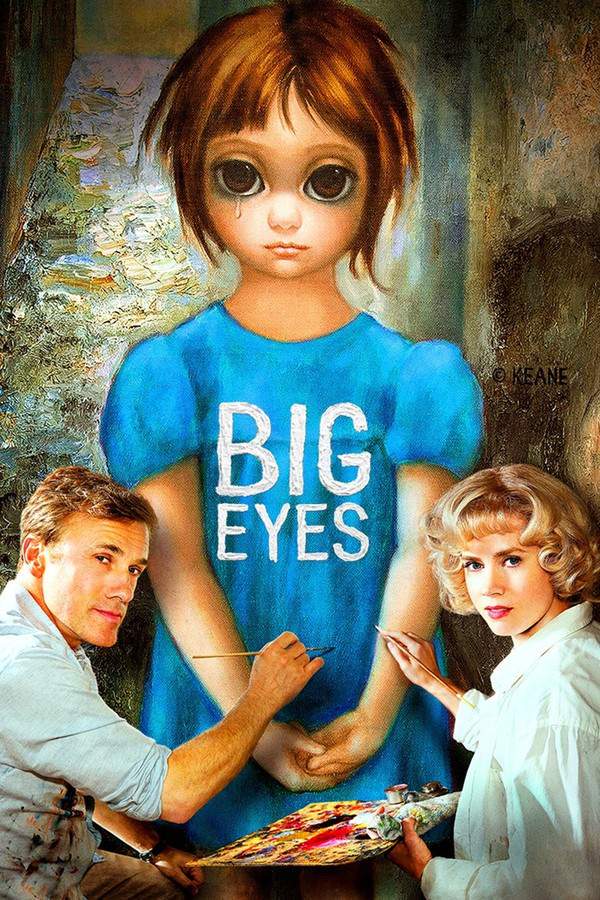
Big Eyes (2014) movie poster

Characters & Themes

Big Eyes (2014) Characters, Setting & Themes Explained

Release, runtime and language
2014 · 106 min · English
JustWatch #5,980 105
Directed by
Tim Burton
Starring
Amy Adams, Christoph Waltz

In 1950s America, Walter Keane achieves remarkable success as a painter of melancholic portraits of children with large, expressive eyes. However, the public is unaware that Margaret Keane, his wife, is the true artist behind these iconic images. As Walter takes credit for her work and his fame increases, Margaret struggles to gain recognition while navigating a complicated and increasingly strained marriage. The deception and the ensuing conflict reveal a hidden truth about the creation of the haunting artwork.

On this page (8)
  1. 1 Where to watch
  2. 2 Characters explained (2)
  3. 3 Where & when it takes place
  4. 4 Themes & meaning (3)
  5. 5 Character & meaning questions
  6. 6 Movie threads
  7. 7 Movies like Big Eyes
  8. 8 Every angle

Where to watch

Where to Watch Big Eyes (2014)

Where can you watch Big Eyes? Stream, rent or buy it in the US, including on Lionsgate+ Amazon Channels, Philo and Starz: current JustWatch availability with up-to-date prices.

Streaming availability powered by JustWatch

2 main characters · contains spoilers

Big Eyes Characters Explained: Who Is Who

The main characters of Big Eyes (2014), heroes and villains: what drives them, how they change over the course of the story and what each of them reveals about the film's bigger ideas.

  • Margaret Keane (Amy Adams)

    Margaret is a talented artist known for her unique paintings of children with oversized eyes. As a single mother, she demonstrates resilience and determination, navigating a complex relationship with Walter while fighting for her identity and recognition as an artist.

    • 🎨 Artist
    • 👩‍👧 Single Mother
    • 💪 Resilient
  • Walter Keane (Christoph Waltz)

    Walter presents himself as a charming salesman and ambitious art promoter. However, his deceptive nature and need for validation lead him to steal Margaret's identity and claim her art as his own, ultimately causing their relationship to deteriorate.

    • 🖼️ Fraud
    • 🌟 Ambitious
    • 💼 Manipulative

Last updated: October 22, 2024 at 19:51

Was this helpful?

Setting

Where and When Does Big Eyes Take Place?

The setting of Big Eyes (2014): the year and time period, the places and locations, and how they shape the characters, the mood and the tension of the story.

Time period

1958

The 1950s was a decade marked by significant societal changes, particularly in the realm of gender roles and artistry. Women increasingly sought independence, leading to a cultural shift reflected in Margaret's bold choices to leave her husband and reclaim her artistic identity.

Location

North Beach, San Francisco, Honolulu, Hawaii

North Beach is a vibrant neighborhood in San Francisco known for its rich Italian heritage and arts scene. It becomes a crucial backdrop for Margaret as she seeks independence and artistic expression. Honolulu, a picturesque island city, represents a significant turning point in Margaret's journey, where she grapples with her identity and relationship with Walter.

  • 🏙️ City
  • 🌴 Island

Last updated: October 22, 2024 at 19:51

Was this helpful?

3 major themes

Big Eyes Meaning: Themes & Message Explained

What is Big Eyes (2014) really about? The emotional, social and philosophical themes the film keeps returning to, its symbolism and the message beneath the surface.

  • Identity

    The theme of identity resonates deeply throughout the film as Margaret struggles to reclaim her name and artistic voice. Initially overshadowed by Walter's claims, her journey reflects the broader fight for recognition and ownership of one's work amid societal pressures.

  • Deception

    Deception plays a pivotal role in Walter and Margaret's tumultuous relationship. From Walter's appropriation of Margaret's art to the façade of their seemingly glamorous life, the film explores the consequences of dishonesty and the pain it inflicts.

  • Justice

    The pursuit of justice emerges as a central theme as Margaret battles for her rights both in court and in the art world. Her journey culminates in a courtroom showdown that highlights the importance of integrity and self-advocacy.

Last updated: October 22, 2024 at 19:51

Was this helpful?

Character & theme questions

Big Eyes Characters & Meaning: Your Questions Answered

The questions people ask about Big Eyes (2014): who the characters really are, their relationships, what the symbols mean, where it takes place and what the movie is really about. Each answer contains spoilers.

Q1

Where is Big Eyes primarily set?

The film takes place primarily in San Francisco's North Beach neighborhood, a district known for its Italian heritage and vibrant arts scene. This location becomes significant as it represents Margaret Keane's environment for artistic expression and her path toward independence. The setting reflects the bohemian culture of the 1950s art world where Margaret navigates her identity as an artist.

  • san francisco
  • north beach
  • setting
  • location
  • art scene
Q2

What role does Honolulu play in the story?

Honolulu, Hawaii serves as a pivotal turning point in Margaret's journey. She travels there and grapples with her identity and relationship with Walter while on the island. This setting marks a crucial moment of self-reflection and ultimately contributes to her decision to leave Walter and reclaim her artistic identity.

  • honolulu
  • hawaii
  • island
  • journey
  • turning point
Q3

When does Big Eyes take place?

The film is set in 1958, during a decade marked by significant societal changes in gender roles and artistry. The 1950s context is essential to understanding Margaret's struggle, as women increasingly sought independence during this period, making her bold choice to leave her husband and claim her artistic voice both radical and historically resonant.

  • 1950s
  • 1958
  • era
  • time period
  • gender roles
Q4

What does the film say about identity?

The theme of identity resonates deeply throughout Big Eyes as Margaret struggles to reclaim her name and artistic voice. Initially overshadowed by Walter's false claims to her work, her journey reflects the broader fight for recognition and ownership of one's creative output amid societal pressures. The film shows how her identity as the true artist is systematically suppressed before she ultimately breaks free.

  • identity
  • artist
  • recognition
  • ownership
  • artistic voice
Q5

How does deception drive the narrative?

Deception plays a pivotal role in Walter and Margaret's relationship, forming the central conflict of the film. Walter appropriates Margaret's art and builds his fame on her talent while maintaining a charming public persona. The film explores how this dishonesty creates a toxic dynamic, affecting not only their marriage but also Margaret's mental well-being as she becomes trapped in a web of lies.

  • deception
  • lies
  • art theft
  • appropriation
  • manipulation
Q6

What role does justice play in Big Eyes?

The pursuit of justice emerges as a central theme as Margaret battles for her rights both in court and in the art world. Her journey culminates in a courtroom showdown where she must prove she is the true creator of the iconic big-eyed paintings. This legal battle highlights the importance of integrity and self-advocacy, ultimately leading to her rightful recognition.

  • justice
  • court
  • battle
  • rights
  • integrity
Q7

Who is Margaret Keane in the film?

Margaret Keane is a talented artist portrayed by Amy Adams who creates the iconic paintings of children with oversized eyes. As a single mother, she demonstrates remarkable resilience and determination while navigating a complex and ultimately abusive relationship with Walter. Her core motivation throughout the film is fighting for recognition as the true creator of her work and reclaiming her artistic identity.

  • margaret keane
  • amy adams
  • artist
  • painter
  • protagonist
Q8

Who is Walter Keane and what motivates him?

Walter Keane, portrayed by Christoph Waltz, presents himself as a charming salesman and ambitious art promoter. However, his deceptive nature and deep need for validation drive him to steal Margaret's artistic identity and claim her work as his own. His motivation stems from insecurity and a desire for fame rather than genuine artistic talent, making him the film's primary antagonist.

  • walter keane
  • christoph waltz
  • antagonist
  • deception
  • salesman
Q9

What is the significance of the big-eyed paintings?

The paintings of children with large, expressive eyes are Margaret Keane's signature artistic creation. These melancholic portraits became enormously popular and financially successful, yet the public remained unaware that Margaret was the true artist. The paintings represent both her unique artistic vision and the foundation of the deception that defines the film's central conflict.

  • big eyes
  • paintings
  • art
  • children
  • portraits
Q10

How do 1950s gender roles factor into the story?

The 1950s setting is integral to understanding Margaret's struggle, as the era's strict gender roles meant women's artistic contributions were often overlooked or attributed to male partners. Margaret's fight to be recognized as the creator of her work reflects the broader cultural shift of women seeking independence during this period, making her eventual victory both personal and symbolically significant.

  • gender roles
  • women artists
  • 1950s
  • recognition
  • independence
Q11

How does the film portray the psychological toll on Margaret?

Big Eyes depicts the psychological strain of a woman trapped in a lie perpetuated by her spouse. The film shows how Walter's gaslighting and emotional manipulation isolate Margaret, causing her significant emotional distress. The tense tone and medium emotional weight convey the toll of living with deception, ultimately making her escape and reclamation of identity deeply satisfying.

  • emotional abuse
  • gaslighting
  • psychological
  • isolation
  • stress

Movie threads

More Movies Like Big Eyes, by Mood & Story

Curated lists built around what makes Big Eyes tick: the same mood, the same kind of story or the same emotional payoff. Each list explains why these movies belong together.

Underdog Triumph Stories like Big Eyes

Quiet individuals rise up against oppression to reclaim their identity and voice. If you enjoyed watching Margaret Keane reclaim her identity in Big Eyes, you'll appreciate these movies about quiet individuals fighting back. This collection features similar stories of personal vindication, where characters overcome oppression to achieve a satisfying and happy ending.

  • triumphant
  • anxious
  • oppressive
  • vindicating
  • methodical
  • tense
  • Tone: tense, ultimately triumphant
  • Pacing: steady, methodical
Why these movies?

The story pattern: Stories in this thread typically follow a three-act structure: establishment of oppression and deception, a period of silent suffering and internal conflict, and finally a climax involving a public confrontation or legal battle that leads to a clear, triumphant resolution for the protagonist.

Why they belong together: These movies are grouped together because they share a core emotional journey from powerlessness to empowerment. They feature a specific type of victory—one that is legal, public, or deeply personal—that provides a strong sense of catharsis and justice, often after a tense and emotionally weighty buildup.

Psychological Marital Dramas like Big Eyes

Stories where a seemingly secure relationship becomes a cage of lies and manipulation. Movies like Big Eyes that delve into the tense dynamics of a marriage fractured by deception. These films explore themes of gaslighting, identity theft within a relationship, and the slow, anxious journey toward freedom, perfect for viewers who appreciate domestic psychological tension.

  • claustrophobic
  • anxious
  • oppressive
  • gaslighting
  • psychological
  • tense
  • Tone: tense, claustrophobic, anxious
  • Pacing: steady, slow burn
Why these movies?

The story pattern: The narrative pattern involves a central, hidden truth that one partner uses to manipulate and control the other. The tension escalates steadily as the victim becomes increasingly aware of their imprisonment, leading to a climax where the deception is exposed and the power dynamic is shattered.

Why they belong together: These films are united by their exploration of a specific type of interpersonal conflict: domestic fraud and psychological manipulation. They create a distinct mood of claustrophobic anxiety and generate tension from the gradual disclosure of a betrayal that happens behind closed doors.

If you liked this

Movies Like Big Eyes

Similar movies to Big Eyes: the same genre, themes or kind of story. Each one comes with its own plot summary, timeline and ending explained.

Browse all movie summaries

Every angle

Big Eyes (2014) Explained: Plot, Timeline & Characters

Everything about Big Eyes in one place: what happens in the plot summary, the timeline in chronological order, the characters and meaning and a spoiler-free summary. What's After the Movie adds the cast, box office and post-credit scenes.

Coming soon on iOS and Android

The Plot Explained Movie Summary App

Plot summaries, endings explained and timelines on your phone. Catch up on any movie in minutes, save your favorites and never miss a twist again.

Be the first to know when we launch. Your email stays private, always.

Learn more about the app