




Plot Explained Spoilers guaranteed!
Plot Explained

Browse by genre

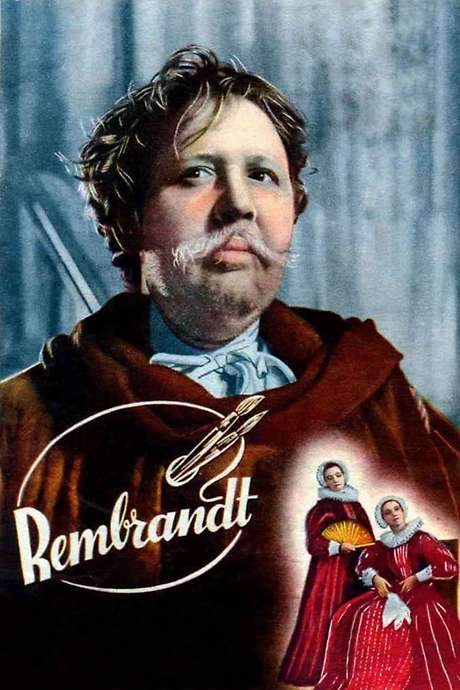
Rembrandt (1936) movie poster

Plot Summary

Rembrandt (1936) Plot Summary Explained

Release, runtime and language
1936 · 85 mins · English
JustWatch #32,463 5
Directed by
Alexander Korda
Starring
Alexander Knox, Marius Goring, Roger Livesey, Raymond Huntley, Elsa Lanchester, Charles Laughton

A portrait of the Dutch master Rembrandt van Rijn at the peak of his career in the mid‑1600s, the film follows his obsessive fascination with women—their lives, loves and souls—and the profound shift in his art after the death of his beloved wife. As his style darkens, it alienates many of his patrons, highlighting the personal and professional turmoil that defined his later years.

On this page (6)
  1. 1 Where to watch
  2. 2 What happens: full plot
  3. 3 Plot questions answered
  4. 4 Movie threads
  5. 5 Movies like Rembrandt
  6. 6 Every angle

Where to watch

Where to Watch Rembrandt (1936)

Where can you watch Rembrandt? Stream, rent or buy it in the US, including on Artiflix, Darkroom and Xumo Play: current JustWatch availability with up-to-date prices.

Streaming availability powered by JustWatch

Full plot summary · contains spoilers

What Happens in Rembrandt: Full Plot Summary

The whole story of Rembrandt (1936) explained, from the opening scene to the final frame: every key event, every twist and what it all adds up to. Read it as a quick recap before the sequel, to check a scene you missed, or to finally understand what really happened.

Set in mid 17th-century Amsterdam, Rembrandt van Rijn, Charles Laughton, endures the death of his wife Saskia, who was both his great love and his sole model. In his grief, he paints Saskia one final time as her image threatens to fade away. Shortly before Saskia's death, Rembrandt receives a commission for his famous painting The Night Watch from the civic militia. When the painting is unveiled, the gentlemen who commissioned it cannot recognize themselves, erupt in fury, and threaten not to pay. Rembrandt's apprentices withdraw, fearing social stigma, and he drinks with Geertje Dirx, Gertrude Lawrence, with whom he shares a mutual attraction.

Ten years pass and Rembrandt is deeply in debt; his possessions have been sold, yet the debt remains overwhelming. He meets Beggar Saul, Roger Livesey, who first models for a painting of King Saul and later teaches him how to beg, but Rembrandt has little talent for this craft. He escapes his creditors by moving to Leiden to stay with his father and brother who run a mill, but the hard labor proves too much for a sensitive artist. He eventually returns home and meets his new maid Hendrickje Stoffels, Elsa Lanchester, who becomes his model and with whom he forms a life together. The couple plans to marry, but a clause in Saskia's will imposes a heavy burden: Rembrandt must pay his son Titus, John Bryning 20,000 florins if he remarries.

In a fit of jealousy, Geertje accuses Hendrickje of impropriety, and Hendrickje is excommunicated. Rembrandt, Hendrickje, and his son relocate to the countryside, seeking peace and space to paint. Hendrickje discovers a way to shield Rembrandt from creditors by declaring his paintings as her property, enabling him to sell them and stabilize his finances. The couple returns to Amsterdam and finally marries, but tragedy strikes soon after as Hendrickje dies. Years later, an aging Rembrandt lives in greater poverty, surviving on help from friends while continuing to paint. He invests his remaining funds in paint and completes one final work: a self-portrait that closes his long, fraught career.

Last updated: February 24, 2026 at 09:22

Was this helpful?

Plot questions answered

Rembrandt Plot Explained: Your Questions Answered

The questions people ask most about Rembrandt (1936): what happens in the confusing scenes, why the characters do what they do, the twists, hidden details and what the ending means. Each answer contains spoilers.

Q1

Why did the civic militia react so negatively to The Night Watch?

The militia members commissioned a traditional group portrait showing themselves as dignified, respectable gentlemen. Instead, Rembrandt painted them in a dramatic, dynamic scene with unusual lighting, unusual poses, and some figures barely recognizable. They expected a conventional portrait that would honor their social standing, not an innovative artistic work that made them look like common soldiers in motion. Their inability to recognize themselves as the respectable citizens they were, combined with the unexpected composition, triggered their fury and refusal to pay.

Foreshadowing: Earlier in the film, Rembrandt's unique artistic vision is established as he pursues expressive intensity over conventional beauty.

  • the night watch
  • commission
  • civic militia
  • unveiling
  • refused to pay
Q2

What was in Saskia's will that prevented Rembrandt from remarrying?

Saskia's will contained a clause stating that if Rembrandt remarried, he would have to pay his son Titus 20,000 florins. This enormous sum, equivalent to a small fortune at the time, was essentially designed to discourage him from replacing her. The financial burden was so severe that it kept Rembrandt from legally marrying Hendrickje Stoffels for years, even after they were deeply committed to each other.

Foreshadowing: Saskia's deathbed scene establishes her as both his great love and his sole model, hinting at the lasting grip she would have on his life.

  • saskia will
  • 20
  • 000 florins
  • remarriage
  • titus
  • clause
Q3

Why did Geertje accuse Hendrickje of impropriety?

Geertje Dirx, Saskia's former maid who had a complicated mutual attraction with Rembrandt, was driven by jealousy when Hendrickje Stoffels entered Rembrandt's life as his new maid and model. Geertje accused Hendrickje of improper conduct, likely implying sexual impropriety, which was a serious accusation in 17th-century Dutch society. The accusation led to Hendrickje's excommunication from the Dutch Reformed Church, threatening her relationship with Rembrandt.

Foreshadowing: After Saskia's death, Rembrandt and Geertje share a night of drinking together, establishing their unresolved attraction.

  • geertje
  • hendrickje
  • jealousy
  • accusation
  • excommunication
Q4

How did Hendrickje help Rembrandt escape his creditors?

Hendrickje Stoffels devised a clever legal arrangement to protect Rembrandt's paintings from being seized by his creditors. She declared that the paintings in their possession were legally her property rather than Rembrandt's. This allowed Rembrandt to continue painting and selling works without the paintings being immediately confiscated to cover his outstanding debts. The scheme enabled the couple to return to Amsterdam and eventually marry, providing Rembrandt some financial stability despite his overwhelming debts.

Foreshadowing: Rembrandt's decade of debt and inability to pay is established early, with his possessions already sold yet the debt remaining crushing.

  • creditors
  • debts
  • paintings
  • property
  • financial shield
Q5

Why did Rembrandt's apprentices leave him after The Night Watch?

The apprentices feared the social stigma attached to Rembrandt's humiliating failure with The Night Watch. When the civic militia reacted with fury and threatened not to pay, Rembrandt's reputation suffered a significant blow. The apprentices, concerned about their own professional futures and social standing in Amsterdam's artistic community, chose to abandon him rather than risk being associated with a disgraced master.

Foreshadowing: The disastrous unveiling directly follows the apprentices' departure, showing the immediate consequences of the painting's rejection.

  • apprentices
  • left
  • night watch
  • social stigma
  • reputation
Q6

Why did Rembrandt flee to Leiden and what happened there?

Overwhelmed by creditors and the social fallout from The Night Watch controversy, Rembrandt fled Amsterdam to Leiden, where his father and brother ran a mill. He hoped to escape his debts and find a simpler life. However, the hard physical labor required at the mill proved too demanding for a sensitive artist unaccustomed to such work. The brutal manual labor became intolerable, and he eventually returned to Amsterdam to face his difficulties.

Foreshadowing: Rembrandt's growing debt and isolation are established before his departure, showing his desperation to escape.

  • leiden
  • mill
  • father
  • brother
  • escape
  • creditors
Q7

What were the consequences of Hendrickje's excommunication?

Hendrickje's excommunication from the Dutch Reformed Church was a severe social and religious punishment resulting from Geertje's accusation of impropriety. Being excommunicated meant she was denied participation in church life and sacraments, and her social standing in the Calvinist community was destroyed. This forced Rembrandt, Hendrickje, and his son Titus to relocate to the countryside to escape the social pressure and find space to continue his work.

Foreshadowing: The conflict with Geertje occurs immediately after Rembrandt and Hendrickje begin their relationship.

  • excommunication
  • church
  • religious consequences
  • social punishment
Q8

How did Saskia's death change Rembrandt's life and art?

Saskia's death devastated Rembrandt emotionally and marked a profound turning point in both his personal life and artistic style. She had been both his beloved wife and his primary model, and her loss left him heartbroken. In his grief, he painted her one final time, attempting to preserve her fading image. After her death, his artistic style darkened significantly, moving away from the lighter, more celebratory works of his earlier period. This shift, combined with the controversial Night Watch, contributed to his alienation from patrons and the decline of his fortunes.

Foreshadowing: The film opens with Saskia's illness and her role as his chief model, establishing her central importance to his art.

  • saskia
  • death
  • grief
  • art style
  • darkening
Q9

What does Rembrandt's final self-portrait represent?

The final self-portrait, completed in old age when Rembrandt lived in poverty, represents the culmination of his long, troubled life and career. After experiencing the deaths of his beloved wife Saskia, his lover Hendrickje, the failure of The Night Watch, decades of debt, and artistic alienation, Rembrandt painted himself as a brokenhearted old man. The work serves as both a personal reckoning with his legacy and a final statement about the relationship between suffering and artistic achievement.

Foreshadowing: Throughout the film, Rembrandt's willingness to depict himself unflinching is established, hinting at his eventual self-portrait as an old man.

  • self-portrait
  • final work
  • old age
  • legacy
  • poverty
Q10

How did Rembrandt meet Hendrickje Stoffels?

After returning to Amsterdam from his failed attempt at manual labor in Leiden, Rembrandt hired a new maid named Hendrickje Stoffels. She became his model and quickly formed a deep personal and artistic connection with him. Together they found a sense of peace, and they began plans to marry, with Hendrickje hoping to provide stability to his chaotic life. Their relationship developed while Rembrandt was still burdened by the financial obligations from Saskia's will and the social fallout from The Night Watch controversy.

Foreshadowing: Rembrandt's return from Leiden shows him seeking a new beginning, setting the stage for Hendrickje's arrival.

  • hendrickje
  • met
  • maid
  • model
  • relationship

Movie threads

More Movies Like Rembrandt, by Mood & Story

Curated lists built around what makes Rembrandt tick: the same mood, the same kind of story or the same emotional payoff. Each list explains why these movies belong together.

Tragic biographies of artists like Rembrandt

Stories exploring the personal suffering and downfall behind great creative minds. Explore movies like Rembrandt that chronicle the lives of brilliant artists marked by personal tragedy. If you were moved by the story of an artist's decline due to grief and financial hardship, these films offer similar poignant journeys into the souls of creative giants facing downfall.

  • tragic
  • melancholic
  • reflective
  • grieving
  • artistic crisis
  • oppressive
  • Tone: melancholic, tragic
  • Pacing: steady, reflective
Why these movies?

The story pattern: These stories typically follow a linear biographical path, charting an artist's rise to prominence followed by a cascading series of personal tragedies—often the death of a loved one—that catalyzes a decline in both their personal fortunes and public acceptance, culminating in a sorrowful or bleak ending.

Why they belong together: Movies in this thread are united by their melancholic tone, heavy emotional weight, and focus on the inextricable link between profound personal suffering and the creative process. They share a steady, reflective pacing that allows the audience to fully absorb the weight of the artist's struggles.

Slow burn movies about grief like Rembrandt

Meditative films where sorrow unfolds gradually, shaping characters' lives. Discover films with a pacing and tone similar to Rembrandt, where melancholy and grief are explored slowly and deeply. If you appreciated the film's steady, heavy portrayal of loss and its long-term impact, these movies offer a similarly reflective and emotionally resonant experience.

  • melancholic
  • grieving
  • reflective
  • sorrowful
  • oppressive
  • slow burn
  • Tone: melancholic, sorrowful
  • Pacing: steady, slow burn
Why these movies?

The story pattern: Narratives in this thread unfold over an extended period, allowing grief to be a central, persistent force. The plot is often straightforward, prioritizing emotional depth over complex twists, as characters navigate a world dimmed by loss, leading to an ultimately somber conclusion.

Why they belong together: These films are grouped by their shared melancholic atmosphere, steady pacing, and heavy emotional core centered on processing loss. The viewing experience is defined by a reflective, sometimes oppressive mood rather than high-tension drama, creating a profound sense of empathy and sorrow.

If you liked this

Movies Like Rembrandt

Similar movies to Rembrandt: the same genre, themes or kind of story. Each one comes with its own plot summary, timeline and ending explained.

Browse all movie summaries

Every angle

Rembrandt (1936) Explained: Plot, Timeline & Characters

Everything about Rembrandt in one place: what happens in the plot summary, the timeline in chronological order, the characters and meaning and a spoiler-free summary. What's After the Movie adds the cast, box office and post-credit scenes.

Coming soon on iOS and Android

The Plot Explained Movie Summary App

Plot summaries, endings explained and timelines on your phone. Catch up on any movie in minutes, save your favorites and never miss a twist again.

Be the first to know when we launch. Your email stays private, always.

Learn more about the app