Year: 2014
Runtime: 106 min
Language: English
Director: Tim Burton
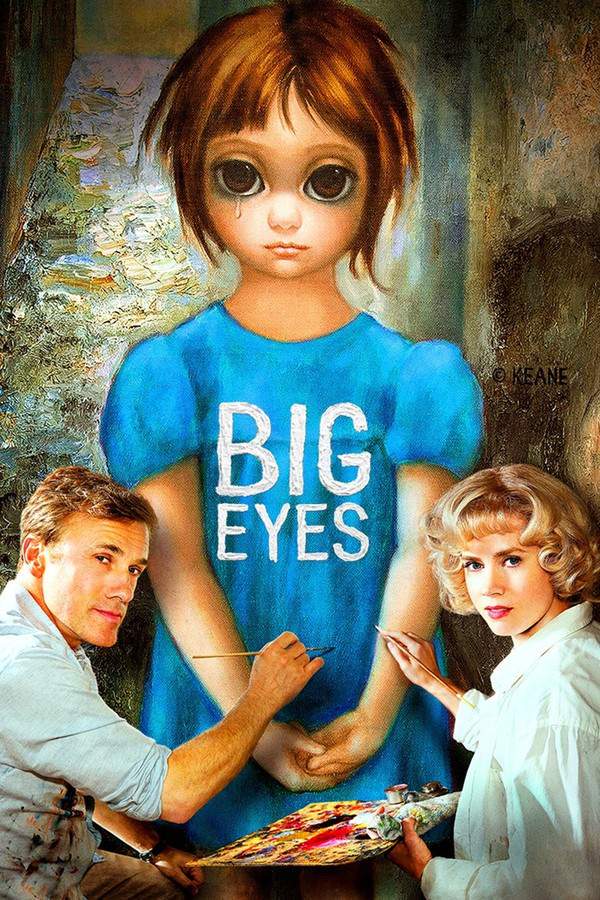
In 1950s America, Walter Keane achieves remarkable success as a painter of melancholic portraits of children with large, expressive eyes. However, the public is unaware that Margaret Keane, his wife, is the true artist behind these iconic images. As Walter takes credit for her work and his fame increases, Margaret struggles to gain recognition while navigating a complicated and increasingly strained marriage. The deception and the ensuing conflict reveal a hidden truth about the creation of the haunting artwork.
Warning: spoilers below!
Haven’t seen Big Eyes yet? This summary contains major spoilers. Bookmark the page, watch the movie, and come back for the full breakdown. If you're ready, scroll on and relive the story!
Read the complete plot breakdown of Big Eyes (2014), including all key story events, major twists, and the ending explained in detail. Discover what really happened—and what it all means.
In 1958, Margaret, portrayed by Amy Adams, makes the bold decision to leave her husband, taking her young daughter, Jane (played by Delaney Raye), to the vibrant North Beach area of San Francisco. As a single mother, Margaret supports her family by working to create illustrations at a furniture factory. There, she finds camaraderie with her friend, Dee-Ann (Krysten Ritter), who assists her in settling into their new life.
While showcasing her talent at an outdoor art show, Margaret crosses paths with Walter Keane (played by Christoph Waltz), a man selling his charming Parisian street scene paintings. While Margaret offers her live portrait sketches at just one dollar, Walter advises her against underpricing her art. His charismatic personality wins over both Margaret and Jane, leading to idyllic dinners and dreams of a future trip to France, all the while boasting of his artistic education in Paris.
Margaret’s unique style, characterized by girls with oversized eyes, results in artworks signed simply with the name KEANE. However, complications arise when her ex-husband serves her with court papers seeking custody of Jane. Walter, smitten, soon proposes, and they marry amidst turmoil.
Walter pursues the art scene vigorously, showing their work to Reuben (Jason Schwartzman), an unimpressed gallery owner who refuses to display their pieces. Undeterred, Walter tries to make a name for himself at a local jazz club but ends up in a violent clash over inadequate wall space—an event that captures headlines and entices crowds to witness the art that sparked a brawl.
The story gains momentum as celebrity gossip columnist Dick Nolan (Danny Huston), who provides narration, becomes intrigued, but he primarily seeks out Margaret’s distinct paintings rather than Walter’s claims. Walter, eager for fame, begins to market their works as his own, leading to an explosion of sales and the opening of his own Keane gallery, where he produces inexpensive reproductions of Margaret’s art.
While their lifestyle flourishes, with a move to an opulent mansion, Margaret feels increasingly isolated, locked away while Walter mingles with A-listers. The facade of their relationship begins to fray, as Walter insists on misleading their daughter Jane (Madeleine Arthur) about the true authorship of the paintings. Enraged by Walter’s appropriation of her work, Margaret attempts to change her artistic style to regain her identity as a painter.
A troubling discovery leads Margaret to find paintings of Parisian scenes signed by another artist, revealing Walter’s deceptive talents. When confronted, Walter admits his inability to paint but warns Margaret to remain silent about the truth. As tension escalates between them, Walter’s threats of violence compel Margaret and Jane to flee, culminating in a dramatic escape during a fiery incident instigated by Walter.
Their new life begins in Honolulu, Hawaii, where Walter makes demands in exchange for a divorce, leaving Margaret feeling trapped. With newfound clarity inspired by two Jehovah’s Witnesses, she decides to reclaim her identity by signing her paintings with “MDH Keane.” A surprise radio interview shocked the world, as Margaret publicly declares herself the real artist, which swiftly captures national attention.
As Walter’s fevered denials continue, Margaret counters with a lawsuit for defamation against him and the press, resulting in a courtroom spectacle. The judge challenges both to create a piece of art under time constraints, where Margaret showcases her undeniable talent while Walter falters under pressure, leading to her triumphant victory in court.
Outside the courthouse, Margaret expresses that her true desire is for recognition, not riches. Amidst the media frenzy, she signs a publication, finally taking ownership of her work. Walter, holding onto his delusions until his death in poverty, never paints again, while Margaret rejuvenates her passion by returning to San Francisco to open a new gallery, continuing to create art every day.
Last Updated: November 03, 2024 at 21:25
Discover curated groups of movies connected by mood, themes, and story style. Browse collections built around emotion, atmosphere, and narrative focus to easily find films that match what you feel like watching right now.
Quiet individuals rise up against oppression to reclaim their identity and voice.If you enjoyed watching Margaret Keane reclaim her identity in Big Eyes, you'll appreciate these movies about quiet individuals fighting back. This collection features similar stories of personal vindication, where characters overcome oppression to achieve a satisfying and happy ending.
Stories in this thread typically follow a three-act structure: establishment of oppression and deception, a period of silent suffering and internal conflict, and finally a climax involving a public confrontation or legal battle that leads to a clear, triumphant resolution for the protagonist.
These movies are grouped together because they share a core emotional journey from powerlessness to empowerment. They feature a specific type of victory—one that is legal, public, or deeply personal—that provides a strong sense of catharsis and justice, often after a tense and emotionally weighty buildup.
Stories where a seemingly secure relationship becomes a cage of lies and manipulation.Movies like Big Eyes that delve into the tense dynamics of a marriage fractured by deception. These films explore themes of gaslighting, identity theft within a relationship, and the slow, anxious journey toward freedom, perfect for viewers who appreciate domestic psychological tension.
The narrative pattern involves a central, hidden truth that one partner uses to manipulate and control the other. The tension escalates steadily as the victim becomes increasingly aware of their imprisonment, leading to a climax where the deception is exposed and the power dynamic is shattered.
These films are united by their exploration of a specific type of interpersonal conflict: domestic fraud and psychological manipulation. They create a distinct mood of claustrophobic anxiety and generate tension from the gradual disclosure of a betrayal that happens behind closed doors.
Don't stop at just watching — explore Big Eyes in full detail. From the complete plot summary and scene-by-scene timeline to character breakdowns, thematic analysis, and a deep dive into the ending — every page helps you truly understand what Big Eyes is all about. Plus, discover what's next after the movie.
Track the full timeline of Big Eyes with every major event arranged chronologically. Perfect for decoding non-linear storytelling, flashbacks, or parallel narratives with a clear scene-by-scene breakdown.
Discover the characters, locations, and core themes that shape Big Eyes. Get insights into symbolic elements, setting significance, and deeper narrative meaning — ideal for thematic analysis and movie breakdowns.
Get a quick, spoiler-free overview of Big Eyes that covers the main plot points and key details without revealing any major twists or spoilers. Perfect for those who want to know what to expect before diving in.
Visit What's After the Movie to explore more about Big Eyes: box office results, cast and crew info, production details, post-credit scenes, and external links — all in one place for movie fans and researchers.
Discover movies like Big Eyes that share similar genres, themes, and storytelling elements. Whether you’re drawn to the atmosphere, character arcs, or plot structure, these curated recommendations will help you explore more films you’ll love.
Big Eyes (2014) Scene-by-Scene Movie Timeline
Big Eyes (2014) Movie Characters, Themes & Settings
Big Eyes (2014) Spoiler-Free Summary & Key Flow
Movies Like Big Eyes – Similar Titles You’ll Enjoy
Made You Look: A True Story About Fake Art (2021) Ending Explained & Film Insights
Pollock (2000) Movie Recap & Themes
My Kid Could Paint That (2007) Ending Explained & Film Insights
Eye of the Beholder (2000) Film Overview & Timeline
Anamorph (2008) Plot Summary & Ending Explained
The Artist's Wife (2020) Spoiler-Packed Plot Recap
Rhinoceros Eyes (2004) Detailed Story Recap
The Artist’s Wife (2019) Film Overview & Timeline
Eyes On Me (2016) Plot Summary & Ending Explained
The Big Picture (2000) Movie Recap & Themes
The Eyes, the Mouth (1982) Spoiler-Packed Plot Recap
Painted Faces (1929) Story Summary & Characters
The Eyes Have It (1931) Detailed Story Recap
Painted Lady (1000) Spoiler-Packed Plot Recap
Dead Man’s Eyes (1944) Movie Recap & Themes