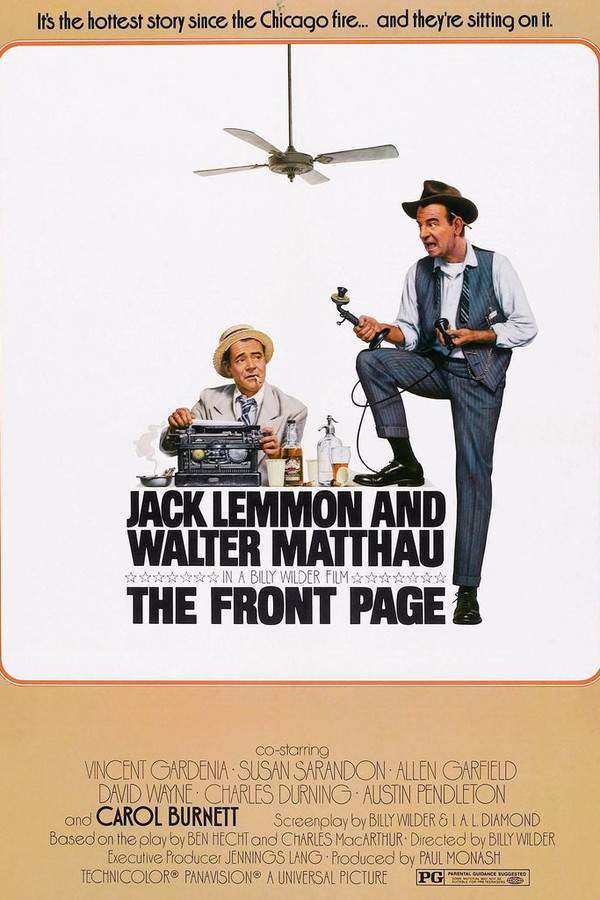
In Cornwall, a small upstate New York town, Vivian Osborne dallies with Judd Brooks, a man who is quickly rising in local circles, while she is married to an elderly but devoted banker, George M. Ferguson, whose steady leadership keeps the town’s giant factory and its financial footing secure. The pair’s public tenderness unfolds at the local train station, where Judd waits to collect the payroll for the factory, and Vivian offers a practiced distraction to maintain appearances.
Meanwhile, the town’s pulse is driven by a hungry young reporter, Bruce Foster, a go-getter for the Courier whose eyes gleam for big-city headlines. His partner in ambition is his girlfriend and typist, Toni Martin, who nudges him toward the glamorous life he secretly craves, even as he clings to the more modest dreams of Cornwall.
That night, a shocking scene erupts at the Ferguson residence. The sheriff and the local Brown arrive to find George M. Ferguson shot dead and Vivian Osborne bound and gagged, a tableau that sends shockwaves through even the quietest streets. The city’s newspapers swarm with sensational energy, splitting into two camps: the sober, fact-driven reporters and the flashier, sensational “yellow journalism” types who chase drama at any cost.
Leading the latter pack is Judd Brooks’s crew, with Bruce Foster swiftly wrapped in their schemes and chasing a tawdry chase after Maizie Dickson, the town’s only female reporter who sees through the gossip even as she slides into a tense game of flirtation with the ambitions of the moment. Maizie’s presence alarms the more principled minds, including the steady voice of conscience in Martin Collins, the dean of the straight-laced reporters who interrupts the celebration with a stern lecture on ethics.
Driven by the sensationalists, the district attorney begins to press charges against Vivian, insisting on a verdict that could seal her fate. Vivian maintains her innocence and protects Jud, but the pressure mounts as the D.A. harasses a pregnant Mrs. Judd Brooks, who collapses under questioning and is hospitalized, casting a shadow over the entire town.
As the rhetoric heats up, the story—shaped by the rival newspapermen—reaches a turning point when a breakthrough occurs. An “Extra! Extra!” blares from a newsboy’s cart: Foster, pursued by the less reputable press, has done real investigative work and discovers the true killers are in Boston, a discovery that undermines the sensationalists’ narrative and threatens to derail Vivian’s trial.
The mood shifts from triumph to peril for those chasing sensational fame. A confrontation with Parks escalates when Jud confronts him, beating the schemer and warning the sheriff that he’ll be at home if anyone dares press charges. The moment becomes a pivotal reminder of personal codes over fabricated sensationalism.
With the dust settling, Foster is offered a position by the reputable paper, a proposal he declines in favor of his more modest, principled path. The next morning, the town’s train to New York departs with the reporters in tow, except for Maizie, who waves goodbye to her former colleagues as Toni Martin hurries after her, determined to join the shifting tides of the city’s journalism.
In the final turn, Foster and Maizie depart the scene together, Maizie hinting at a new opening at the Courier, and Foster warmly offering her the job she has long sought. The film closes with a quiet sense of balance restored—ethics, ambition, and opportunity interwoven as the remaining crowds fade into a new chapter of reporting in a town that learned, harshly, the cost of sensationalism.