



Plot Explained Spoilers guaranteed!
Plot Explained

Browse by genre

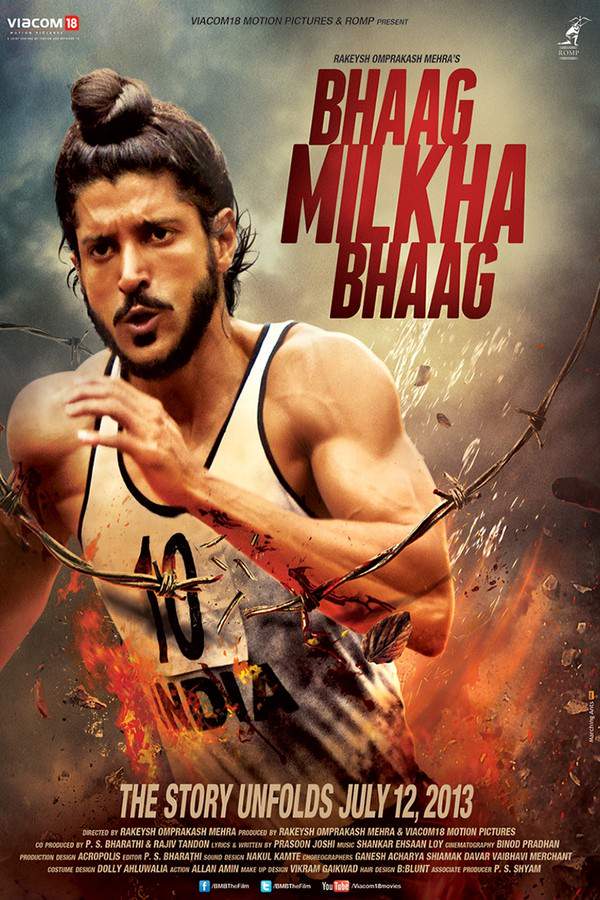
Bhaag Milkha Bhaag (2013) movie poster

Timeline

Bhaag Milkha Bhaag (2013) Timeline Explained – Every Event in Order

Release, runtime and language
2013 · 186 min · Hindi
Directed by
Rakeysh Omprakash Mehra
Starring
Farhan Akhtar

This biographical film tells the story of Milkha Singh, a celebrated Indian athlete. Farhan Akhtar portrays Singh, recounting his journey from a difficult childhood marked by tragedy to becoming a world-renowned sprinter. The film explores his intense training, his pursuit of excellence in the 400-meter race, and the devastating loss he faced at the 1960 Olympics. It’s a story of perseverance, dedication, and the unwavering spirit of a national icon.

On this page (7)
  1. 1 Where to watch
  2. 2 Events in order (14)
  3. 3 Timeline questions answered
  4. 4 The book behind the movie
  5. 5 Movie threads
  6. 6 Movies like Bhaag Milkha Bhaag
  7. 7 Every angle

Where to watch

Where to Watch Bhaag Milkha Bhaag (2013)

Where can you watch Bhaag Milkha Bhaag? Stream, rent or buy it in the US, including on Google Play Movies, YouTube and Apple TV Store: current JustWatch availability with up-to-date prices.

Streaming availability powered by JustWatch

14 events in order · contains spoilers

Bhaag Milkha Bhaag Timeline: Events in Chronological Order

Every key event of Bhaag Milkha Bhaag (2013) in order, scene by scene, with when and where it takes place. Use it to untangle flashbacks, time jumps and parallel storylines, to refresh your memory before the sequel or to find the exact scene you are thinking of.

  1. 1960 Summer Olympics

    The film opens during the 1960 Summer Olympics in Rome, where Milkha Singh's coach passionately exclaims, 'Bhaag Milkha Bhaag!' This phrase echoes Milkha's haunting childhood memories that overshadow his racing career, culminating in a disheartening fourth-place finish.

    When
    1960
    Where
    Rome
  2. Partition of India

    In 1947, the Partition of India causes chaos and mass religious violence in Punjab, tragically resulting in the deaths of Milkha's parents. This traumatic event shapes Milkha's early life and sets the stage for his future challenges as a survivor.

    When
    1947
    Where
    Punjab
  3. Relocation to Delhi

    After the horrific events of the Partition, Milkha relocates to Delhi where he eventually reunites with his sister. This new city provides a backdrop for his early struggles as he navigates life in impoverished refugee camps.

    Where
    Delhi
  4. Life in Refugee Camps

    While living in refugee camps in Delhi, Milkha finds companionship among fellow refugees and resorts to petty theft to survive. Amidst this turmoil, he meets Biro, who inspires him to live with integrity and aim for a better future.

    Where
    Delhi
  5. Joining the Army

    Milkha's life takes a turn when he joins the army, where he impresses a Havaldar by winning a race that offers milk and eggs as a reward. This victory leads to his selection for a commission, sparking his journey toward becoming a champion athlete.

  6. Facing Ridicule

    On the eve of the Indian team's selection for the Olympics, Milkha faces ridicule and violence from senior competitors who feel threatened by his talent. Despite being injured, he shows remarkable determination and breaks the national record in the race, returning home as a champion.

  7. Proposing to Biro

    Returning home as a national champion, Milkha proposes to Biro, only to discover that she has been married off while he was away. This heartbreaking revelation adds to the emotional weight of his journey, shaking his sense of achievement.

  8. 1956 Melbourne Olympics

    During the 1956 Melbourne Olympics, Milkha engages in a regrettable one-night stand with his Australian technical coach's granddaughter. This distraction leads to a poor performance in his final race, leaving him consumed by guilt as he reflects on his mistakes.

    When
    1956
    Where
    Melbourne
  9. Training for the Asian Games

    On his journey back to India, Milkha learns the world record for the 400m race stands at 45.90 seconds. Motivated by this knowledge, he dedicates himself to rigorous training, ultimately achieving an incredible time of 45.80 seconds at the Asian Games in Tokyo.

    When
    1958
    Where
    Tokyo
  10. Heading to Pakistan

    Prime Minister Jawaharlal Nehru persuades Milkha to lead the Indian team for a friendly race in Pakistan. However, he struggles with distractions and past traumas as he returns to his village, recalling the traumatic murder of his parents.

    Where
    Pakistan
  11. Overcoming the Past

    During his visit to the village, Milkha recalls his father's last words, 'Bhaag Milkha Bhaag!' This emotional encounter revitalizes his spirit, as he connects with a boy who turns out to be the son of a childhood friend.

    Where
    Punjab
  12. Victory in Pakistan

    As the race begins in Pakistan, Milkha faces initial challenges as the Pakistani favorite leads. However, with resilience and determination, he steadily overtakes his competitors, ultimately clinching victory and earning respect from both nations.

    Where
    Pakistan
  13. Becoming 'The Flying Sikh'

    His impressive performance in the race earns him the title of 'The Flying Sikh' from General Ayub Khan, the Pakistani president. This accolade highlights his status as a sports icon and an emblem of unity.

    Where
    Pakistan
  14. National Holiday Declaration

    In recognition of Milkha's achievements, Prime Minister Nehru proclaims a day in his honor as a 'National Holiday.' This gesture underscores the significance of his journey and the struggles he overcame to reach greatness.

Last updated: October 28, 2024 at 18:19

Was this helpful?

Timeline questions answered

Bhaag Milkha Bhaag Timeline Explained: Your Questions Answered

When does it happen, and why in that order? The questions people ask about the chronology of Bhaag Milkha Bhaag (2013): time jumps, flashbacks, cause and effect between scenes and the correct order of events, each answered with spoilers.

Q1

Why does Milkha struggle at the Olympics despite being a champion?

Milkha struggles at the Olympics because he is haunted by traumatic childhood memories of the Partition, when his parents were murdered. The phrase "Bhaag Milkha Bhaag!" (Run Milkha Run!), which was his father's final words, triggers flashbacks that overwhelm him during races, causing him to lose focus and finish fourth in the 1960 Rome Olympics.

Foreshadowing: The film opens with this phrase being shouted during the Rome Olympics, establishing the psychological burden that plagues his career.

  • partition trauma
  • olympic performance
  • childhood memories
  • psychological barrier
Q2

What does "Bhaag Milkha Bhaag" mean and why is it important?

"Bhaag Milkha Bhaag" means "Run Milkha Run" in Hindi. These were Milkha's father's final words before dying during the 1947 Partition violence. The phrase becomes a powerful motif throughout the film, representing both the desperate command to survive and later the driving force behind his athletic achievements.

Foreshadowing: The coach shouts this phrase at the 1960 Olympics, connecting the traumatic past to the present moment.

  • father's words
  • partition
  • slogan
  • meaning
Q3

Why is Biro already married when Milkha returns home?

Milkha proposes to Biro after winning the national championship and breaking the record, but he discovers she has been married off to someone else while he was away training. This happens because in that era, families often arranged marriages quickly, and Milkha's prolonged absence gave her family no choice but to accept another proposal.

Foreshadowing: Earlier, Biro tells Milkha that she always encourages him to run toward his dreams, setting up their emotional connection before the tragic separation.

  • biro
  • marriage
  • love
  • breakup
Q4

What happens at the 1956 Melbourne Olympics that ruins Milkha's performance?

During the 1956 Melbourne Olympics, Milkha gets involved in a regretful one-night stand with the granddaughter of his Australian technical coach. This distraction and subsequent guilt contribute to his dismal performance in the final 400m race, leaving him ashamed and self-critical.

Foreshadowing: The film hints at his vulnerability to personal distractions earlier in his career, which manifests fully in Melbourne.

  • melbourne
  • olympics
  • distraction
  • guilt
Q5

How does Milkha join the army and become a professional athlete?

While living in Delhi refugee camps, Milkha joins the army. He impresses a Havaldar by winning a race that offers milk and eggs as rewards - a significant incentive for someone who grew up in poverty. This victory leads to his selection for a commission, giving him the structure and training facilities to pursue athletics professionally.

Foreshadowing: Earlier scenes show Milkha stealing and surviving in the camps, establishing his running skills as his ticket to a better life.

  • army
  • havaldar
  • recruitment
  • commission
Q6

Why does Milkha's race in Pakistan become historically significant?

Milkha wins the race in Pakistan despite being distracted by painful memories of his parents' murder. He overcomes the Pakistani favorite who initially leads, ultimately winning and gaining respect from both India and Pakistan. This victory earns him the title "The Flying Sikh" from Pakistani President General Ayub Khan.

Foreshadowing: Milkha's visit to his village triggers memories of his father's last words, which seem to give him renewed strength during the race.

  • pakistan
  • flying sikh
  • general ayub khan
  • victory
Q7

What is the significance of Milkha's 45.80 seconds record?

After the 1956 Olympics, Milkha's coach tells him the world record for 400m is 45.90 seconds. Driven by this target, Milkha trains rigorously and achieves 45.80 seconds at the 1958 Asian Games in Tokyo, setting a national record and proving he can compete at the highest international level.

Foreshadowing: This moment marks a turning point where Milkha transforms his Olympic failure into motivation for record-breaking performance.

  • asian games
  • tokyo
  • world record
  • 45 seconds
Q8

Why is Milkha Singh called "The Flying Sikh"?

After winning the historic race in Pakistan, General Ayub Khan, the Pakistani President, bestows upon Milkha the title "The Flying Sikh" in recognition of his incredible speed. This nickname becomes synonymous with his legacy as one of the greatest sprinters in history.

Foreshadowing: His victory in Pakistan is depicted as a moment of national pride that transcends the India-Pakistan rivalry.

  • flying sikh
  • title
  • nickname
  • ayub khan
Q9

How does the Partition of India shape Milkha's life?

The 1947 Partition brings chaos and religious violence to Punjab, resulting in the brutal murder of Milkha's parents. This traumatic childhood event sets the foundation for his psychological struggles throughout his athletic career, making "running away" both a literal and metaphorical theme in his life.

Foreshadowing: The film opens with the aftermath of Partition, showing young Milkha escaping the violence that claims his family.

  • partition
  • parents death
  • trauma
  • childhood
Q10

What happens to Milkha at the 1960 Rome Olympics?

At the 1960 Rome Olympics, Milkha finishes in fourth place in the 400m final, just missing a medal. Despite his training and abilities, his performance is derailed by flashbacks to his traumatic childhood during the Partition, triggered by his coach's repeated shout of "Bhaag Milkha Bhaag!"

Foreshadowing: The film opens with this moment, establishing it as the central psychological conflict Milkha must overcome.

  • rome
  • olympics
  • fourth place
  • final race
Q11

Why does Nehru declare a national holiday in Milkha's honor?

Prime Minister Jawaharlal Nehru declares a day in Milkha's honor as a "National Holiday" to celebrate his unprecedented athletic achievements and his role as a unifying national icon who brought pride to India through his record-breaking performances and international victories.

Foreshadowing: This honor represents the culmination of Milkha's journey from a traumatized refugee to a national hero.

  • nehru
  • national holiday
  • honor
  • recognition

Movie threads

More Movies Like Bhaag Milkha Bhaag, by Mood & Story

Curated lists built around what makes Bhaag Milkha Bhaag tick: the same mood, the same kind of story or the same emotional payoff. Each list explains why these movies belong together.

Rise from Trauma to Triumph like in Bhaag Milkha Bhaag

Biographical journeys fueled by devastating loss and unwavering resilience. If you were moved by the powerful journey in Bhaag Milkha Bhaag, this thread features movies like it—true stories of individuals who overcome devastating personal tragedies and historical trauma to achieve legendary status. These films share a heavy emotional weight, a hopeful tone, and a focus on resilience in the face of immense adversity.

  • inspiring
  • tragic
  • persevering
  • determined
  • gripping
  • emotional
  • Tone: hopeful, earnest
  • Pacing: steady, chronological
Why these movies?

The story pattern: The narrative pattern typically begins with a foundational trauma or loss that defines the protagonist's life. Their subsequent journey is a direct response to this pain, often framed as a quest for redemption or validation. The plot structure is frequently chronological, moving through formative struggles and relentless training toward a climactic public achievement that is emotionally layered with the initial loss.

Why they belong together: Movies are grouped here because they share a core emotional structure: the transformative power of using deep-seated pain as fuel for extraordinary accomplishment. They balance heavy dramatic weight with a forward-moving, hopeful momentum, creating a specific and powerful inspirational experience.


Sports Dramas with National Pride like Bhaag Milkha Bhaag

Intense sports dramas where an athlete's personal quest becomes a nation's symbol. For viewers who loved the combination of intense sports action and patriotic fervor in Bhaag Milkha Bhaag, this section gathers similar movies. These films focus on athletes whose personal dedication and struggles on the field carry the weight of national pride, often set against a significant historical backdrop.

  • patriotic
  • intense
  • gripping
  • earnest
  • determined
  • inspiring
  • Tone: patriotic, intense
  • Pacing: steady
Why these movies?

The story pattern: The plot revolves around an athlete's rigorous training and pivotal competitions, but the stakes are elevated beyond personal achievement to represent a nation's pride or recovery. The antagonist is often a rival nation or a historical moment of national significance. The character's internal drive is amplified by external pressure, creating a powerful narrative of dedication and symbolic victory.

Why they belong together: These films are grouped by their unique blend of personal sports narrative and collective national identity. They share a high-intensity, earnest mood, combining the visceral thrill of competition with the emotional gravity of representing something larger than oneself.

If you liked this

Movies Like Bhaag Milkha Bhaag

Similar movies to Bhaag Milkha Bhaag: the same genre, themes or kind of story. Each one comes with its own plot summary, timeline and ending explained.

Browse all movie summaries

Every angle

Bhaag Milkha Bhaag (2013) Explained: Plot, Timeline & Characters

Everything about Bhaag Milkha Bhaag in one place: what happens in the plot summary, the timeline in chronological order, the characters and meaning and a spoiler-free summary. What's After the Movie adds the cast, box office and post-credit scenes.

Coming soon on iOS and Android

The Plot Explained Movie Summary App

Plot summaries, endings explained and timelines on your phone. Catch up on any movie in minutes, save your favorites and never miss a twist again.

Be the first to know when we launch. Your email stays private, always.

Learn more about the app