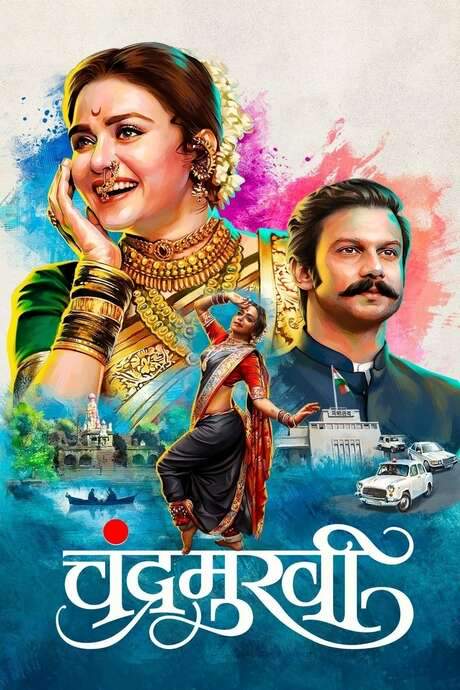
Murlikant Petkar arrives at a local police station, aged and resolute, to file a complaint against the President of India for not being awarded the Arjuna Award despite his life’s work. He insists that securing the award would ignite a brighter future for his village, and as an officer asks about his eligibility, he begins to recount a remarkable life story that stretches from a small Maharashtra village to the edge of global sport.
Growing up in Peth Islampur, his heart is set on an Olympic gold for India, a dream that earns him mockery from classmates and scolding from his father. The taunts sharpen into a stubborn resolve, driving him to leave home and join the Indian Army Corps of EME, where he trains as a boxer with steady discipline. His talent earns him a chance to represent India at the International Services Sports Meet in 1964 in Tokyo, where he performs well but falters in the final round—his focus slips at a crucial moment. Disheartened by the failure, his coach, Tiger Ali, refuses to continue training him, believing the flame may be extinguished.
The unit then faces the turmoil of war: the Indo-Pakistani conflict of 1965 brings air attacks that shake the camp. A bullet wounds his spine, leaving him paraplegic and confined to a war infirmary. Depression darkens his days as he grapples with the loss of an Olympic dream, and he even considers ending his life. In the dim hours of hardship, his former coach visits him, offering a renewed spark of purpose and rekindling the drive to compete again—this time in a different arena: the Paralympics.
Driven by renewed hope, he trains harder than before and earns a place at the 1972 Summer Paralympics in the 50-meter freestyle event. The Olympic spirit meets tragedy when Palestinian terrorists strike the Olympic venue, forcing the Paralympics to relocate to Heidelberg. He fights through the heats at the new site, overcoming every obstacle to clinch the Gold and set a new World record. The victory catapults him into fame back home, where villagers greet him with joy and pride, and his name is spoken with growing reverence.
Yet the memory of his triumph fades with time, and a police inspector who heard his tale remains intrigued but skeptical about its authenticity. He enlists a journalist to document the legend, while Petkar’s own application for the Arjuna Award moves through the system toward a broader honor. A senior government official dispels the modest Arjuna Award as inadequate for such a monumental career, announcing instead that the Padma Shri will recognize his service to the nation.
On a March day etched in memory, he receives the Padma Shri from the President, a culmination that seems to seal a lifetime of perseverance and resilience. The narrative closes on a note of unbending faith in the human spirit, a reply to every challenge, every sneer, every whispered doubt, crystallized in a final, defining moment of resolve.
> "Ae, hasta kaiko hai? (Why are you laughing?)"