

Plot Explained Spoilers guaranteed!
Plot Explained

Browse by genre

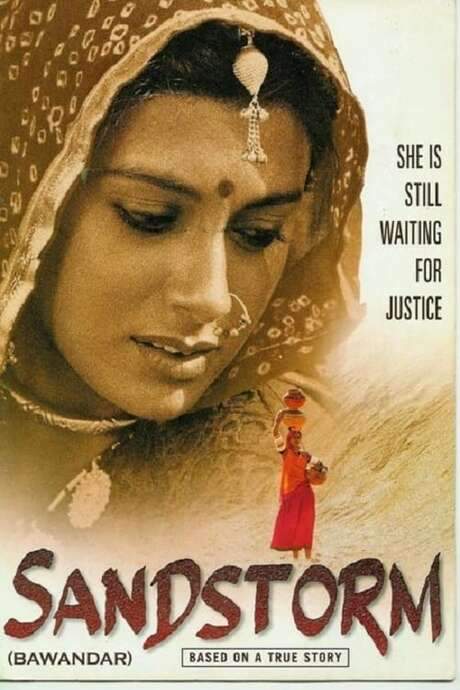
Bawandar (2000) movie poster

Timeline

Bawandar (2000) Timeline Explained – Every Event in Order

Release, runtime and language
2000 · More mins · Hindi
Directed by
Jag Mundhra
Starring
Lillete Dubey, Nandita Das, Rahul Khanna, Deepti Naval, Gulshan Grover, Yashpal Sharma

Shoba T. Mathur, an officer, is assigned to raise awareness against child marriage and other evils rooted in misinterpreted Hindu scriptures in Dhabri, Rajasthan. She recruits Saanvri, a housewife, mother of Kamli and wife of rickshaw driver Sohan, to spread the message. Saanvri’s work provokes the anger of village elders, especially the Gujjar family, who see it as a threat to tradition.

On this page (5)
  1. 1 Where to watch
  2. 2 Events in order (15)
  3. 3 Timeline questions answered
  4. 4 Movie threads
  5. 5 Every angle

Where to watch

Where to Watch Bawandar (2000)

Where can you watch Bawandar? Stream, rent or buy it in the US, including on Fawesome: current JustWatch availability with up-to-date prices.

Streaming availability powered by JustWatch

15 events in order · contains spoilers

Bawandar Timeline: Events in Chronological Order

Every key event of Bawandar (2000) in order, scene by scene, with when and where it takes place. Use it to untangle flashbacks, time jumps and parallel storylines, to refresh your memory before the sequel or to find the exact scene you are thinking of.

  1. Foreign journalists arrive in Rajasthan to investigate

    Amy and Ravi travel to Rajasthan five years after the gang-rape to investigate Sanwari's case. They learn of the brutal incident from a newspaper and begin to uncover what happened in the village. The encounter sets the frame for the retelling of Sanwari's story through testimony.

    When
    Five years after the incident
    Where
    Rajasthan (Dhabri)
  2. Sanwari and Sohan's modest life in Dhabri

    Sanwari and Sohan are a married couple from the Kumhar caste living in Dhabri. Sanwari makes pots while Sohan drives a rickshaw to support the family. Their everyday life is fragile under social oppression and economic strain.

    When
    Before the incident
    Where
    Dhabri
  3. Shobha Devi recruits Sanwari as Saathin

    Shobha Devi, a government social worker, notices Sanwari's courage against oppression. She recruits Sanwari as a Saathin, a grassroots worker for the Women's Development Project. This marks Sanwari's formal entry into anti-violence activism.

    When
    Early stages of Shobha's program
    Where
    Dhabri
  4. Sanwari educates women; opposition rises

    Sanwari begins educating village women about child marriage and women's oppression, challenging deep-rooted norms. Conservative elders and the Gurjar community push back against her activism. The campaign soon becomes a flashpoint in the village.

    When
    During activism
    Where
    Dhabri
  5. Gurjar boycott targets Sanwari and family

    Five men from the Gurjar community spearhead a social and economic boycott against Sanwari and her family. Milk purchases stop and customers refuse to buy the pots she makes, crippling their livelihood. The boycott demonstrates the power of collective retaliation against dissenters.

    When
    During the boycott period
    Where
    Dhabri
  6. The attack and rape

    During a confrontation over a child marriage, the five Gurjar men beat Sohan and gang-rape Sanwari. The crime exposes the brutal consequences of continuing patriarchal and caste-based oppression. The trauma reverberates through the family and the village.

    When
    Shortly after the boycott
    Where
    Dhabri
  7. Police refuse FIR without medical report

    Sanwari and Sohan attempt to file a First Information Report at the local police station, but the inspector refuses to lodge it without a medical report. The case exposes corruption and procedural obstacles within law enforcement. The family’s path to justice stalls at the outset.

    When
    Days after the rape
    Where
    Dhabri Police Station
  8. Doctor requires court order for medical report

    The doctor declines to issue a medical report without a court order, explaining that rape cases require legal authorization. This bureaucratic obstruction delays vital evidence. The struggle highlights systemic barriers to accountability.

    When
    Soon after the FIR attempt
    Where
    Local clinic/hospital
  9. Court order enables medical examination

    With Shobha's help, the couple secures a court order, allowing the medical examination to proceed. The intervention makes it possible to gather official evidence for the case. The legal breakthrough contrasts with ongoing social hostility.

    When
    After securing the court order
    Where
    Dhabri Court
  10. Medical tests in Jaipur and formal complaint

    A medical test is conducted in Jaipur two days after the incident, and the formal complaint is lodged thereafter. The distance to Jaipur underscores bureaucratic persistence and the need for credible documentation. This step draws national attention to the case.

    When
    Two days after the incident
    Where
    Jaipur
  11. National attention and PM's involvement

    The case receives national attention when a Delhi-based NGO leader intervenes on Sanwari's behalf. The Prime Minister's Office becomes involved and offers support from the Prime Minister's Relief Fund. The official interest signals a shift in political will toward justice.

    When
    After NGO intervention
    Where
    Delhi
  12. Accused arrested and tried; political backing appears

    The alleged offenders are arrested and brought to trial, but face protection from the local MLA, Dhanraj Meena. A lawyer is hired to defend them, illustrating political influence in the judicial process. The trial becomes a battleground of power and accountability.

    When
    During the trial period
    Where
    Rajasthan Court
  13. Defenses encounter community pressure

    A Gurjar lawyer defends Sanwari but faces community pressure to favor the accused. The defense strategy exploits social loyalties, complicating the pursuit of justice. The courtroom becomes a stage for broader social conflict.

    When
    During the trial
    Where
    Court in Rajasthan
  14. Judges are transferred; verdict goes against Sanwari

    Judges handling the case are transferred multiple times, delaying the proceedings. Ultimately, the five accused walk free, with the verdict against Sanwari's demands for justice. The outcome underscores the perceived failures of the legal system.

    When
    Final judgment
    Where
    Rajasthan Court
  15. Ending narration and ongoing activism

    The film closes with Deepti Naval's narration affirming Bhanwari Devi's refusal to give up the fight for justice. Sanwari's legacy as a rape activist endures as she helps other women recover and seek aid. The message ties the historical case to ongoing social reform.

    When
    End of film

Last updated: October 09, 2025 at 16:38

Was this helpful?

Timeline questions answered

Bawandar Timeline Explained: Your Questions Answered

When does it happen, and why in that order? The questions people ask about the chronology of Bawandar (2000): time jumps, flashbacks, cause and effect between scenes and the correct order of events, each answered with spoilers.

Q1

Why did the Gurjar men attack Sanwari?

The Gurjar men attacked Sanwari because she reported a child marriage occurring within their community to the authorities. As a Saathin (grassroots women's rights worker), she was tasked with stopping child marriages, and her report directly challenged the Gurjar elders' traditional practices. This act of defiance was seen as a severe transgression against community norms, leading to the brutal retaliation.

Foreshadowing: Earlier scenes show Sanwari facing opposition from village elders as she educates women about child marriage, establishing the growing tension.

  • gurjar community
  • child marriage
  • retaliation
  • saathin
Q2

How did the boycott impact Sanwari and her family?

The Gurjar community organized an economic boycott against Sanwari's family by stopping all milk purchases and refusing to buy the pots they made. Since Sanwari and Sohan relied on these income sources, the boycott severely crippled their livelihood, putting enormous financial pressure on the family while attempting to force them to abandon Sanwari's activism.

Foreshadowing: The film establishes early that the Kumhar family depends on selling pots and milk for survival, making the boycott's impact devastating.

  • economic boycott
  • gurjar community
  • pots
  • milk
  • livelihood
Q3

Why did the police refuse to file the FIR initially?

The local police inspector refused to file a First Information Report without a medical report documenting the rape. This bureaucratic refusal trapped Sanwari and Sohan in a catch-22: the police demanded medical evidence before accepting the complaint, yet obtaining that evidence required a court order. This delay and obstruction exemplified the systemic failures victims face when seeking justice.

Foreshadowing: The corrupt inspector's reluctance was hinted at when Sanwari and Sohan first approached the police station.

  • fir
  • police
  • medical report
  • obstruction
  • corruption
Q4

Why did the doctor require a court order for the medical examination?

The doctor refused to issue a medical report without a court order, claiming that rape cases legally require judicial authorization before a medical examination can be conducted. This bureaucratic requirement further delayed the case and exemplified how procedural obstacles hindered justice for the victim, forcing Sanwari's family to pursue legal avenues just to gather evidence of the crime.

Foreshadowing: The rigid legal procedures were established earlier when Sanwari attempted to file her complaint.

  • doctor
  • court order
  • medical examination
  • bureaucratic delay
Q5

How did Sanwari's case become a national issue?

The case gained national attention when a major women's NGO in Delhi intervened on Sanwari's behalf after learning about the incident. The NGO leader pushed the matter further, leading to Prime Minister's Office involvement. The PM assigned the investigation to the Central Bureau of Investigation and offered Rs. 1 lakh from the Prime Minister's Relief Fund, transforming a local crime into a nationally significant case.

Foreshadowing: The NGO's involvement was foreshadowed by Shobha Devi's connections to larger women's rights networks.

  • ngo
  • prime minister
  • cbi
  • national attention
  • media
Q6

Why were the five accused men acquitted in court?

The five accused Gurjar men walked free because multiple factors undermined the case: judges were repeatedly transferred, causing lengthy delays; the local MLA Dhanraj Meena backed the accused; and the defense lawyer exploited community pressure and social loyalties within the Gurjar community. Despite Sanwari's courage in pursuing justice, the combined political influence and procedural chaos resulted in the attackers being declared not guilty.

Foreshadowing: The film showed the MLA's involvement and the community's pressure on the defense lawyer early in the trial.

  • acquittal
  • mla
  • judges transferred
  • gurjar lawyer
  • verdict
Q7

What happened to Sanwari after the court verdict?

Despite the devastating verdict, Sanwari did not give up. The film ends with her continuing her work as a rape activist, providing help, counsel, and inspiration to other survivors of sexual violence. Her resilience transformed her personal tragedy into a mission of supporting other women seeking justice.

Foreshadowing: The film's closing narration explicitly connects Sanwari's story to Bhanwari Devi's real-life continued activism.

  • activism
  • after verdict
  • resilience
  • survivors
  • hope
Q8

Why does the film use a foreign reporter as the narrator?

The film frames its narrative through Amy, a foreign journalist who reads about Sanwari's case and travels to Rajasthan to investigate. This storytelling device provides a lens for viewers to discover the events alongside an outsider, making the complex social and legal issues accessible while emphasizing how the case reached international awareness. The framing also allows the story to be told chronologically through testimony and investigation.

Foreshadowing: The film opens with Amy and Ravi's arrival in the desert, setting up the retrospective narrative.

  • amy
  • narrator
  • journalist
  • framing device
  • investigation
Q9

What role did MLA Dhanraj Meena play in the case?

Local MLA Dhanraj Meena provided political protection and backing to the five accused Gurjar men. His involvement demonstrated how powerful local figures could influence the judicial process, hiring lawyers to defend the accused and using political influence to complicate the pursuit of justice. This backing emboldened the defendants and contributed to the ultimate acquittal.

Foreshadowing: The MLA's name appears early in the timeline as providing protection to the accused during the trial.

  • mla
  • dhanraj meena
  • political backing
  • accused
  • influence
Q10

Why did Shobha Devi recruit Sanwari as a Saathin?

Shobha Devi, a government social worker with the Women's Development Project, noticed Sanwari's courage when she stood up against a corrupt quarry supervisor who was exploiting women. Recognizing her fearlessness and potential to inspire change, Shobha recruited Sanwari as a Saathin, a grassroots worker tasked with educating rural women about issues like child marriage and gender oppression. This role transformed Sanwari from a potter's wife into a community activist.

Foreshadowing: Sanwari's defiance against the quarry supervisor was the initial demonstration of her courage that attracted Shobha's attention.

  • saathin
  • shobha devi
  • women's development project
  • recruitment
  • activism

Movie threads

More Movies Like Bawandar, by Mood & Story

Curated lists built around what makes Bawandar tick: the same mood, the same kind of story or the same emotional payoff. Each list explains why these movies belong together.

Courageous Battles Against Corruption Like in Bawandar

Stories of individuals taking on powerful, corrupt systems for justice. If you were moved by the struggle in Bawandar, explore other movies about fighting systemic injustice. These powerful dramas feature ordinary individuals taking on corrupt systems, showcasing resilience in the face of overwhelming odds and political pressure.

  • gritty
  • infuriating
  • courageous
  • hopeful
  • somber
  • resilient
  • Tone: dark, infuriating, hopeful
  • Pacing: steady, procedural
Why these movies?

The story pattern: The narrative follows a clear, often linear, path from a personal injustice to a public confrontation. The protagonist gathers evidence, faces intimidation, and endures a stressful, procedural battle (like a court case or public campaign) that tests their spirit. The outcome is often realistically bittersweet, mixing small personal victories with the sobering reality that the system itself is difficult to fully overcome.

Why they belong together: These films are grouped by their shared focus on a high-intensity, morally clear conflict between an individual and a corrupt institution. They create a harrowing yet inspiring mood, blending somber realism with the power of human resilience, and maintain a steady pacing as they methodically build the case against injustice.

Movies About Surviving Trauma Like Bawandar

Intense stories of surviving trauma and the arduous path to healing. If you appreciated Bawandar's powerful portrayal of survival, discover other films about overcoming profound trauma. These intense dramas explore the harrowing experience and the bittersweet, complex journey of rebuilding a life, focusing on resilience in the face of unbearable pain.

  • harrowing
  • gritty
  • oppressive
  • resilient
  • somber
  • courageous
  • Tone: dark, harrowing, bittersweet
  • Pacing: steady, methodical
Why these movies?

The story pattern: The narrative is sharply divided into a before and after, with a central, traumatic event serving as the pivot. The second half explores the fallout: the struggle for justice, the process of healing, and the confrontation with a world that may be indifferent or hostile. The character arc is about enduring and finding a way to live with the trauma, rather than erasing it.

Why they belong together: These movies are united by their unflinching exploration of survival. They share a high-intensity, dark tone, a heavy emotional weight, and a focus on the gritty, often oppressive reality of life after a life-shattering event. The pacing is steady, methodically following the survivor's difficult path.

Every angle

Bawandar (2000) Explained: Plot, Timeline & Characters

Everything about Bawandar in one place: what happens in the plot summary, the timeline in chronological order, the characters and meaning and a spoiler-free summary. What's After the Movie adds the cast, box office and post-credit scenes.

Coming soon on iOS and Android

The Plot Explained Movie Summary App

Plot summaries, endings explained and timelines on your phone. Catch up on any movie in minutes, save your favorites and never miss a twist again.

Be the first to know when we launch. Your email stays private, always.

Learn more about the app