Plot Explained Spoilers guaranteed!
Plot Explained

Browse by genre

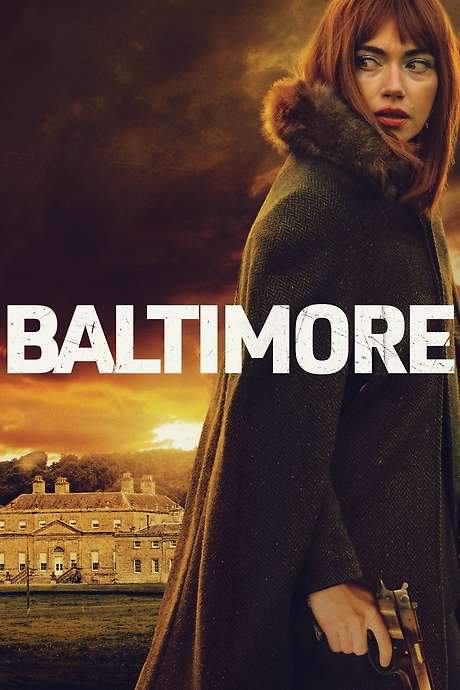
Baltimore (2023) movie poster

Timeline

Baltimore (2023) Timeline Explained – Every Event in Order

Release, runtime and language
2023 · 98 mins · English
Loading streaming availability…
Directed by
Christine Molloy, Joe Lawlor
Starring
Imogen Poots, Carrie Crowley, Dermot Crowley, Alan Howley, John Kavanagh, Ella Cannon
Budget
$2M

Based on the real 26 April 1974 raid, former debutante turned IRA operative Rose Dugdale and three comrades stormed Russborough House in Wicklow, stealing nineteen priceless paintings to fund the Irish Republican Army’s armed campaign. The story then unfolds over the ensuing days as Dugdale lies low in a remote cottage, awaiting the fallout.

On this page (6)
  1. 1 Where to watch
  2. 2 Events in order (13)
  3. 3 Timeline questions answered
  4. 4 Movie threads
  5. 5 Movies like Baltimore
  6. 6 Every angle
Loading streaming availability…

13 events in order · contains spoilers

Baltimore Timeline: Events in Chronological Order

Every key event of Baltimore (2023) in order, scene by scene, with when and where it takes place. Use it to untangle flashbacks, time jumps and parallel storylines, to refresh your memory before the sequel or to find the exact scene you are thinking of.

  1. Awakening to activism during university studies

    Rose Dugdale, an English heiress, grows uncomfortable with privilege and begins radical politics on campus. She forms a student club to push for social and British-Ireland policy changes. A news footage of British soldiers attacking a peaceful protest hardens her resolve toward 'action' as the only path to change.

    When
    During university studies
    Where
    University campus, England
  2. Renouncing privilege and wealth after graduation

    After graduation she abandons a planned government career, sells her expensive home, and gives all her money to the poor. She renounces her family name and begins a new life away from aristocratic ties. Her transformation marks a permanent shift toward anti-British activism.

    When
    After graduation
    Where
    England
  3. Move to Northern Ireland and activism

    She relocates to Northern Ireland and becomes a pro-Irish activist. In this new environment she finds like-minded comrades and channels her frustrations into political action. Her commitment deepens as she meets members of the IRA.

    When
    Post-graduation
    Where
    Northern Ireland
  4. Introduction to the Provisional IRA and training

    Dugdale is introduced to the Provisional IRA and is invited to join their ranks. She undergoes extensive training in weapons, explosives, and spycraft, building the skills that will underpin later operations. Her quick grasp of the craft earns her a leadership role.

    When
    Early involvement with IRA
    Where
    IRA training facilities
  5. Bombing of a police station

    After proving herself, she participates in an attack on a police station. The bombing demonstrates her commitment and marks her rise within the organization. The operation also signals the shift from symbolic acts to high-risk, real-world actions.

    When
    Soon after training
    Where
    Police station, Northern Ireland
  6. Rise to leadership within the IRA

    Dugdale's performance earns her a quick ascent to a leadership position. She becomes a prominent figure within the group and is trusted with planning and directing operations. Her ascent underscores the fervor and intensity of the period.

    When
    Following the station bombing
    Where
    IRA circles, Northern Ireland
  7. Planning the Russborough House raid

    In April 1974, Dugdale plans a raid on Russborough House, home of Sir Alfred Beit. She conceals her hair under a red wig and adopts a French accent to disguise her identity. The operation is aimed at seizing valuable assets and sending a message to authorities.

    When
    April 1974
    Where
    Russborough House, Ireland
  8. The raid at Russborough House

    Dugdale and her team break in, restrain Sir Beit and his wife, and subject them to verbal and physical abuse. The action is shocking in its audacity and the level of intrusion on a private home. The assault reveals the single-mindedness of her mission.

    When
    April 1974
    Where
    Russborough House
  9. Discovery of the paintings and extraction plan

    Her real aim is the Beit art collection, including a rare Vermeer. The team carefully extracts the paintings and moves them to a rural property under Dugdale's alias. The plan hinges on a ransom and political demands to secure prisoners' release.

    When
    Following the raid
    Where
    Russborough to rural property
  10. Ransom demand and police threat

    Dugdale contacts authorities using her French accent and demands the release of IRA prisoners along with a ransom for the paintings' return. She threatens destruction if her demands are not met. The-scale threats escalate the police manhunt.

    When
    After moving paintings
    Where
    Rural property; phone contact to police
  11. Police pursuit and property raid

    A wide police hunt tracks the paintings and eventually leads to a raid on the rural property. The lease Dugdale signed is uncovered, tying the operation to her. The investigation tightens and closes in on her team.

    When
    During the manhunt
    Where
    Rural property, Ireland
  12. Arrest, conviction, and sentencing

    Dugdale is arrested and convicted for both the art theft and her earlier role in the station bombing. The legal process culminates in a sentencing that marks the end of her public anti-authority activities. She defies the court by raising a fist as she is led away.

    When
    Post-raid, after 1974
    Where
    Courtroom, Ireland
  13. Defiant courtroom moment

    In sentencing, Dugdale defiantly raises a fist to the court, a symbolic gesture of resistance. The moment cements her as a controversial figure in the period's struggle. Her actions remain a stark example of militant activism crossing into crime.

    When
    During sentencing
    Where
    Courtroom

Last updated: October 05, 2025 at 12:36

Was this helpful?

Timeline questions answered

Baltimore Timeline Explained: Your Questions Answered

When does it happen, and why in that order? The questions people ask about the chronology of Baltimore (2023): time jumps, flashbacks, cause and effect between scenes and the correct order of events, each answered with spoilers.

Q1

Why did Rose Dugdale become an IRA operative?

Rose Dugdale's transformation into an IRA operative began during her university years when she became radicalized by Irish republicanism. A pivotal moment came when she witnessed news footage of British soldiers assaulting an unarmed civil rights protest, which convinced her that only 'action' would bring lasting change. After graduating, she abandoned her planned government career, sold her inheritance, donated her wealth to the poor, and moved to Northern Ireland to join the Provisional IRA.

Foreshadowing: During her university activism, she tells her classmates that peaceful protest is insufficient and that direct action is necessary.

  • rose dugdale
  • ira
  • activism
  • radicalization
  • northern ireland
Q2

What was the Russborough House raid?

The Russborough House raid was a 1974 art heist in which Rose Dugdale and three IRA comrades stormed the Irish estate of Sir Alfred Beit. Disguised with a blond wig and French accent, they restrained Sir Beit and his wife, subjecting them to verbal and physical abuse before stealing nineteen priceless paintings, including a rare Vermeer. The stolen art was moved to a rural property where Dugdale attempted to ransom them in exchange for the release of IRA prisoners.

Foreshadowing: Dugdale's strategic mind and willingness to take big risks are established earlier during her training and leadership in the police station bombing.

  • russborough house
  • art heist
  • ira
  • rose dugdale
  • paintings
Q3

Why did Rose Dugdale target the Beit family's art collection?

Rose Dugdale specifically targeted the Beit art collection because it contained a priceless Vermeer, one of only two copies remaining in the world. While the raid appeared to be an attack on wealthy British aristocracy, her real fixation was on acquiring valuable cultural assets that could be used to fund the IRA's armed campaign and secure the release of Republican prisoners.

Foreshadowing: Earlier scenes establish Dugdale's single-minded dedication to the IRA cause and her strategic approach to operations.

  • vermeer
  • beit family
  • art collection
  • painting
  • russborough house
Q4

How was Rose Dugdale caught after the art theft?

Rose Dugdale was caught when police traced the lease of the rural property where the paintings were hidden back to her. Investigators discovered the connection through the alias she had used to rent the property, leading to a police raid before she could complete her ransom plan. She was arrested and convicted for both the art theft and her earlier involvement in the police station bombing.

Foreshadowing: The timeline shows Dugdale's careful planning, but the fatal flaw was using her own identity to secure the rural property.

  • arrest
  • police
  • investigation
  • rose dugdale
  • conviction
Q5

What happened to the stolen paintings after the Russborough House raid?

After stealing nineteen paintings from Russborough House, Rose Dugdale moved them to a rural property she had rented under an alias. She then contacted authorities demanding the release of IRA prisoners along with a ransom, threatening to destroy the paintings if her demands weren't met. However, police closed in before the exchange could occur, and the paintings were recovered during the raid on the property.

Foreshadowing: Dugdale's ransom demand reveals her primary objective was political leverage rather than personal enrichment.

  • paintings
  • stolen art
  • ransom
  • ira prisoners
  • recovery
Q6

Why did Rose Dugdale demand the release of IRA prisoners?

Rose Dugdale demanded the release of IRA prisoners as part of her ransom negotiation because the primary goal of the heist was political, not financial. By using the stolen paintings as leverage, she sought to secure freedom for imprisoned IRA members while simultaneously funding the organization's armed campaign against British rule in Northern Ireland.

Foreshadowing: Her earlier decision to donate all her wealth to the poor demonstrates her commitment to the Republican cause over personal gain.

  • ira prisoners
  • ransom
  • political demands
  • northern ireland
  • activism
Q7

What was Rose Dugdale's motivation for the Russborough House heist?

Rose Dugdale's motivation for the heist was twofold: to fund the IRA's armed campaign and to secure the release of imprisoned IRA members. As a committed Republican, she viewed the theft of valuable paintings as a strategic operation that could achieve political objectives while dealing a symbolic blow to the British-backed Irish aristocracy.

Foreshadowing: Her radicalization journey from university activist to IRA member shows her escalating commitment to militant action.

  • motivation
  • funding
  • ira
  • political
  • heist
Q8

How did Rose Dugdale's university experience shape her activism?

Rose Dugdale's university experience was the catalyst for her transformation from English heiress to IRA operative. During her studies, she became uncomfortable with her privileged background and formed a student club to push for radical reforms in British society and Irish policy. The experience opened her eyes to political activism and ultimately led her to reject her aristocratic life entirely.

Foreshadowing: The film opens with her university awakening, establishing the foundation for all subsequent decisions.

  • university
  • heiress
  • radicalism
  • activism
  • transformation
Q9

What was the significance of the Vermeer painting in the heist?

The Vermeer painting stolen during the Russborough House raid was one of only two copies remaining in the world, making it extraordinarily valuable both financially and culturally. This rare piece was the centerpiece of Dugdale's target list, representing the high stakes of the operation and why she was willing to risk so much to acquire it for the IRA.

Foreshadowing: Dugdale's fixation on the art collection becomes apparent during the raid when she prioritizes the paintings over anything else.

  • vermeer
  • painting
  • art theft
  • rare
  • value
Q10

What happened to Rose Dugdale at the end of the film?

Rose Dugdale was arrested and convicted for both the art theft at Russborough House and her earlier involvement in the police station bombing. During her sentencing in court, she defiantly raised a fist to the judge and onlookers as she was led away to serve her sentence, symbolizing her continued resistance despite capture.

Foreshadowing: Throughout the film, Dugdale's unwavering commitment to the IRA cause foreshadows her defiant stance even in defeat.

  • court
  • sentencing
  • arrest
  • conviction
  • defiant
Q11

Why did Rose Dugdale use a disguise during the raid?

Rose Dugdale used a blond wig and adopted a French accent during the Russborough House raid to disguise her identity. As an Englishwoman conducting the operation in Ireland, her accent and appearance could easily identify her to authorities. The disguise was part of her meticulous planning to evade capture and maintain the operation's secrecy.

Foreshadowing: Her IRA training in spycraft, which includes disguise and deception techniques, prepares her for this aspect of the operation.

  • disguise
  • wig
  • french accent
  • identity
  • raid
Q12

Why did Rose Dugdale abandon her privileged life?

Rose Dugdale abandoned her privileged life because she became deeply uncomfortable with her wealth and status as an English heiress. After graduating from university, she rejected a planned government career, sold her expensive home, donated all her money to the poor, and renounced her family name. Her exposure to Irish republican ideology during university made her view her aristocratic background as complicit in British oppression of Ireland.

Foreshadowing: Her mother's presence throughout the film serves as a constant reminder of the life she deliberately chooses to leave behind.

  • wealth
  • privilege
  • heiress
  • family
  • sacrifice

Movie threads

More Movies Like Baltimore, by Mood & Story

Curated lists built around what makes Baltimore tick: the same mood, the same kind of story or the same emotional payoff. Each list explains why these movies belong together.

Movies about radical conversion like Baltimore

Stories of transformative belief that lead to extreme, violent acts. If you were fascinated by the radical transformation in Baltimore, discover other movies like it. These films explore similar stories of political awakening and extreme action, focusing on characters who abandon their past for a new, dangerous ideology.

  • radical
  • serious
  • defiant
  • gripping
  • anxious
  • ideological
  • Tone: serious, intense, defiant
  • Pacing: steady, character-driven
Why these movies?

The story pattern: The narrative pattern follows a clear arc: a personal or political awakening, a rejection of a privileged or former identity, a deep immersion into a radical ideology, and finally, a tangible, often violent, act that tests the character's resolve and has significant consequences.

Why they belong together: Movies in this thread share a focus on the intense, personal journey of radicalization. They are united by a heavy emotional weight, a serious tone, and a dramatic exploration of how belief systems can lead individuals to commit acts they once would have condemned.

Tense crime aftermath movies like Baltimore

The gripping suspense of lying low after a perfect crime begins to unravel. Fans of the gripping tension in Baltimore's second half will enjoy these similar movies. Discover other tense thrillers about criminals dealing with the fallout of a heist or attack, where the real drama is in the anxious waiting and the crumbling of plans.

  • tense
  • claustrophobic
  • anxious
  • gripping
  • suspenseful
  • paranoid
  • Tone: tense, claustrophobic, anxious
  • Pacing: steady, building dread
Why these movies?

The story pattern: The narrative structure often bifurcates: a first act detailing the meticulous planning and execution of a crime, followed by a longer, more psychologically intense second act focused on the aftermath. This part of the story is defined by confinement, rising paranoia, and the slow, tense unraveling of the initial success.

Why they belong together: These films are grouped by their shared, pervasive mood of tension and anxiety. They share a steady pacing that builds dread, a claustrophobic feel as characters are trapped in hiding, and a generally sad or bleak ending that underscores the futility or cost of the criminal act.

If you liked this

Movies Like Baltimore

Similar movies to Baltimore: the same genre, themes or kind of story. Each one comes with its own plot summary, timeline and ending explained.

Browse all movie summaries

Every angle

Baltimore (2023) Explained: Plot, Ending, Timeline & Characters

Everything about Baltimore in one place: what happens in the plot summary, the timeline in chronological order, the characters and meaning, the ending explained and a spoiler-free summary. What's After the Movie adds the cast, box office and post-credit scenes.

Coming soon on iOS and Android

The Plot Explained Movie Summary App

Plot summaries, endings explained and timelines on your phone. Catch up on any movie in minutes, save your favorites and never miss a twist again.

Be the first to know when we launch. Your email stays private, always.

Learn more about the app