Plot Explained Spoilers guaranteed!
Plot Explained

Browse by genre

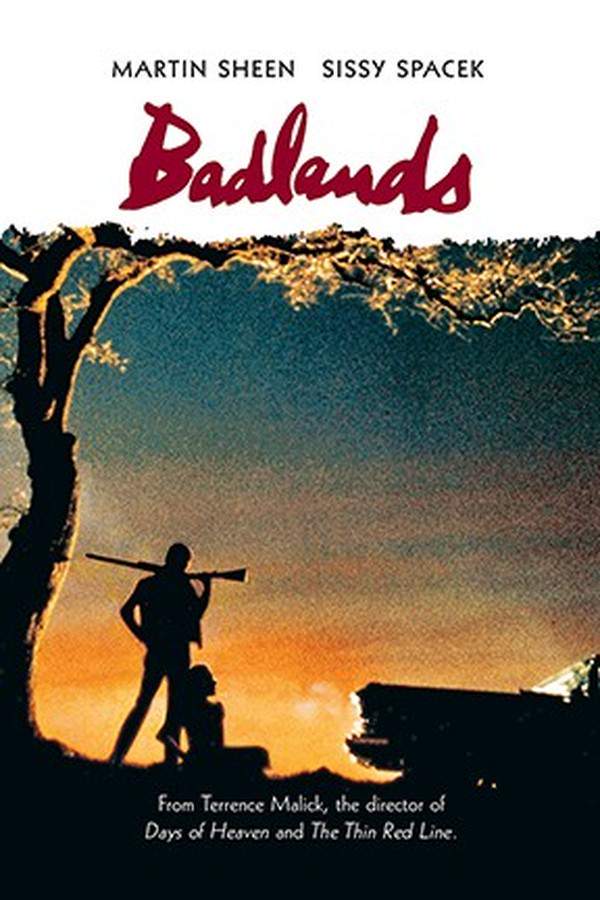
Badlands (1973) movie poster

Plot Summary

Badlands (1973) Plot Summary Explained

Release, runtime and language
1973 · 94 min · English
Directed by
Terrence Malick
Starring
Martin Sheen, Sissy Spacek

A teenage girl rebels against her strict upbringing when she falls for an enigmatic drifter. Their passionate but forbidden relationship leads to a violent confrontation with her father, forcing them to flee across the Midwest. As they evade the law and journey through the desolate Badlands, their escape leaves a path of destruction and raises questions about love, freedom, and the consequences of defying societal norms.

On this page (6)
  1. 1 Where to watch
  2. 2 What happens: full plot
  3. 3 Plot questions answered
  4. 4 Movie threads
  5. 5 Movies like Badlands
  6. 6 Every angle

Where to watch

Where to Watch Badlands (1973)

Where can you watch Badlands? Stream, rent or buy it in the US, including on Plex, Tubi TV and YouTube Free: current JustWatch availability with up-to-date prices.

Streaming availability powered by JustWatch

Full plot summary · contains spoilers

What Happens in Badlands: Full Plot Summary

The whole story of Badlands (1973) explained, from the opening scene to the final frame: every key event, every twist and what it all adds up to. Read it as a quick recap before the sequel, to check a scene you missed, or to finally understand what really happened.

Set in the late 1950s and unfolding outside the quaint little town of Fort Dupree, South Dakota, the story centers around Holly Sargis, a 15-year-old girl portrayed by Sissy Spacek. Holly grapples with life at home alongside her sign painter father, Warren Oates, their bond strained ever since the untimely death of her mother from pneumonia years ago. In the midst of this turbulent backdrop, Holly meets Kit Carruthers, a troubled 25-year-old garbage collector resembling the iconic James Dean, brought to life by Martin Sheen. Captivated by his charm, Holly embarks on a journey that initially appears romantic but soon takes a dark and violent turn.

As Holly shares her experiences with Kit through a flow of romantic clichés, the audience is privy to Kit's increasingly reckless behavior, setting an ominous tone. Her father, whose disapproval of their liaison boils over into tragedy, callously shoots Holly's beloved dog, marking a palpable shift in their lives. In an impulsive act driven by rage and despair, Kit retaliates against Holly’s father, shooting him dead. This shocking climax propels Holly and Kit into a world where they must take drastic measures to escape the consequences of their actions, culminating in a staged suicide as they flee towards the wild expanses of Montana's badlands.

Once in the wilderness, they quickly construct a small tree house, relishing a brief period of idyllic life where they fish and scavenge for food—yet danger lurks just beneath the surface. The couple is soon hunted down by bounty hunters, and in a harrowing confrontation, Kit kills three of them, forcing them to flee once more. In their desperate bid for survival, they take refuge with Cato, a friend of Kit's, but the trust is shattered when Kit suspects deceit, leading to Cato's death as well as the murder of an unsuspecting teenage couple visiting him.

As an interstate APB sweeps across the Midwest, declaring Kit and Holly wanted, the duo continues their fugitive journey, brazenly raiding a wealthy man's mansion for clothes and supplies, yet they show a strange mercy by sparing the man and his housemaid. Amidst their chaotic escape, Holly's feelings begin to wane, and she grows increasingly detached from Kit. Reflecting on her diminishing affection, she narrates, “spelling out entire sentences on the off of my mouth,” capturing her growing discontent.

At an oil rig, the tension escalates dramatically as a police helicopter sweeps into view. In a tragic climax of violence, Kit kills a policeman, while Holly, disillusioned and weary, chooses to turn herself in. In a high-speed pursuit, her fate diverges from Kit's as he manages a precarious escape before ultimately surrendering himself—seeking to solidify his own mythical legacy by constructing a makeshift monument.

In captivity, Kit finds himself transformed into a kind of folk hero among soldiers and journalists, while he and Holly reunite under dire circumstances. In a chilling exchange, Kit tells her, “it's too bad about your dad. We're going to have to sit down and talk about that sometime.” The tale reaches its unsettling conclusion, with the two lovers board a military plane bound for trial—Kit, facing the inevitable consequences of his actions, is sentenced to death for his string of crimes, while Holly, being a minor, receives a more lenient sentence of probation, eventually leading to her marriage to the son of her defense lawyer, a haunting reminder of the twisted path their lives took together.

Last updated: January 18, 2025 at 14:36

Was this helpful?

Plot questions answered

Badlands Plot Explained: Your Questions Answered

The questions people ask most about Badlands (1973): what happens in the confusing scenes, why the characters do what they do, the twists, hidden details and what the ending means. Each answer contains spoilers.

Q1

Why does Kit kill Holly's father?

Kit kills Holly's father in a fit of rage after the father shoots Holly's beloved dog. While the dog killing is the immediate trigger, the deeper motivation stems from Kit's pattern of impulsive, violent reactions. He sees himself as protecting Holly and asserting his dominance in the relationship. The murder is not a calculated decision but a spontaneous act that sets their fatal journey in motion, revealing Kit's inability to control his emotions and his willingness to use extreme violence to resolve conflicts.

Foreshadowing: Earlier scenes establish Kit's reckless behavior and his willingness to cross moral boundaries, hinting at his capacity for violence.

  • kit carruthers
  • holly father
  • murder
  • dog killing
  • violence
Q2

Why does Kit become a folk hero while in captivity?

Kit transforms into a celebrity figure among soldiers, reporters, and police at the military base because the media and public fascination with his story takes on a mythic quality. His good looks, quiet demeanor, and the romanticized narrative of his crime spree appeal to the public's appetite for notoriety. This reflects the movie's dark commentary on how society elevates violent criminals into folk heroes, treating their crimes as entertainment rather than tragedy.

Foreshadowing: The interstate APB and widespread manhunt establish Kit's growing notoriety throughout their flight.

  • kit folk hero
  • media attention
  • captivity
  • notoriety
  • celebrity criminal
Q3

Why does Holly turn herself in instead of staying with Kit?

Holly turns herself in after witnessing Kit kill a policeman during the helicopter encounter at the oil rig. The constant violence and chaos have worn her down, and she realizes the fugitive lifestyle is unsustainable. Her growing detachment from Kit throughout the journey, symbolized by her narrating she was 'spelling out entire sentences on the off of my mouth,' reflects her emotional withdrawal. She chooses to face consequences rather than continue living in fear and violence.

Foreshadowing: Holly's increasing dissatisfaction and emotional distance are visible throughout their time in the badlands and during the mansion scene.

  • holly surrender
  • turning herself in
  • disillusionment
  • police helicopter
  • oil rig
Q4

What happens to Kit at the end of Badlands?

Kit is sentenced to death for his string of murders, which includes Holly's father, three bounty hunters, Cato, an innocent teenage couple, and the policeman killed at the oil rig. After a high-speed chase where he briefly evades capture, Kit deliberately surrenders and is transported by military plane to face trial. His execution represents the inevitable consequences of his violent path, though the movie emphasizes how his legacy as a folk hero persists even in death.

Foreshadowing: The escalating violence throughout the film, particularly the murders of bounty hunters and innocent people, seals his fate.

  • kit death penalty
  • execution
  • trial
  • sentencing
  • end of movie
Q5

Why does Kit spare the wealthy man and housemaid at the mansion?

When Kit and Holly raid the mansion for supplies and a Cadillac, Kit shows a puzzling mercy by sparing both the man and his housemaid. This reveals the inconsistency in Kit's violence, he kills without hesitation in some situations yet shows restraint in others. The act suggests Kit doesn't kill purely for gain or survival; his violence appears tied to specific triggers like perceived threats, rage, or paranoia. This moment highlights the randomness and meaninglessness of his moral code.

Foreshadowing: Earlier killings (Holly's father, bounty hunters) already show his violence is unpredictable and context-dependent.

  • mansion raid
  • sparing lives
  • mercy
  • wealthy man
  • housemaid
Q6

Why does Kit kill Cato?

Kit kills Cato, his own friend who offered them shelter, because he suspects Cato of planning to betray them to authorities. Cato attempts to deceive Kit, possibly trying to lead law enforcement to their location. Trusting no one and viewing any potential betrayal as a threat to their survival, Kit eliminates Cato. This murder further demonstrates Kit's complete lack of hesitation when he perceives a threat, even against someone who helped them.

Foreshadowing: The bounty hunter encounter establishes that people are actively hunting them, making Kit paranoid about trust.

  • cato death
  • kit kills friend
  • betrayal
  • shelter
  • murder
Q7

Why does Kit build a monument before surrendering?

Before surrendering, Kit constructs a makeshift monument using piled-up rocks, which serves as a self-made legacy marker. This act reveals his preoccupation with creating a lasting image and mythologizing himself. Even as he accepts capture, Kit is concerned with how he will be remembered, reinforcing his narcissistic personality. He wants to leave a visible mark, much like the folklore status he achieves in captivity.

Foreshadowing: This behavior aligns with his earlier statements about wanting to join the Mounties in Canada, an escape into legend.

  • monument
  • surrender
  • legacy
  • rocks
  • self-mythologizing
Q8

Why does Holly become disillusioned with Kit?

Holly's disillusionment stems from witnessing the escalating violence and realizing the romantic fantasy she pursued has curdled into something dark and empty. As they flee across the badlands, the initial infatuation fades when confronted with the reality of Kit's cold-blooded murders and the constant threat of capture. Her narration style shifts to detached, cliché-ridden observations, revealing her emotional withdrawal. By the time they reach the oil rig, she is fully ready to end the relationship.

Foreshadowing: Her growing dissatisfaction is visible during the mansion scene and when she narrates about 'spelling out sentences' as a sign of emotional disconnection.

  • holly disillusionment
  • falling out of love
  • detachment
  • relationship decline
  • badlands
Q9

Why does Kit kill the three bounty hunters?

Kit kills three bounty hunters who track them to their tree house because he sees them as an existential threat to their freedom. Rather than fleeing or negotiating, Kit responds with lethal force, killing all three hunters in a desperate bid to escape. This incident marks a turning point that solidifies their status as fugitives wanted for murder, not just missing persons. It demonstrates Kit's pattern of solving problems through violence rather than caution or wit.

Foreshadowing: The idyllic tree house life was always precarious, and the arrival of hunters was inevitable given their notoriety.

  • bounty hunters
  • tree house
  • killing
  • escape
  • violence
Q10

Why does Holly receive probation while Kit gets the death penalty?

Holly receives probation because she is a minor (15 years old) at the time of the crimes, and she ultimately turns herself in, showing willingness to face consequences. The legal system treats her as a coerced participant rather than an equal perpetrator. Kit, being 25 and the primary instigator of all the murders, faces the full weight of the law. This contrast underscores the movie's exploration of how youth and gender shape culpability, and it hauntingly leads to Holly eventually marrying the son of her defense lawyer, a life far removed from her traumatic past.

Foreshadowing: Holly's decision to turn herself in directly influences her lenient sentence, while Kit's continued evasion and violence result in execution.

  • holly probation
  • kit death penalty
  • legal outcome
  • sentencing difference
  • minor
Q11

What is the significance of Holly's detached narration?

Holly's narration uses clichéd, romantic language that contrasts sharply with the brutal reality of their crimes. This detachment serves multiple purposes: it reflects her emotional dissociation from the violence she's witnessing, it shows how she's internalizing societal expectations of romance even in extreme circumstances, and it creates ironic distance between her youthful fantasies and the grim truth. The narration style emphasizes her innocence corrupted by circumstances and her struggle to make sense of something beyond her comprehension.

Foreshadowing: The narration establishes the disconnect between Holly's expectations and reality from the moment she meets Kit.

  • narration
  • narration style
  • cliché
  • detachment
  • holly voiceover
Q12

Why does Kit want to escape to Canada and join the Mounties?

Kit's dream of escaping to Canada and becoming a Mountie represents his desire to reinvent himself and achieve a noble, legitimized identity. Throughout the film, he imagines scenarios where his actions are heroic rather than criminal. This fantasy reveals his narcissistic need for positive recognition and his disconnect from reality. The Canada dream is also a practical escape plan, but the deeper motivation is his longing for respectability and mythologized status, traits that manifest when he becomes a folk hero in captivity.

Foreshadowing: His preoccupation with legacy and self-mythologizing is evident in his monument-building before surrendering.

  • canada
  • mounties
  • escape plan
  • fantasy
  • reinvention

Movie threads

More Movies Like Badlands, by Mood & Story

Curated lists built around what makes Badlands tick: the same mood, the same kind of story or the same emotional payoff. Each list explains why these movies belong together.
Fatalistic Crime Spree Movies like Badlands

Stories of alienated characters whose romantic escape descends into purposeless violence. If you liked the detached, violent journey in Badlands, explore more movies about couples or drifters on aimless crime sprees. These films often share a bleak tone, a steady pace, and a heavy emotional weight, exploring themes of alienation and the dark side of freedom.

  • fatalistic
  • alienating
  • detached
  • ominous
  • melancholic
  • nostalgic
  • Tone: dark, melancholic, fatalistic
  • Pacing: steady, deliberate
Why these movies?

The story pattern: The narrative follows characters, often a couple, as they break from their mundane lives through an act of violence, embarking on a road trip that is less about escape and more about a slow, inevitable descent. The journey is marked by sporadic, almost casual violence, and is often narrated with a haunting, dispassionate clarity that contrasts with the brutality on screen.

Why they belong together: These films are grouped by their shared mood of detached fatalism and their core plot structure: a romanticized flight from society that curdles into a violent, nihilistic spectacle. They explore the gap between illusion and reality, often through a nostalgic or alienating aesthetic.

Movies with Bleak American Landscapes like Badlands

Visually striking journeys where the desolate setting mirrors a character's internal emptiness. Discover movies like Badlands that use the American plains, deserts, or rural settings to create a powerful, melancholic atmosphere. These films use the landscape to enhance themes of isolation, violence, and the emptiness of the American dream, offering a similarly heavy and visually arresting experience.

  • desolate
  • ominous
  • melancholic
  • atmospheric
  • nostalgic
  • lyrical
  • Tone: melancholic, ominous, desolate
  • Pacing: steady, lyrical
Why these movies?

The story pattern: The narrative unfolds against a backdrop of wide-open spaces that feel paradoxically claustrophobic. The journey through these landscapes is both physical and psychological, with the environment amplifying the characters' loneliness and the inevitability of their fate. The plot is often simple, allowing the mood and setting to dominate.

Why they belong together: These movies share a specific aesthetic and mood: a poetic yet stark portrayal of America that is integral to the story's emotional impact. The visual language—often featuring desolate plains, empty roads, and stark light—creates a unified feeling of melancholy, nostalgia, and ominous dread.

If you liked this

Movies Like Badlands

Similar movies to Badlands: the same genre, themes or kind of story. Each one comes with its own plot summary, timeline and ending explained.

Browse all movie summaries

Every angle

Badlands (1973) Explained: Plot, Timeline & Characters

Everything about Badlands in one place: what happens in the plot summary, the timeline in chronological order, the characters and meaning and a spoiler-free summary. What's After the Movie adds the cast, box office and post-credit scenes.

Coming soon on iOS and Android

The Plot Explained Movie Summary App

Plot summaries, endings explained and timelines on your phone. Catch up on any movie in minutes, save your favorites and never miss a twist again.

Be the first to know when we launch. Your email stays private, always.

Learn more about the app