Plot Explained Spoilers guaranteed!
Plot Explained

Browse by genre

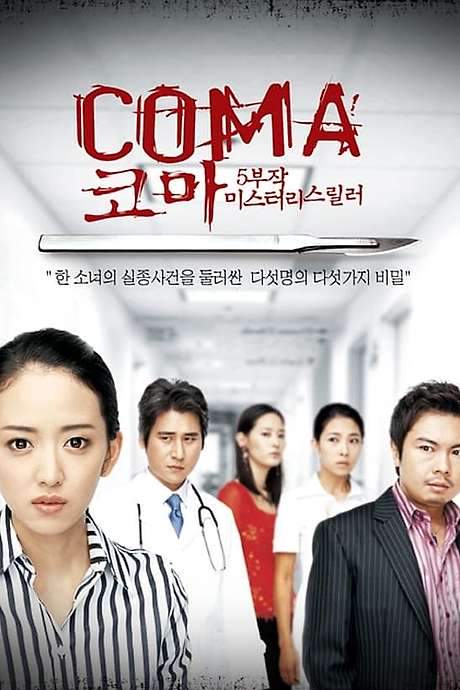
Coma (1978) movie poster

Plot Summary

Coma (1978) Plot Summary Explained

Release, runtime and language
1978 · 113 min · French
Directed by
Michael Crichton
Starring
Michael Douglas, Rip Torn

A teenager with the ability to vividly control her dreams finds herself isolated and seeking connection through online platforms. Confined to her room, she explores the unsettling boundaries between her waking life and her dreamscapes. A mysterious YouTuber named Patricia Coma offers guidance, leading her into a world of growing uncertainty and eerie revelations as she struggles to distinguish reality from nightmare.

On this page (7)
  1. 1 Where to watch
  2. 2 What happens: full plot
  3. 3 Plot questions answered
  4. 4 The book behind the movie
  5. 5 Movie threads
  6. 6 Movies like Coma
  7. 7 Every angle

Where to watch

Where to Watch Coma (1978)

Where can you watch Coma? Stream, rent or buy it in the US, including on Hoopla, Plex and Amazon Video: current JustWatch availability with up-to-date prices.

Streaming availability powered by JustWatch

Full plot summary · contains spoilers

What Happens in Coma: Full Plot Summary

The whole story of Coma (1978) explained, from the opening scene to the final frame: every key event, every twist and what it all adds up to. Read it as a quick recap before the sequel, to check a scene you missed, or to finally understand what really happened.

Dr. Susan Wheeler, a surgical resident at Boston Memorial Hospital, is devastated when her friend, Nancy Greenly, a young healthy woman, is left brain dead after a routine procedure there. Her suspicions are piqued when, shortly after, another young, otherwise healthy patient also slips into a coma during knee surgery.

Susan dives into the hospital’s records and uncovers a troubling pattern: over the last year, a surprising number of fit, young patients have suffered the same fate, and all of the affected procedures happened in operating room #8. What’s more, each patient had a tissue-type sample taken before being transferred to the Jefferson Institute, a distant care facility.

Her physician boyfriend, Mark Bellows, believes the coincidences may be innocent, but Susan’s questions rattle the hospital’s inner circle. She offends the Chief of Anesthesiology, Dr. George Harris, by requesting access to the relevant patient charts, and her insistence on digging deeper leads to increasing isolation. As pressure from superiors and colleagues mounts, she also begins to doubt the trustworthiness of Mark.

A grim turn comes when Susan visits the hospital morgue, where Nancy’s postmortem is underway. She questions the pathologists about how someone could be put into a coma without detection, and one of them suggests carbon monoxide poisoning as a possibility.

The tension at the top floors intensifies. Dr. Harris, the chief of surgery, scolds Susan for her recent behavior and warns that she could be dismissed unless she agrees to see a psychiatrist. He’s not entirely unsympathetic, though, giving her a weekend away to recover from her grief and stress. Susan and Mark escape to the seaside for a recharge, but the trip is cut short when a highway sign points to the Jefferson Institute, and the urge to uncover the truth becomes irresistible.

Back at the hospital, Kelly, a maintenance worker who had warned Susan that something was wrong, is fatally electrocuted by an unseen assailant. From Kelly’s tip, Susan investigates the basement and discovers a tank whose line runs through the ventilation system into OR #8, controlled by a radio signal. The killer who has been stalking Susan targets her again; one late-night confrontation ends with Susan trapping him in the anatomy lab’s cadaver cooler.

Believing the Jefferson Institute is an innocent cover for a compassionate, cutting-edge facility, Susan joins the institute’s tour of an apparent high-tech, low-cost care option for coma patients. But the truth soon surfaces: the institute is a front for an international organ black market, where patients’ organs are harvested and sold to the highest bidder. Security footage captures Susan’s escape as she rides away on top of an ambulance, the facility’s underground network of harvested organs slipping into international shipping to the airport.

Armed with this knowledge, Susan hurries to Dr. Harris for confirmation. He offers her a drink, and she quickly loses control, experiencing intense abdominal pain that resembles appendicitis. It becomes clear she has been drugged, and she is rushed into surgery to have an appendectomy. As she lies prepped, the staff inform Dr. Harris that OR #7 is ready, but he insists on using OR #8, drawing Mark’s suspicion and prompting him to act. He finds the gas line feeding the anesthesia system, destroys it, and forges a path to safety as Susan gasps back to consciousness after the operation.

In the end, the plan unravels: the evidence, the attempted coercion, and Mark’s decisive intervention culminate in Dr. Harris’s arrest, with the two police officers waiting outside after Susan’s harrowing ordeal. The movie closes on a note of relief tempered by the chilling reminder that greed can hide behind the veneer of clinical care.


Last updated: October 09, 2025 at 15:39

Was this helpful?

Plot questions answered

Coma Plot Explained: Your Questions Answered

The questions people ask most about Coma (1978): what happens in the confusing scenes, why the characters do what they do, the twists, hidden details and what the ending means. Each answer contains spoilers.

Q1

Why did patients fall into comas after surgery in OR #8?

Patients were being deliberately rendered brain-dead through carbon monoxide pumped into the anesthesia system in operating room #8. The conspiracy targeted young, healthy patients whose tissue types matched potential organ recipients. After being put into comas, these patients were transferred to the Jefferson Institute where their organs were harvested and sold on the international black market.

Foreshadowing: The morgue pathologist earlier suggested carbon monoxide poisoning as a method that could cause coma without detection, planting the seed for Susan's discovery.

  • coma patients
  • OR 8
  • brain death
  • organ harvesting
  • surgery complications
Q2

What was the Jefferson Institute really?

The Jefferson Institute was a front for an international organ black market. Disguised as a legitimate high-tech care facility offering low-cost treatment for coma patients, it was actually where harvested organs were collected and shipped internationally. Patients believed to be in comas were killed during organ extraction.

Foreshadowing: Susan noticed that every patient who fell into a coma had a tissue-type sample taken before being transferred to the institute, hinting at a selection process.

  • Jefferson Institute
  • organ trafficking
  • black market
  • organ harvest
  • medical conspiracy
Q3

How was carbon monoxide being pumped into the operating room?

A carbon monoxide tank was hidden in the hospital basement with a delivery line running through the ventilation system directly into OR #8. The line was controlled by a radio signal, allowing the perpetrator to activate the gas remotely during surgery. This method rendered patients brain-dead without immediate detection.

Foreshadowing: Kelly the maintenance worker warned Susan that something was wrong and directed her to investigate the basement.

  • carbon monoxide
  • gas line
  • OR 8
  • ventilation
  • poisoning
  • radio signal
Q4

Who was behind the organ harvesting conspiracy?

Dr. George Harris, the Chief of Anesthesiology at Boston Memorial Hospital, was the mastermind behind the operation. He orchestrated the carbon monoxide poisonings in OR #8 and ran the Jefferson Institute as a front for organ trafficking. He also arranged for Susan to be drugged and operated on when she got too close to the truth.

Foreshadowing: Dr. Harris was sympathetic toward Susan early on, granting her time off and warning her about psychiatric evaluation, which later appeared designed to manage her investigation.

  • Dr. George Harris
  • chief anesthesiologist
  • mastermind
  • organ trafficking
  • conspiracy
Q5

Why was Mark suspicious of Susan's investigation at first?

Mark Bellows, Susan's boyfriend and fellow physician, initially dismissed her suspicions about the coma patients as coincidental. He believed the pattern of young patients falling into comas could be random rather than deliberate. His initial skepticism created tension with Susan, though he eventually came around when evidence became undeniable and he witnessed the attempt to kill Susan in OR #8.

Foreshadowing: Mark's skepticism shifted dramatically when he saw Dr. Harris insist on using OR #8 for Susan's surgery, raising immediate red flags.

  • Mark Bellows
  • boyfriend
  • skepticism
  • support
  • intervention
Q6

What happened to Kelly the maintenance worker?

Kelly, a hospital maintenance worker, was killed after tipping Susan off about irregularities in the hospital. He was fatally electrocuted by an unseen assailant. Before his death, he directed Susan to investigate the basement, which led her to discover the carbon monoxide tank and delivery system.

Foreshadowing: Kelly's warning about something being wrong in the hospital and his subsequent death highlighted the deadly seriousness of the conspiracy.

  • Kelly
  • maintenance worker
  • electrocution
  • killed
  • whistleblower
Q7

Why did Dr. Harris drug Susan before surgery?

When Susan confronted Dr. Harris believing he was the mastermind, he offered her a drink that was drugged. She experienced severe abdominal pain mimicking appendicitis, requiring emergency surgery. Dr. Harris planned to use the surgery as another opportunity to kill her in OR #8, continuing the pattern of murdering patients for their organs.

Foreshadowing: Dr. Harris had consistently tried to control Susan's investigation through professional pressure and isolation, making his final act of drugging her a calculated elimination.

  • drugged
  • appendicitis
  • surgery
  • Dr. Harris
  • murder attempt
  • OR 8
Q8

How did Mark save Susan during surgery?

When Mark realized Dr. Harris was insisting on using OR #8 for Susan's surgery, he became suspicious. He discovered the gas line feeding carbon monoxide into the anesthesia system and destroyed it, preventing Susan from being poisoned. This intervention saved her life and exposed the murder weapon.

Foreshadowing: Mark's earlier skepticism had transformed into active suspicion the moment he saw Dr. Harris's unusual insistence on OR #8.

  • Mark Bellows
  • gas line
  • saved
  • surgery
  • OR 8
  • carbon monoxide
Q9

Why was Susan being stalked and attacked?

Susan became a target because her investigation threatened the entire organ harvesting operation. A mysterious assailant stalked her throughout the hospital, attempting to kill her when she got too close to the truth. She ultimately trapped this attacker in the anatomy lab's cadaver cooler, confirming the conspiracy involved direct violence against whistleblowers.

Foreshadowing: The attacks escalated as Susan got closer to discovering the basement carbon monoxide setup and the Jefferson Institute's true purpose.

  • stalked
  • attacked
  • threat
  • attacker
  • survival
  • hospital
Q10

What triggered Susan to investigate the hospital?

Susan's investigation began after her close friend Nancy Greenly, a healthy young woman, suffered brain death following a routine procedure. When another young, otherwise healthy patient also slipped into a coma during knee surgery, Susan recognized a suspicious pattern and began digging into hospital records, leading her to discover the connection to OR #8 and the Jefferson Institute.

Foreshadowing: Nancy's brain death was the initial tragedy that set Susan on the path to uncovering the conspiracy.

  • Nancy Greenly
  • investigation
  • brain death
  • pattern
  • hospital records
  • OR 8

Movie threads

More Movies Like Coma, by Mood & Story

Curated lists built around what makes Coma tick: the same mood, the same kind of story or the same emotional payoff. Each list explains why these movies belong together.

Female-Led Conspiracy Thrillers like Coma

One woman uncovers a sinister truth that powerful forces want to keep hidden. If you liked the tense investigation in Coma, you'll enjoy these movies featuring women who uncover sinister plots. These stories share a mood of paranoia and high stakes, pitting a lone protagonist against powerful, corrupt systems in a fight for survival.

  • investigative
  • paranoid
  • suspenseful
  • sinister
  • claustrophobic
  • anxious
  • Tone: tense, paranoid
  • Pacing: steady, investigative
Why these movies?

The story pattern: The narrative follows a clear investigative arc: from initial suspicion and disbelief, to gathering evidence while facing increasing danger, culminating in a risky confrontation to reveal the conspiracy. The protagonist often operates alone, facing betrayal and threats that test her resilience.

Why they belong together: Movies in this thread are grouped by their shared focus on a solo female investigator, the high-tension mood of being hunted by a hidden enemy, and the steady pacing of an unfolding mystery with life-or-death stakes.

Claustrophobic Psychological Thrillers like Coma

Stories where tension builds from a confined setting and growing paranoia. Fans of the suffocating tension and paranoid atmosphere in Coma will find similar experiences here. This thread gathers movies that masterfully use confined settings and psychological pressure to create a deeply unsettling and suspenseful mood.

  • claustrophobic
  • suspenseful
  • paranoid
  • anxious
  • uneasy
  • sinister
  • Tone: tense, sinister
  • Pacing: steady, slow burn
Why these movies?

The story pattern: The narrative often unfolds in a limited space, amplifying the protagonist's isolation and vulnerability. The central conflict is internal as much as external, focusing on the character's deteriorating mental state and their struggle to discern truth from manipulation while feeling trapped.

Why they belong together: These movies are connected by their shared, oppressive mood of claustrophobia and paranoia, a steady pacing that methodically builds unease, and a focus on psychological tension over physical action.

If you liked this

Movies Like Coma

Similar movies to Coma: the same genre, themes or kind of story. Each one comes with its own plot summary, timeline and ending explained.

Browse all movie summaries

Every angle

Coma (1978) Explained: Plot, Timeline & Characters

Everything about Coma in one place: what happens in the plot summary, the timeline in chronological order, the characters and meaning and a spoiler-free summary. What's After the Movie adds the cast, box office and post-credit scenes.

Coming soon on iOS and Android

The Plot Explained Movie Summary App

Plot summaries, endings explained and timelines on your phone. Catch up on any movie in minutes, save your favorites and never miss a twist again.

Be the first to know when we launch. Your email stays private, always.

Learn more about the app