-
P
Psychopath (Robert Hunger-Bühler)
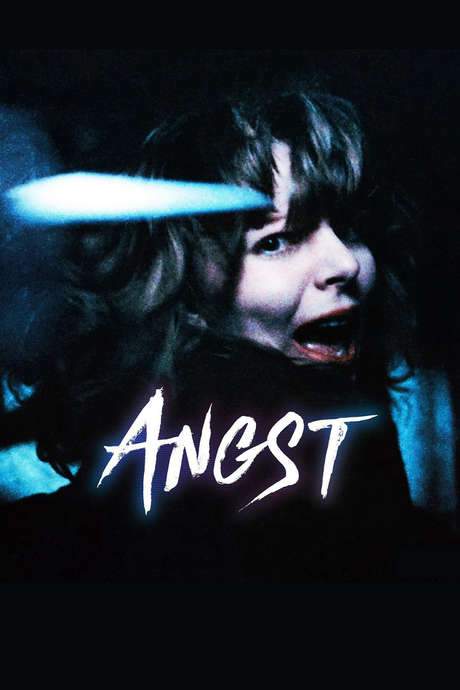
An unnamed serial killer freshly released from prison, he is driven by a sadistic urge to see fear in his victims’ eyes. He stalks victims in ordinary spaces—like diners and taxis—before choosing a house to break into. He reveals a cold, calculating demeanor, with moments of sudden, brutal rage. His stated motivation and methodical restraint mark him as a chilling, unstoppable force of violence.
- 🔪 Violence
- 🧠 Psychopathy
- 🗝️ Manipulation
-
A mother living in the house with her son and daughter, she becomes a target during the killer’s rampage. She endures the chaos of an intrusion and ultimately dies as the intruder’s violence escalates. Her struggle to protect her family is cut short, underscoring the film’s brutal realism. Her fate emphasizes the collateral damage of the killer’s cruelty.
- 👩 Mother
- 🩸 Victim
- 👪 Family tragedy
-
D
Daughter (Karin Springer)
The daughter who pleads for her mother’s medication and tries to flee, only to be drawn into the killer’s orbit of violence. She experiences fear and desperation as she confronts the intruder, ultimately becoming a victim of his brutal ritual. Her death highlights the indiscriminate nature of the killer’s wrath. Her presence marks the personal stakes of the confrontation within the house.
- 👧 Daughter
- 🩸 Victim
- 🕯️ Fear
-
D
Daughter (Silvia Rabenreither)
Another daughter in the house who becomes entangled in the killer’s rampage. She is attacked after the mother is confronted, and her fate is sealed by the killer’s escalation. Her murder reinforces the film’s unflinching portrayal of violence within a domestic space. The scene underscores the predator’s disregard for family and life.
- 👧 Daughter
- 🩸 Victim
- 🕯️ Dread
-
A mentally impaired boy in a wheelchair living in the house. He becomes a target of the intruder’s brutality, who drags him to the upstairs bathroom and drowns him. His vulnerability exemplifies the indiscriminate cruelty of the killer and heightens the film’s sense of hopelessness.
-
T
Taxi Driver (Renate Kastelik)
A female taxi driver who becomes a potential target when the killer hops into her cab. She grows suspicious, and the driver’s vigilance forces the killer to flee rather than complete the murder. Her scene punctuates the constant threat present in everyday routines like a city ride.
-
W
Waitress (Rosa Schandl)
A waitress at the café who witnesses the tension surrounding the killer’s actions in a social space that becomes a backdrop for fear. Her presence helps anchor the film’s everyday realism, contrasting with the killer’s hidden predatory behavior.
-
G
Guest at café (Hermann Groissenberger)
A café patron who serves as a bystander in the sequences where the killer’s menace intrudes into public life. His reactions contribute to the texture of ordinary life disrupted by violence.
-
G
Guest at café (Claudia Schinko)
Another café patron who witnesses the mounting tension in a public space, reinforcing the film’s theme of ubiquitous fear in everyday settings.
-
G
Guest at café (Beate Jurkowitsch)
A further café patron whose presence amplifies the sense of shared vulnerability in public venues.
-
A policeman’s contact in a scene that anchors the killer’s murder spree in a recognizably public setting. The encounter with law enforcement adds a procedural counterpoint to the chaos.
-
P
Prison Guard (Helmut Hrdina)
One of the guards connected to the killer’s release, his presence helps contextualize the protagonist’s return to violence after imprisonment.
-
P
Prison Guard (Emil Polaczek)
Another guard present in the context of the killer’s prison background, reinforcing the backstory of imprisonment before the rampage.
-
P
Prison Guard (Adolf Hagmann)
A guard whose presence completes the depiction of the killer’s imprisonment history.
-
P
Prison Guard (Karl Riepl)
Part of the prison context surrounding the killer’s release, contributing to the narrative of returning danger.
-
P
Prison Guard (Günther Dietz)
Another guard linked to the prison setting that frames the killer’s release and subsequent actions.
-
P
Passer-by (Elisabeth Fez)
A bystander whose presence underscores the pervasiveness of fear in public spaces during the killer’s spree.
- 👥 Bystander
- 🕯️ Observation
-
P
Passer-by (Paula Elkins)
Another passer-by who witnesses the chaos, adding to the film’s atmosphere of uneasy spectatorship.
- 👥 Bystander
- 🕯️ Observation
-
P
Passer-by (Tennesee Gelinek)
A bystander caught in the crossfire of the killer’s presence in public spaces.
- 👥 Bystander
- 🕯️ Observation
-
P
Passer-by (Vallerian Tomsich)
A bystander witness who adds to the broader social context of fear surrounding the killer.
- 👥 Bystander
- 🕯️ Observation
-
P
Passer-by (Rafael Gelinek)
A member of the audience in the public scenes, reinforcing the sense that violence interrupts ordinary life.
- 👥 Bystander
- 🕯️ Observation
-
P
Passer-by (Mischa Griegor)
A witness whose presence contributes to the film’s texture of everyday fear.
- 👥 Bystander
- 🕯️ Observation
-
P
Passer-by (Andrea Eckelbacher)
A bystander whose actions and reactions help illustrate the public dimension of the killer’s violence.
- 👥 Bystander
- 🕯️ Observation
-
P
Passer-by (Martin Kretschier)
Another onlooker in the film’s public spaces, contributing to the sense of shared fear.
- 👥 Bystander
- 🕯️ Observation
-
P
Passer-by (Ursula Kretschier)
A bystander whose presence amplifies the everyday nature of danger in the story.
- 👥 Bystander
- 🕯️ Observation
-
P
Passer-by (Tina Schlögl)
A bystander witness in the café street scene, adding to the collective sense of fear.
- 👥 Bystander
- 🕯️ Observation
-
P
Passer-by (Walter Herzog)
A café or street bystander who bears witness to the killer’s presence.
- 👥 Bystander
- 🕯️ Observation
-
P
Passer-by (Rudolf Steger)
A bystander whose reactions contribute to the film’s texture of public perception and fear.
- 👥 Bystander
- 🕯️ Observation