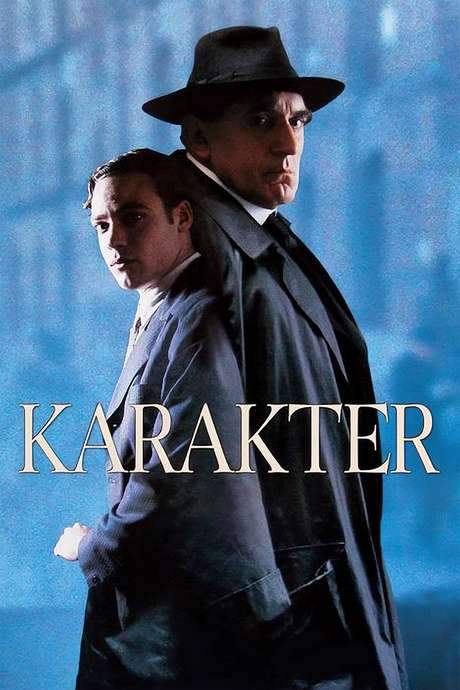
In present-day London, Michael Walton visits his older cousins Walter and Oliver Page to learn more about their family history. He is especially curious about his great-aunt Anne Keyes, the sister of his grandmother Celia. Anne, an actress by trade, was the eldest of the Keyes children, and her father Sir Alexander, a Member of Parliament, and mother Maud had initially adopted her in hopes of giving her a stable start. Maud later gave birth to Ralph and Celia, which adds new layers to the family’s past. As Michael asks questions, Walter begins to reminisce about a pivotal summer in 1939 at the Keyes estate in Norfolk, a time thick with political tension and private secrets.
On Sir Alexander’s birthday, the family gathers around a garden table for a celebratory meal. The circle includes Hector, an outspoken MP who voices strong opinions about Britain’s stance toward Nazi Germany, and Lawrence, a more reserved figure who is deeply connected to Anne. Sir Alexander also brings a quiet guest, Joseph Balcombe, a government employee whose presence hints at delicate, state-level matters. During the dinner, Hector’s outspoken mood reveals a person who has long debated the idea of a new prime minister, hinting at the political undercurrents that will soon bear fruit in the story. The next day, while Anne is searching for a cat in a shed that is normally off-limits because it stores Sir Alexander’s private papers, she discovers gramophone records labeled “Foxtrot.” These records turn out to hold taped meetings and telephone conversations, and Sir Alexander confesses that he has allowed Balcombe to store government documents in that shed.
Two weeks pass, and a grim turn arrives when Hector is found dead, the cause listed as suicide. Anne wonders whether Balcombe played any part in Hector’s death, though Sir Alexander tries to brush off such suspicions and promises to remove the records from the shed the following day during a family picnic. During the picnic, the family steps away for a walk, leaving Anne guarding baby Oliver. When they return, the baby is missing. Anne suspects a prank or a game, but the search continues until she and Balcombe follow the lane and find Oliver in his pushchair, unharmed but bringing a seed of doubt about Anne’s truthfulness. That night, Balcombe removes the records, yet Anne secretly keeps two of them, recognizing their potential significance.
Back in London, Parliament is recalled, and Anne plays the records aloud. One contains the distressing voice of Hector pleading with Balcombe, urging an end to calls about his private life. A maid interrupts the scene, causing the gramophone to topple and the record to crack into pieces. On September 1, Anne gives a second record to her actor friend Gilbert, a man well-versed in politics. The next day, as the country learns that Britain has declared war on Germany, Gilbert arrives late and appears visibly shaken, only to be found dead later, described as another suicide. While watching Gilbert’s last scene, Anne recognizes that a supposed flub—where he changes his line from “You should listen to me, Jenny” to “You should listen to it again, Anne”—was not a flub at all, but a message meant for her.
Anne goes back to Norfolk to stay with Aunt Elizabeth and continues listening to the second recording. Balcombe’s voice surfaces again, detailing a plot to pressure and silence people like Hector. The recording ends with a childhood reference as her brother Ralph suggests a codename, “Thin Man Dancing,” for their covert operation. At a London party, Anne discloses Ralph’s involvement to Lawrence, who already seems to know the truth. Lawrence urges Anne to bring the recording to a rendezvous at a suburban veterinary surgery. When she follows through, she discovers Lawrence dead in a shed filled with euthanised pets, forcing her to escape and pass the recording to a child, who promises to mail it to Churchill.
Her capture follows soon after, as she is drugged by her father and imprisoned in Aunt Elizabeth’s house near St Paul’s Cathedral. Balcombe visits and presents the second recording, explaining that it had actually been made for her father and that their house in London is used for a sequence of pro-appeasement meetings that her father chairs. In a difficult confrontation, Sir Alexander admits that he believes Britain must secure an early peace with Germany to avoid ruin, and he tells Anne that she is the only family member not aligned with his views. The family deprives her of water and she appears to be on the cusp of death, but Maud intervenes, releasing her, just as the rest of the family heads to the park.
Returning to the present, Walter reveals to Michael that Anne died in Canada about twenty years earlier, and that he was playing a role in a larger plan shaped by his family and Balcombe. Michael realizes that Balcombe had manipulated Walter into moving Oliver’s pushchair into the lane, a subtle manipulation that bound the living to the past. He asks Oliver and Walter to join him to meet his mother, and they travel to the same park where Anne’s final moments once felt within reach. There, an elderly woman in a stroller is revealed to be Anne, and Michael finally tells them that he had known the truth all along but chose to hear it from them directly, completing the circle of memory and revelation.
> You should listen to me, Jenny
> You should listen to it again, Anne
In the end, the film threads together the shards of memory, loyalty, and secrecy. The Norfolk summer becomes a mirror for a family that navigates the fraught terrain between duty and desire, public duty and private fear, while the present-day reunion forces a reckoning about what truly happened to Anne and how those past choices continue to shape the lives of those who remain. The story is told with a measured, restrained tone that favors atmosphere and character psychology over spectacle, inviting viewers to weigh each character’s motives against the accumulating evidence of the records, the silences, and the quiet acts of family loyalty. The emotional weight rests not on dramatic reveals alone but on the slow, careful unspooling of what was hidden, who paid the price, and how the truth finally surfaces in the lives of Michael, Walter, and Oliver as they confront a legacy that refuses to stay buried.