Plot Explained Spoilers guaranteed!
Plot Explained

Browse by genre

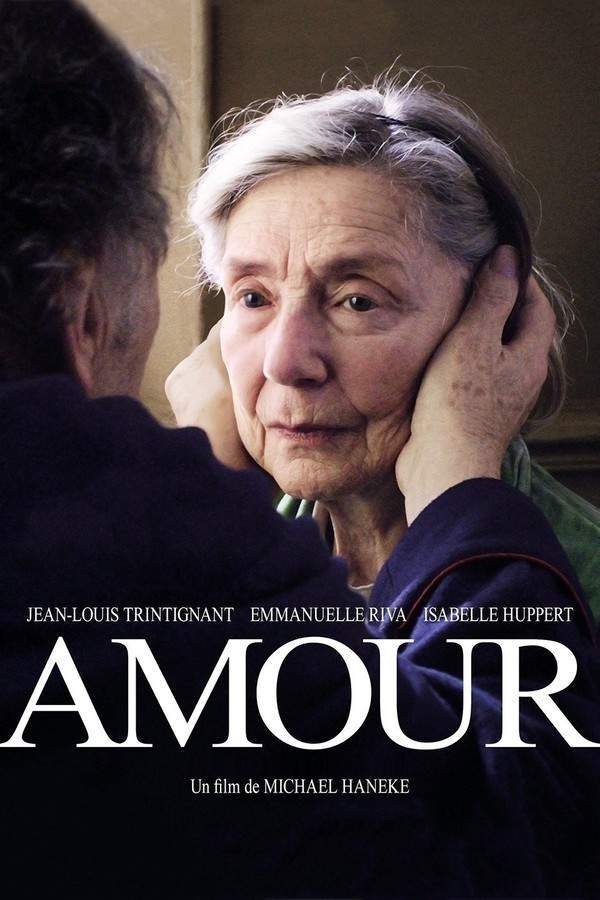
Amour (2012) movie poster

Plot Summary

Amour (2012) Plot Summary Explained

Release, runtime and language
2012 · 127 min · French
JustWatch #8,395 2
Directed by
Michael Haneke
Starring
Jean-Louis Trintignant, Isabelle Huppert, Emmanuelle Riva
Budget
$8.9M

A retired music teacher, Georges, and his wife, Anne, share a loving and devoted life until Anne suffers a debilitating stroke. Suddenly unable to care for herself, Anne's health declines, forcing Georges to become her caregiver. He tenderly attends to her needs while grappling with his own aging and mortality, determined to honor his promise to keep her at home, away from a hospital setting. The film portrays a deeply moving and intimate portrait of love, loss, and commitment in old age.

On this page (6)
  1. 1 Where to watch
  2. 2 What happens: full plot
  3. 3 Plot questions answered
  4. 4 Movie threads
  5. 5 Movies like Amour
  6. 6 Every angle

Where to watch

Where to Watch Amour (2012)

Where can you watch Amour? Stream, rent or buy it in the US, including on Sundance Now, Amazon Video and Apple TV Store: current JustWatch availability with up-to-date prices.

Streaming availability powered by JustWatch

Full plot summary · contains spoilers

What Happens in Amour: Full Plot Summary

The whole story of Amour (2012) explained, from the opening scene to the final frame: every key event, every twist and what it all adds up to. Read it as a quick recap before the sequel, to check a scene you missed, or to finally understand what really happened.

After a series of complaints from residents of a Paris apartment building about an unpleasant odor emanating from one of the units, authorities break down the door to discover the lifeless body of Anne, adorned with fresh flowers, laying on a bed.

Several months prior to this tragic moment, Anne and her husband Georges, both octogenarian piano instructors, attend a captivating performance by Alexandre, one of Anne's former students. Upon returning home, they discover that an attempted break-in has occurred in their apartment. The following morning, as the couple enjoys breakfast, Anne suffers a stroke, plunging her into a catatonic state unresponsive to Georges's calls. Just as Georges prepares to seek help, Anne regains consciousness, unwittingly unaware that a stroke had transpired. Initially, she resists medical intervention until she realizes she cannot pour her own drink.

Following her surgery aimed to unblock a carotid artery, complications arise, leaving Anne paralyzed on her right side and bound to a wheelchair. She extracts a promise from Georges, urging him not to admit her back into a hospital or nursing care. In turn, Georges becomes her dedicated caretaker, though growing increasingly weary. One fateful day, after seemingly attempting suicide by leaping from a window, Anne expresses her desire to no longer continue living.

During a visit from Alexandre, Anne brightens up momentarily, dressing elegantly and engaging in a lively chat, which instills a glimmer of hope in Georges about her recovery. Unfortunately, that hope is short-lived as Anne suffers a second stroke that severely affects her mental faculties, stripping her of coherent speech. Georges, steadfast in his caregiving role, begins hiring a nurse three days a week to help manage Anne's condition. Meanwhile, their daughter Eva urges Georges to consider professional care, but he steadfastly refuses to break the promise he made to Anne. Eventually, he hires a second nurse but dismisses her upon discovering her mistreatment of Anne.

In a poignant moment, Georges sits beside Anne's bed, recounting stories from his childhood to soothe her. However, as he reaches the tale's conclusion, he tragically takes a pillow and smothers her. Afterward, Georges returns home with arms full of flowers, carefully washing and trimming them. He selects a dress from Anne's wardrobe and composes a heartfelt letter, sealing the bedroom door and catching a pigeon that has entered through the window. In his letter, Georges explains that he has set the pigeon free. Engaging in a bittersweet reverie, he imagines Anne bustling about the kitchen, calling for him to fetch her a coat, and he follows her out the door.

The film culminates in a haunting return to the opening scene, with Eva sitting alone in the living room, wandering through the now silent and empty home.
Last updated: November 07, 2024 at 22:58

Was this helpful?

Plot questions answered

Amour Plot Explained: Your Questions Answered

The questions people ask most about Amour (2012): what happens in the confusing scenes, why the characters do what they do, the twists, hidden details and what the ending means. Each answer contains spoilers.

Q1

Why does Georges kill Anne at the end of the film?

Georges smother Anne with a pillow as an act of mercy killing. After Anne suffers a second stroke that leaves her severely cognitively impaired and unable to communicate coherently, Georges decides to end her suffering. This act is motivated by his deep love for her and his desire to spare her further indignity and pain, following her earlier expressed wish to no longer continue living.

Foreshadowing: Anne earlier attempted suicide by jumping from a window and explicitly told Georges she wanted to die.

  • mercy killing
  • euthanasia
  • georges
  • anne
  • death
  • love
  • caregiving
Q2

What promise does Anne extract from Georges after her surgery?

After her surgery to unblock a carotid artery leaves her paralyzed on her right side, Anne makes Georges promise never to admit her back into a hospital or nursing care. She wants to remain at home, and Georges honors this promise throughout the film, even when their daughter Eva urges him to consider professional care.

Foreshadowing: This promise becomes the central burden of the film, as Georges struggles to care for Anne at home despite the immense physical and emotional toll.

  • promise
  • hospital
  • nursing care
  • georges
  • anne
  • caregiving
Q3

Why does Anne say she wants to die?

After her first stroke leaves her paralyzed on her right side and dependent on Georges for basic care, Anne expresses that she no longer wants to continue living. This desire stems from her loss of independence and dignity, her inability to perform simple tasks like pouring her own drink, and the realization that her condition will only worsen. She attempts suicide by jumping from a window to escape her suffering.

Foreshadowing: Anne's despair is foreshadowed early when she resists medical intervention after her first stroke, indicating her reluctance to live in a diminished state.

  • suicide
  • death wish
  • anne
  • suffering
  • paralysis
Q4

What causes Anne's first stroke?

Anne suffers a stroke suddenly while eating breakfast with Georges the morning after they discover an attempted break-in at their apartment. The stroke occurs without warning, plunging her into a catatonic state unresponsive to Georges's calls. While the exact cause is not explicitly stated, it appears to be a sudden cerebrovascular event that leaves her initially unresponsive.

Foreshadowing: The attempted break-in earlier that evening creates stress, though the stroke itself strikes without clear warning.

  • stroke
  • anne
  • health
  • medical emergency
Q5

Why does Georges dismiss the first nurse he hires?

Georges initially hires a nurse to help care for Anne three days a week, despite his daughter's urging for full-time professional care. He later dismisses a second nurse after discovering that she is mistreating Anne. This incident reinforces Georges's commitment to caring for Anne himself and ensuring her dignity, even as the physical toll on him grows.

Foreshadowing: The mistreatment by the nurse highlights the vulnerability of patients like Anne and Georges's protective devotion.

  • nurse
  • mistreatment
  • caregiving
  • dismissal
Q6

What is the significance of the pigeon in the film?

A pigeon enters the apartment through the window after Georges has killed Anne. In his letter to her, Georges explains that he has set the pigeon free. This moment symbolizes release and freedom, both for Anne from her suffering and perhaps for Georges from his burden. It adds a poetic, bittersweet element to the final scene.

  • pigeon
  • freedom
  • letter
  • flowers
Q7

Why does the film open with the discovery of Anne's dead body?

The film opens with authorities discovering Anne's lifeless body, adorned with fresh flowers, in her bed. This non-linear structure serves multiple purposes: it establishes the bleak, tragic tone immediately, creates dramatic irony as viewers know the outcome, and allows the narrative to focus on the emotional journey rather than suspense. The opening death scene returns at the end, showing the aftermath of Georges's act.

  • opening scene
  • flashback
  • death
  • structure
Q8

What is Anne's relationship with Alexandre?

Alexandre is one of Anne's former students who has become a successful concert pianist. At the beginning of the film, Anne and Georges attend his performance. When Alexandre visits later, Anne momentarily brightens, dressing elegantly and engaging in lively conversation, showing that her connection to music and her former student still brings her joy even in her diminished state.

Foreshadowing: Alexandre's visit provides a brief moment of hope for Georges about Anne's possible recovery, making her subsequent decline more poignant.

  • alexandre
  • student
  • concert
  • piano
  • visit
Q9

Why does Georges hire another nurse after dismissing the first one?

After dismissing the nurse who mistreated Anne, Georges decides to hire a second nurse to help manage Anne's increasing care needs. Despite his earlier experience, he recognizes that he cannot provide round-the-clock care alone as Anne's condition deteriorates. However, he remains vigilant about the quality of care Anne receives.

  • nurse
  • caregiving
  • help
  • second nurse
Q10

What happens to Eva at the end of the film?

At the end of the film, after Georges has killed Anne, Eva (the daughter) returns to the apartment and is shown wandering alone through the now silent, empty home. The film returns to the opening scene, revealing that Eva is the one who discovers the apartment after her mother's death. Her solitude amplifies the themes of loss and the absence left by both her mother's death and presumably her father's disappearance.

  • eva
  • daughter
  • ending
  • loss
  • alone
Q11

Why does Georges tell Anne childhood stories near the end?

Georges sits beside Anne's bed and recounts stories from his childhood to comfort her as her condition deteriorates. This tender moment demonstrates his unwavering devotion and love, using the intimate act of storytelling to connect with Anne during her final days. It also shows Georges coping with the situation by clinging to cherished memories.

  • childhood stories
  • comfort
  • memories
  • georges
Q12

What is the significance of the attempted break-in at the beginning?

Returning home from Alexandre's concert, Anne and Georges discover an attempted break-in at their apartment. This disturbing incident creates tension and foreshadows the intrusion of illness into their previously harmonious life. The break-in represents the first disruption to their peaceful existence, setting the stage for the medical crisis that follows the next morning.

Foreshadowing: The break-in precedes Anne's stroke the very next morning, marking the beginning of their decline.

  • break-in
  • apartment
  • incident
  • stress

Movie threads

More Movies Like Amour, by Mood & Story

Curated lists built around what makes Amour tick: the same mood, the same kind of story or the same emotional payoff. Each list explains why these movies belong together.

Movies about End-of-Life Love like Amour

Stories about long-term devotion challenged by the harsh realities of aging and illness. If you were moved by Amour's intimate story, explore similar movies about aging couples and late-life devotion. These films focus on the profound challenges of caregiving, chronic illness, and the ultimate test of love in old age, offering a sobering yet tender look at commitment.

  • intimate
  • devastating
  • sorrowful
  • unflinching
  • meditative
  • heartbreaking
  • Tone: bleak, intimate, sorrowful
  • Pacing: slow, deliberate, meditative
Why these movies?

The story pattern: These narratives often follow a linear, downward trajectory of physical or mental decline, placing the caregiver in a central, demanding role. The conflict arises from the immense strain of daily responsibilities, the pain of witnessing a loved one's suffering, and the ethical dilemmas surrounding quality of life versus prolonging life at all costs.

Why they belong together: Movies in this group share a solemn, intimate tone, a slow, deliberate pacing that mirrors the weight of the situation, and a high emotional intensity focused on love's limits. They are united by their unflinching gaze at aging, mortality, and the quiet heroism of caregiving.

Claustrophobic Domestic Dramas like Amour

Films where a home becomes a stage for a slow, inevitable, and emotionally crushing ordeal. If the confined, sorrowful atmosphere of Amour resonated with you, discover more films about quiet tragedies unfolding at home. These movies use a single location to create intense, intimate, and devastating character studies, often with slow pacing and heavy emotional weight.

  • claustrophobic
  • oppressive
  • quiet
  • devastating
  • intimate
  • sorrowful
  • Tone: bleak, oppressive, melancholic
  • Pacing: slow burn, deliberate
Why these movies?

The story pattern: The narrative pattern is one of confinement and slow erosion. A major life event—such as an illness, a loss, or a secret—traps characters within their home, and the film documents the gradual breakdown of their spirits and relationships. There is often no escape, leading to a bleak and inevitable conclusion.

Why they belong together: These films are grouped by their shared use of a limited setting to amplify emotional intensity, their slow, deliberate pacing that builds a sense of inescapable fate, and their overwhelmingly bleak tone. The primary mood is one of oppressive intimacy and devastating quiet.

If you liked this

Movies Like Amour

Similar movies to Amour: the same genre, themes or kind of story. Each one comes with its own plot summary, timeline and ending explained.

Browse all movie summaries

Every angle

Amour (2012) Explained: Plot, Timeline & Characters

Everything about Amour in one place: what happens in the plot summary, the timeline in chronological order, the characters and meaning and a spoiler-free summary. What's After the Movie adds the cast, box office and post-credit scenes.

Coming soon on iOS and Android

The Plot Explained Movie Summary App

Plot summaries, endings explained and timelines on your phone. Catch up on any movie in minutes, save your favorites and never miss a twist again.

Be the first to know when we launch. Your email stays private, always.

Learn more about the app