Plot Explained Spoilers guaranteed!
Plot Explained

Browse by genre

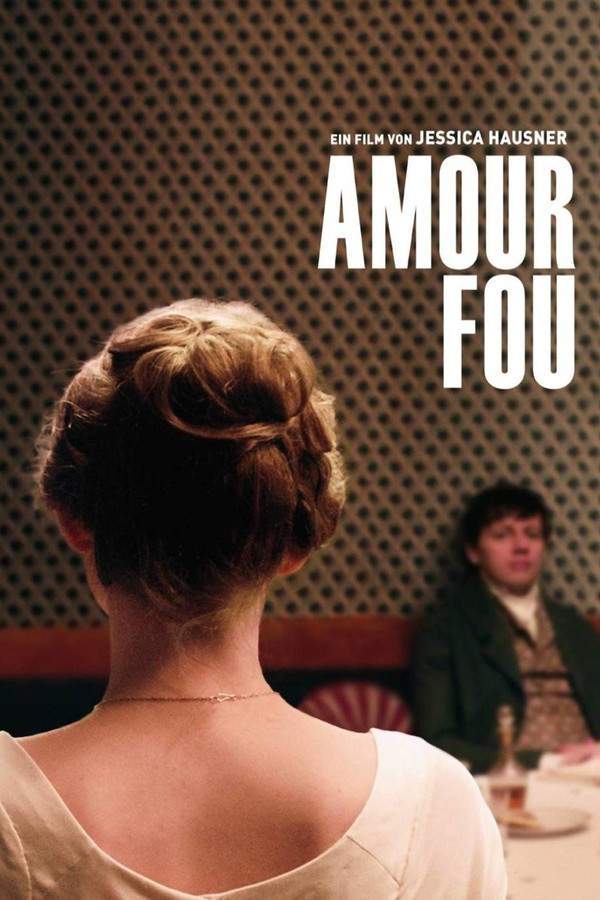
Amour Fou (2015) movie poster

Plot Summary

Amour Fou (2015) Plot Summary Explained

Release, runtime and language
2015 · 96 min · German
Directed by
Jessica Hausner

In 19th-century Berlin, the poet Heinrich grapples with mortality and seeks to overcome it through intense love. He is initially rejected by his cousin Marie, leading to despair. However, his outlook changes when he encounters Henriette, the captivating wife of a business partner. Henriette shares Heinrich's fatalistic views, as she is suffering from a terminal illness and embraces a romantic, shared demise.

On this page (6)
  1. 1 Where to watch
  2. 2 What happens: full plot
  3. 3 Plot questions answered
  4. 4 Movie threads
  5. 5 Movies like Amour Fou
  6. 6 Every angle

Where to watch

Where to Watch Amour Fou (2015)

Where can you watch Amour Fou? Stream, rent or buy it in the US, including on Kanopy: current JustWatch availability with up-to-date prices.

Streaming availability powered by JustWatch

Full plot summary · contains spoilers

What Happens in Amour Fou: Full Plot Summary

The whole story of Amour Fou (2015) explained, from the opening scene to the final frame: every key event, every twist and what it all adds up to. Read it as a quick recap before the sequel, to check a scene you missed, or to finally understand what really happened.

In the heart of Berlin, a lavish soiree hosted by the affluent Henriette Vogel sets the stage for a profound exploration of love, despair, and the human condition. During this gathering, the troubled poet Heinrich von Kleist approaches his close friend and cousin, Marie, sharing the deep pain he feels about life. Overwhelmed by his emotions, he proposes a haunting idea: a murder-suicide pact, which Marie staunchly declines.

Disheartened but undeterred, Heinrich then turns to Henriette. He confides in her that since Marie has refused his darkest wish, his affection for her has grown, even as he expresses his sorrow that she feels like an unloved outsider, much like himself. Henriette, shocked by his perspective on her life, asserts that she has a strong connection with her husband and daughter, promptly rejecting his proposal. However, shortly after this unsettling conversation, she begins to suffer from mysterious spasms and fainting episodes.

As Heinrich continues to visit Henriette during her illness, he observes her life as one filled with mediocrity, noting her unwillingness to spend time alone with him to prevent gossip. With her doctor at a loss initially, he assures her that her condition is likely not serious. Yet, the situation takes a grave turn when further medical advice reveals a fatal tumor that could soon claim her life. In a moment of vulnerability, Henriette invites Heinrich to her home, where she admits her impending death and the profound loneliness she now experiences, in line with what he had previously expressed. She now willingly considers the suicide pact he proposed.

However, Heinrich is taken aback, expressing a hope that he would encounter someone who desired death for reasons beyond her circumstances. With great reluctance, both venture into the countryside, aiming to fulfill their tragic pact. Their plans face an unexpected disruption when Heinrich encounters an acquaintance at the inn, resulting in an uncomfortable dinner where misunderstandings abound. This trip consequently fails to achieve the intended outcome, prompting them to return to Berlin.

Desperation leads Heinrich back to Marie, who has just returned from Paris, recently engaged. He again requests her participation in his dark plan, only to hear her reject him once more, advocating instead for the pursuit of life's good despite its inherent absurdity. Discouraged by Marie's unwavering rejection, Heinrich hurries back to Henriette, confessing that she has occupied his thoughts extensively and pleading for her to reaffirm their pact. Henriette agrees, though uncertainty lingers.

Meanwhile, Henriette’s husband, Vogel, returns from Paris bearing news that may change everything: an alternative doctor believes there may not be a tumor after all. He invites her to accompany him to Paris for further treatment and recognizes the growing closeness between Henriette and Heinrich, stating he would respect her decision if she chose to leave him. Henriette brushes off this suggestion, labeling Heinrich as selfish.

The story takes a pivotal turn when Heinrich arrives at the Vogel residence, eager to whisk Henriette away to fulfill their grim agreement. Though hesitant, Vogel insists that some fresh air and exercise could benefit her, emphasizing the potential for her survival as plans for Paris commence.

As Heinrich and Henriette spend a night at an inn, he reads poetry to her and expresses remorse for doubting her commitment. Their bond deepens as they venture into the woods the next day. Just as Henriette tries to articulate her thoughts about their impending action, Heinrich's despair reaches a dramatic climax as he tragically shoots her. Attempting to follow suit, he finds his weapon falters twice, underscoring the chaos of the moment.

In the aftermath, Vogel is left to reckon with the death of his wife. Upon inspecting his desk, he uncovers a hidden note Henriette had penned before her initial suicide attempt, shedding light on her tumultuous emotional state. Venturing into the woods, he finds the lifeless forms of both Henriette and Heinrich sprawled in a tragic tableau. The unsettling conclusion unravels further when Vogel learns from Henriette's physician that her autopsy revealed she had been in good health, devoid of any tumor or ulcer. It dawns upon him that her demise was an act of love for Heinrich, illuminating the depths of sacrifice and sorrow woven into this harrowing narrative.

Last updated: September 22, 2026 at 18:34

Was this helpful?

Plot questions answered

Amour Fou Plot Explained: Your Questions Answered

The questions people ask most about Amour Fou (2015): what happens in the confusing scenes, why the characters do what they do, the twists, hidden details and what the ending means. Each answer contains spoilers.

Q1

Was Henriette actually terminally ill in Amour Fou?

No. Although Henriette's doctors initially diagnosed her with a fatal tumor and her condition seemed to justify her agreeing to Heinrich's death pact, the autopsy at the end of Amour Fou reveals she was in perfect health. Her supposed illness was never real, which transforms the entire tragedy into a story of a woman who chose to die purely out of love.

Foreshadowing: Early in the film, Henriette's symptoms begin mysteriously after her unsettling conversation with Heinrich, hinting that her illness may be psychosomatic rather than physical.

  • henriette illness
  • terminal tumor
  • autopsy reveal
  • fake diagnosis
  • amour fou twist
Q2

Why did Heinrich shoot Henriette before she could finish speaking?

Heinrich's despair reached a breaking point in the woods, and he acted in a moment of madness rather than waiting to hear Henriette out. She had begun to share her true feelings about their impending action, but his obsession with fulfilling the pact overtook his ability to listen, resulting in the irreversible tragedy at the heart of Amour Fou.

Foreshadowing: Heinrich had earlier expressed disappointment that Henriette only wanted death because of her illness, suggesting a growing instability around the pact itself.

  • heinrich shoots henriette
  • woods tragedy
  • murder-suicide pact
  • amour fou climax
Q3

Why was Heinrich disappointed when Henriette finally agreed to the death pact?

Heinrich wanted a partner who desired death for her own philosophical reasons, not because circumstances had forced her hand. When Henriette agreed only after being told she was dying, he saw her consent as circumstantial rather than genuine, which made her feel like a lesser match for the pact he had been chasing.

Foreshadowing: Heinrich explicitly tells Henriette he had hoped to meet someone who longed for death beyond her situation, showing his standards were never simply about finding any willing partner.

  • heinrich disappointment
  • henriette agreement
  • murder-suicide motivation
  • philosophical death
Q4

Why did Marie refuse Heinrich's murder-suicide proposal?

Marie found the idea morally unacceptable and incompatible with her worldview. Even after returning from Paris engaged and seemingly settled, she continued to advocate for finding joy in life despite its absurdity, making Heinrich's fatalism fundamentally opposed to her values.

Foreshadowing: Her first rejection at the soiree establishes her as the rational counterweight to Heinrich's despair, foreshadowing that she will never waver from that position.

  • marie rejection
  • heinrich cousin
  • murder-suicide refusal
  • life affirmation
Q5

Why did Henriette eventually agree to join Heinrich's death pact?

After receiving her supposed terminal diagnosis, Henriette experienced the loneliness and existential isolation Heinrich had originally described to her. Her impending death aligned her outlook with his fatalism, transforming the pact from something horrifying into something she now saw as a meaningful escape from suffering.

Foreshadowing: Heinrich had earlier told Henriette that she lived a life of quiet mediocrity and loneliness, words she only fully understood once her diagnosis forced her to confront mortality.

  • henriette agreement
  • terminal diagnosis
  • shared despair
  • suicide pact
Q6

What caused Henriette's mysterious spasms and fainting episodes?

The film presents her symptoms as physically mysterious at first, with her initial doctor dismissing them as non-severe before further tests supposedly revealed a fatal tumor. In hindsight, given the autopsy proves she was healthy, the symptoms appear to have been psychosomatic, triggered by emotional turmoil after her disturbing conversation with Heinrich.

Foreshadowing: Her symptoms begin immediately after Heinrich confronts her about her unhappy life, suggesting a psychological origin rather than a biological one.

  • henriette symptoms
  • spasms fainting
  • psychosomatic illness
  • tumor diagnosis
Q7

Why did Heinrich and Henriette's first countryside trip fail?

An unexpected acquaintance of Heinrich's appeared at the inn and joined them for an awkward, misunderstanding-filled dinner. The intrusion made it impossible for them to carry out their plan privately, forcing them to return to Berlin without fulfilling the pact.

Foreshadowing: Heinrich had shown a pattern of social awkwardness throughout the film, hinting that any escape into public settings would be vulnerable to disruption.

  • countryside trip
  • failed escape
  • inn dinner
  • amour fou disruption
Q8

Why did Heinrich's gun misfire when he tried to kill himself?

The misfire underscores the chaos and unreliability of the moment after Heinrich had just killed Henriette. Whether interpreted as mechanical failure or symbolic hesitation, it prevented him from completing his half of the pact and forced him to face the horror of what he had done alone.

Foreshadowing: Heinrich had earlier expressed uncertainty about Henriette's commitment, and his hesitation throughout the relationship is mirrored in his weapon failing him at the crucial moment.

  • heinrich gun misfire
  • failed suicide
  • weapon malfunction
  • tragic irony
Q9

What did Henriette's hidden note to Vogel reveal?

The note, written before her first suicide attempt, shed light on her emotional turmoil and her intentions regarding her relationship with Heinrich. It showed that her despair was real and that her feelings for the poet had been forming long before the death pact became explicit.

Foreshadowing: Vogel's discovery of the note at his desk mirrors earlier scenes where Henriette's inner life was hidden beneath the surface of her social role as wife and mother.

  • henriette note
  • hidden letter
  • vogel discovery
  • emotional confession
Q10

Why did Vogel allow Heinrich to take Henriette away for the final trip?

Vogel had already acknowledged the closeness between his wife and Heinrich and told her he would respect her decision to leave him. When Heinrich arrived insisting they leave together, Vogel framed it as beneficial for Henriette's health, perhaps hoping the fresh air and Paris plans afterward would give her a reason to return.

Foreshadowing: Vogel's earlier offer to let Henriette leave if she chose foreshadows his passive acceptance when Heinrich comes to collect her.

  • vogel permission
  • henriette departure
  • paris treatment
  • husband acceptance
Q11

Why did Heinrich's affection for Henriette grow after Marie rejected him?

Rejection deepened Heinrich's fixation on finding a partner for his pact, and Henriette's situation began to mirror his own despair. Her eventual willingness to join him validated his worldview in a way Marie's repeated refusal never could, transforming him from a suitor into an obsessive who could not let her go.

Foreshadowing: Heinrich told Henriette that his love for her grew precisely because Marie refused his darkest wish, planting the seed for his obsessive attachment early on.

  • heinrich obsession
  • growing affection
  • henriette bond
  • rejection fixation
Q12

Why did Heinrich propose the murder-suicide pact to Marie before anyone else?

Marie was Heinrich's closest friend and cousin, making her the person he trusted most with his darkest thoughts. He sought a partner who shared his suffering, and her familiarity made her the natural first choice before he expanded his search to others like Henriette.

Foreshadowing: Their intimacy at the opening soiree establishes Marie as Heinrich's emotional anchor, which is why her refusal wounds him so deeply and drives him toward Henriette.

  • marie proposal
  • heinrich cousin
  • first choice
  • murder-suicide origin

Movie threads

More Movies Like Amour Fou, by Mood & Story

Curated lists built around what makes Amour Fou tick: the same mood, the same kind of story or the same emotional payoff. Each list explains why these movies belong together.

Fatalistic love stories like Amour Fou

Stories where love and mortality collide, forging bonds that crave destruction as much as devotion. Movies like Amour Fou explore love stories intertwined with mortality, suicide pacts, and terminal illness. If you liked Amour Fou and want similar bleak romantic dramas about doomed devotion and shared demise, these films offer the same haunting blend of passion and fatalism, dark humor, and tragic inevitability in period settings.

  • fatalistic
  • doomed romance
  • mortality
  • dark humor
  • melancholic
  • suicidal ideation
  • Tone: bleak, melancholic, somber
  • Pacing: slow burn, contemplative
Why these movies?

The story pattern: Stories in this thread typically follow one or two characters who fixate on death as the only meaningful destination, and seek a partner willing to walk there with them. Courtship is replaced by negotiation, seduction by philosophical agreement. Along the way there are refusals, hesitations, and tests of conviction. The romance often reveals itself to be twisted — embedded with manipulation, delusion, or desperation — and the climax usually delivers a tragic shared ending that reframes everything that came before.

Why they belong together: These films share a sense of inevitability and fatalism, where the central bond is built around endings rather than beginnings. They favor slow, introspective pacing, awkward social rituals that mask deeper despair, and bleak conclusions. Common threads include terminal illness, misdiagnosis, suicide pacts, aristocratic or bohemian settings, and a tone that blends dark comedy with sorrowful contemplation.

Slow existential period dramas like Amour Fou

Quiet historical films that linger on mortality, loneliness, and the absurdity of polite society. Movies like Amour Fou appeal to viewers who love slow paced period dramas steeped in existential dread and dark humor. If you liked Amour Fou, these contemplative historical films offer similar themes of mortality, loneliness, and aristocratic absurdity, with deliberately paced storytelling, bleak endings, and heavy emotional weight grounded in 19th century settings.

  • existential
  • slow burn
  • period drama
  • 19th century
  • oppressive
  • dark humor
  • Tone: bleak, contemplative, darkly comic
  • Pacing: slow, deliberate, conversation-driven
Why these movies?

The story pattern: Films in this thread tend to follow an outsider — a writer, poet, philosopher, or eccentric — navigating a rigid social world while privately wrestling with meaninglessness, depression, or death. The narrative moves through social gatherings, letters, and long silences rather than action. Tension builds not from plot mechanics but from the gap between outward civility and inner despair. Climaxes often arrive quietly and devastatingly, sometimes through violence, sometimes through disappearance.

Why they belong together: These films share a deliberately unhurried rhythm, an aristocratic or bourgeois 19th-century European setting, and a thematic preoccupation with mortality, faith, and the failure of social rituals to console. They combine intellectual conversation with physical stillness, dark absurdist humor with weighty sorrow, and high cultural literacy with deeply bleak conclusions. The mood is consistently oppressive, contemplative, and fatalistic.

If you liked this

Movies Like Amour Fou

Similar movies to Amour Fou: the same genre, themes or kind of story. Each one comes with its own plot summary, timeline and ending explained.

Browse all movie summaries

Every angle

Amour Fou (2015) Explained: Plot, Timeline & Characters

Everything about Amour Fou in one place: what happens in the plot summary, the timeline in chronological order, the characters and meaning and a spoiler-free summary. What's After the Movie adds the cast, box office and post-credit scenes.

Coming soon on iOS and Android

The Plot Explained Movie Summary App

Plot summaries, endings explained and timelines on your phone. Catch up on any movie in minutes, save your favorites and never miss a twist again.

Be the first to know when we launch. Your email stays private, always.

Learn more about the app