

Plot Explained Spoilers guaranteed!
Plot Explained

Browse by genre

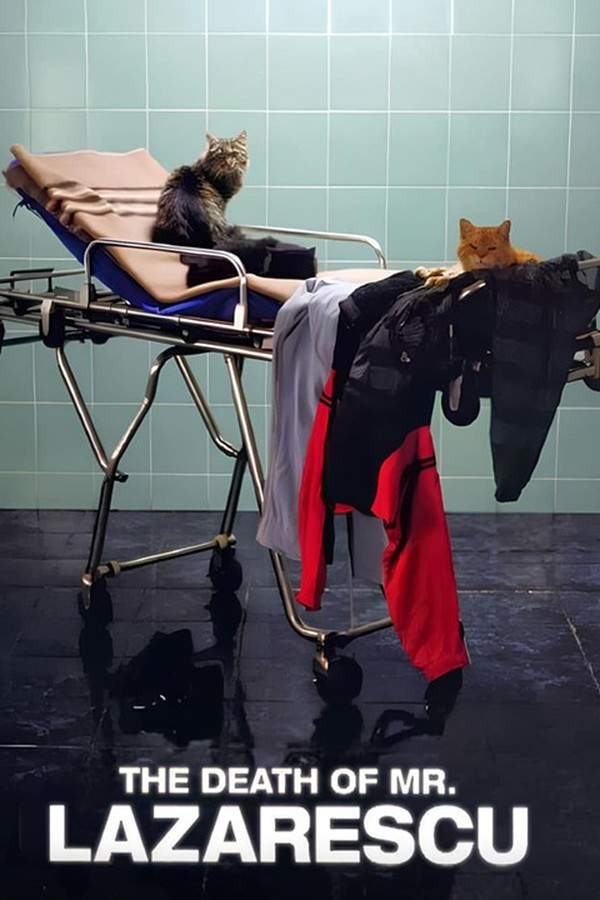
The Death of Mr. Lazarescu (2006) movie poster

Plot Summary

The Death of Mr. Lazarescu (2006) Plot Summary Explained

Release, runtime and language
2006 · 2 h 33 m · Romanian
JustWatch #25,301 1
Directed by
Cristi Puiu
Starring
Bogdan Dumitrache, Dana Dogaru, Mimi Branescu, Cerasela Iosifescu, Dragos Bucur, Doru Ana

After suffering a dizzy spell, a curmudgeonly, elderly widower named Mr. Lazarescu finds himself on a desperate odyssey through Bucharest’s overwhelmed hospitals. Each facility proves unable or unwilling to properly diagnose or treat his condition, forcing him and his distraught daughter to repeatedly seek help. The film poignantly portrays his increasingly frustrating experience and the systemic failings within Romania’s healthcare system, highlighting the challenges faced by patients and the strain on medical professionals.

On this page (6)
  1. 1 Where to watch
  2. 2 What happens: full plot
  3. 3 Plot questions answered
  4. 4 Movie threads
  5. 5 Categories
  6. 6 Every angle

Where to watch

Where to Watch The Death of Mr. Lazarescu (2006)

Where can you watch The Death of Mr. Lazarescu? Stream, rent or buy it in the US: current JustWatch availability with up-to-date prices.

Streaming availability powered by JustWatch

Full plot summary · contains spoilers

What Happens in The Death of Mr. Lazarescu: Full Plot Summary

The whole story of The Death of Mr. Lazarescu (2006) explained, from the opening scene to the final frame: every key event, every twist and what it all adds up to. Read it as a quick recap before the sequel, to check a scene you missed, or to finally understand what really happened.

Dante Remus Lăzărescu, portrayed by Ion Fiscuteanu, is a grumpy retired engineer who leads a lonely life in his Bucharest apartment. His only companions are three cats that fill the void left by his deceased wife. One day, in the grips of excruciating pain, he decides to call for an ambulance. However, when help does not arrive, he turns to his well-meaning neighbors. Unfortunately, instead of providing the necessary medical attention, they mistakenly give him anti-nausea pills, unveiling Lăzărescu's tendency towards heavy drinking. As one neighbor assists him back to bed, they initiate another call for the ambulance.

Once the ambulance finally arrives, nurse Mioara, played by Luminița Gheorghiu, quickly dismisses the idea that his long-standing ulcer problem could be behind his suffering. During her assessment of his medical history, she grows increasingly concerned that colon cancer may be the real culprit. Aware of the seriousness of his condition, Mioara decides to take Lăzărescu to the hospital and informs his sister about the situation, urging her to make the long journey from her remote location. Meanwhile, Lăzărescu's daughter is living in Toronto, Canada, making communication nearly impossible due to the vast distance.

As night falls, Lăzărescu embarks on a relentless journey through the bustling hospitals of Bucharest, with Mioara being his only supporter in this desperate situation. At each new facility, medical staff reluctantly agree to examine him, only to later reject him, citing fatigue or their disdain for the appalling state of the elderly man, whom they dismiss as just another smelly drunk. As Lăzărescu's condition continues to decline, his ability to articulate his thoughts slips away, eventually leaving him in a state of incoherent murmurs, as he drifts closer to unconsciousness. Amidst the turmoil, Mioara remains unwavering, fighting against a healthcare system that appears more preoccupied with a surge of bus accident victims than the plight of this suffering individual.

It is only after reaching the fourth hospital that Lăzărescu finally receives the crucial attention he desperately needs. The medical team there agrees to admit him and prepares for an emergency operation aimed at removing a blood clot from his brain, marking a significant turn in this harrowing ordeal.

Last updated: November 17, 2024 at 17:53

Was this helpful?

Plot questions answered

The Death of Mr. Lazarescu Plot Explained: Your Questions Answered

The questions people ask most about The Death of Mr. Lazarescu (2006): what happens in the confusing scenes, why the characters do what they do, the twists, hidden details and what the ending means. Each answer contains spoilers.

Q1

Why was Mr. Lazarescu rejected from the first three hospitals?

The hospitals rejected him because staff dismissed him as just another smelly, drunken old man. They cited fatigue or simply refused to admit him, treating him as a burden rather than a patient. Despite his worsening condition, the medical professionals prioritized bus accident victims over him, showing the systemic indifference that defines the film's critique of Romanian healthcare.

Foreshadowing: Early scenes establish that neighbors already perceive him as a heavy drinker due to his disheveled state and the discovery of his drinking habits.

  • hospital rejection
  • medical neglect
  • healthcare system
  • bureaucracy
  • patient dismissals
Q2

What was wrong with Mr. Lazarescu?

The nurse Mioara suspected colon cancer based on his medical history, but the actual urgent condition was a blood clot in his brain. By the time he reached the fourth hospital, his condition had severely deteriorated to the point of incoherent murmuring and near-unconsciousness, requiring emergency surgery.

Foreshadowing: Mioara's assessment during the ambulance arrival reveals her concern about his chronic ulcer history and the possibility of serious illness.

  • brain clot
  • colon cancer
  • medical diagnosis
  • emergency surgery
  • terminal illness
Q3

Why did nurse Mioara stay with Mr. Lazarescu throughout the night?

Mioara remained his sole advocate because she recognized the seriousness of his condition and felt responsible for getting him proper care. Despite being a paramedic with limited authority, she fought against institutional resistance and accompanied him to every hospital, becoming his only supporter in a system that treated him as expendable.

Foreshadowing: From the moment she arrives in the ambulance, Mioara shows concern beyond her professional duties by deciding to transport him to the hospital herself.

  • Mioara
  • advocacy
  • compassion
  • medical professional
  • caregiver support
Q4

Why did the neighbors give Mr. Lazarescu anti-nausea pills instead of calling proper help?

The neighbors misinterpreted his symptoms, thinking he was experiencing nausea rather than a life-threatening emergency. This mistake inadvertently revealed Mr. Lazarescu's secret heavy drinking problem, which later influenced how medical staff perceived and treated him throughout his hospital journey.

Foreshadowing: The neighbors' well-meaning but misguided intervention sets up the pattern of misunderstanding that follows him through the entire healthcare system.

  • neighbors
  • drinking
  • misdiagnosis
  • anti-nausea pills
  • substance abuse
Q5

Why was Mr. Lazarescu's daughter unreachable during the emergency?

Mr. Lazarescu's daughter lived in Toronto, Canada, making immediate communication nearly impossible due to the vast distance and time difference. This isolation emphasizes his vulnerability, he has no immediate family in Romania to advocate for him, leaving him dependent on strangers and a distant sister who must travel from a remote location.

Foreshadowing: The summary mentions his daughter early, establishing her absence as a key factor in his loneliness and helplessness.

  • daughter
  • Toronto
  • distance
  • family isolation
  • emotional support
Q6

What happened when Mr. Lazarescu finally arrived at the fourth hospital?

At the fourth hospital, staff finally agreed to admit him and prepared for emergency surgery to remove a blood clot from his brain. This acceptance marks the pivotal moment in his ordeal, though the help comes after immense suffering and likely too late to fully recover from the damage caused by delays.

Foreshadowing: The repeated rejections at previous hospitals build toward this moment as the only possible outcome the narrative allows.

  • fourth hospital
  • admission
  • emergency surgery
  • brain clot
  • medical intervention
Q7

What does the ending say about Romania's healthcare system?

The ending is bittersweet, he finally receives the medical attention he desperately needs, but only after being shuttled through three hospitals that refused to treat him. The film suggests the system failed him through bureaucratic indifference and prioritizes mass casualty events over individual patients, offering procedural hope that comes too late to prevent significant suffering.

Foreshadowing: The constant rejections and staff complaints about being overwhelmed establish the systemic failures that culminate in this delayed intervention.

  • healthcare critique
  • systemic failure
  • medical neglect
  • bureaucracy
  • social commentary
Q8

Why did hospital staff dismiss Mr. Lazarescu as a drunk?

Hospital staff dismissed him as a drunk because of his disheveled appearance, strong body odor, and the smell of alcohol on his breath. This prejudice caused them to underestimate the severity of his actual medical condition, leading them to prioritize other patients and refuse admission based on his perceived status rather than his symptoms.

Foreshadowing: The neighbor's discovery of his drinking and his unkempt appearance plant the seed of this perception early in the film.

  • drunk
  • prejudice
  • medical bias
  • patient dignity
  • stigma

Movie threads

More Movies Like The Death of Mr. Lazarescu, by Mood & Story

Curated lists built around what makes The Death of Mr. Lazarescu tick: the same mood, the same kind of story or the same emotional payoff. Each list explains why these movies belong together.

Bleak system critiques like The Death of Mr. Lazarescu

Stories exposing the crushing indifference of bureaucratic systems on individual lives. If you appreciated the searing social commentary in The Death of Mr. Lazarescu, explore more movies that dissect the failure of systems and their impact on human dignity. These similar stories often feature a slow, observational pace and a heavy emotional weight, focusing on characters struggling against impersonal bureaucracy.

  • bleak
  • frustrating
  • clinical
  • oppressive
  • somber
  • melancholic
  • Tone: bleak, somber, critical
  • Pacing: slow, deliberate, observational
Why these movies?

The story pattern: The narrative typically follows a protagonist's downward spiral as they navigate a complex and indifferent system. The conflict is not with a single villain but with the faceless machinery of an institution, leading to a journey marked by repeated frustrations, small humiliations, and an erosion of hope.

Why they belong together: Movies are grouped here for their shared tone of bleak realism, their focus on systemic failure as the central antagonist, and their emotionally heavy engagement with themes of social injustice and the fragility of individual lives within large, uncaring structures.

Slow-burn character ordeals like in The Death of Mr. Lazarescu

Intimate, patient portraits of individuals facing isolation and physical or mental decline. For viewers who were moved by the patient, intimate portrayal of Mr. Lazarescu's journey, this thread highlights other movies with a similar slow-burn pace and focus on a lonely character's ordeal. These films share a bleak tone and heavy emotional weight, offering a raw look at human fragility.

  • lonely
  • melancholic
  • somber
  • patient
  • immersive
  • intimate
  • Tone: bleak, melancholic, lonely
  • Pacing: slow, patient, immersive
Why these movies?

The story pattern: These narratives are character studies that unfold in near real-time, focusing on the minute-by-minute experience of a protagonist's struggle. There is often no traditional plot, just a linear progression of a deteriorating situation, emphasizing the character's internal experience and isolation over external action.

Why they belong together: This grouping is defined by a specific mood mix: a slow, observational pace combined with a bleak, melancholic tone and themes of loneliness, aging, or decline. The films create a powerful, empathetic connection to a single character's suffering.

Categories

Movie Lists Featuring The Death of Mr. Lazarescu

The Death of Mr. Lazarescu appears in these hand-built movie categories. Each one groups movies by a specific mood, theme or story type, with their plot summaries and endings explained.

View all movie categories

Every angle

The Death of Mr. Lazarescu (2006) Explained: Plot, Timeline & Characters

Everything about The Death of Mr. Lazarescu in one place: what happens in the plot summary, the timeline in chronological order, the characters and meaning and a spoiler-free summary. What's After the Movie adds the cast, box office and post-credit scenes.

Coming soon on iOS and Android

The Plot Explained Movie Summary App

Plot summaries, endings explained and timelines on your phone. Catch up on any movie in minutes, save your favorites and never miss a twist again.

Be the first to know when we launch. Your email stays private, always.

Learn more about the app