Plot Explained Spoilers guaranteed!
Plot Explained

Browse by genre

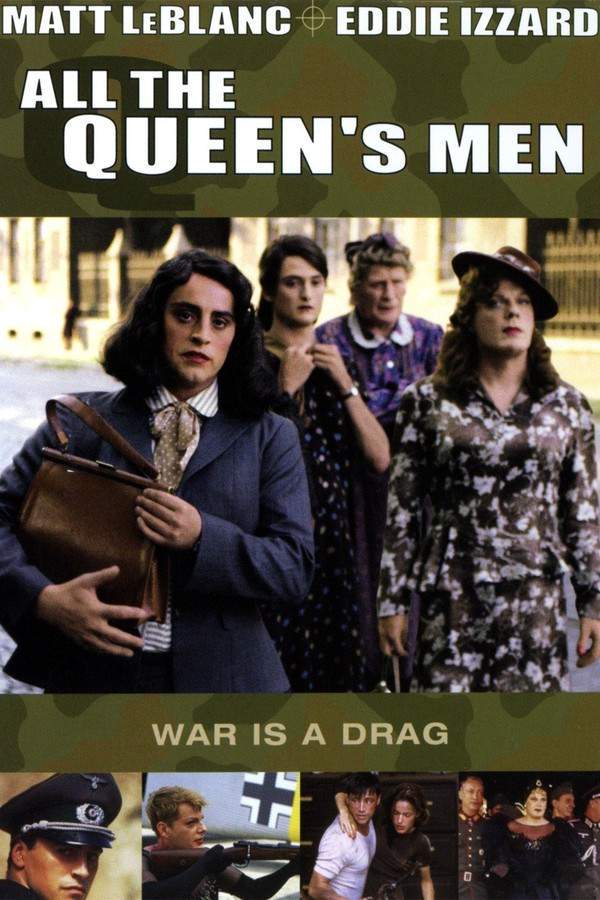
All the King’s Men (1999) movie poster

Plot Summary

All the King’s Men (1999) Plot Summary Explained

Release, runtime and language
1999 · 110 mins · English
Loading streaming availability…
Directed by
Julian Jarrold
Starring
James Murray, Ian McDiarmid, Maggie Smith, Tom Burke, Ben Crompton, Sonya Walger

A feature-length drama that follows the enigmatic fate of the Sandringham Company, which vanished during the 1915 Gallipoli campaign. Led by estate manager Captain Frank Beck, the unit moves into combat, only to be shrouded by an uncanny mist and disappear without a trace, leaving the mystery unsolved.

On this page (6)
  1. 1 Where to watch
  2. 2 What happens: full plot
  3. 3 Plot questions answered
  4. 4 Movie threads
  5. 5 Movies like All the King’s Men
  6. 6 Every angle
Loading streaming availability…

Full plot summary · contains spoilers

What Happens in All the King’s Men: Full Plot Summary

The whole story of All the King’s Men (1999) explained, from the opening scene to the final frame: every key event, every twist and what it all adds up to. Read it as a quick recap before the sequel, to check a scene you missed, or to finally understand what really happened.

Based on the true story of the 1/5th (Territorial) Battalion of the Norfolk Regiment, a unit formed from the King’s Sandringham estate and once known as a “Sandringham Company,” the film follows Pvt. Will Needham [James Murray] and his comrades as they head to Gallipoli.

On 12 August 1915, the battalion suffers heavy losses, and a later myth grows that the unit vanished into a mist. The story then shifts to uncovering how that legend took root back home, as an investigator is sent after the war on behalf of the royal family to learn the truth about what happened to the Sandringham Company. This journey intertwines with the lives of key figures at the heart of the monarchy, including Queen Alexandra Maggie Smith and King George V David Troughton, whose involvement adds a layer of intrigue and pressure to the search for answers. The investigation also brushes against the religious and civic figures of the era, such as Rev. Pierrepoint Edwards Ian McDiarmid, as memories of the war are sifted through in the years that follow.

As depicted, the remnants of the Sandringham Company are eventually separated from other British troops, suffer devastating losses, and are reportedly taken prisoner by Ottoman soldiers before a massacre is carried out. One survivor wakes in a German military hospital, where a doctor explains that he was fortunate to have been found by German troops accompanying the Turkish forces, a detail that adds moral and historical ambiguity to the ordeal.

The film culminates in a controversial moment: a scene showing prisoners killed as they attempt to surrender. This portrayal drew criticism from the Turkish Ambassador in London, and from Captain Frank Beck David Jason himself, whose grandson objected that the sequence was not supported by evidence. The narrative thus cycles between tribute and critique, weighing the remembered history against contested facts.

Throughout, the story stays anchored in the human cost and the quest for truth, weaving perspectives from the royal household, military figures, and the ordinary soldiers who lived through the campaign. The result is a careful, lucid exploration of a famous wartime episode, its origins in myth, and the difficult path to historical clarity, all rendered with a restrained, respectful tone and a commitment to accuracy that invites viewers to reflect on how memories of war are formed and transmitted.

Last updated: February 17, 2026 at 19:57

Was this helpful?

Plot questions answered

All the King’s Men Plot Explained: Your Questions Answered

The questions people ask most about All the King’s Men (1999): what happens in the confusing scenes, why the characters do what they do, the twists, hidden details and what the ending means. Each answer contains spoilers.

Q1

Why did the Sandringham Company disappear at Gallipoli?

The Sandringham Company did not actually disappear into mist as the myth suggests. During the August 12, 1915 action at Gallipoli, the battalion suffered heavy casualties, became separated from allied troops, and were subsequently captured by Ottoman soldiers. The myth of vanishing into mist grew in the years after the war, likely as a way to soften the harsh reality of massacre and captivity.

  • sandringham company
  • gallipoli
  • disappearance
  • mist
  • vanished soldiers
Q2

What happened to the Sandringham soldiers after being captured?

After capture by Ottoman forces, the remnants of the Sandringham Company were held as prisoners. The film depicts a controversial scene where prisoners were killed while attempting to surrender. Historical evidence for this specific massacre is disputed, and the Turkish Ambassador criticized this portrayal as unsupported.

Foreshadowing: The separation from allied troops during the August 12 battle directly led to their vulnerable position.

  • captured soldiers
  • ottoman prison
  • gallipoli prisoners
  • massacre
Q3

Why was the film's surrender scene controversial?

The film depicts prisoners being killed as they attempted to surrender, a sequence that drew criticism from the Turkish Ambassador in London and from Captain Frank Beck's grandson. Both argued the scene was not supported by independent historical evidence, raising questions about artistic license versus factual accuracy.

  • turkish ambassador
  • historical accuracy
  • film controversy
  • surrender scene
Q4

How did a Sandringham soldier end up in a German hospital?

One survivor woke up in a German military hospital after being found by German troops accompanying Turkish forces. The doctor explained that the soldier was fortunate to have been found by these German troops, adding moral and historical ambiguity to the ordeal by showing how enemy forces could play unexpectedly protective roles.

  • german hospital
  • survivor
  • turkish forces
  • prisoner of war
Q5

What caused the heavy losses on August 12, 1915 at Gallipoli?

During the action on August 12, 1915, the battalion sustained devastating casualties and became separated from other British troops. Communication lines broke down amid chaotic fighting, leaving the Sandringham Company isolated and vulnerable to enemy advance.

Foreshadowing: The film's early scenes establish the unit's close ties to the royal household, making their eventual fate more poignant.

  • august 12 1915
  • gallipoli
  • heavy casualties
  • battle losses
Q6

Why did the royal family investigate the Sandringham Company's fate?

After World War I, an investigator was sent on behalf of the royal family to uncover the truth about what happened to the Sandringham Company. This investigation sought to verify or debunk the growing myth and reconstruct events, driven by the royal household's close ties to the unit that originated from the Sandringham estate.

  • royal family
  • post-war investigation
  • sandringham estate
  • truth
Q7

Why did the myth of disappearing into mist develop?

The myth that the Sandringham Company disappeared into a mist grew in Britain after the war. This legend likely emerged as a way to process the traumatic reality of the battalion's fate, massacre and captivity, offering a more mysterious and somewhat noble narrative than the brutal truth of what actually happened.

  • myth
  • mist
  • legend
  • war story
  • memory
Q8

Was Captain Frank Beck a real historical figure?

Yes, Captain Frank Beck was the real estate manager at Sandringham who led the Sandringham Company. His grandson objected to the film's depiction of prisoners being killed while surrendering, stating the sequence was not supported by evidence. Beck's connection to the royal family added significant weight to the unit's story.

  • captain frank beck
  • real person
  • estate manager
  • sandringham
Q9

What was the Sandringham Company's connection to the royal family?

The 1/5th (Territorial) Battalion of the Norfolk Regiment was formed from men employed at the King's Sandringham estate in Norfolk. This close connection to the royal household, led by King George V and Queen Alexandra, meant the unit was known as the Sandringham Company, and the royal family maintained interest in their fate long after the war.

Foreshadowing: The film's opening establishes the unit's formation at Sandringham House, showing King George V's personal involvement.

  • king george v
  • queen alexandra
  • sandringham house
  • royal household
Q10

Did Ottoman forces massacre British prisoners at Gallipoli?

The film depicts Ottoman forces killing British prisoners attempting to surrender, but this portrayal is disputed. The Turkish Ambassador in London criticized the scene as historically unsupported. While prisoner mistreatment occurred during the war, the specific incident shown in the film lacks independent corroboration.

  • ottomans
  • british prisoners
  • massacre
  • gallipoli
  • war crimes
Q11

How was the Sandringham Company originally formed?

The Sandringham Company was formed in the pre-war period as part of Britain's territorial forces. Men from the King's Sandringham estate in Norfolk formed the core of the 1/5th (Territorial) Battalion of the Norfolk Regiment, creating a unit with direct ties to the royal household.

  • territorial battalion
  • norfolk regiment
  • sandringham estate
  • unit formation
Q12

How accurate is All the King's Men to the true story?

The film is based on the true story of the 1/5th (Territorial) Battalion of the Norfolk Regiment, known as the Sandringham Company. However, the controversial scene depicting prisoners being killed while surrendering has been criticized by the Turkish Ambassador and Captain Frank Beck's grandson as lacking evidentiary support, highlighting the tension between dramatic storytelling and historical fact.

  • historical accuracy
  • true story
  • based on facts
  • film controversy

Movie threads

More Movies Like All the King’s Men, by Mood & Story

Curated lists built around what makes All the King’s Men tick: the same mood, the same kind of story or the same emotional payoff. Each list explains why these movies belong together.

Historical Mysteries of War like All the King’s Men

War stories centered on a haunting, unexplained historical disappearance. If you were captivated by the unresolved fate of the Sandringham Company in All the King’s Men, explore more movies like it. This collection features similar historical war stories built around a central, haunting mystery—tales of disappearances, unexplained events, and the bleak search for answers amidst the chaos of conflict.

  • somber
  • mysterious
  • historical
  • tragic
  • unresolved
  • oppressive
  • Tone: somber, mysterious, bleak
  • Pacing: steady, methodical
Why these movies?

The story pattern: These narratives typically follow a linear or investigative structure, methodically presenting the events leading up to a pivotal, mysterious incident. The story often unfolds through the perspectives of those left behind—historians, soldiers, or family members—grappling with incomplete information and the emotional weight of an unsolved tragedy. The journey is one of mounting dread and melancholic reflection.

Why they belong together: Movies in this thread are united by their blending of historical drama with an enduring mystery. They share a somber tone, a steady, deliberate pacing that allows the gravity of the events to sink in, and a deep, often heavy emotional weight stemming from themes of loss and the fragility of historical truth.

Bleak and Tragic War Epics like All the King’s Men

War films that unflinchingly depict the heavy cost and senseless tragedy of conflict. For fans of the heavy, tragic atmosphere of All the King’s Men, this list curates movies with a similar bleak worldview. These similar films explore the darkest aspects of war—massacres, prisoner trauma, and the crushing weight of loss—delivering a powerful, emotionally draining experience that lingers long after the credits roll.

  • bleak
  • tragic
  • grim
  • oppressive
  • somber
  • heavy
  • Tone: bleak, tragic, grim
  • Pacing: steady, relentless
Why these movies?

The story pattern: The narrative journey in these films is a descent into the heart of darkness. Characters are often confronted with impossible choices, witnessing or participating in horrific acts that strip away their humanity. The plot builds steadily towards an inevitable, sorrowful conclusion, underscoring the futility and senseless destruction inherent in war.

Why they belong together: These films are grouped by their uncompromisingly bleak tone, high emotional intensity, and tragic resolutions. They share a commitment to portraying war as a harrowing, soul-crushing experience, marked by a heavy atmosphere, disturbing themes, and a pacing that allows the full weight of the tragedy to be felt.

If you liked this

Movies Like All the King’s Men

Similar movies to All the King’s Men: the same genre, themes or kind of story. Each one comes with its own plot summary, timeline and ending explained.

Browse all movie summaries

Every angle

All the King’s Men (1999) Explained: Plot, Timeline & Characters

Everything about All the King’s Men in one place: what happens in the plot summary, the timeline in chronological order, the characters and meaning and a spoiler-free summary. What's After the Movie adds the cast, box office and post-credit scenes.

Coming soon on iOS and Android

The Plot Explained Movie Summary App

Plot summaries, endings explained and timelines on your phone. Catch up on any movie in minutes, save your favorites and never miss a twist again.

Be the first to know when we launch. Your email stays private, always.

Learn more about the app