Amarcord

Amarcord

JustWatch#13,7764

Year: 1973

Runtime: 123 mins

Language: Italian

Director: Federico Fellini

DramaComedy

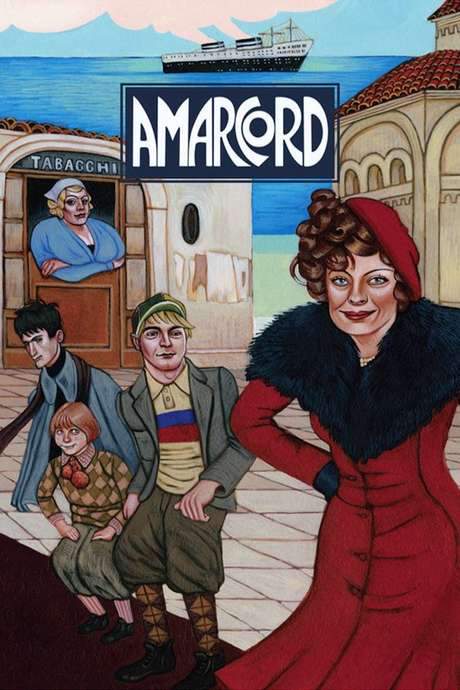
In a nostalgic Italian seaside town, adolescent Titta roams with his friends, stumbling into mischief while observing the town’s colorful eccentrics. He frequently clashes with his strict father but finds protection in his doting mother, and watches an array of characters—from extended relatives and fervent Fascist loyalists to alluring women—engage in absurd, sometimes surreal episodes that blend everyday life with fleeting fantasies.

Where to Watch Amarcord?

Find where to stream, rent, or buy Amarcord (1973) in the US with current JustWatch availability, up-to-date pricing, and platform listings for subscription, rental, and digital purchase options.

Warning: spoilers below!

Haven’t seen Amarcord yet? This summary contains major spoilers. Bookmark the page, watch the movie, and come back for the full breakdown. If you're ready, scroll on and relive the story!

Timeline – Amarcord (1973)

Trace every key event in Amarcord (1973) with our detailed, chronological timeline. Perfect for unpacking nonlinear stories, spotting hidden connections, and understanding how each scene builds toward the film’s climax. Whether you're revisiting or decoding for the first time, this timeline gives you the full picture.

1

Spring arrival in Borgo San Giuliano

Fluffy poplar seeds drifting on the wind announce spring in Borgo San Giuliano. The townspeople greet the season as preparations begin for the year's rituals and communal events that will unfold as the weather warms.

Spring Borgo San Giuliano
2

Fogheraccia and the segavecchia

At night the villagers gather in the square for the fogheraccia, a traditional bonfire that burns the segavecchia, an effigy of an old woman. The crowd erupts with pranks, fireworks, and lewd noises while a civically minded lawyer lectures on regional history.

Night Village square
3

School life under Fascism

In school, fascist authority saturates daily life as teachers recite dry facts. Titta and his classmates drift off, skip class, or bicker while being pressed to solve problems and identify obscure historical details.

Day School
4

Confession and avoidance

Titta goes to confession but avoids admitting his masturbation and a failed attempt to seduce Gradisca. The priest seems more concerned with floral arrangements than the boy’s sins.

Day Church
5

Fascist inspection and athletic displays

Fascist officials tour the town and demand that the schoolchildren perform athletic routines for their approval. The event showcases the regime’s control over youth and public life.

Day School/streets
6

The bell tower gramophone and its fate

A gramophone hidden in the bell tower broadcasts The Internationale, secretly arranged to inspire the crowd. The tense moment ends when gun-crazed Fascists shoot the recording, destroying it.

Day Bell tower / town
7

Aurelio questioned for past beliefs

Owing to his anarchist past, Aurelio is brought in for questioning by Fascist officials. He endures humiliation and returns home nauseated after being forced to drink castor oil.

Day Aurelio's home
8

Uncle Teo in the asylum

The family visits Uncle Teo in the countryside asylum, hoping for a day out. Teo escapes into a tree and yells Voglio una donna!, provoking attempts to catch him with the help of a dwarf nun and two orderlies who eventually coax him back.

Summer afternoon Insane asylum / countryside
9

Autumn follows, Rex voyage and fog

Autumn arrives as villagers set out in small boats to greet the SS Rex, the regime’s celebrated liner. By midnight they are asleep, but the foghorn rouses them to watch the ship pass, its wake capsizing their boats and leaving them awed and adrift.

Autumn Coastal village / bay
10

Foggy terrace and imagined dances

A thick autumn fog cloaks the town and the Grand Hotel. The youths wander the terrace, dancing with imaginary female partners as if the fog has erased reality.

Autumn night Grand Hotel terrace
11

The car race and Gradisca dream

The annual car race becomes a stage for Titta’s daydreams of winning Gradisca’s favour. He imagines a future where the prize is both the prize and a person to be won.

Autumn Car race course
12

Tobacconist encounter

In a late-evening visit to the tobacconist, Gradisca grows aroused as Titta demonstrates strength, but she overpowers him and sends him home. She still slips him a cigarette before parting.

Evening Tobacconist shop
13

Miranda’s death

Winter brings heavy snow as Miranda nurses a sick Titta back to health. When spring returns, she dies of an illness, leaving Titta devastated and profoundly changed.

Spring Titta's home
14

Gradisca’s wedding reception

The village attends Gradisca’s wedding reception to a Carabiniere. The event marks a closing chapter for Gradisca’s romance with Titta and the town’s social dynamics.

Spring Village
15

Titta disappears as Gradisca leaves

As Gradisca drives off with her new husband, someone notices that Titta has vanished as well. The film closes on this unresolved departure, with the boy’s fate hanging in the air.

Post-reception Village outskirts

Last updated: October 09, 2025 at 10:52

Was this helpful?

Amarcord (1973) Timeline Questions Answered – Chronology FAQ

Find frequently asked questions about the Amarcord (1973) timeline, including chronological order, nonlinear jumps, cause-and-effect links, and scene sequence clarifications. This timeline FAQ helps explain when key events happen, how moments connect, and why the story unfolds in that specific order.

Q1

Why does Titta skip confession about his private moments and Gradisca?

A.

Titta goes to confession but deliberately avoids admitting his masturbation or his failed attempt to seduce Gradisca. Instead, he lets the priest focus on floral arrangements rather than his actual sins. This shows Titta's typical adolescent approach to guilt and shame, he protects his private world of sexual curiosity from religious scrutiny while maintaining a facade of innocence.

Earlier scenes established Titta's fixation on Gradisca and his awkward attempts to assert his masculinity around women.

confessiontittagradiscapriestchurchadolescence
Q2

What is the segavecchia tradition in Amarcord?

A.

The segavecchia is a traditional bonfire ritual held in Borgo San Giuliano where villagers burn an effigy of an old woman (the segavecchia, meaning 'old woman' in the local dialect). This happens during fogheraccia, a communal celebration with fireworks, pranks, and lewd noises. The event represents a civic history lesson and a symbolic clearing away of the old year to make way for spring.

segavecchiafogheracciatraditionbonfirevillageritual
Q3

Why is Uncle Teo confined in the asylum?

A.

Uncle Teo, Aurelio's brother, is shown confined in a countryside asylum, though the exact nature of his condition is never fully explained. He oscillates between sanity and dream, often yelling 'Voglio una donna!' (I want a woman!) from a tree. The family visits him hoping for a day out, and they eventually coax him back to the asylum with the help of a dwarf nun and two orderlies. His character represents both affection and fragility.

teouncleasylumaureliofamilyfragility
Q4

What happens to the gramophone playing The Internationale?

A.

A gramophone hidden in the church bell tower broadcasts The Internationale, the anarchist anthem secretly arranged to inspire the crowd during a Fascist inspection. The tense moment ends when gun-crazed Fascists shoot the recording, destroying it. This incident connects to Aurelio's anarchist past and shows the regime's violent suppression of dissenting voices.

gramophoneinternationalebell towerfascistsanthemprotest
Q5

Why is Aurelio forced to drink castor oil?

A.

Aurelio is pulled aside for questioning because of his anarchist past. The Fascist officials force him to drink castor oil, a harsh purgative used as a punitive measure during the regime. He returns home nauseated and hobbling, where his wife Miranda bathes him in a haze of worry and care. This scene depicts the humiliation and physical cruelty of Fascist oppression.

aureliocastor oilfascismpunishmentanarchistinterrogation
Q6

What is the significance of the SS Rex passing by?

A.

The SS Rex was the regime's celebrated ocean liner, and its voyage past the coastal village becomes a major event. Villagers set out in small boats to greet it, half-asleep by midnight. When the massive ship passes, its wake capsizes their hopeful little flotilla, leaving them awed and adrift. This moment symbolizes the gap between the regime's grand promises and the mundane reality of ordinary people.

rexshiplinerfascist regimewakecoastal village
Q7

What happens during Titta's visit to the tobacconist?

A.

In a late-evening visit to the tobacconist shop, Gradisca becomes aroused as Titta demonstrates his strength by trying to lift her. However, she overpowers him and sends him home unsettled but exhilarated. Before he leaves, she slips him a cigarette, her trademark gift. This scene marks Titta's first physical encounter with a woman, contrasting his fantasies with reality.

tobacconistgradiscacigarettestrengthflirtationshop
Q8

When does Titta's mother Miranda die?

A.

Titta's mother Miranda dies in spring, after nursing him through a serious illness during winter when heavy snow blanketed the town. She recovers Titta's health but then succumbs to illness herself, leaving a devastating void that profoundly reshapes the boy's world. This event is the film's most emotionally weighty moment, signaling the end of Titta's protected childhood.

mirandamotherdeathtittaillnessspring
Q9

What happens to Titta at the end of Amarcord?

A.

At the end of the film, Gradisca marries a Carabiniere and leaves the village during her wedding reception. As she drives away with her new husband, someone notices that Titta has also vanished. His disappearance remains unresolved, his chapter closes as the seasons turn once more, symbolizing the bittersweet end of his youth and the irreversible transition into adulthood.

tittagradiscaweddingdisappearanceendingyouth
Q10

Why does the film include scenes of Fascist oppression?

A.

The film is set in a small Italian town during the Fascist era, and Fellini uses these political elements to contrast the public rituals of the regime with the private lives of ordinary citizens. Scenes like Aurelio's forced castor oil drinking and the gramophone incident show how political oppression intrudes on daily life, while the citizens largely endure it with a mix of submission and quiet resistance.

fascismregimeoppressionaureliopoliticshistorical context
Q11

What is the meaning of the fog and surreal fantasies in the film?

A.

The film uses fog and surreal fantasy sequences to represent the hazy, dreamlike quality of memory and adolescence. During the autumn fog, Titta and other youths wander the Grand Hotel terrace dancing with invisible partners, as if the fog has erased reality. These moments blend everyday life with fleeting fantasies, capturing the lyrical, nostalgic tone of Fellini's personal memoir.

fogfantasysurrealdreammemoryadolescence
Mobile App Preview

Coming soon on iOS and Android

The Plot Explained Mobile App

From blockbusters to hidden gems - dive into movie stories anytime, anywhere. Save your favorites, discover plots faster, and never miss a twist again.

Sign up to be the first to know when we launch. Your email stays private, always.

Explore Movie Threads

Discover curated groups of movies connected by mood, themes, and story style. Browse collections built around emotion, atmosphere, and narrative focus to easily find films that match what you feel like watching right now.

Movies with episodic nostalgia and melancholic reflection like Amarcord

Vignette-style memoirs that blend bittersweet memory with everyday eccentricity.If you liked the wistful, vignette-driven storytelling of Amarcord, discover more movies that use an episodic structure to explore memory and place. These films, like Amarcord, create a bittersweet and dreamlike atmosphere, perfect for viewers seeking similar reflective journeys.

nostalgicmelancholicbittersweetreflectivedreamlikevignetteatmosphericearthy

Narrative Summary

These narratives unfold not as traditional plots but as collections of memories and moments, often tied to a specific location or period. The focus is on atmosphere and character sketches over a driving plot, leading to a cumulative emotional impact that is more reflective than dramatic.

Why These Movies?

Movies are grouped here for their shared emphasis on mood and memory over plot, their melancholic yet often humorous tone, and their slow, deliberate pacing that allows the audience to soak in the atmosphere of a bygone world.

Movies with surreal whimsy and everyday absurdity like Amarcord

Stories where the mundane world is punctuated by strange, fantastical episodes.Fans of the surreal and humorous episodes in Amarcord will enjoy these movies that blend realistic settings with moments of fantasy and absurdity. Discover similar films where the line between reality and dream is playfully blurred, offering a unique and thought-provoking cinematic experience.

surrealwhimsicalabsurdsatiricaldreamlikeeccentricthought-provokingbittersweet

Narrative Summary

The narrative pattern involves a grounded, often small-town or familial setting that serves as a stage for eccentric characters and inexplicable events. The story embraces the illogical and the magical without fully abandoning reality, using surrealism to highlight the comedy and tragedy of human existence.

Why These Movies?

These films are connected by their unique tonal blend of earthy realism and playful surrealism. They share a moderate complexity that arises from this juxtaposition and a similar emotional weight that balances humor with poignant, sometimes melancholic, observations.

Unlock the Full Story of Amarcord

Don't stop at just watching - explore Amarcord in full detail. From the complete plot summary and scene-by-scene timeline to character breakdowns, thematic analysis, and a deep dive into the ending - every page helps you truly understand what Amarcord is all about. Plus, discover what's next after the movie.

Amarcord Summary

Read a complete plot summary of Amarcord, including all key story points, character arcs, and turning points. This in-depth recap is ideal for understanding the narrative structure or reviewing what happened in the movie.

Amarcord Summary

Characters, Settings & Themes in Amarcord

Discover the characters, locations, and core themes that shape Amarcord. Get insights into symbolic elements, setting significance, and deeper narrative meaning - ideal for thematic analysis and movie breakdowns.

Characters, Settings & Themes in Amarcord

Amarcord Spoiler-Free Summary

Get a quick, spoiler-free overview of Amarcord that covers the main plot points and key details without revealing any major twists or spoilers. Perfect for those who want to know what to expect before diving in.

Amarcord Spoiler-Free Summary

More About Amarcord

Visit What's After the Movie to explore more about Amarcord: box office results, cast and crew info, production details, post-credit scenes, and external links - all in one place for movie fans and researchers.

More About Amarcord