Year: 2007
Runtime: 91 mins
Language: English
Director: Sol Tryon
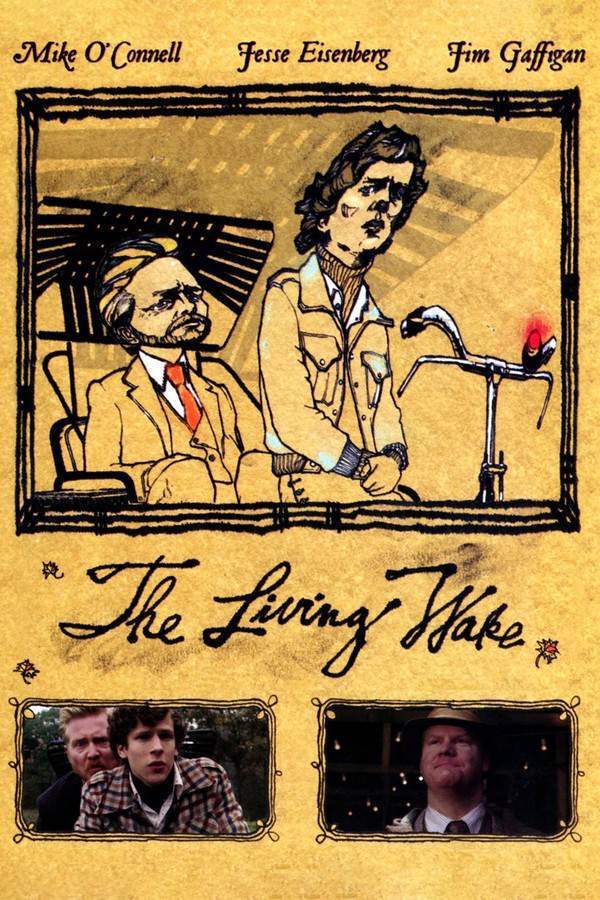
In a story‑book world, artist K. Roth Binew learns he has only one day left. He enlists his sole friend, Mills Joquin, to ferry him around in a bicycle‑powered rickshaw. Throughout the day Binew endures absurd trials in search of meaning, culminating in a “living wake” on a makeshift stage where friends and foes gather for his final performance.
Warning: spoilers below!
Haven’t seen The Living Wake yet? This summary contains major spoilers. Bookmark the page, watch the movie, and come back for the full breakdown. If you're ready, scroll on and relive the story!
Read the complete plot breakdown of The Living Wake (2007), including all key story events, major twists, and the ending explained in detail. Discover what really happened—and what it all means.
On the day he discovers a rare terminal illness, K. Roth Binew enlists his best and only friend, Mills Joaquin, to share a last day together. A self-proclaimed genius, K. Roth searches for a deeper meaning to life in a promised, but ultimately abandoned, monologue his eccentric father, Lampert Binew, never delivered. The quest for purpose drives the day as Mills stays by his side, navigating a landscape of rituals, memories, and sudden revelations.
The day begins with a tense confrontation with his neighbor and rival, Reginald, whom K. Roth invites to his living wake. With Mills in tow, he tries to stitch together a send-off that feels authentic: they sketch funeral arrangements, visit a peculiar “liquorsmith” (the scene’s oddball witness to their plans), and even stage a goat sacrifice to appease the Greek gods. Throughout this rite of passage, K. Roth clings to the belief that love is the ultimate meaning of life, leading to a wistful picnic with his former nanny, Marla, whom he describes as his true love. The moment is bittersweet, tempered by the distance between fantasy and reality.
A bold detour follows when K. Roth and Mills encounter a brief affair with a prostitute, a moment that underscores the fragility of his grand declarations. The pair then head to the public library, where the writer tries to donate his entire body of work. When the library staff determines his books are unfit for reading, a new line of questioning opens as he seeks answers from a local Psychic.
With death looming, the mood shifts toward reconciliation and doubt. A sudden pull toward faith arrives when K. Roth stumbles upon a church, and the community there urges him to reconnect with his family. His brother, Karl Binew, and his mother, Alma Binew, are hesitant to believe the news of his impending end, arguing that K. Roth may simply be caught in another one of his elaborate episodes. Karl bluntly declares that K. Roth is not really a writer or inventor outside of his own ego, and he calls in the family doctor for another opinion. After one last drink at a bar, the two friends brace for the wake’s ritual to come.
The wake unfolds before the entire cast, turning the living room into a stage. A dance to a song called “If I Was Real” is performed by Mills, followed by a one-woman play by K. Roth titled “Remembrance of Dawn.” The spectacle is interrupted again when the mother, Karl, and the family doctor, Dr. Schoenberg, arrive to intervene and plead for an end to the proceedings. K. Roth refuses, and the wake presses on as he ties up loose ends, even seeking some measure of revenge on Reginald and dispersing his possessions. Mills recites a poem in tribute, adding another layer to the night’s emotional fabric.
Then the moment arrives when the ghost of Lampert Binew appears to the audience—visible only to K. Roth—sparking a generational reckoning. The apparition explains that he never truly abandoned his son; he died without leaving a trace. He also dispels the notion of any simple blueprint or “equation for life,” insisting that the meaning of life is simply to live to one’s full potential. In a cathartic breakthrough, K. Roth admits that his life, in many ways, has been meaningless and that he was “a stupid, drunk, scared, dying man.” With that hard-won clarity, he finds a last sense of direction and steps toward his final act of farewell, encouraged by his father’s words.
As the wake reaches its culmination, the ritual ends with a poignant, if somber, sendoff. Mills lovingly carries K. Roth’s body to a pond, where he performs a quiet, ceremonial cremation. The film closes on the image of a life fully lived, even in its ending, leaving Mills to carry on the memory of a day that began with bravado and ended with quiet, hard-won meaning.
Last Updated: October 09, 2025 at 16:31
Discover curated groups of movies connected by mood, themes, and story style. Browse collections built around emotion, atmosphere, and narrative focus to easily find films that match what you feel like watching right now.
Stories where eccentric characters and absurd humor explore profound, emotional themes.If you liked The Living Wake, explore movies that blend whimsical humor with melancholic reflection. These films feature eccentric characters on unique personal journeys, using absurdity and wit to explore themes of life, death, and legacy, all while maintaining a bittersweet emotional core.
Narratives in this thread often follow an eccentric protagonist on a specific quest or through a series of unusual events. The plot structure provides a framework for exploring deeper emotional truths, with comedic moments often preceding or undercutting poignant revelations. The journey typically leads to a bittersweet resolution that acknowledges both the absurdity and beauty of existence.
Movies are grouped here for their distinctive tone, which masterfully blends whimsy and melancholy. They share a similar emotional mix, where medium-intensity humor is balanced with a reflective, sometimes sad, core. The pacing is steady, allowing for both quirky antics and quiet contemplation, resulting in a consistently bittersweet feel.
Characters facing their own end with humor, ritual, and a search for meaning.Find movies similar to The Living Wake that explore a character's last day through an absurdist and comedic lens. These films focus on the search for meaning and the creation of personal rituals in the face of mortality, blending dark humor with poignant character reflection.
The narrative pattern involves a protagonist receiving a terminal diagnosis or facing an imminent end, prompting a series of planned or spontaneous events throughout a single day. The plot is structured around these rituals or quests, which are often grand, illogical, or deeply personal. The conflict arises from the gap between the character's idealized finale and the messy reality, leading to a climax that is a performance or presentation of their life's meaning.
These films are connected by a highly specific plot premise—a curated final day—and a shared thematic focus on grappling with mortality through absurdity. They possess a similar mood blend of existential dread met with defiant humor and a moderate complexity that often includes subplots about legacy and relationships.
Don't stop at just watching — explore The Living Wake in full detail. From the complete plot summary and scene-by-scene timeline to character breakdowns, thematic analysis, and a deep dive into the ending — every page helps you truly understand what The Living Wake is all about. Plus, discover what's next after the movie.
Track the full timeline of The Living Wake with every major event arranged chronologically. Perfect for decoding non-linear storytelling, flashbacks, or parallel narratives with a clear scene-by-scene breakdown.
Discover the characters, locations, and core themes that shape The Living Wake. Get insights into symbolic elements, setting significance, and deeper narrative meaning — ideal for thematic analysis and movie breakdowns.
Get a quick, spoiler-free overview of The Living Wake that covers the main plot points and key details without revealing any major twists or spoilers. Perfect for those who want to know what to expect before diving in.
Visit What's After the Movie to explore more about The Living Wake: box office results, cast and crew info, production details, post-credit scenes, and external links — all in one place for movie fans and researchers.
Discover movies like The Living Wake that share similar genres, themes, and storytelling elements. Whether you’re drawn to the atmosphere, character arcs, or plot structure, these curated recommendations will help you explore more films you’ll love.
The Living Wake (2007) Scene-by-Scene Movie Timeline
The Living Wake (2007) Movie Characters, Themes & Settings
The Living Wake (2007) Spoiler-Free Summary & Key Flow
Movies Like The Living Wake – Similar Titles You’ll Enjoy
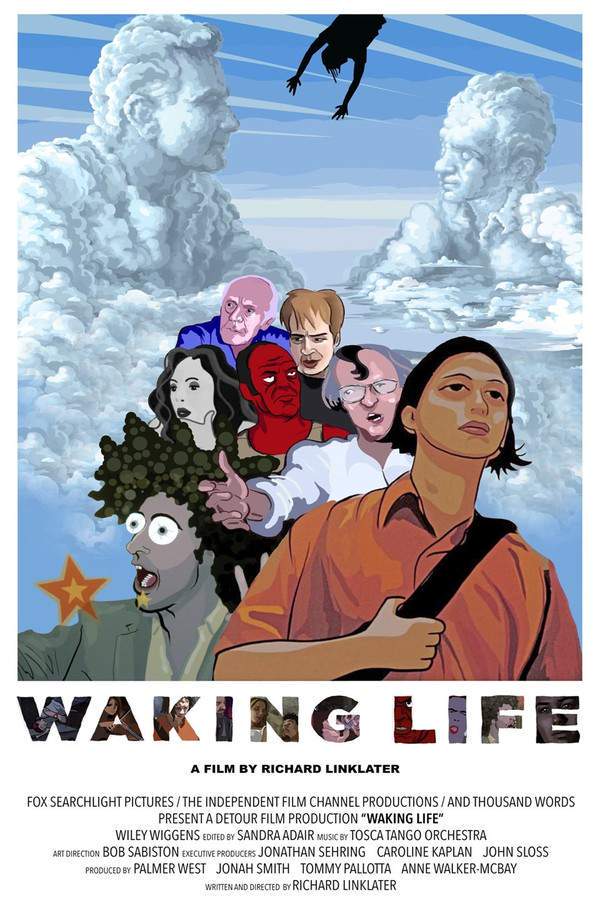
Waking Life (2001) Story Summary & Characters
You, the Living (2009) Spoiler-Packed Plot Recap
The Last Laugh (2019) Film Overview & Timeline
Waking Ned Devine (1998) Plot Summary & Ending Explained
Dead Awake (2010) Full Summary & Key Details
The Living World (2003) Complete Plot Breakdown
Dead on Time (1983) Detailed Story Recap
A Dead Man Visits the Living (1988) Ending Explained & Film Insights
The Living Man (2020) Detailed Story Recap
Living a Zombie Dream (1996) Complete Plot Breakdown
Wake Up and Dream (1946) Spoiler-Packed Plot Recap
Wake Up (1975) Ending Explained & Film Insights
The Dream Factory (1997) Film Overview & Timeline
Man Alive (1945) Story Summary & Characters
Wake Up Dead Man (2025) Spoiler-Packed Plot Recap