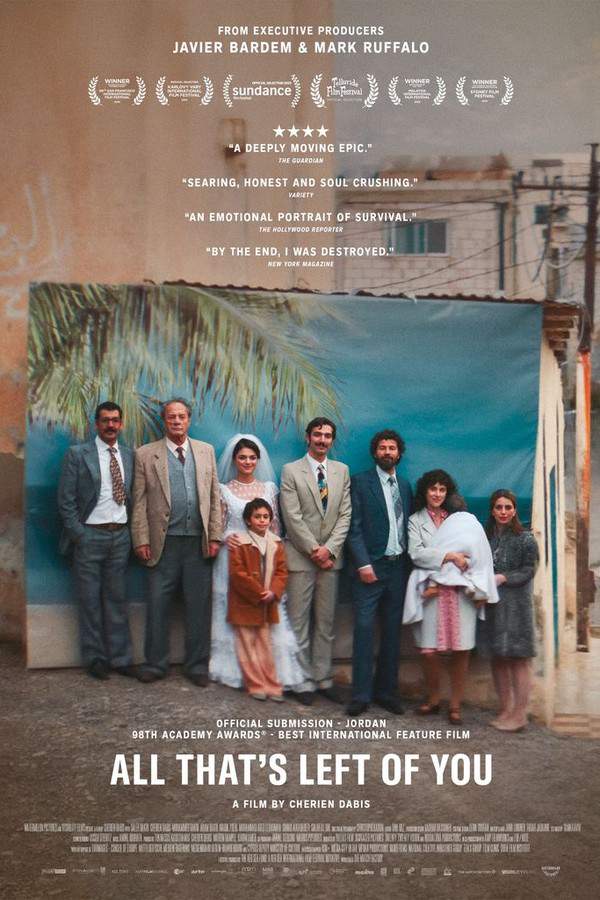
The family history Hanan has been recounting reaches the present through Noor, the younger generation who inherits consequences he did not create. When Noor is shot in the head, Hanan and Salim are told that he cannot survive, but that his organs can. They authorize the donation, and six recipients are saved. Only after the transplant does the movie disclose the identity of Hanan’s unseen listener: he is the adult Israeli man living with Noor’s heart. The revelation changes the preceding account from a story offered to an abstract audience into one mother’s decision to tell the recipient exactly whose life and history continue inside him. Hanan brings the narrative to the sea and to the poem that has moved through the family, placing Noor’s death beside earlier displacement, separation, and political violence rather than treating the shooting as an isolated tragedy. The recipient is not asked to become a substitute son, and the donation does not return Noor to his parents. What Hanan gives him is the context that medicine alone could not transfer—the names, memories, and accumulated losses attached to the heart that made his survival possible.
The organ crossing from a Palestinian child into an Israeli adult creates an intimate connection across a boundary the surrounding history has repeatedly made lethal. The film does not use that connection to declare the conflict reconciled. Six lives saved cannot compensate Hanan and Salim for Noor, and individual generosity cannot repair the dispossession narrated across generations. Its force comes from refusing those false equations. Hanan can preserve the truth of what happened while still consenting to an act that benefits people beyond her own community, and the recipient can accept the heart only after being made responsible for hearing the life attached to it. The sea, which can represent both separation and continuity, holds the final telling without closing it. Trauma has passed from parent to child throughout the story through silence, fear, and inherited political conditions; Noor’s heart establishes another form of transmission, bodily and sustaining rather than only destructive. The ending’s hope is therefore specific and fragile: history remains unresolved, but Hanan prevents grief from having the final authority over what Noor’s body can mean.