Plot Explained Spoilers guaranteed!
Plot Explained

Browse by genre

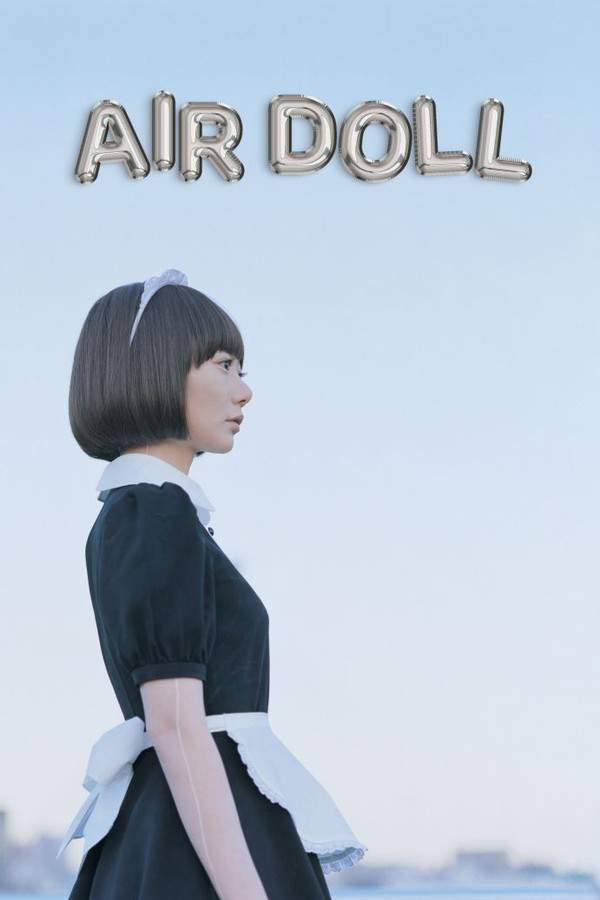
Air Doll (2009) movie poster

Characters & Themes

Air Doll (2009) Characters, Setting & Themes Explained

Release, runtime and language
2009 · 112 mins · Japanese
Loading streaming availability…
Directed by
Hirokazu Kore-eda
Starring
Susumu Terajima, Itsuji Itao, Mari Hayashida, Mari Hoshino, Sumiko Fuji, Tasuku Emoto

An inflatable, life‑size sex doll awakens one morning and, hidden from her owner, wanders into town where she meets Junichi. She quickly falls for him, begins courting him, and even lands a job at the same shop where he works. Just as her new life seems flawless, an unforeseen event upends everything.

On this page (8)
  1. 1 Where to watch
  2. 2 Characters explained (4)
  3. 3 Where & when it takes place
  4. 4 Themes & meaning (4)
  5. 5 Character & meaning questions
  6. 6 Movie threads
  7. 7 Movies like Air Doll
  8. 8 Every angle
Loading streaming availability…

4 main characters · contains spoilers

Air Doll Characters Explained: Who Is Who

The main characters of Air Doll (2009), heroes and villains: what drives them, how they change over the course of the story and what each of them reveals about the film's bigger ideas.

  • Hideo (Itsuji Itao)

    A middle-aged man who lives alone with Nozomi and treats the doll as his closest companion. He resents real, messy relationships and prefers a predictable, controllable form of companionship over genuine human contact.

    • 💤 Loner
    • 🗝️ Control freak
    • 🧭 Detached
  • Nozomi (Bae Doona)

    A life-like inflatable doll who comes to life when alone with Hideo. She explores the world with curiosity, forms a romantic bond with Junichi, and experiences longing and hurt. Her ultimate deflation and disposal underscore the fragility of her existence.

    • 💗 Emergent consciousness
    • 🌸 Wonder
    • 🎭 Performance vs reality
  • Junichi (Arata Iura)

    A video store employee who is drawn to Nozomi and develops a romantic connection with her. He embodies genuine affection but also becomes a casualty of the complex dynamics surrounding Nozomi's awakening.

    • 💘 Romantic interest
    • ⚖️ Moral gray area
  • Video Shop Owner (Ryo Iwamatsu)

    The video-store manager who misreads Nozomi's relationship with Hideo and coerces her in a moment of vulnerability. His actions illustrate how others instrumentalize Nozomi's presence.

    • 💼 Store owner
    • ⚖️ Moral ambiguity

Last updated: February 17, 2026 at 17:24

Was this helpful?

Setting

Where and When Does Air Doll Take Place?

The setting of Air Doll (2009): the year and time period, the places and locations, and how they shape the characters, the mood and the tension of the story.

Time period

Location

Hideo's apartment, Video store, Doll factory

The story centers on a quiet urban apartment where a middle-aged man lives with an inflatable doll he calls Nozomi. When Nozomi comes to life, she ventures into the outside world, visiting a video store and encountering others in a city that feels both intimate and impersonal. The locations—his private home, the public video shop, and the factory where dolls are made—highlight the tension between solitary life and the social world they try to inhabit.

  • 🏢 Domestic setting
  • 🌃 Urban environment
  • 🫂 Isolation

Last updated: February 17, 2026 at 17:24

Was this helpful?

4 major themes

Air Doll Meaning: Themes & Message Explained

What is Air Doll (2009) really about? The emotional, social and philosophical themes the film keeps returning to, its symbolism and the message beneath the surface.

  • Loneliness

    Hideo's life is defined by isolation; Nozomi's awakening creates a shared space of longing that never fully resolves. The film contrasts a man's need for predictable companionship with Nozomi’s emerging consciousness. Their evolving dynamic questions whether proximity alone can satisfy the ache for connection. It also shows how loneliness can push people toward unconventional forms of companionship.

  • Humanity

    Nozomi's awakening raises questions about what makes life and feeling real. The maker's claim that dolls have hearts highlights the divide between manufactured desire and genuine emotion. The interactions with Junichi and others reveal the limits of artificial companionship and the value of empathy beyond appearance. The film invites viewers to consider what it means to be truly alive.

  • Objectification

    Nozomi begins as a product intended for companionship, owned by Hideo. The video store encounter shows her treated as an object of desire within a market of needs. The factory's disposal of used dolls underscores the commodification and disposability of such artificial beings. The relationships she forms expose how care can become transactional and dehumanizing.

  • Mortality

    The climax centers on mortality as Junichi dies and Nozomi deflates, choosing an end to her life-sustaining presence. Nozomi's act of releasing her own air signals autonomy amid vulnerability and heartbreak. The film suggests life, memory, and affection are fragile, and that the boundaries between living and existing are delicate.

Last updated: February 17, 2026 at 17:24

Was this helpful?

Character & theme questions

Air Doll Characters & Meaning: Your Questions Answered

The questions people ask about Air Doll (2009): who the characters really are, their relationships, what the symbols mean, where it takes place and what the movie is really about. Each answer contains spoilers.

Q1

Where is the story of Air Doll set?

The story unfolds in a quiet urban Japanese setting. Nozomi ventures from Hideo's private apartment into the outside world, visiting a video store and eventually a doll factory. These locations contrast Hideo's isolated domestic life with the broader social world, highlighting the tension between solitude and human connection.

  • setting
  • urban
  • japan
  • locations
  • apartment
  • video store
  • factory
Q2

What does the video store symbolize in Air Doll?

The video store represents the public world where Nozomi experiences being seen as a person rather than an object. It's where she encounters Junichi and forms genuine human connection. However, the store also becomes a place of vulnerability, as the owner exploits her, illustrating how the outside world can be both inviting and threatening.

  • video store
  • symbolism
  • junichi
  • social world
  • vulnerability
Q3

What is the main theme of Air Doll?

Air Doll explores several interconnected themes: loneliness and the ache for connection, what it means to be truly alive and human, the objectification of beings created for companionship, and the fragility of life and memory. The film uses Nozomi's journey to examine how loneliness drives people toward unconventional forms of relationships and questions whether artificial companions can fulfill genuine emotional needs.

  • themes
  • loneliness
  • humanity
  • objectification
  • mortality
  • meaning
Q4

What does Air Doll say about loneliness?

The film portrays loneliness as a defining force that shapes both Hideo and Nozomi. Hideo's isolation leads him to prefer controllable artificial companionship over messy human relationships. Nozomi's awakening creates a shared space of longing between them, but their evolving dynamic shows that proximity alone cannot satisfy the deep need for genuine connection.

  • loneliness
  • isolation
  • companionship
  • hideo
  • relationship
Q5

How does Air Doll explore humanity and consciousness?

Nozomi's awakening raises questions about what makes life and feeling real. The doll maker's claim that dolls have hearts highlights the divide between manufactured desire and genuine emotion. Through Nozomi's interactions with Junichi, the film explores the limits of artificial companionship and invites viewers to consider what it truly means to be alive.

  • humanity
  • consciousness
  • awakening
  • nozomi
  • alive
  • emotions
Q6

Who is Nozomi and what does she represent?

Nozomi is a life-like inflatable doll who comes to life when alone with her owner Hideo. She represents emerging consciousness, the desire for love and belonging, and the vulnerability of beings created for others' needs. Her journey from object to feeling being explores themes of identity, autonomy, and the fragile nature of existence.

  • nozomi
  • character
  • doll
  • consciousness
  • identity
  • role
Q7

Who is Hideo and what is his role in the story?

Hideo is a middle-aged man who lives alone with the inflatable doll he calls Nozomi, treating her as his closest companion. He represents the archetype of someone who resents real, messy relationships and prefers predictable, controllable forms of companionship. His arc explores how loneliness can push people toward artificial solutions and the consequences of avoiding genuine human connection.

  • hideo
  • character
  • owner
  • loneliness
  • isolation
  • role
Q8

Who is Junichi and what role does he play?

Junichi is a video store employee who develops a romantic connection with Nozomi. He represents genuine human affection and the possibility of real connection for someone like Nozomi. However, his role also highlights the tragic dimensions of the story's complex dynamics, as he becomes entangled in the unusual relationships surrounding the awakened doll.

  • junichi
  • character
  • video store
  • romance
  • affection
  • role
Q9

What does Air Doll say about objectification?

The film explores objectification through Nozomi's journey from product to person. Initially created as a companion object for Hideo, she encounters others who treat her as an object of desire within a market of needs. The factory's disposal of used dolls underscores the commodification and disposability of artificial beings, while the relationships she forms expose how care can become transactional and dehumanizing.

  • objectification
  • commodification
  • doll factory
  • disposable
  • treatment
Q10

What does the doll factory represent in Air Doll?

The doll factory represents the place of origin and ultimate disposability of artificial companions. It underscores the commodification of beings created for human needs, nozomi herself was made there. The factory scene highlights the cold, industrial reality behind the personal relationships formed with these products, foreshadowing the fragility of Nozomi's existence and the transient nature of her artificial life.

  • doll factory
  • origin
  • manufacturing
  • disposability
  • commodification
Q11

What is the tone and mood of Air Doll?

Air Doll maintains a consistently melancholic tone through its slow, observational pacing. The film emphasizes Nozomi's wonder and subsequent disillusionment with weighted emotional undertones. While the premise is initially whimsical, the narrative is largely devoid of humor, focusing instead on the poignant sadness of a being that desires love but is ultimately treated as disposable.

  • tone
  • mood
  • melancholy
  • pacing
  • atmosphere
  • emotional
Q12

How does Air Doll address mortality?

Mortality becomes central to the film's conclusion, where both Nozomi and Junichi meet tragic ends. Nozomi's act of releasing her own air signals autonomy amid vulnerability and heartbreak. The film suggests that life, memory, and affection are fragile, and that the boundaries between living and existing are delicate, questions that resonate whether one is human or artificial.

  • mortality
  • death
  • ending
  • fragility
  • life
  • existence

Movie threads

More Movies Like Air Doll, by Mood & Story

Curated lists built around what makes Air Doll tick: the same mood, the same kind of story or the same emotional payoff. Each list explains why these movies belong together.

Movies about artificial beings like in Air Doll

Stories where manufactured beings gain consciousness and yearn for a humanity they can't fully grasp. If you were captivated by the sentient doll in Air Doll, explore more movies that delve into the awakening and alienation of artificial life. These films share a melancholic tone and explore themes of consciousness, yearning, and tragic romance.

  • lonely
  • melancholic
  • dreamlike
  • yearning
  • poignant
  • existential
  • Tone: melancholic, poignant
  • Pacing: slow, observant
Why these movies?

The story pattern: This narrative follows the linear but emotionally rich arc of a manufactured being discovering sentience. It begins with innocence and curiosity about the world, evolves into a quest for genuine connection and identity, but is ultimately defined by a tragic disillusionment, as the being realizes its fundamental otherness and disposability.

Why they belong together: These films are grouped together because they share a core focus on the existential loneliness of an artificial consciousness. They blend fantasy or sci-fi elements with heavy drama, feature a melancholic, observational tone, and deliver a profound emotional punch centered on themes of objectification and the desire for love.


Somber and lonely character dramas like Air Doll

Slow-burn character studies where a profound sense of isolation leads to a bleak but poignant end. Fans of the quiet melancholy and emotional weight of Air Doll will find more poignant stories here. This thread collects movies with a slow pace, heavy mood, and a focus on characters navigating profound isolation and yearning.

  • melancholic
  • lonely
  • poignant
  • detached
  • slow burn
  • somber
  • Tone: melancholic, bleak
  • Pacing: slow, character-driven
Why these movies?

The story pattern: The narrative is less about external plot and more about an internal emotional journey. It follows a character, often an outsider, as they move through the world with a sense of detachment. The pacing is slow and deliberate, emphasizing quiet moments of observation and unspoken longing, building towards an inevitable, somber conclusion that highlights the character's fundamental isolation.

Why they belong together: These films are united by their melancholic atmosphere, slow pacing, and heavy emotional focus on loneliness. They prioritize mood and character introspection over fast-paced action, creating a similarly contemplative and somber viewing experience that resonates long after the credits roll.

If you liked this

Movies Like Air Doll

Similar movies to Air Doll: the same genre, themes or kind of story. Each one comes with its own plot summary, timeline and ending explained.

Browse all movie summaries

Every angle

Air Doll (2009) Explained: Plot, Timeline & Characters

Everything about Air Doll in one place: what happens in the plot summary, the timeline in chronological order, the characters and meaning and a spoiler-free summary. What's After the Movie adds the cast, box office and post-credit scenes.

Coming soon on iOS and Android

The Plot Explained Movie Summary App

Plot summaries, endings explained and timelines on your phone. Catch up on any movie in minutes, save your favorites and never miss a twist again.

Be the first to know when we launch. Your email stays private, always.

Learn more about the app