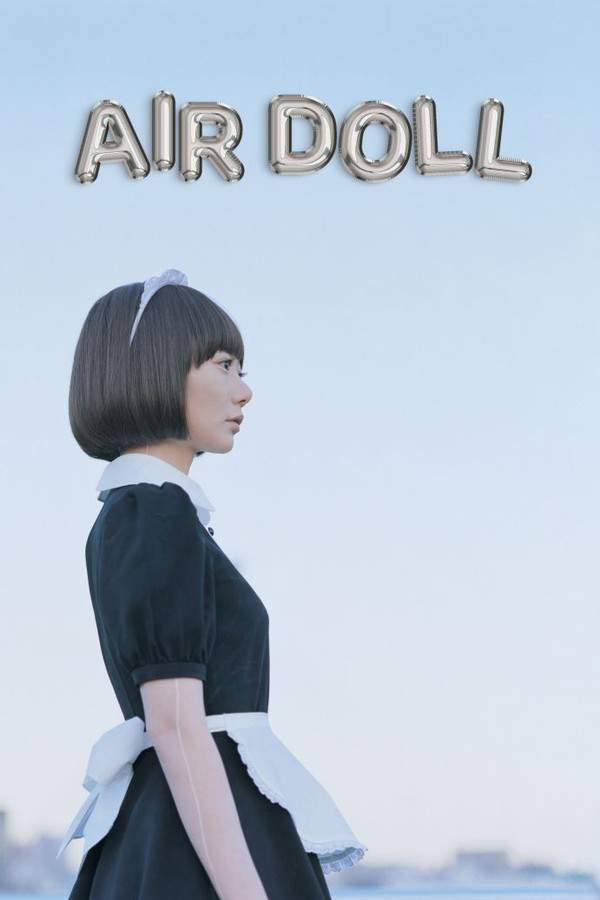
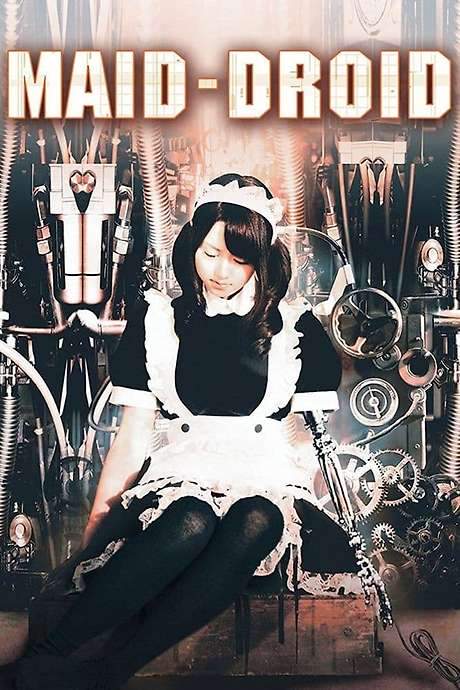
Middle-aged Hideo, Itsuji Itao, lives alone with an inflatable sex doll he calls Nozomi, Bae Doona. The doll is his closest companion; he dresses her, talks to her over dinner, takes her for walks in a wheelchair, and has sex with her. The arrangement is quiet but intimate, a routine that masks a deeper loneliness and a longing for connection in a world that feels distant.
While Hideo is at work, Nozomi comes to life. She dresses in her maid's outfit and explores the world outside their apartment with childlike wonder, a fresh curiosity that contrasts with Hideo’s stagnant routine. She soon takes a job in a video store and becomes romantically involved with Junichi, Arata Iura. Their bond grows in the margins of ordinary life, as she learns to navigate emotions and desires she hadn’t imagined as a doll. When she accidentally cuts herself and deflates, Junichi repairs the tear with adhesive tape and re-inflates her, a small act that feels like a fragile bridge between two different kinds of being.
One day, Hideo visits the store; Nozomi serves him, embarrassed, but he does not recognize her. Her boss assumes Hideo is her boyfriend and that she is cheating on Junichi, coercing Nozomi into sex. The power dynamics become tangled: the human world pressures a non-human creation to perform intimacy, while Hideo’s own relationship to Nozomi remains stagnant and withdrawn. At their home, Hideo discovers Nozomi is no longer a doll. He asks her to return to lifelessness, as he finds human relationships
> "annoying".
Hurt, she runs away and begins a quest to understand her own worth beyond someone else’s use. Nozomi goes to the factory where she was manufactured and meets her maker. He explains that he believes all the dolls have hearts, judging by the expressions on their faces when they are returned, revealing the kind of treatment they received. When she asks what happens to used dolls, he says he throws them out with the garbage, a stark reminder of the disposable nature of artificial companions and the fragility of artificial lives.
Nozomi tells Junichi she will do whatever he wants for him. He asks to let out her air and re-inflate her as he did in the video store, a request that exposes the blurred lines between care and control. Afterwards, as he sleeps, she attempts to return the favor; finding no plug, she cuts him with scissors, and attempts to stem the blood flow with adhesive tape. Junichi dies, and she leaves his body with the garbage. Heartbroken, she removes the tape sealing her own wound and allows herself to deflate, to be collected with the garbage, completing a haunting arc that probes longing, abuse, and the haunting question of what makes a person whole.