Plot Explained Spoilers guaranteed!
Plot Explained

Browse by genre

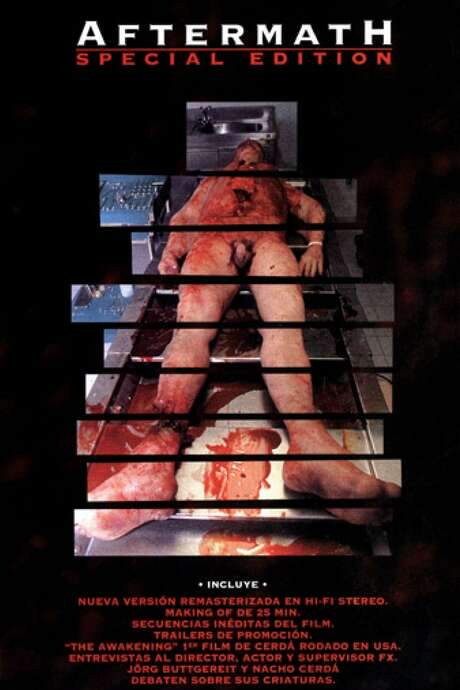
Aftermath (1994) movie poster

Characters & Themes

Aftermath (1994) Characters, Setting & Themes Explained

Release, runtime and language
1994 · 30 mins
Loading streaming availability…
Directed by
Nacho Cerdà
Starring
Pep Tosar, Xevi Collellmir, Ángel Tarris, Jordi Tarrida

When the others leave for the night, the last mortician begins to fondle the corpses. He quickly moves to the corpse of a young woman who died in a car crash.

On this page (8)
  1. 1 Where to watch
  2. 2 Characters explained (5)
  3. 3 Where & when it takes place
  4. 4 Themes & meaning (3)
  5. 5 Character & meaning questions
  6. 6 Movie threads
  7. 7 Movies like Aftermath
  8. 8 Every angle
Loading streaming availability…

5 main characters · contains spoilers

Aftermath Characters Explained: Who Is Who

The main characters of Aftermath (1994), heroes and villains: what drives them, how they change over the course of the story and what each of them reveals about the film's bigger ideas.

  • Mortician

    played by Pep Tosar

    A disturbed, meticulous mortician who becomes consumed by Marta Arnau Marti's body. He maintains a calm exterior while his private curiosity leads him toward morally and legally unacceptable actions. His cold, systematic demeanor contrasts with the raw, taboo impulses that drive the plot.

    • 🪦 Morbid
    • 🔬 Clinical
    • 🔪 Obsessive
  • Cadáver Vin

    played by Xevi Collellmir

    One of the two male corpses subjected to autopsy. The presence of a lifeless body serves as the catalyst for the mortician's transgressive behavior, highlighting the film's exploration of mortality and desecration.

    • 🪦 Cadaver
    • 🔬 Autopsy subject
    • 🧭 Dead
  • Watchman

    played by Ángel Tarris

    A quiet, watchful figure who observes the morgue's corridors. The Watchman embodies the boundary between life and death, offering a peripheral perspective on the events unfolding in the morgue.

    • 👁️ Watcher
    • 🚧 Boundary
    • 🕯️ Quiet
  • Médico #2

    played by Jordi Tarrida

    A morgue doctor assisting with the autopsies. He represents the professional front of the operation and shares a sense of clinical detachment that shapes the film's unsettling atmosphere.

    • 🧪 Doctor
    • 🧭 Clinical
    • 🗝️ Professional
  • Marta Arnau Marti

    The woman who dies in the opening car crash and becomes the focal point of the mortician's fixation. Her body triggers the unfoldings of desire, violation, and the ultimate tragedy within the morgue.

    • 🪦 Victim
    • 💔 Tragedy
    • 🗝️ Focal point

Last updated: February 17, 2026 at 18:13

Was this helpful?

Setting

Where and When Does Aftermath Take Place?

The setting of Aftermath (1994): the year and time period, the places and locations, and how they shape the characters, the mood and the tension of the story.

Time period

Location

Morgue, Mortuary

A clinically sterile morgue serves as the film's central stage, with cold metal tables and quiet corridors. The space is where autopsies unfold, exposing the tension between science and fixation. Its hushed atmosphere amplifies the disturbing acts surrounding Marta Arnau Marti's body.

  • 🧪 Clinical
  • 🧊 Cold
  • 🧰 Sterile

Last updated: February 17, 2026 at 18:13

Was this helpful?

3 major themes

Aftermath Meaning: Themes & Message Explained

What is Aftermath (1994) really about? The emotional, social and philosophical themes the film keeps returning to, its symbolism and the message beneath the surface.

  • Obsession

    The film centers on a mortician whose fixation on Marta Arnau Marti's body spirals into dangerous, immoral behavior. The narrative tracks how obsession distorts professional detachment into compulsion, driving deadly acts. The theme examines how private fascinations become public horrors.

  • Death

    Death is rendered as both physical decay and a narrative force that reshapes characters. The morgue's quiet environment foregrounds the moment death becomes a stage for control and transgression. The story uses dead bodies to explore desire, power, and the boundaries of humanity.

  • Voyeurism

    The mortician's autopsy work is filtered through a gaze that borders on spectatorship and arousal. Photography and the clinical fascination with illness reveal a disturbing appetite for watching and recording. This theme exposes how looking can become a weapon and a sanctuary for forbidden impulses.

Last updated: February 17, 2026 at 18:13

Was this helpful?

Character & theme questions

Aftermath Characters & Meaning: Your Questions Answered

The questions people ask about Aftermath (1994): who the characters really are, their relationships, what the symbols mean, where it takes place and what the movie is really about. Each answer contains spoilers.

Q1

What is the setting of Aftermath?

The film takes place almost entirely in a clinically sterile morgue with cold metal tables and quiet corridors. This clinical, cold environment serves as the central stage where the mortician's disturbing acts unfold, creating a stark contrast between the professional medical setting and the transgressive behavior that occurs there.

  • morgue setting
  • mortuary
  • clinical
  • sterile environment
Q2

What is the main theme of Aftermath?

The primary theme is obsession, specifically how the mortician's fixation on Marta Arnau Marti's body spirals from private curiosity into dangerous, immoral behavior. The film examines how obsession distorts professional detachment into compulsion, transforming private fascinations into public horrors.

  • obsession theme
  • mortician fixation
  • psychological obsession
Q3

How does Aftermath explore death?

Aftermath uses death as both physical decay and a narrative force that reshapes characters. The morgue's quiet environment transforms death into a stage for control and transgression. The story exploits dead bodies to explore desire, power, and the boundaries of humanity.

  • death theme
  • mortality
  • corpse desecration
  • power and death
Q4

What does Aftermath say about voyeurism?

The film explores voyeurism through the mortician's clinical gaze, which borders on spectatorship and arousal. His autopsy work reveals a disturbing appetite for watching and recording. The theme exposes how looking can become both a weapon and a sanctuary for forbidden impulses.

  • voyeurism
  • clinical gaze
  • watching
  • forbidden impulses
Q5

Who is the mortician in Aftermath?

The mortician, named Pep Tosar, is a disturbed and meticulous professional who maintains a calm, systematic exterior while harboring taboo impulses. His clinical detachment masks a private obsession with Marta Arnau Marti's body that drives the entire narrative.

  • mortician
  • Pep Tosar
  • character
  • protagonist
Q6

Who is Marta Arnau Marti in Aftermath?

Marta Arnau Marti is the young woman who dies in a car crash at the film's opening. Her body becomes the focal point of the mortician's fixation, triggering the chain of desire, violation, and tragedy that unfolds within the morgue.

  • Marta Arnau Marti
  • victim
  • car crash victim
Q7

Who is the Watchman in Aftermath?

The Watchman, played by Ángel Tarris, is a quiet, watchful figure who patrols the morgue's corridors. He embodies the boundary between life and death, offering a peripheral perspective on the events unfolding in the sterile environment.

  • Watchman
  • Ángel Tarris
  • observer
  • life and death boundary
Q8

What role do the bodies play in Aftermath?

The corpses in the film serve as both catalysts and instruments for the mortician's transgressive behavior. Specifically, Marta Arnau Marti's body becomes the object of his obsession, while Cadáver Vin (Xevi Collellmir) represents one of the male corpses subjected to autopsy that highlights the film's exploration of mortality and desecration.

  • corpses
  • bodies
  • autopsy
  • desecration
  • mortality
Q9

What is the tone of Aftermath?

Aftermath has a consistently dark and disturbing tone without any redemption arc. The narrative progresses methodically through the mortician's ritualistic behavior, creating a bleak atmosphere where the protagonist's depravity becomes normalized. The film is explicitly designed to shock and provoke through its unflinching portrayal of psychological disturbance.

  • tone
  • atmosphere
  • dark
  • disturbing
  • psychological
Q10

What makes Aftermath intense to watch?

The film is rated for its overwhelming focus on graphic and transgressive acts, creating a consistently stressful viewing experience. The intensity stems from themes of corpse desecration, sexual violation, and the complete absence of humanity in the protagonist's actions. There is no humor or romance to缓解 the heaviness.

  • intense content
  • graphic violence
  • transgressive
  • disturbing

Movie threads

More Movies Like Aftermath, by Mood & Story

Curated lists built around what makes Aftermath tick: the same mood, the same kind of story or the same emotional payoff. Each list explains why these movies belong together.

Movies about moral collapse like Aftermath

Characters spiraling into transgressive obsessions without redemption. If you were captivated by the grim descent in Aftermath, this thread features other films where characters fall into transgressive obsessions. Explore more movies like Aftermath that explore similar themes of psychological decay and moral depravity.

  • disturbing
  • unsettling
  • grim
  • voyeuristic
  • psychological
  • bleak
  • Tone: dark, bleak, disturbing
  • Pacing: steady, methodical
Why these movies?

The story pattern: The narrative follows a protagonist's linear and steady descent from a state of normalcy or quiet obsession into acts of profound transgression. The story structure is straightforward, often escalating without subplots, leading to a bleak conclusion that solidifies their depravity.

Why they belong together: Movies are grouped here because they share a dark, uncompromising tone, a heavy emotional weight centered on transgressive acts, and a steady pacing that methodically builds a sense of dread and moral decay without moments of relief.

Claustrophobic horror films similar to Aftermath

Intense horror films set in isolated, confined spaces that trap the mind. Fans of the confined, unsettling atmosphere of Aftermath will find more movies like it here. Discover similar psychological horror films that use isolated settings to create a deeply disturbing and claustrophobic viewing experience.

  • claustrophobic
  • unsettling
  • disturbing
  • isolated
  • psychological
  • tense
  • Tone: dark, unsettling, grim
  • Pacing: steady, tense
Why these movies?

The story pattern: The plot often unfolds almost entirely within a single, restrictive location—like a morgue, a basement, or a secluded house—intensifying the psychological pressure on the protagonist. The narrative is straightforward, focused on the escalating horror within the confined space, leading to a grim or bleak resolution.

Why they belong together: These films are connected by their shared use of a claustrophobic setting to generate unease, a dark and heavy tone devoid of humor, and a high-intensity focus on psychological disturbance and graphic, challenging themes.

If you liked this

Movies Like Aftermath

Similar movies to Aftermath: the same genre, themes or kind of story. Each one comes with its own plot summary, timeline and ending explained.

Browse all movie summaries

Every angle

Aftermath (1994) Explained: Plot, Timeline & Characters

Everything about Aftermath in one place: what happens in the plot summary, the timeline in chronological order, the characters and meaning and a spoiler-free summary. What's After the Movie adds the cast, box office and post-credit scenes.

Coming soon on iOS and Android

The Plot Explained Movie Summary App

Plot summaries, endings explained and timelines on your phone. Catch up on any movie in minutes, save your favorites and never miss a twist again.

Be the first to know when we launch. Your email stays private, always.

Learn more about the app