Plot Explained Spoilers guaranteed!
Plot Explained

Browse by genre

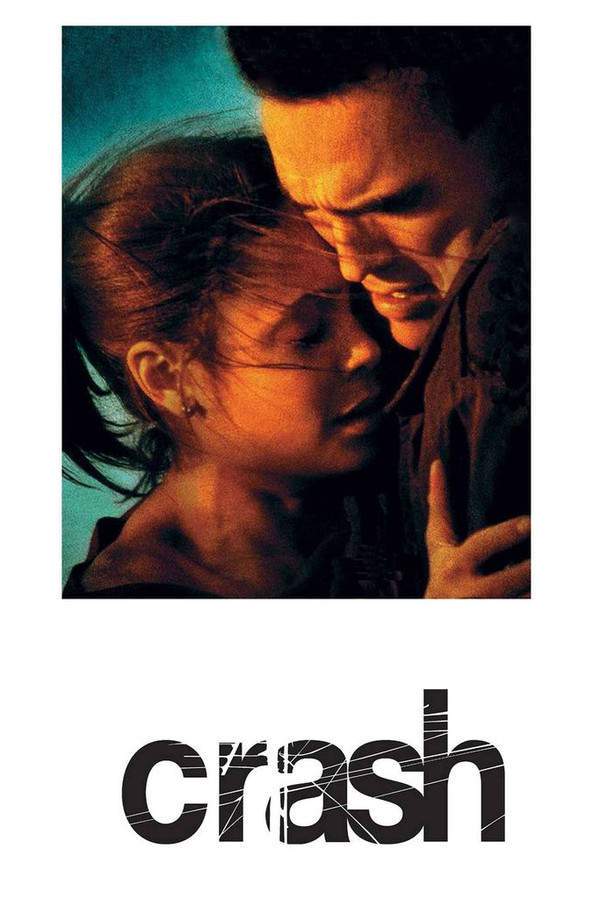
Crash (1997) movie poster

Plot Summary

Crash (1997) Plot Summary Explained

Release, runtime and language
1997 · 100 min · Hebrew
Directed by
David Cronenberg
Starring
James Spader, Holly Hunter

Driven by an unsettling fascination, several drivers become dangerously obsessed with witnessing traffic accidents. This gripping drama explores their twisted motivations and the allure of risk as they push the boundaries of their own safety, seeking a perverse connection to life and death. The narrative delves into the psychological reasons behind this obsession and the unsettling consequences that arise from their actions.

On this page (6)
  1. 1 What happens: full plot
  2. 2 Plot questions answered
  3. 3 The book behind the movie
  4. 4 Movie threads
  5. 5 Movies like Crash
  6. 6 Every angle

Full plot summary · contains spoilers

What Happens in Crash: Full Plot Summary

The whole story of Crash (1997) explained, from the opening scene to the final frame: every key event, every twist and what it all adds up to. Read it as a quick recap before the sequel, to check a scene you missed, or to finally understand what really happened.

Set in Toronto, the story follows James Ballard (James Spader), a film producer embroiled in an unconventional open marriage with his wife Catherine (played by Deborah Kara Unger). The couple's relationship is marked by a series of infidelities, presenting a complex web of lust and unfulfilled desires. Early scenes depict Catherine's peculiar arousal from touching bare metal against her skin, while James engages in an affair with a camera girl on his film set. Their intimate encounters become increasingly mundane, yet the couple finds heightened excitement in sharing the intimate details of their extramarital activities.

The narrative takes a dramatic turn when James drives home one night and collides with another vehicle, resulting in the tragic death of the male passenger. Among the wreckage, he finds himself trapped alongside the passenger's wife, Dr. Helen Remington (Holly Hunter), who intriguingly exposes herself to him as she removes her seat belt. This encounter marks the beginning of an unusual bond between them, as well as a newfound obsession with car accidents and the unusual allure of danger.

Following his recovery, James meets Helen again and is introduced to Vaughan (Elias Koteas), a man captivated by the wreckage of James’ leg post-accident. James is confined to a secluded ward intended for air crash victims, where he and Catherine share explicit moments while recounting the details of the crash. The tale takes a deeper dive into their psyche when James begins to obsessively watch traffic and realize that his perception of driving has dramatically changed since the accident.

As the narrative progresses, James and Helen's connection intensifies, leading them into a thrilling moment of passion at the airport garage after an almost-fatal driving incident. Meanwhile, James's relationship with Catherine grows increasingly urgent and raw. They seek answers for their bizarre arousal toward car wrecks by attending one of Vaughan’s cult-like gatherings that recreates the infamous crash that resulted in James Dean's death.

When authorities interrupt this bizarre performance, James escapes with Vaughan, Helen, and a stunt driver named Colin Seagrave (Peter MacNeill). The group becomes more entangled, exploring their obsessions with sexual encounters associated with the aftermath of car accidents. While James alternates between relationships with Helen and his wife Catherine, Vaughan’s influence escalates as he fetishizes the concept of car crashes.

Tragedy soon strikes when a reckless Vaughan purposefully crashes his car, leading to his own demise in a spectacular accident. This act propels Helen and another member of their group, Gabrielle (Rosanna Arquette), into an unexpected romantic connection, finding solace amidst their shared chaos.

In a revelatory climax, James replicates Vaughan's dangerous facade by viciously pursuing Catherine on a freeway, resulting in a catastrophic collision that leaves their roles of desire and destruction inseparably linked. As he approaches the wrecked car in which Catherine lies, they share an intimate moment, and his whispered words of "maybe the next one" linger in the air, hinting at an inevitable connection between extreme ecstasy and mortality. This raw exploration of desire amidst tragedy delivers a haunting portrayal of how trauma reshapes human sexuality, leaving both James and Catherine teetering on the edge of ecstasy and destruction.
Last updated: May 23, 2025 at 08:18

Was this helpful?

Plot questions answered

Crash Plot Explained: Your Questions Answered

The questions people ask most about Crash (1997): what happens in the confusing scenes, why the characters do what they do, the twists, hidden details and what the ending means. Each answer contains spoilers.

Q1

Why does James become obsessed with traffic accidents after his crash?

The collision fundamentally transforms James's perception of driving and danger. While trapped in the wreckage alongside Helen, he experiences an intense sexual encounter that creates a neurological link between car crashes and arousal. This trauma-induced obsession replaces his previous mundane sexual relationships with a fetishistic fascination with vehicular destruction, fundamentally changing how he views mortality and desire.

Foreshadowing: Early scenes show James and Catherine's sexual encounters becoming increasingly routine, suggesting their need for more extreme stimulation.

  • James Ballard
  • car crash
  • obsession
  • trauma
  • sexual fetish
Q2

Why does Helen expose herself to James in the wreckage?

Helen's exposure of herself to James while trapped in the destroyed vehicles represents her own trauma-induced sexual awakening. Having witnessed her husband's death in the collision, she copes by sexually engaging with the man she survived alongside, creating an immediate bond through shared trauma. This shocking act establishes the film's central premise that catastrophic events can trigger intense sexual responses.

Foreshadowing: The film establishes Catherine's peculiar arousal from touching bare metal, establishing that the characters seek unusual sources of sexual stimulation.

  • Helen Remington
  • car wreckage
  • trauma
  • sexual awakening
  • James Ballard
Q3

What drives Vaughan's fascination with car accidents?

Vaughan views car crashes as the ultimate intersection of technology and human mortality, believing they represent pure moments of transcendence where humans confront death directly. He sees these accidents as religious experiences that strip away civilization's veneer, revealing raw human nature. His philosophy attracts others who share this death-driven worldview, forming a cult-like community that recreates famous crashes like James Dean's fatal accident.

Foreshadowing: Vaughan becomes captivated by the wreckage of James's leg, showing his fetishistic interest in crash injuries.

  • Vaughan
  • car accidents
  • death fetish
  • transcendence
  • cult leader
Q4

Why does Vaughan intentionally crash his car and die?

Vaughan's death represents the ultimate fulfillment of his philosophy. He believes that true transcendence comes from deliberately confronting death through a controlled crash. By intentionally driving into an overpass at high speed, he achieves the ultimate sexual release he has been seeking throughout the film. His death is not impulsive but rather the culmination of his entire belief system about the fusion of sex and death.

Foreshadowing: Vaughan aggressively pursues Catherine while driving earlier, demonstrating his willingness to risk fatal accidents.

  • Vaughan
  • intentional crash
  • death
  • suicide
  • transcendence
  • philosophy
Q5

What does James mean when he says 'maybe the next one' at the end?

James's whispered words to Catherine suggest they are trapped in an endless cycle of destruction and desire. By implying there will be 'the next' accident, James indicates their fetish has become inseparable from their relationship, they cannot experience true intimacy without the presence of potential death. The ambiguous ending implies they will continue seeking increasingly dangerous encounters, locked in a loop between ecstasy and annihilation.

Foreshadowing: Throughout the film, characters repeatedly return to crash sites and recreate dangerous scenarios, establishing this cyclical pattern.

  • ending
  • 'maybe the next one'
  • cycle
  • destruction
  • desire
  • Catherine
Q6

Why does Catherine become involved in James's dangerous fetish?

Catherine was already seeking extreme stimulation before the accident, as evidenced by her arousal from touching bare metal and her open marriage arrangements. When James introduces her to Vaughan's world, she finds a framework that validates her own death-driven desires. Her participation becomes a way to reconnect with James after his transformation, as their shared fetish creates a new, destructive intimacy between them.

Foreshadowing: Early scenes show Catherine's unusual sexual responses and the couple's pattern of sharing intimate details of their affairs.

  • Catherine
  • fetish
  • marriage
  • participation
  • trauma
  • stimulation
Q7

What is the significance of the James Dean accident recreation?

Vaughan's cult recreates James Dean's fatal 1955 crash to experience the famous moment where celebrity, speed, and death intersected. This event serves as a ritual that validates the group's beliefs about car accidents as transformative experiences. For James and Catherine, witnessing this controlled reenactment deepens their commitment to Vaughan's philosophy and accelerates their own descent into dangerous fetishistic behavior.

Foreshadowing: Vaughan expresses admiration for James Dean's death earlier, establishing his fascination with this particular crash.

  • James Dean
  • crash recreation
  • cult
  • celebrity death
  • ritual
  • Vaughan
Q8

How does the accident change James's perception of driving?

After surviving the collision, James develops a hyperawareness of traffic as potential sources of sexual release. He begins compulsively watching other drivers, imagining accidents, and visiting impound lots to examine wrecked vehicles. His former mundane commute transforms into a constant search for dangerous encounters, where every car on the road represents a potential source of the traumatic arousal he experienced during his own crash.

Foreshadowing: The collision is described as pivotal and initiating complex experiences, marking it as a turning point in James's psychology.

  • driving
  • perception
  • traffic
  • obsession
  • impound lot
  • hyperawareness
Q9

Why does James pursue Catherine on the highway at the climax?

James's aggressive pursuit of Catherine on the highway replicates Vaughan's earlier behavior, showing how completely he has adopted his mentor's philosophy. By deliberately crashing into Catherine's vehicle, James attempts to experience the ultimate intimacy he believes is only possible through shared danger. This violent act represents both his love for Catherine and his inability to connect without the presence of life-threatening risk.

Foreshadowing: James previously witnesses Vaughan pursuing Catherine aggressively, which foreshadows his own similar action.

  • highway
  • pursuit
  • Catherine
  • crash
  • climax
  • Vaughan influence
Q10

What triggers the intense connection between James and Helen?

James and Helen's relationship develops directly from their shared traumatic experience in the car wreckage. Being trapped together during her husband's death creates an instant, powerful bond between them. Their subsequent encounters, first at the impound lot, then at the airport garage, represent attempts to recreate the intense arousal from that initial trauma, making their connection fundamentally rooted in catastrophe rather than conventional romantic attraction.

Foreshadowing: The collision is described as initiating a series of complex experiences, establishing trauma as the foundation of their bond.

  • Helen Remington
  • connection
  • trauma
  • wreckage
  • bond
  • shared experience
Q11

Why is Gabrielle attracted to James despite his involvement with Helen and Catherine?

Gabrielle is drawn to James because he represents someone who understands and accepts her own body marked by past trauma, she has physical scars from a car accident. Within Vaughan's philosophy, these scars become badges of transcendence rather than deformities. Their encounter in the junkyard represents connection between two people whose bodies have been transformed by violent encounters, finding beauty in damage that others would see as repulsive.

Foreshadowing: James is attracted to Gabrielle specifically after learning about her crash-related scars, showing his fetishization of trauma evidence.

  • Gabrielle
  • scars
  • car crash
  • attraction
  • body modification
  • acceptance
Q12

How does the film explore the connection between sexuality and death?

The film presents car crashes as sexual experiences, suggesting trauma creates neurological pathways linking pain with pleasure. Characters achieve arousal only in proximity to danger, and their relationships are defined by shared near-death experiences rather than emotional intimacy. This exploration of 'death drive' presents sexuality not as life-affirming but as a symptom of psychological damage and a unconscious pull toward self-destruction.
Foreshadowing: The meta notes explicitly state the film presents explicit sexuality as a symptom of deep psychological damage and a death drive.

  • sexuality
  • death
  • trauma
  • psychology
  • paraphilia
  • destruction
  • Cronenberg

Movie threads

More Movies Like Crash, by Mood & Story

Curated lists built around what makes Crash tick: the same mood, the same kind of story or the same emotional payoff. Each list explains why these movies belong together.

Movies about Erotic Obsession like Crash

Stories where deep-seated trauma twists into dangerous and compulsive sexual desires. If you were fascinated by the psychosexual themes in Crash, this list features similar movies where characters grapple with dysfunctional desires. These films explore dark, transgressive territory, focusing on the dangerous allure of obsessive behavior and the psychological underpinnings of sexual compulsion.

  • psychosexual
  • obsessive
  • transgressive
  • unsettling
  • compulsive
  • dark desire
  • Tone: dark, unsettling, psychosexual
  • Pacing: steady, deliberate
Why these movies?

The story pattern: Narratives in this thread center on a character's psychological unraveling, driven by a paraphilia or obsessive desire that is taboo or dangerous. The plot often progresses steadily, showing the character seeking out increasingly risky situations to satisfy their compulsion, leading to a climax that questions the nature of their desire and its consequences.

Why they belong together: These films are grouped together for their shared exploration of the dark side of human sexuality, linking trauma to compulsive behavior. They share a heavy emotional weight, a dark tone, and a focus on the psychological reasons behind transgressive acts, creating a consistently intense and unsettling viewing experience.

Psychological Dramas about Compulsion like Crash

Character studies of individuals trapped in cycles of dangerous, irrational behavior. For viewers who appreciated the deep character study of compulsion in Crash, this section collects other films about self-destructive cycles. These movies feature characters gripped by an irresistible urge, leading them into dangerous territory and exploring the bleak consequences of their actions.

  • self-destructive
  • compulsive
  • psychological
  • obsessive
  • unsettling
  • character study
  • Tone: dark, psychological, grim
  • Pacing: steady, character-driven
Why these movies?

The story pattern: The narrative pattern follows a protagonist whose life becomes dominated by a single, destructive obsession. The story structure is often linear but psychologically dense, building tension as the character's behavior escalates. Endings are frequently ambiguous or bleak, leaving the character—and the audience—to ponder if the cycle can ever be broken.

Why they belong together: These films are connected by their intense focus on a character's internal battle with a driving, harmful compulsion. They share a steady, methodical pacing that builds unease, a high level of psychological intensity, and a heavy emotional weight derived from witnessing a person's deliberate unraveling.

If you liked this

Movies Like Crash

Similar movies to Crash: the same genre, themes or kind of story. Each one comes with its own plot summary, timeline and ending explained.

Browse all movie summaries

Every angle

Crash (1997) Explained: Plot, Timeline & Characters

Everything about Crash in one place: what happens in the plot summary, the timeline in chronological order, the characters and meaning and a spoiler-free summary. What's After the Movie adds the cast, box office and post-credit scenes.

Coming soon on iOS and Android

The Plot Explained Movie Summary App

Plot summaries, endings explained and timelines on your phone. Catch up on any movie in minutes, save your favorites and never miss a twist again.

Be the first to know when we launch. Your email stays private, always.

Learn more about the app