Plot Explained Spoilers guaranteed!
Plot Explained

Browse by genre

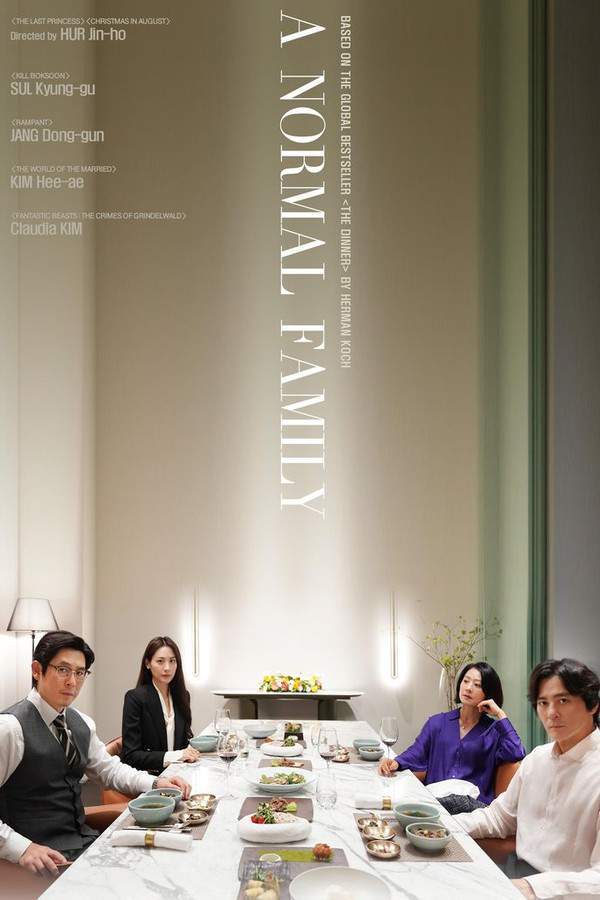
A Normal Family (2025) movie poster

Ending Explained

A Normal Family (2025) Ending Explained – Final Scene & Meaning

Release, runtime and language
2025 · 1 h 56 m · Korean
Echo score 80
Directed by
Jin-ho Hur
Starring
Kim Hee-ae, Sol Kyung-gu, Jang Dong-Gun, Claudia Kim, Yoo In-Sun

A lawyer named Jae-wan often defends individuals accused of serious crimes. His brother is a dedicated doctor who prioritizes the well-being of his patients. When a situation arises involving their teenage children, the brothers are forced to confront difficult moral questions and examine their own values.

On this page (5)
  1. 1 What happens at the end
  2. 2 Final events in order
  3. 3 Ending questions answered
  4. 4 Movie threads
  5. 5 Every angle

Ending explained · contains spoilers

What Happens at the End of A Normal Family?

How A Normal Family (2025) ends, what the final scene means, which earlier moments set it up and how to read the ending if the film leaves it open. The full ending explained, with every spoiler.

In the haunting ending of A Normal Family, the seemingly tragic climax reveals a dark, irreversible act of violence. After the brothers’ intense dinner confrontation about their moral choices and the fate of their children, Jae-gyu, driven by a mixture of fear and desperation to protect his son Si-ho, impulsively runs over Jae-wan with his car. Although his initial intention isn’t to kill his brother—he is overwhelmed by the situation and his feelings of guilt and responsibility—this reckless act shatters the family’s fragile stability forever. The film leaves us with the chilling image of the aftermath, emphasizing the devastating consequences of unchecked emotion and moral compromise.

The movie’s conclusion is deliberately ambiguous about whether Jae-gyu will accept the gravity of what he has done or surrender himself to the authorities, but his action underscores the theme of how far people are willing to go when faced with moral dilemmas and familial loyalty. Meanwhile, the younger generation’s indifference to the moral weight of their actions—exemplified by Hye-yoon’s dismissiveness and Si-ho’s faked concern—serves as a stark reminder of a society where innocence and goodness are slipping away, replaced by apathy and the pursuit of self-interest. The ending challenges viewers to reflect on the corrosive effects of moral decay within families and society, suggesting that once the line is crossed, there’s often no turning back. Ultimately, it’s a powerful, unsettling conclusion that questions the very notions of justice, righteousness, and what it truly means to be “normal.” This unresolved, brutal ending is what makes the film linger in the mind, prompting us to consider the darker aspects of human nature that simmer beneath the veneer of civility.

Last updated: June 25, 2025 at 09:03

Was this helpful?

The last 4 events

How A Normal Family Ends: The Final Events in Order

The last events of A Normal Family (2025) in chronological order, the run-up to the ending explained above. The complete timeline has all 12 events, scene by scene.

Open the full timeline
  1. Rising tension as the crisis looms

    The possibility of the incident going public unsettles the family dynamics, revealing fragility beneath their outward success. Conversations grow tenser as each member weighs their options and loyalties.

    When
    present
    Where
    Home
  2. Background of a growing family adds stakes

    As the crisis unfolds, the personal life of Jae-wan is foregrounded by the knowledge that he recently welcomed a new child with Ji-soo. This detail heightens fears about the impact of any scandal on his family life.

    When
    recently
    Where
    Home
  3. The core conflict takes shape

    The central dilemma emerges: tell the truth and risk ruin, or protect the family at the cost of justice and honesty. The film frames this as a test of loyalty, responsibility, and the cost of secrets.

    When
    present
    Where
    Home
  4. Tension sets the course for the story

    With the initial events and conflicts laid out, the story pivots on how the families navigate the consequences and what choices they will make under pressure. The veneer of harmony has begun to crack, revealing tougher decisions ahead.

    When
    present
    Where
    Home

Ending questions answered

A Normal Family Ending: Your Questions Answered

The questions people ask most about the ending of A Normal Family (2025): what the final scene means, how the twist works, what happens to each character and how to read the ending. Each answer contains spoilers.

Q1

Why does Jae-gyu run over Jae-wan in the final scene?

Jae-gyu runs over Jae-wan impulsively during their confrontation about their children's crimes. He is overwhelmed by fear and desperation to protect his son Si-ho, combined with guilt over his own moral compromises. It is not a calculated murder but a reckless act born from emotional turmoil, the film emphasizes this was not his intention, though the consequences are irreversible.

Foreshadowing: The brothers' earlier argument about moral choices and their conflicting definitions of righteousness builds to this explosive moment.

  • Jae-gyu
  • Jae-wan
  • car accident
  • confrontation
  • protecting son
Q2

Does Jae-wan survive being hit by the car?

The film leaves the outcome deliberately ambiguous. What is clear is that Jae-wan is struck by Jae-gyu's car and the aftermath is described as devastating, shattering the family's fragile stability forever. The focus is on the irreversible damage to their relationship and family, regardless of whether Jae-wan physically survives.

  • Jae-wan
  • survival
  • injury
  • car accident outcome
Q3

What happens to Si-ho at the end of the movie?

Si-ho, who was involved in the assault that triggered the family's moral crisis, remains largely unpunished by the film's end. His faked concern for Hye-yoon during the dinner scene reveals his fundamental lack of remorse. The ending suggests the younger generation escapes accountability while the adults face the consequences of their choices.

Foreshadowing: Si-ho's earlier behavior showed a pattern of avoiding responsibility while expecting protection from his father.

  • Si-ho
  • fate
  • consequences
  • younger generation
Q4

Will Jae-gyu turn himself in to the police?

The ending is deliberately ambiguous about whether Jae-gyu will accept responsibility for hitting Jae-wan or surrender to authorities. The film focuses on his act of violence and its devastating consequences rather than resolving this question, leaving viewers to contemplate the broader themes of moral accountability.

  • Jae-gyu
  • police
  • surrender
  • accountability
  • ambiguous ending
Q5

What does the ending say about moral decay in families?

The ending serves as a stark warning about how moral compromise spreads through families. The brothers' differing approaches, one defending criminals, the other prioritizing patients, both ultimately fail to protect their children from becoming morally corrupt. The violent conclusion shows that once the line is crossed, there is often no turning back.

Foreshadowing: The dinner confrontation directly contrasts the brothers' moral philosophies and reveals how neither approach prevented their children's violence.

  • moral decay
  • family values
  • corruption
  • theme
  • consequences
Q6

Why are the younger characters so indifferent to their actions?

Hye-yoon's dismissiveness and Si-ho's faked concern represent a generation that has absorbed the adults' moral hypocrisy without absorbing any actual ethical foundation. The film suggests this indifference is a product of privilege and the erosion of genuine moral guidance within the family. The children mirror the fathers' moral compromises but without any self-awareness.

Foreshadowing: Earlier scenes showed the parents debating morality while their children observed, suggesting the kids learned to pay lip service to ethics without internalizing them.

  • Hye-yoon
  • Si-ho
  • youth
  • indifference
  • moral apathy
Q7

What does the title "A Normal Family" mean in context of the ending?

The ending powerfully subverts the idea of a "normal" family by revealing the violence and moral corruption hidden beneath the surface. The brothers' seemingly respectable professions, lawyer and doctor, mask their inability to handle ethical crises. The final act exposes that their family is defined not by normalcy but by cover-ups, compromises, and ultimately violence.

Foreshadowing: The film consistently contrasted the family's public respectability with their private moral failures.

  • title
  • normal family
  • irony
  • facade
  • meaning
Q8

What is the film's message about justice and righteousness?

The ending challenges the notion that pursuing justice or maintaining righteousness protects families. Jae-wan, the lawyer who claims to uphold justice, and Jae-gyu, the doctor who believes in doing right, both fail to prevent tragedy. The film suggests their rigid moral positions ultimately contributed to the crisis rather than solving it.

Foreshadowing: The brothers' debate during dinner directly addresses their opposing views on justice and how these views shaped their families.

  • justice
  • righteousness
  • moral dilemma
  • theme
  • brother conflict
Q9

Why does the film leave the ending so unresolved and ambiguous?

The ambiguity forces viewers to grapple with the same moral uncertainty the characters face. By not revealing whether Jae-wan survives or whether Jae-gyu accepts responsibility, the film emphasizes that some actions have irreversible consequences regardless of ultimate outcomes. The unresolved ending mirrors how real moral compromises continue to reverberate without clear closure.

  • ambiguous ending
  • unresolved
  • interpretation
  • intent

Movie threads

More Movies Like A Normal Family, by Mood & Story

Curated lists built around what makes A Normal Family tick: the same mood, the same kind of story or the same emotional payoff. Each list explains why these movies belong together.

Movies about families in moral crisis like A Normal Family

Families torn apart by a devastating secret that tests their loyalties and values. If you liked the tense exploration of a family unraveling under pressure in A Normal Family, you'll find similar stories here. These films focus on the heavy emotional toll of secrets, moral compromises, and the lengths families go to protect their own, often with devastating consequences.

  • tense
  • moral conflict
  • family drama
  • claustrophobic
  • anxious
  • unsettling
  • Tone: tense, anxious, morally fraught
  • Pacing: steady, methodical build
Why these movies?

The story pattern: These stories typically begin with a single, often violent, incident that shatters a family's stability. The narrative follows the cover-up and the resulting psychological fallout, forcing family members to choose between their ethical codes and their loyalty to each other. The journey is one of escalating tension and moral disintegration, leading to a climax where the truth cannot be contained.

Why they belong together: Movies in this thread share a core focus on domestic drama intertwined with crime or a heavy moral dilemma. They are united by a tense, anxious mood and a claustrophobic atmosphere, prioritizing the emotional and psychological unraveling of relatable characters over complex plotting.
Slow burn moral thrillers like A Normal Family

Stories where moral tension escalates steadily towards an inevitable confrontation. Fans of the steady, anxiety-inducing build and heavy moral questions in A Normal Family will appreciate these films. This selection focuses on thrillers where the suspense is psychological, driven by ethical dilemmas and the slow unraveling of characters under pressure.

  • slow burn
  • moral dilemma
  • psychological thriller
  • tense
  • anxious
  • unsettling
  • Tone: tense, bleak, unsettling
  • Pacing: steady, slow burn
Why these movies?

The story pattern: The narrative pattern involves a catalyst event that introduces a profound moral problem. The story then follows the characters as they attempt to navigate the situation, with each decision tightening the vice of consequences. The pacing is intentionally steady, focusing on character introspection and the growing weight of their actions rather than quick plot twists, leading to a climax that feels both inevitable and devastating.

Why they belong together: These movies are grouped by their shared pacing and tone. They prioritize a sustained sense of dread and moral unease over fast-paced action. The similarity lies in the viewing experience: a heavy, tense atmosphere that builds methodically, focusing on the psychological cost of difficult decisions.

Every angle

A Normal Family (2025) Explained: Plot, Ending, Timeline & Characters

Everything about A Normal Family in one place: what happens in the plot summary, the timeline in chronological order, the characters and meaning, the ending explained and a spoiler-free summary. What's After the Movie adds the cast, box office and post-credit scenes.

Coming soon on iOS and Android

The Plot Explained Movie Summary App

Plot summaries, endings explained and timelines on your phone. Catch up on any movie in minutes, save your favorites and never miss a twist again.

Be the first to know when we launch. Your email stays private, always.

Learn more about the app