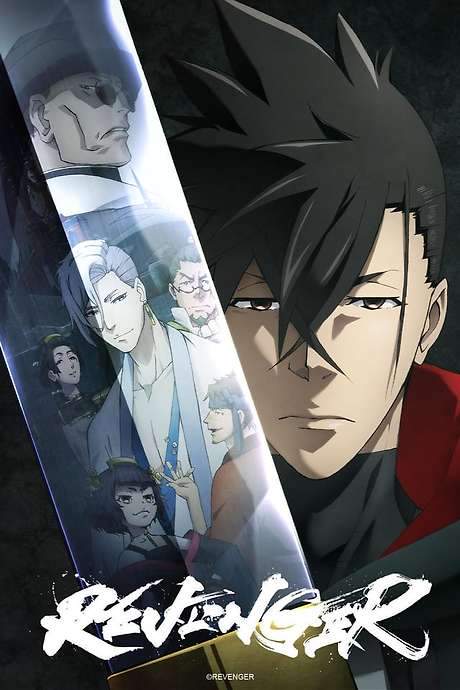
Year: 1000
Runtime: 1,200 mins
Language: Japanese
Directors: Ciao Nekotomi, Masato Tamagawa
He is a down‑and‑out freelancer who learns his middle‑school girlfriend Hinata Tachibana was murdered by the Tokyo Manji Gang. On a train platform he’s pushed onto the tracks, expects to die, but awakens 12 years in the past, back in his teenage years. Determined to save Hinata and change his fate, he joins the gang and confronts the violent future.
Warning: spoilers below!
Haven’t seen Tokyo Revengers yet? This summary contains major spoilers. Bookmark the page, watch the movie, and come back for the full breakdown. If you're ready, scroll on and relive the story!
Trace every key event in Tokyo Revengers (1000) with our detailed, chronological timeline. Perfect for unpacking nonlinear stories, spotting hidden connections, and understanding how each scene builds toward the film’s climax. Whether you're revisiting or decoding for the first time, this timeline gives you the full picture.
Last updated: December 03, 2025 at 23:58
Find frequently asked questions about the Tokyo Revengers (1000) timeline, including chronological order, nonlinear jumps, cause-and-effect links, and scene sequence clarifications. This timeline FAQ helps explain when key events happen, how moments connect, and why the story unfolds in that specific order.
Every time Takemichi shakes hands with Naoto Tachibana, he is transported exactly 12 years into the past. The handshake triggers a strange jolt that sends him from 2017 back to 2005. This time travel is a paradox, changing the past alters the future, but Takemichi retains his memories of both timelines.
The first handshake occurs shortly after Takemichi reveals the date of Hinata's death to Naoto, establishing the rule early in the story.
Akkun, one of Takemichi's friends in Toman, becomes overwhelmed by the consequences of his involvement with the gang. In one timeline, Mikey's friendship with Takemichi prevents Akkun from going to prison, but Akkun still commits suicide out of fear and guilt over the violence he has been part of. His death highlights the brutal cost of gang life and the trauma it inflicts on young people.
Earlier scenes show Akkun being forced into underground fights by Kiyomasa, establishing the dangerous environment that weighs on him.
Takemichi saves Hinata by using his knowledge of the future to prevent the events that lead to her death. He returns to 2005 multiple times, working to change the trajectory of Toman and stop the violence that would eventually claim Hinata and Naoto. Each trip to the past alters the timeline, and in the final present, Takemichi goes to Hinata's house and finds her alive.
Takemichi's very first time jump is motivated by learning Hinata's death date, setting up his mission to save her.
Mikey (Manjiro Sano) is the charismatic head of Tokyo Manji Gang, and his leadership directly influences whether Toman becomes a violent criminal organization that kills Hinata. Takemichi forms a bond with Mikey, which gradually reshapes the gang's dynamics and prevents Mikey from descending into the darkness that leads to the tragic future. Protecting Mikey's humanity is essential to changing the outcome.
From Takemichi's first encounter with Mikey, the narrative shows Mikey as both powerful and unstable, hinting at his crucial role in the story's outcome.
Kiyomasa is a ruthless enforcer within Toman who runs illegal underground fights. During the conflict with rival gang Moebius, Kiyomasa stabs Draken (Ken Ryūgūji), Mikey's trusted second-in-command. This act occurs as the gang war escalates and internal tensions rise. Draken's stabbing is a turning point that threatens to destroy Toman from within and push Mikey toward greater violence.
The timeline establishes Kiyomasa as a dangerous element within Toman from the early underground fight scenes.
Naoto survives because of the time paradox created when Takemichi and Naoto first shook hands in 2005. The strange jolt that transported Takemichi back to the present created a paradox that preserved Naoto's life. Instead of being killed in 2017 alongside his sister, Naoto grows up as a detective in the altered timeline, working with Takemichi to change the future.
The moment Takemichi reveals Hinata's death date to Naoto and they clasp hands is the exact trigger for the paradox.
Moebius is a rival gang that launches a brutal assault on Tokyo Manji Gang on August 3, 2005. The attack escalates the gang conflict to open warfare. During the battle, Peh-yan temporarily sides with Moebius out of anger toward Mikey and Draken for allowing Pah-chin to be arrested, while Kiyomasa takes advantage of the chaos to stab Draken. Toman ultimately prevails, but the fight reveals deep fractures within the gang.
Toman's declaration of war on Moebius to avenge a friend's death sets up this major confrontation.
Peh-yan betrays Toman during the Moebius attack because he is furious that Mikey and Draken allowed Pah-chin to be arrested. Feeling betrayed himself, Peh-yan temporarily aligns with Moebius and fights against his own gang. However, after the battle, Peh-yan realizes his mistake and offers a sincere apology to Mikey and Draken, beginning the process of reconciliation.
Pah-chin's arrest after turning himself in for stabbing Osanai creates the resentment that fuels Peh-yan's betrayal.
Takemichi's actions in 2005 create butterfly effect consequences in the present. Each time he alters events, such as forming friendships with Mikey, preventing Kiyomasa's crimes, or changing the outcomes of battles, the future shifts. Some changes are positive (Hinata and Naoto survive), while others are tragic (Akkun's suicide in one timeline). The timeline remains fragile, requiring Takemichi to carefully navigate his interventions.
The narrative establishes early on that Takemichi's foreknowledge gives him power but also responsibility for the consequences of his changes.
Pah-chin turns himself in after stabbing Osanai, the leader of Moebius, to avenge a friend's death. This act triggers internal strife within Toman because Pah-chin's arrest angers other members, particularly Peh-yan, who feels Mikey and Draken betrayed Pah-chin by not preventing his capture. Pah-chin's decision sets off a chain of events that weakens Toman's unity.
Pah-chin's involvement in the underground fight scene establishes his violent but loyal character.
Takemichi joins Toman because he learns that Hinata and Naoto will be killed by this gang in the future. To change their fate, he must infiltrate the organization and influence its direction from within. His goal is to prevent the gang from becoming the violent criminal group responsible for Hinata's death while protecting his friends caught up in its operations.
The opening reveals that Toman is responsible for Hinata's murder, establishing Takemichi's motivation for joining.
The summary establishes that Toman as an organization is responsible for Hinata's murder in the original timeline, but the specific leader responsible is tied to the gang's dark future under Mikey's leadership. As Takemichi works to change Mikey's trajectory, he is fundamentally trying to prevent the version of Toman that would order Hinata's death.
The news of Hinata's death by Toman comes early, driving Takemichi's entire mission.
Discover curated groups of movies connected by mood, themes, and story style. Browse collections built around emotion, atmosphere, and narrative focus to easily find films that match what you feel like watching right now.
Desperate heroes leap through time to prevent a devastating future.If you liked the high-stakes time-travel mission of Tokyo Revengers, explore more movies where characters race against the clock to alter a dark future. These stories feature complex cause-and-effect, emotional sacrifice, and the desperate hope of redemption.
The narrative follows a protagonist who discovers a devastating future and gains the ability to travel back in time to prevent it. Each change creates ripple effects, leading to new complications and moral dilemmas. The journey is a tense, iterative process of trial and error, culminating in a final attempt to secure a better outcome.
These movies are grouped by their core premise of using time manipulation for redemption. They share a high-tension, emotionally heavy tone, fast pacing driven by urgency, and a focus on the psychological toll of repeatedly facing failure and tragedy to achieve a hopeful ending.

An outsider infiltrates a violent world to save someone from within.Fans of Tokyo Revengers' violent gang world and personal redemption quest will enjoy these movies. Discover similar stories about outsiders infiltrating criminal organizations, facing moral tests, and fighting for a cause within a gritty, high-intensity setting.
The narrative centers on a protagonist who is emotionally or physically weak, but possesses strong determination. They enter a harsh, violent environment like a gang to protect or save someone connected to it. The journey tests their courage and morals, forcing them to confront powerful antagonists and survive brutal conflicts to achieve their deeply personal goal.
This thread groups movies with a shared setting of organized crime and a specific character arc of salvation. They feature high-intensity violence, a dark and gritty tone, heavy emotional weight centered on friendship and sacrifice, and a central theme of redemption through immersion in a dangerous world.
Don't stop at just watching - explore Tokyo Revengers in full detail. From the complete plot summary and scene-by-scene timeline to character breakdowns, thematic analysis, and a deep dive into the ending - every page helps you truly understand what Tokyo Revengers is all about. Plus, discover what's next after the movie.
Read a complete plot summary of Tokyo Revengers, including all key story points, character arcs, and turning points. This in-depth recap is ideal for understanding the narrative structure or reviewing what happened in the movie.
Discover the characters, locations, and core themes that shape Tokyo Revengers. Get insights into symbolic elements, setting significance, and deeper narrative meaning - ideal for thematic analysis and movie breakdowns.
Discover movies like Tokyo Revengers that share similar genres, themes, and storytelling elements. Whether you’re drawn to the atmosphere, character arcs, or plot structure, these curated recommendations will help you explore more films you’ll love.
Tokyo Revengers (1000) Plot Summary & Movie Recap
Tokyo Revengers (1000) Scene-by-Scene Movie Timeline
Tokyo Revengers (1000) Spoiler-Free Summary & Key Flow
Movies Like Tokyo Revengers – Similar Titles You’ll Enjoy
Tokyo Tribe (2015) Spoiler-Packed Plot Recap
City Hunter (2024) Full Summary & Key Details
Tokyo Vampire Hotel (1000) Plot Summary & Ending Explained
Tokyo Raiders (2000) Complete Plot Breakdown
Teen Titans: Trouble in Tokyo (2006) Ending Explained & Film Insights
Tokyo: The Last Megalopolis (1988) Movie Recap & Themes
The Tokyo Project (1988) Story Summary & Characters
Tokyo Revengers (2021) Movie Recap & Themes
Tokyo Revengers 2 Part 1: Bloody Halloween - Destiny (2023) Story Summary & Characters
Teenage Yakuza (1962) Movie Recap & Themes
Delinquent Girl Boss: Tokyo Drifters (1970) Full Summary & Key Details
Tokyo Mafia: Yakuza Blood (1997) Movie Recap & Themes
Tokyo Mafia: Battle for Shinjuku (1996) Full Movie Breakdown
Revenger (1000) Complete Plot Breakdown
Tokyo Revelation (1995) Plot Summary & Ending Explained