Plot Explained Spoilers guaranteed!
Plot Explained

Browse by genre

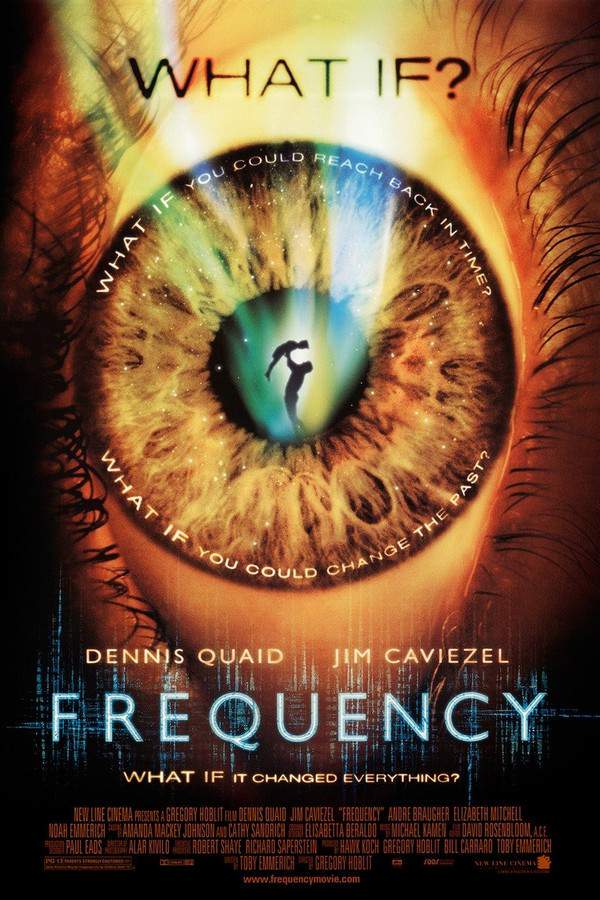
Frequency (2000) movie poster

Plot Summary

Frequency (2000) Plot Summary Explained

Release, runtime and language
2000 · 118 min · English
Loading streaming availability…
Directed by
Gregory Hoblit
Starring
Dennis Quaid, James Caviezel
Budget
$31M

Following a tragic accident, John Sullivan discovers a unique ability to communicate with his deceased father across time. Determined to change the past and prevent his father's death, John alters events on October 12, 1969. However, he soon realizes that tampering with time creates unexpected and far-reaching consequences, forcing him to confront the delicate balance of fate and the potential dangers of rewriting history.

On this page (6)
  1. 1 Where to watch
  2. 2 What happens: full plot
  3. 3 Plot questions answered
  4. 4 Movie threads
  5. 5 Movies like Frequency
  6. 6 Every angle
Loading streaming availability…

Full plot summary · contains spoilers

What Happens in Frequency: Full Plot Summary

The whole story of Frequency (2000) explained, from the opening scene to the final frame: every key event, every twist and what it all adds up to. Read it as a quick recap before the sequel, to check a scene you missed, or to finally understand what really happened.

In 1969 New York, a catastrophic incident occurs when a gasoline tanker tips over on a highway ramp, spilling fuel into an underground electrical substation and trapping two workers inside. Among the brave responders is veteran firefighter Frank Sullivan (Dennis Quaid), who defies orders and goes underground to rescue the trapped individuals. Amidst rising fuel levels and sparking electronics, Frank along with another firefighter successfully extracts the workers, narrowly escaping a massive explosion that follows. Frank's timing is impeccable, as he exits just moments before the fireball engulfs the tunnel.

Returning home to his wife Julia (played by Elizabeth Mitchell) and young son Johnny (James Caviezel) on October 10, 1969, Frank proudly maintains a large radio antenna at their residence. Fast forward to October 10, 1999, Johnny Sullivan has grown into an NYPD detective, still residing in his childhood home. However, his relationship with girlfriend Samantha (Melissa Errico) deteriorates as she perceives him as emotionally detached, a consequence of his father's tragic death in a fire when Johnny was only six.

On the eve of the 30th anniversary of his father's demise, Johnny’s childhood friend Gordo (Noah Emmerich) visits with his son, Gordy (Michael Cera), and stumbles upon Frank's old Heathkit ham radio, which they fail to get operational. One night, moderately intoxicated, Johnny is taken aback when the radio springs to life amidst a remarkable occurrence of the Aurora Borealis. During this transmission, he engages in a conversation centered around the 1969 World Series, revealing specific details that puzzle him. It dawns on Johnny that he is communicating with his father from 1969, and further recognition strikes when Frank inadvertently leaves a burn mark, which appears simultaneously in Johnny’s present.

As the connection deepens, Johnny warns Frank of a fateful error on October 12, 1969, leading to his eventual demise. Frank, initially skeptical, soon becomes a believer when subsequent events unfold just as Johnny predicted, prompting him to alter his movements during a rescue operation and successfully avoiding his tragic fate. They begin to share glimpses of their lives, communicating through carved messages on the desk, linking their realities.

As the storyline progresses, Johnny reveals to Frank that he will succumb to lung cancer in 1989. Motivated by this knowledge, Frank disposes of his cigarettes in a moment of reflection. The changes to their timeline lead to unforeseen consequences - the Nightingale, a serial killer, has now taken multiple victims, including Johnny's mother Julia. Struggling with new memories of his mother’s death, Johnny seeks to intervene, pressing Frank to assist him in apprehending the Nightingale.

Initially reluctant, claiming he is "just a fireman," Frank ultimately agrees to help as Johnny lays out vital information regarding the murders. In a series of events, Frank manages to save one victim but faces dire consequences as the Nightingale sets him up for murder by planting evidence.

Using his detective skills, Johnny discovers a connection between the first victim and a suspect known as Darryl Simpson (Rocco Sisto), but without sufficient evidence, the suspect walks free. Frank soon realizes that his wallet carries the Nightingale’s fingerprints and instructs him to hide it for Johnny to find 30 years later. After identifying Jack Shepard (Shawn Doyle), a former NYPD detective, as the Nightingale through the fingerprints, Johnny confronts him in 1999.

Back in 1969, an emotional standoff occurs when Frank finds himself under arrest for murder. He attempts to convince detective Satch DeLeon (Andre Braugher) of his innocence, referencing details about the Nightingale derived from his communication with Johnny. In a twist of fate, Frank is saved when he accurately predicts impending World Series events, ultimately breaking free and confronting Shepard, leading to a climactic showdown.

The story culminates in both timelines as John and Frank, united against the Nightingale, navigate their shared fate and battle against evil. The film closes with a heartwarming scene of John, now a family man with Samantha and a son of his own, alongside his happy and healthy parents, celebrating in a lively softball game, fulfilling the destinies they fought to alter.
Last updated: October 27, 2024 at 17:09

Was this helpful?

Plot questions answered

Frequency Plot Explained: Your Questions Answered

The questions people ask most about Frequency (2000): what happens in the confusing scenes, why the characters do what they do, the twists, hidden details and what the ending means. Each answer contains spoilers.

Q1

How does Johnny first make contact with his father in the past?

Johnny makes contact through his father's old Heathkit ham radio while drunk on the night of October 1999. During an unusual Aurora Borealis display, the radio suddenly activates and he hears his father's voice from 1969. The connection happens because the solar storm creates the right atmospheric conditions for the radio to bridge the 30-year time gap between them.

  • ham radio
  • aurora borealis
  • time communication
  • 1969
  • father son
Q2

What fatal mistake does Frank make on October 12, 1969?

In the original timeline, Frank makes a timing error during a rescue operation on October 12, 1969. While rescuing workers from the underground electrical substation, he hesitates or delays slightly, causing him to be caught in the explosion that kills him. Johnny warns him about this specific error, allowing Frank to adjust his timing and escape moments before the fireball engulfs the tunnel.

  • october 12 1969
  • rescue
  • explosion
  • firefighter death
  • timing
Q3

Why does preventing Frank's death create the Nightingale serial killer?

Preventing Frank's death creates a butterfly effect that alters the entire course of history. In the original timeline, Frank died in 1969, but his survival means he lives to 1989 and dies of lung cancer. This change cascades through time, affecting events and people Frank never encountered in the original timeline. One of those changes is the emergence of Jack Shepard as the Nightingale serial killer, who now targets Julia and kills her in the altered timeline.

  • butterfly effect
  • serial killer
  • timeline change
  • Jack Shepard
  • Nightingale
Q4

How does Frank prove his innocence to detective Satch DeLeon?

Frank proves his innocence by using knowledge from his future son Johnny about the 1969 World Series. When Frank is arrested for the Nightingale murders in 1969, he tells detective Satch DeLeon exactly what will happen in the upcoming World Series games. When his predictions prove accurate, DeLeon believes him and helps Frank escape to confront Jack Shepard directly.

  • Satch DeLeon
  • World Series 1969
  • arrest
  • detective
  • prediction
Q6

Why does Julia die in the altered timeline?

Julia dies because the timeline change alters Frank's path and the people he encounters. When Frank survives 1969 and lives a different life, Jack Shepard never becomes the detective he was in the original timeline. This allows Shepard to become the Nightingale serial killer who now targets Julia as one of his victims. Johnny gains new memories of his mother's murder after the timeline shifts, forcing him to work with Frank to prevent it.

  • Julia
  • mother death
  • Nightingale victim
  • timeline change
  • serial killer
Q7

How do the carved messages on the desk work across time?

After their radio contact stabilizes, Johnny and Frank communicate through carved messages on Frank's desk. Johnny carves messages into the desk in 1999, which simultaneously appear as fresh carvings in 1969 because the desk exists in both timelines. This allows them to share detailed information like the Nightingale's identity and future events without depending on the radio connection.

  • desk carvings
  • communication
  • time bridge
  • desk messages
  • both timelines
Q8

How does Frank help save one of the Nightingale's potential victims?

Armed with information from Johnny about the Nightingale's murder patterns and victims, Frank in 1999 successfully intervenes to save a potential victim. However, the Nightingale retaliates by framing Frank for murder, planting evidence that makes Frank look guilty. This forces Johnny to work harder to clear his father's name while also trying to catch the real killer.

  • rescue
  • victim
  • framing
  • evidence
  • Nightingale
Q9

How does the timeline reset at the ending of the movie?

At the ending, the timeline resets because Johnny and Frank successfully stop Jack Shepard in both 1969 and 1999. Frank confronts and defeats Shepard in 1969, while Johnny captures him in 1999. This eliminates the Nightingale threat entirely, which removes the reason Julia died in the altered timeline. The film shows Johnny now living with Samantha and their son, with his healthy parents alive - a restored timeline where Frank never died and the family is together.

  • timeline reset
  • ending
  • happy ending
  • family reunification
  • final scene
Q10

What is the significance of the Heathkit ham radio?

The Heathkit ham radio is the key mechanism that enables communication between the two time periods. Built by Frank in 1969, it sits in the attic for 30 years until Gordo and his son discover it and fail to get it working. The radio only functions during the rare Aurora Borealis event, which creates the atmospheric conditions necessary to bridge the 30-year gap between 1969 and 1999.

  • Heathkit ham radio
  • communication device
  • aurora
  • time travel mechanism
  • antenna
Q11

Why does Johnny warn Frank about lung cancer in 1989?

Johnny reveals to Frank that in the original timeline, Frank died of lung cancer in 1989 after smoking for years. This warning motivates Frank to quit smoking immediately, as he now knows his future. The revelation also strengthens their bond, as Johnny is trying to help his father live longer while also trying to prevent his 1969 death.

  • lung cancer
  • 1989
  • smoking
  • quit smoking
  • future knowledge

Movie threads

More Movies Like Frequency, by Mood & Story

Curated lists built around what makes Frequency tick: the same mood, the same kind of story or the same emotional payoff. Each list explains why these movies belong together.

Butterfly Effect Thrillers like Frequency

Thrillers where tampering with the past creates dangerous and unforeseen consequences. If you liked Frequency and its tense exploration of time travel consequences, discover more movies like it. This section features similar sci-fi thrillers, crime dramas, and high-stakes stories where characters confront the dangerous butterfly effect of changing the past, creating gripping and complex narratives.

  • time paradox
  • high-stakes
  • anxious
  • mind-bending
  • urgent
  • race against time
  • Tone: tense, anxious, high-stakes
  • Pacing: fast, urgent
Why these movies?

The story pattern: Stories in this thread typically involve a central character gaining the ability to alter a past event, leading to immediate, unexpected, and often worsening consequences. The plot becomes a frantic race to contain the damage, forcing characters to navigate complex causal loops and moral dilemmas about whether it's possible or right to 'fix' history.

Why they belong together: These movies are grouped by their shared focus on the cause-and-effect chaos of altering timelines. They deliver a specific kind of intellectual and emotional tension, blending sci-fi concepts with urgent thrillers, and consistently explore themes of responsibility, regret, and the fragility of reality.

Emotional Rescue Missions Across Time like Frequency

Personal dramas where characters risk everything to save family across time or space. Looking for movies like Frequency that blend sci-fi with deep emotional drama? This collection features stories where characters use extraordinary means to save a loved one, creating a powerful mix of tense action and heartfelt character journeys, often leading to a hopeful and emotionally satisfying conclusion.

  • emotional
  • hopeful
  • high-stakes
  • father-son
  • redemption
  • race against time
  • Tone: emotional, tense, hopeful
  • Pacing: fast, character-driven
Why these movies?

The story pattern: The narrative pattern centers on a protagonist who discovers a way—through time travel, alternate realities, or other extraordinary means—to prevent a personal tragedy, often the death of a family member. The journey is emotionally driven, focusing on reconciliation, sacrifice, and the overwhelming desire to rewrite a painful past, balancing external threats with internal healing.

Why they belong together: These films are connected by their core emotional engine: using a high-concept plot to explore themes of love, loss, and redemption. They resonate because the sci-fi stakes are directly tied to profound human emotions, creating a uniquely gripping and cathartic experience that balances heavy themes with a hopeful payoff.

If you liked this

Movies Like Frequency

Similar movies to Frequency: the same genre, themes or kind of story. Each one comes with its own plot summary, timeline and ending explained.

Browse all movie summaries

Every angle

Frequency (2000) Explained: Plot, Timeline & Characters

Everything about Frequency in one place: what happens in the plot summary, the timeline in chronological order, the characters and meaning and a spoiler-free summary. What's After the Movie adds the cast, box office and post-credit scenes.

Coming soon on iOS and Android

The Plot Explained Movie Summary App

Plot summaries, endings explained and timelines on your phone. Catch up on any movie in minutes, save your favorites and never miss a twist again.

Be the first to know when we launch. Your email stays private, always.

Learn more about the app