Plot Explained Spoilers guaranteed!
Plot Explained

Browse by genre

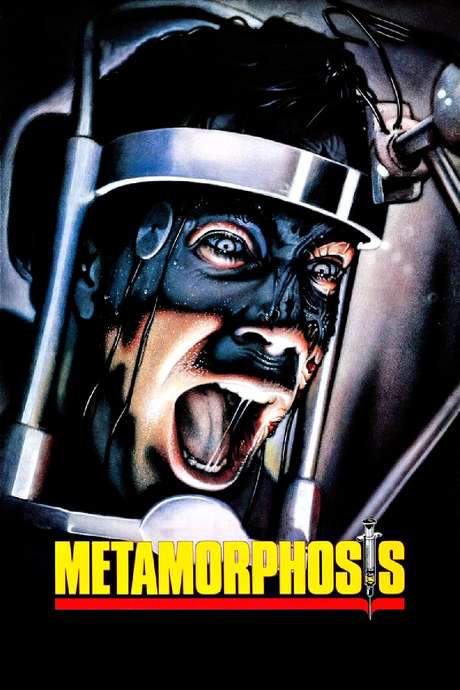
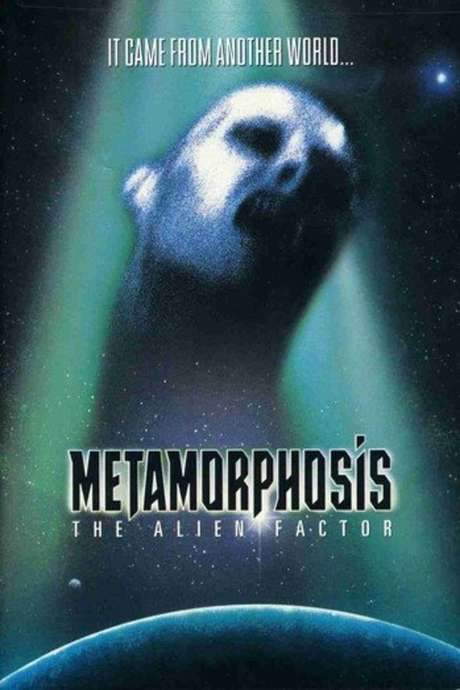
Metamorphosis (1990) movie poster

Plot Summary

Metamorphosis (1990) Plot Summary Explained

Release, runtime and language
1990 · 98 mins · English
JustWatch #25,387 2
Directed by
Glenn Takakjian
Starring
Allen Lewis Rickman, Greg Sullivan, Tony Gigante, George Gerard, Katherine Romaine, Tara Leigh

A mysterious extraterrestrial virus infects a bio‑researcher, turning him into a blood‑thirsty monster. Dr. Vialini, the chief overseeing the covert experiment, refuses to involve police or the public, but his efforts to contain the outbreak backfire as he soon becomes the creature’s next victim.

On this page (6)
  1. 1 Where to watch
  2. 2 What happens: full plot
  3. 3 Plot questions answered
  4. 4 Movie threads
  5. 5 Movies like Metamorphosis
  6. 6 Every angle

Where to watch

Where to Watch Metamorphosis (1990)

Where can you watch Metamorphosis? Stream, rent or buy it in the US, including on Fawesome, Cineverse and Midnight Pulp: current JustWatch availability with up-to-date prices.

Streaming availability powered by JustWatch

Full plot summary · contains spoilers

What Happens in Metamorphosis: Full Plot Summary

The whole story of Metamorphosis (1990) explained, from the opening scene to the final frame: every key event, every twist and what it all adds up to. Read it as a quick recap before the sequel, to check a scene you missed, or to finally understand what really happened.

Geneticist Peter Houseman, a professor at a private university, leads a pioneering program in DNA research with the help of his friend Mike and his young collaborator Willy. He aims to create a serum that could prevent aging and defeat death, a dream that keeps him pushing forward even as a skeptical funding commission raises questions about his ongoing requests. Among the panel’s voices are an aging Professor Lloyd, who resents Peter’s progress, and Inspector Sally, with whom Peter soon develops an uneasy attraction. To keep the project afloat, the team leans on the technical guidance of Dr. Elliot Stein, [Allen Lewis Rickman], who helps oversee the experimental protocol and the modified DNA at the core of the serum. Despite the scrutiny, Peter decides to test the serum on himself, hoping the results will vindicate his work.

Initially, the experiment appears to yield positive results: Peter feels stronger, his vitality returning in surprising ways, and he begins a tentative relationship with Sally even as her son Tommy watches with suspicion. Yet as days pass, Peter’s behavior grows increasingly erratic. He slips into a nightclub where he brutally harms a prostitute, an act he cannot fully explain or remember. Soon after, Patricia, a flirtatious student who had tried to seduce him, is raped and strangled, a brutal sequence that unsettles everyone around him. Complicating matters, Peter’s own body begins to change, taking on reptilian traits and signaling a deeper physical transformation.

A car accident by a police vehicle leaves Peter hospitalized, where he experiences a rapid and disturbing aging process that saps his strength. He asserts that the serum has granted him a form of immortality—he will forever remain what he has become. In the hospital, Dr. Michael Foster, [George Gerard], and the other investigators watch as Peter’s body regresses beyond normal bounds. Dr. Lloyd’s theory grows darker: Peter’s form seems to be sliding back to an earlier point in human evolution. As Peter grows more monstrous, he escapes the hospital, killing Lloyd and Willy, and discovers that his altered frame now requires human blood to sustain itself. He kidnaps Tommy and returns to the university lab, leaving a bloody trail in his wake as he seeks one final chance to fix the experiment.

Tommy finally breaks the serum bottle, and mother and son flee through the campus while Peter, now a terrifying anthropomorphic creature, gives chase. Mike and the police close in, awaiting outside, and Sally, Tommy, and the others move to safety. Peter is confronted at the door, shot by the authorities, and begins to decompose right after his lethal confrontation with the law.

In the aftermath, Tommy quietly reveals to his mother a mysterious lizard kept in a box. When Sally urges him to let it out or risk its death, Tommy simply says it will never die, hinting that a fragment of Peter’s legacy has survived in a new, enduring form. The ending leaves a haunting sense that the pursuit of youth and life has a dangerous, inescapable cost, with a creature of science lingering beyond the boundaries of death.
Last updated: December 03, 2025 at 23:58

Was this helpful?

Plot questions answered

Metamorphosis Plot Explained: Your Questions Answered

The questions people ask most about Metamorphosis (1990): what happens in the confusing scenes, why the characters do what they do, the twists, hidden details and what the ending means. Each answer contains spoilers.

Q1

Why did Peter decide to test the serum on himself?

Peter tested the serum on himself because he was under intense pressure from the funding commission, which questioned his work and threatened to cut support. Despite warnings from colleagues like Dr. Stein, Peter believed so strongly in his anti-aging research that he was willing to risk his own life to prove the serum worked. The initial positive results, feeling stronger and more vital, seemed to vindicate his decision, though the consequences soon turned catastrophic.

Foreshadowing: Earlier scenes show Peter's desperation to secure funding and his competitive tension with Professor Lloyd, who resents his scientific progress.

  • peter houseman
  • serum
  • self-experiment
  • dna research
  • funding pressure
Q2

Why did Peter become violent after taking the serum?

The serum triggered a violent transformation in Peter due to its uncontrolled effects on his DNA. As the serum worked to reverse aging, it also caused his body to regress evolutionarily, stripping away his humanity and replacing it with primal, predatory instincts. This regression explains both his blackouts during violent episodes and his inability to control his actions, he was literally becoming less human as the serum rewound his evolutionary development.

Foreshadowing: Peter's first violent episode at the club, where he beats a prostitute with no memory, marks the beginning of this loss of control.

  • peter violence
  • serum side effects
  • evolutionary regression
  • loss of control
  • aggression
Q3

What is Lloyd's theory about Peter's transformation?

Professor Lloyd hypothesizes that Peter's body is regressing to an earlier point in human evolution, essentially devolving rather than evolving. This explains his growing strength, his reptilian physical traits, and his increasing reliance on primal impulses. Lloyd's theory suggests the serum, rather than granting eternal youth, is pushing Peter backward through the evolutionary chain toward a more primitive, animalistic state.

Foreshadowing: This theory is introduced during Peter's hospitalization when his body begins showing clear reptilian characteristics.

  • professor lloyd
  • evolutionary regression
  • devolution
  • reptilian traits
  • serum effects
Q4

Why does Peter need human blood to survive?

After his transformation progresses, Peter discovers that his altered body now requires human blood to sustain itself. This need stems from his regression to a more primitive evolutionary state, his body has become that of a predator dependent on fresh blood for sustenance. The discovery coincides with his escape from the hospital when his physical cravings become impossible to ignore.

Foreshadowing: Peter's growing strength and simultaneous degeneration hint at an increasing need for biological replenishment that normal food cannot provide.

  • human blood
  • predatory transformation
  • survival need
  • monster diet
  • sustenance
Q5

What does the lizard at the end represent?

The lizard represents the continuation of Peter's experiment and possibly his consciousness surviving in a new form. When Tommy shows Sally the lizard and says it will never die, it implies that a fragment of Peter, or more accurately, the mutated essence created by his serum, has persisted beyond his death. This ambiguous ending suggests the pursuit of immortality has produced an unexpected, enduring legacy that cannot be destroyed.

Foreshadowing: Peter's earlier claim that he would live forever because he will always be what he has become foreshadows this survival in another form.

  • lizard ending
  • immortality
  • tommy
  • peters legacy
  • metamorphosis symbolism
  • survival
Q6

Why did Peter kidnap Tommy?

Peter kidnapped Tommy to use him as leverage for accessing the university laboratory and completing his experiment. After killing Lloyd and Willy during his escape, Peter returned to the lab seeking one final chance to fix the serum and stabilize his condition. By taking Tommy, Peter forced Sally to cooperate while also having a human hostage to aid his escape and pursuit of the remaining serum supplies.

Foreshadowing: Tommy's earlier hostility toward Peter and the tense family dynamic set up this kidnapping as a way to confront both his professional and personal failures.

  • tommy kidnapping
  • sally
  • laboratory
  • leverage
  • experiment completion
Q7

What did Peter mean when he said he would live forever?

When Peter claimed immortality, he meant that the serum had fundamentally altered his body in a way that would not allow natural death, he would remain in his current monstrous form indefinitely. Rather than achieving the youthful immortality he sought, Peter realized he had become locked into a permanent state of being, neither aging nor dying in the conventional sense. The lizard at the end confirms this interpretation, suggesting his transformed essence literally cannot die.

Foreshadowing: This claim occurs during Peter's hospitalization when he experiences rapid aging followed by reversal, demonstrating the serum's unstable hold on his biology.

  • immortality
  • forever
  • living
  • death
  • eternal existence
  • serum promise
Q8

How did Peter's body physically transform into a monster?

Peter's transformation progressed gradually as the serum's effects accumulated. First, he gained unusual strength and vitality, then began exhibiting erratic behavior and memory gaps during violent episodes. As his condition worsened, his body developed reptilian traits, scaly skin, altered physiology, and increasingly inhuman features. By the climax, he had become an anthropomorphic dinosaur-like creature, representing the complete devolution his body underwent under the serum's influence.

Foreshadowing: The timeline shows incremental changes: from the nightclub assault to Patricia's murder, each event marking a further stage in his physical degeneration.

  • physical transformation
  • body horror
  • reptilian appearance
  • monster form
  • evolution reversal
Q9

Why couldn't Sally save Peter from his transformation?

Sally could not save Peter because the transformation was biological and irreversible once it progressed beyond a certain point. Though she formed a genuine romantic connection with him early in his experiment, Peter's increasing violence and loss of humanity quickly destroyed any possibility of saving him. By the time he kidnapped her son, Peter had become entirely predatory, viewing humans merely as sources of blood rather than people he cared about.

Foreshadowing: Tommy's immediate hostility toward Peter foreshadows the eventual collapse of the relationship and the violent confrontation to come.

  • sally
  • relationship
  • love
  • failure
  • transformation cost
Q10

What is the meaning of the title Metamorphosis?

The title Metamorphosis refers to Peter's complete transformation from a respected geneticist into a bloodthirsty monster. The term, borrowed from Kafka's story about a man who wakes up as an insect, perfectly captures the horror of irreversible physical and psychological change. Peter's metamorphosis represents both the literal bodily transformation caused by the serum and the metaphorical death of his human identity.

Foreshadowing: Peter's gradual physical changes throughout the film embody the title's reference to transformation and loss of self.

  • title meaning
  • transformation
  • metamorphosis
  • kafka
  • identity loss
  • monster

Movie threads

More Movies Like Metamorphosis, by Mood & Story

Curated lists built around what makes Metamorphosis tick: the same mood, the same kind of story or the same emotional payoff. Each list explains why these movies belong together.

Body Horror Transformations like in Metamorphosis

Stories where a person's body rapidly and violently betrays them. If you liked the gruesome physical change in Metamorphosis, explore more movies like it. This collection features intense body horror stories where characters undergo rapid, monstrous transformations, showcasing graphic effects and a desperate fight against their own flesh.

  • gruesome
  • body horror
  • monstrous
  • desperate
  • brutal
  • unsettling
  • Tone: dark, gruesome
  • Pacing: fast, relentless
Why these movies?

The story pattern: Narratives in this thread follow a clear, downward spiral. A catalyst, often scientific or supernatural, triggers an irreversible physical metamorphosis. The plot focuses on the escalating violence and desperation as the protagonist loses their humanity, leading to containment failures and bloody consequences.

Why they belong together: These movies are grouped by their shared focus on graphic, fast-paced body horror. They prioritize a high-intensity, visceral experience with a dark tone, emphasizing the terror of physical mutilation and the complete loss of self, rather than slow psychological dread.

Contained Science Horror like in Metamorphosis

Tense stories of dangerous experiments breaking containment within isolated facilities. Fans of the lab-gone-wrong scenario in Metamorphosis will enjoy these similar movies. Discover stories of scientific arrogance, dangerous experiments, and containment failures that create claustrophobic, high-stakes thrillers and creature features.

  • claustrophobic
  • anxious
  • unsettling
  • scientific hubris
  • containment failure
  • desperate
  • Tone: dark, tense, unsettling
  • Pacing: fast, steady
Why these movies?

The story pattern: The narrative pattern involves a confined setting, like a lab or research facility, where an experiment escapes control. The story charts the failure of containment protocols, the panicked response of the scientists involved, and the ensuing struggle for survival against the created threat.

Why they belong together: Movies in this thread share a core premise of scientific ambition leading to disaster. They generate a specific, claustrophobic anxiety through containment failure, often blending body horror with a desperate fight for survival in an isolated, high-tech environment.

If you liked this

Movies Like Metamorphosis

Similar movies to Metamorphosis: the same genre, themes or kind of story. Each one comes with its own plot summary, timeline and ending explained.

Browse all movie summaries

Every angle

Metamorphosis (1990) Explained: Plot, Timeline & Characters

Everything about Metamorphosis in one place: what happens in the plot summary, the timeline in chronological order, the characters and meaning and a spoiler-free summary. What's After the Movie adds the cast, box office and post-credit scenes.

Coming soon on iOS and Android

The Plot Explained Movie Summary App

Plot summaries, endings explained and timelines on your phone. Catch up on any movie in minutes, save your favorites and never miss a twist again.

Be the first to know when we launch. Your email stays private, always.

Learn more about the app