









Plot Explained Spoilers guaranteed!
Plot Explained

Browse by genre

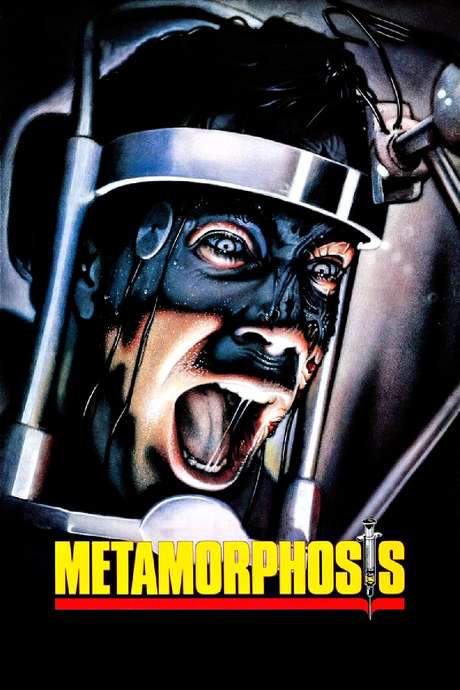
Metamorphosis (1990) movie poster

Plot Summary

Metamorphosis (1990) Plot Summary Explained

Release, runtime and language
1990 · 96 mins · English
JustWatch #25,545 2
Starring
Stephen Brown, Anna Colona, Harry Cason, George Eastman, Tim Wright, Laura Gemser

Witness the Change! A geneticists working on a drug to stop ageing tries it upon himself with horrendous consequences.

On this page (6)
  1. 1 Where to watch
  2. 2 What happens: full plot
  3. 3 Plot questions answered
  4. 4 Movie threads
  5. 5 Movies like Metamorphosis
  6. 6 Every angle

Where to watch

Where to Watch Metamorphosis (1990)

Where can you watch Metamorphosis? Stream, rent or buy it in the US, including on Fawesome, Cineverse and Midnight Pulp: current JustWatch availability with up-to-date prices.

Streaming availability powered by JustWatch

Full plot summary · contains spoilers

What Happens in Metamorphosis: Full Plot Summary

The whole story of Metamorphosis (1990) explained, from the opening scene to the final frame: every key event, every twist and what it all adds up to. Read it as a quick recap before the sequel, to check a scene you missed, or to finally understand what really happened.

Geneticist Peter Houseman, Gene LeBrock, a professor at a private university, leads bold research on a DNA-based serum he claims could halt aging and even conquer death, with the steady support of his friend Dr. Mike Lester, Harry Cason, and his eager young collaborator Willy Carson, David Wicker. A funding commission reviews his ongoing requests, bringing into the room the elderly Professor Lloyd, Stephen Brown, whose envy borders on bitterness, and Inspector Sally Donnelly, Catherine Baranov, a figure Peter is drawn to as much as he is scrutinized. The commission’s skepticism and bureaucratic hurdles push Peter to test the serum on himself, using a batch of the modified DNA he has created. At first the experiment appears promising; Peter grows stronger, and a fragile romance develops with Inspector Donnelly, though her son Tommy, Jason Arnold, immediately exhibits hostility toward him.

As the weeks pass, Peter’s behavior grows unstable: he visits a club and brutally beats a prostitute, with no clear memory of the act, and soon Patricia Kelly, Anna Colona, a flirtatious student who had tried to seduce him, is raped and strangled. Meanwhile, Peter’s body begins to degenerate, taking on reptilian traits that blur the line between human and monster. He is struck by a police car and admitted to a hospital, where doctors Mike and Lloyd watch as Peter seemingly ages in reverse, a phenomenon they struggle to explain. Peter contends that the serum will keep him alive forever, no matter how much he changes, while Lloyd hypothesizes that his body is regressing to an earlier point in humanity’s evolutionary history.

Escaping the hospital, Peter grows more monstrous and murders Lloyd and Willy, discovering that his condition now requires human blood to sustain itself. He kidnaps Tommy and returns to the university lab, determined to salvage the experiment, leaving a bloody wake behind him. Tommy destroys the vial containing the serum, and as Peter closes in, Sally and Mike rally the police outside to help thwart him. Peter, now an anthropomorphic dinosaur-like creature, is shot by the arriving officers and slowly begins to decompose.

Some time later, Tommy shows his mother a lizard in a box; when Sally urges him to set it free, the boy warns that it will never die, implying that the essence of Peter persists in the creature. In the shadows of that final image, the film leaves a chilling question about the price of scientific immortality and what truly outlives the human body. Serina Steinberg, Serina Steinberg, appears in the cast as Patricia’s friend, a quiet reminder of the social circle surrounding the central drama, while the old guard of academia, including the Old Professor, Wayne Potrafka, watches the events unfold with a mix of awe and dread.

Last updated: October 09, 2025 at 15:06

Was this helpful?

Plot questions answered

Metamorphosis Plot Explained: Your Questions Answered

The questions people ask most about Metamorphosis (1990): what happens in the confusing scenes, why the characters do what they do, the twists, hidden details and what the ending means. Each answer contains spoilers.

Q1

Why does Peter test the serum on himself instead of waiting for approval?

Peter decides to self-experiment because he becomes frustrated with the funding commission's bureaucratic delays and skepticism toward his research. The constant scrutiny from the committee, combined with his belief in the serum's potential, pushes him to prove its effectiveness by becoming his own test subject. This decision sets in motion the tragic transformation that defines the entire film.

Foreshadowing: Earlier scenes show Peter's growing impatience with academic oversight and his confidence in his own work.

  • peter houseman
  • serum
  • self-experiment
  • funding
  • bureaucracy
Q2

What causes Peter's violent outbursts after taking the serum?

The serum begins to destabilize Peter's mind and body, causing violent episodes he cannot fully recall. His first known violent act is brutally beating a prostitute at a club, after which he has no memory of the assault. These violent episodes escalate as his physical transformation progresses, suggesting the serum is corrupting both his mental state and his primal instincts.

Foreshadowing: The timeline notes show Peter's behavior growing unstable after he begins the experiment.

  • peter houseman
  • violence
  • serum side effects
  • memory loss
  • behavior change
Q3

Why does Peter's body transform into a reptilian creature?

Professor Lloyd hypothesizes that Peter's body is regressing to an earlier stage in human evolution, effectively devolving rather than aging. The serum's modified DNA triggers this reverse evolution, causing Peter's cells to revert to more primitive genetic patterns. This explains his developing reptilian features and dinosaur-like appearance as his body abandons human characteristics.

Foreshadowing: Lloyd's evolutionary theory is introduced early in the film, preparing viewers for the later transformation.

  • reptilian transformation
  • evolutionary regression
  • peter houseman
  • monster
  • dinosaur
Q4

Why does Peter need human blood to survive?

After his transformation progresses, Peter's body discovers it requires human blood to sustain itself and maintain its strength. This need emerges as part of his devolution into a more primitive creature, replacing normal human nutritional requirements with predatory instincts. The discovery marks a turning point where Peter fully crosses from scientist to monster.

Foreshadowing: The timeline hints at his growing hunger and violent impulses following the transformation.

  • human blood
  • predatory instinct
  • monster transformation
  • cannibalism
  • violence
Q5

Why does Tommy destroy the serum instead of letting Peter use it?

Tommy destroys the serum vial to prevent Peter from completing his experiment and potentially creating more of the dangerous substance. The boy has witnessed Peter's transformation and understands the danger the serum poses. By destroying it, Tommy removes any chance of Peter finding a cure or replicating the experiment, effectively ending the threat.

Foreshadowing: Tommy's hostility toward Peter is established early, showing his distrust of the scientist.

  • tommy
  • serum destruction
  • protection
  • final confrontation
  • experiment end
Q6

What does the ending imply about Peter's survival in the lizard?

The ending suggests that Peter's consciousness or essential nature may have transferred into the small lizard that Tommy keeps. When Sally tells Tommy to let the lizard go because it will die, Tommy responds that it will never die, implying the creature possesses Peter immortality. This leaves the film with an ambiguous but chilling conclusion that the monstrous essence persists beyond Peter's death.

Foreshadowing: Earlier dialogue about the serum granting eternal life foreshadows this ambiguous survival.

  • lizard ending
  • immortality
  • survival
  • ambiguous conclusion
  • transformation
Q7

Why does Peter target Patricia Kelly?

Peter targets Patricia Kelly because she had previously attempted to seduce him, and as his mental state deteriorates, he becomes consumed by the memory of that encounter. The timeline indicates that her flirtatious behavior toward Peter earlier in the film becomes twisted in his unstable mind, leading him to rape and strangle her. This murder represents one of the escalating violent acts that accompany his physical transformation.

Foreshadowing: Patricia's attempts to seduce Peter are noted early in the relationship timeline.

  • patricia kelly
  • murder
  • seduction
  • escalation of violence
Q8

Why does Peter appear to age in reverse at the hospital?

While hospitalized after being hit by a police car, Peter undergoes a phase of apparent reverse aging due to the serum's effects on his cells. This phenomenon confuses the doctors, including Mike and Lloyd, who struggle to explain how a grown man appears to be aging backward. The reverse aging is actually part of the evolutionary regression process, where his body is moving backward through developmental stages rather than forward through time.

Foreshadowing: The timeline establishes this as a confusing medical phenomenon that the doctors cannot explain.

  • reverse aging
  • hospital
  • regression
  • medical phenomenon
  • devolution
Q9

Why is Professor Lloyd so bitter toward Peter?

Professor Lloyd's bitterness stems from academic envy and rivalry. As an elderly scholar who has likely spent decades without achieving breakthrough results, he watches a younger researcher like Peter claim potentially revolutionary discoveries. His envy borders on bitterness, and he is shown scrutinizing Peter's funding requests with particular skepticism. This rivalry adds a subplot of academic competition to the main narrative.

Foreshadowing: Lloyd appears in the funding commission scene, where his critical attitude toward Peter is evident.

  • professor lloyd
  • academic rivalry
  • envy
  • bureaucracy
  • bitterness
Q10

Why is Tommy hostile toward Peter from the beginning?

Tommy displays immediate hostility toward Peter because he senses the danger that the scientist poses to his mother and their family dynamic. As a child, Tommy is more intuitively aware of the threat that Peter's transformation represents, even before the physical changes become apparent. This instinctive rejection of Peter contrasts with Sally's romantic involvement, creating family tension throughout the film.

Foreshadowing: The timeline notes Tommy's hostility as an early indicator of trouble ahead.

  • tommy
  • hostility
  • family tension
  • protection instinct
  • safety concerns
Q11

How does Peter develop a relationship with Inspector Donnelly while under investigation?

Peter's romance with Inspector Sally Donnelly develops during the period when her son Tommy exhibits hostility toward him. Despite being under investigation by her own department, Sally is drawn to Peter, possibly due to his increased strength and vitality from the serum. The relationship is brief and ultimately tragic, occurring alongside the escalating violence that Peter commits.

Foreshadowing: The timeline shows the romance developing as Peter's strength returns after initial treatment.

  • sally donnelly
  • romance
  • inspection
  • relationship
  • tragic love
Q12

How does Peter finally die if he has regenerative abilities?

Peter is shot by police officers during the final confrontation at the university laboratory, and unlike his earlier resilience, this time he does not recover. After being shot, he begins to decompose completely, suggesting that the combined effect of the wounds, the destroyed serum, and whatever remained of his human biology finally overwhelms his ability to survive. The police bullets provide the physical end to a creature that had become nearly unkillable.

Foreshadowing: Earlier scenes show Peter's invulnerability, making the final death more significant.

  • peter death
  • police confrontation
  • decomposition
  • final fight
  • monster ending

Movie threads

More Movies Like Metamorphosis, by Mood & Story

Curated lists built around what makes Metamorphosis tick: the same mood, the same kind of story or the same emotional payoff. Each list explains why these movies belong together.

Mad Science and Tragic Consequences like in Metamorphosis

Stories where a brilliant mind's ambition creates a monstrous tragedy. Explore movies like Metamorphosis where brilliant experiments backfire with monstrous results. These films delve into the horrors of scientific hubris, body horror, and the ethical dilemmas of playing god. If you liked the grim descent from ambition to tragedy in Metamorphosis, you'll find similar chilling stories here.

  • mad science
  • body horror
  • tragic
  • unnerving
  • ethical dilemma
  • hubris
  • Tone: dark, tragic, unnerving
  • Pacing: steady, methodical
Why these movies?

The story pattern: These narratives typically follow a clear, cause-and-effect arc beginning with a scientific breakthrough that promises a better future. The protagonist, often the scientist themselves, ignores ethical warnings, leading to a gradual or sudden transformation. The story climaxes with the creation of a monstrosity and the irreversible collapse of the creator's world, culminating in a bleak or ambiguous ending that underscores the folly of their ambition.

Why they belong together: Movies are grouped here for their sharp focus on the theme of 'man playing god' and its devastating fallout. They share a dark tone, heavy emotional weight from the consequences, and a central conflict between human ambition and natural or ethical limits. The unifying element is the tragic transformation, both physical and psychological, born from unchecked scientific curiosity.

Grim Body Horror Transformations like in Metamorphosis

A steady, grim unraveling of the human form and mind. Find movies similar to Metamorphosis that feature a slow, horrifying bodily transformation. These films create a sense of unease and dread as characters lose control of their physical form. If you liked the relentless body horror and psychological decay in Metamorphosis, this collection offers more chilling tales of metamorphosis and monstrosity.

  • body horror
  • unnerving
  • anxious
  • desperate
  • claustrophobic
  • mutation
  • Tone: dark, horrific, grim
  • Pacing: steady, relentless
Why these movies?

The story pattern: The narrative pattern is a downward spiral. It begins with a catalyst—a disease, experiment, or encounter—that initiates an unwanted physical change. The story steadily charts the progression of this transformation, focusing on the character's growing horror, desperation, and often their increasing alienation from society. The climax typically involves the full manifestation of the monstrosity, resulting in violence and a bleak resolution that offers no escape or cure.

Why they belong together: These films are united by their primary use of body horror as a source of terror and their deeply unsettling mood. They share a steady pacing that allows the dread to sink in, a high intensity driven by visceral imagery, and a dark tone devoid of relief. The core similarity is the experiential journey of watching a human form become a prison and then a weapon.

If you liked this

Movies Like Metamorphosis

Similar movies to Metamorphosis: the same genre, themes or kind of story. Each one comes with its own plot summary, timeline and ending explained.

Browse all movie summaries

Every angle

Metamorphosis (1990) Explained: Plot, Timeline & Characters

Everything about Metamorphosis in one place: what happens in the plot summary, the timeline in chronological order, the characters and meaning and a spoiler-free summary. What's After the Movie adds the cast, box office and post-credit scenes.

Coming soon on iOS and Android

The Plot Explained Movie Summary App

Plot summaries, endings explained and timelines on your phone. Catch up on any movie in minutes, save your favorites and never miss a twist again.

Be the first to know when we launch. Your email stays private, always.

Learn more about the app