Plot Explained Spoilers guaranteed!
Plot Explained

Browse by genre

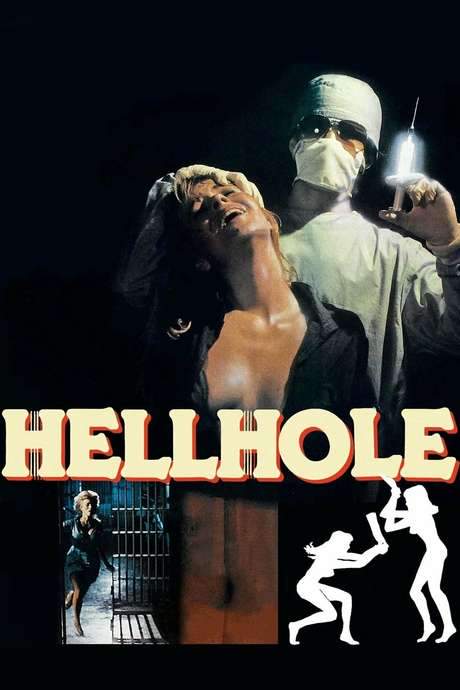
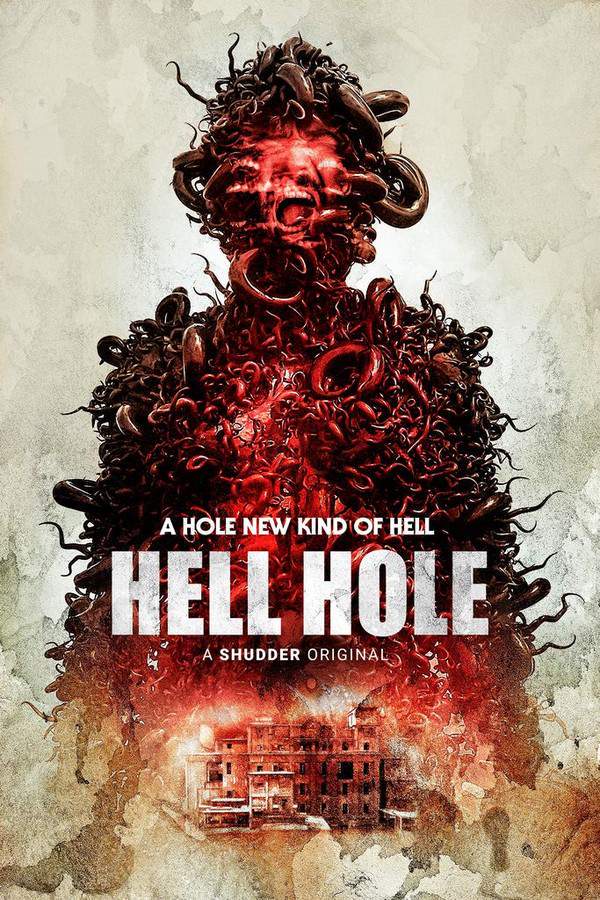
Hell Hole (2024) movie poster

Plot Summary

Hell Hole (2024) Plot Summary & Ending Explained

Release, runtime and language
2024 · 1 h 32 m · English
Echo score 54
Loading streaming availability…
Starring
John Adams, Toby Poser, Anders Hove, Olivera Perunicic, Bruno Veljanovski, Petar Arsic
Budget
$1M

While fracking in a remote area of Serbia, an American crew accidentally unearths an ancient evil from a forgotten tomb. They must struggle to contain the terrifying force they’ve unleashed, while also facing opposition from government environmental advisors. A monstrous threat emerges, relentlessly pursuing the team and endangering everyone around them.

On this page (7)
  1. 1 Where to watch
  2. 2 What happens: full plot
  3. 3 Plot questions answered
  4. 4 How it ends
  5. 5 Movie threads
  6. 6 Movies like Hell Hole
  7. 7 Every angle
Loading streaming availability…

Full plot summary · contains spoilers

What Happens in Hell Hole: Full Plot Summary

The whole story of Hell Hole (2024) explained, from the opening scene to the final frame: every key event, every twist and what it all adds up to. Read it as a quick recap before the sequel, to check a scene you missed, or to finally understand what really happened.

In 1814, on Serbian soil, a Napoleonic platoon that has been pushed out of the Illyrian Provinces is worn down by hunger and confusion. Two weary soldiers stumble upon a lone rider and her horse, and a sudden feverish plan to strike the animal quickly spirals into a surreal nightmare: the horse shatters into thousands of fragments, releasing a monstrous presence that relentlessly pursues one of the men. The scene abruptly shifts to the present, where a group of Americans far from their homeland arrives in Serbia to carry out a fracking operation deep in the landscape’s quiet, tense corners.

The expedition is led by Emily Toby Poser, who arrives with her partner in work, John Adams, her son, Teddy Maximum Portman, and a cadre of local collaborators, among them Sofija Olivera Perunicic and their mentor, Professor Nicholai. The Americans bring a brash, sometimes condescending energy to the project, joking with the Serbs about their pace and approach, even as Sofija, a biology major, offers insights into DNA sequencing and the possibility of tracking species in the area. The interpersonal tension surfaces early—Teddy reveals a crush on Sofija, and Emily resists the idea of fostering that connection, while John airily quips about the peculiarities of life and the strange ways bodies can grow inside others.

As the fracking proceeds, a troubling find interrupts the routine: a fragment of bloody tissue emerges, followed by the unearthing of a French soldier entangled in a gooey, eggshell-like net. The French soldier’s body bears a disquieting odor, and his incoherent speech hints at a reality beyond ordinary explanation. Sofija and Nicolai take samples, hoping to decode what they’ve uncovered; meanwhile, the discovery becomes more alarming when a knife is used by the soldier in a desperate attempt to end his own life, a moment that culminates in a grotesque transfer as a reptilian parasite leaves the French soldier and enters [John Adams].

The repercussions are swift and brutal. John’s arrival at the cafeteria is marked by a shared sense of foreboding as the same stench follows him, and the others realize something extraordinary has happened. The infected man later dies in a brutal struggle, his body dismantled as the parasite spreads. The mysterious creature then moves from one host to another, and a deadly confrontation ensues with Christian Bruno Veljanovski, who falls in the clash. Sofija, steadfast in her scientific curiosity, posits a sensational theory: the French soldier’s biology shows a symbiotic, egg-like relationship with a creature similar to an argonaut octopus, suggesting an evolutionary reversal that allows the parasite to live and propagate inside male hosts.

As the organism propagates, Danko [Petar Arsic] and his teammate Filip [Boris Lukman] become entwined in the danger. Danko encounters the parasitic entity more directly and is pressed to the brink as the group grapples with what to do next. Emily and Sonja—together with Nicolai—work to navigate both the scientific puzzle and the ethical questions that arise as more men fall under the creature’s influence. The parasite appears to spare women, complicating the team’s plan to contain the threat, while the group debates whether to let Danko endure the burden or to end his life for the broader safety of everyone else.

Nicolai persists in his belief that the creature can be saved or guided to survive, even if it means risking his own life, and he convinces Emily to loosen restrictions to allow him to help. The team’s efforts grow more desperate as more men fall victim to the parasite, and a crucial choice is made to drive the creature toward the lake in the hope of ending the threat without eradicating the possibility of life within an alternate host. As the tale intensifies, the parasite takes another host—Nicolai’s body—terrifying Sonja in the process. In a final, frenzied moment, Sonja stabs at the creature, while Emily urges Sofija and Teddy to run to safety.

The film closes on a haunting, ambiguous note. Years later, Teddy sits in a bath while Sofija stands nearby, and a news broadcast reports a deadly oil-rig accident that has claimed multiple lives. The monster’s true whereabouts remain unsettled, and the final image hints that the entity may have found a reluctant home within Teddy, suggesting a possibility that the threat could endure in a hidden form rather than being completely vanquished. The closing mood is unsettling and unsettled, inviting reflection on the boundaries between science, exploitation, and the unknown that lingers beneath the surface of modern industry.
Last updated: June 09, 2026 at 07:36

Was this helpful?

Plot questions answered

Hell Hole Plot Explained: Your Questions Answered

The questions people ask most about Hell Hole (2024): what happens in the confusing scenes, why the characters do what they do, the twists, hidden details and what the ending means. Each answer contains spoilers.

Q1

Why does the parasite in Hell Hole only infect men?

The parasitic creature exclusively targets male hosts throughout the film. It transfers from the French soldier to John Adams, then to Christian, then to Danko, and finally to Nicolai, all men. The creature spares women, which becomes a key plot point as the group realizes Sofija and Emily are safe from infection. Sofija theorizes this may relate to the creature's reproductive biology, which functions symbiotically inside male hosts in a reversed-womb-like manner.

Foreshadowing: The monster's preference for male hosts is established early when only men fall victim to the infection.

  • parasite
  • gender
  • infection
  • host
  • male victims
Q2

How did the French soldier survive underground for so long?

The French soldier didn't survive in the traditional sense, he was dead or nearly so, but the creature existed in a symbiotic relationship with his body. Sofija's analysis reveals the creature operates like an argonaut octopus, with a gooey, eggshell-like net serving as a protective shell. This allowed the entity to remain dormant for over 200 years inside the soldier's corpse, preserved in the Serbian ground until the fracking operation disturbed it.

Foreshadowing: The strange gooey net discovered with the French soldier hints at something other than natural decomposition.

  • French soldier
  • centuries
  • dormant
  • underground
  • symbiosis
Q3

What is the monster in Hell Hole?

The creature is an ancient, otherworldly parasitic entity that preys on human hosts. It resembles a tentacled organism similar to a deep-sea creature and operates as a biological horror, it enters human bodies, uses them as incubators, and transfers between hosts when the current host dies or weakens. The 1814 prologue establishes it as a supernatural predator that emerged from the ground to hunt soldiers.

Foreshadowing: The 1814 prologue shows the creature hunting and killing a Napoleonic soldier, establishing its predatory nature.

  • creature
  • monster
  • parasite
  • ancient entity
  • predator
Q4

Why did Nicolai volunteer to become the parasite's host?

Nicolai volunteered to host the creature to protect the remaining team members. With the parasite spreading rapidly through the male workers, he believed sacrificing himself would contain the threat and allow the others to escape. His scientific curiosity also played a role, he wanted to understand the creature and potentially find a way to save it or guide it to safety rather than simply destroy it.

Foreshadowing: Earlier, Nicolai insists the creature can be saved or guided, showing his willingness to risk himself.

  • Nicolai
  • sacrifice
  • host
  • volunteer
  • protection
Q5

How does the parasite transfer from one person to another?

The parasite transfers through direct physical contact when a host dies or becomes severely weakened. When the French soldier begs John to cut his throat, the creature leaves the soldier's dying body and enters John. Similarly, when John fights Christian, the creature leaves John's body and attacks Christian, killing him. The transfer appears to be triggered by the current host's imminent death and requires proximity to a new host.

Foreshadowing: The first transfer occurs when the French soldier is near death and John gets close enough.

  • transfer
  • parasite
  • host
  • infection
  • contact
Q6

Does Teddy become infected at the end of Hell Hole?

The ending strongly implies Teddy has become the parasite's new host. Years after the events, Teddy sits in a bathtub while Sofija stands nearby, and a news broadcast reports a deadly oil-rig accident that has claimed multiple lives. The ambiguous ending suggests the creature survived and found refuge within Teddy, meaning the threat was never truly eliminated. The unsettling final image leaves open whether Teddy is aware of or controlling the entity.

Foreshadowing: The creature consistently seeks new male hosts when its current host dies, and Teddy was the only uninfected male remaining.

  • Teddy
  • infection
  • ending
  • host
  • ambiguous
Q7

Why does the monster emerge when the team starts fracking?

The monster was buried deep underground in Serbian territory, sealed within a gooey, egg-like structure containing the French soldier's body. The fracking operation physically disturbs this ancient burial site, breaking the protective shell and releasing the dormant creature. The 1814 prologue shows the monster emerged when the Napoleonic soldiers attacked the woman's horse, suggesting the creature was already disturbed and moving through the earth before becoming trapped.

Foreshadowing: The bloody meat and strange odor discovered before the French soldier hint that something lies beneath the site.

  • fracking
  • underground
  • release
  • excavation
  • monster
Q8

What is the connection between the parasite and the argonaut octopus?

Sofija discovers the French soldier's DNA has a striking connection to the argonaut octopus, a creature known for its unique reversed-womb-like shell. This suggests the parasite evolved similarly, using a protective, egg-like structure for incubation. The shared DNA implies the creature may be an ancient marine organism that somehow ended up buried in Serbian soil, maintaining its biological programming for reproduction inside host bodies.

Foreshadowing: The gooey, net-like substance around the French soldier resembles an octopus shell structure.

  • octopus
  • argonaut
  • DNA
  • evolution
  • biology
Q9

How is the 1814 prologue connected to the present-day story?

The 1814 prologue establishes that the creature has existed for centuries in Serbian territory. When a Napoleonic platoon stumbles upon a woman with a horse, the horse shatters and releases the monster, which attacks one of the soldiers. This predates the American team's arrival by over 200 years, confirming the creature is ancient and has been buried, or trapped, in the ground ever since. The fracking operation unknowingly disturbs the same entity.

Foreshadowing: The monster emerging in 1814 proves it was already present in the region long before modern humans arrived.

  • 1814
  • prologue
  • Napoleonic
  • soldiers
  • history
Q10

Why does Emily resist Teddy's interest in Sofija?

Emily's resistance to Teddy's romantic interest in Sofija stems from her protective nature as a mother in a dangerous, remote work environment. The team is focused on a high-risk drilling operation, and Teddy's crush on Sofija represents a distraction that could compromise safety or create interpersonal conflict within the already tense group dynamics. Emily appears reluctant to encourage any relationship that could complicate the mission's already fraught atmosphere.

Foreshadowing: Teddy explicitly reveals his crush on Sofija early in the film, and Emily's disapproval is immediately visible.

  • Emily
  • Teddy
  • Sofija
  • relationship
  • tension
Q11

Why does the team decide to drive the creature toward the lake?

With the parasite spreading rapidly and no way to kill it without killing the host, the team chooses to guide the creature toward the lake as a desperate attempt to end the threat. They hope that by leading it to water, they can either trap it there or find an alternate host that won't endanger the remaining survivors. It's a final, risky strategy to contain the creature without eradicating the possibility of life within an alternate host, reflecting Nicolai's belief that the entity deserves a chance to survive.

Foreshadowing: The team debates between killing the creature entirely versus finding a way to contain it safely.

  • lake
  • containment
  • strategy
  • escape
  • water

Ending explained

What Happens at the End of Hell Hole?

How Hell Hole (2024) ends, in short: the final scene, the last twist and what it means for the characters. The full ending explained, with every spoiler, lives on its own page.

Read the full ending explained

The film ends with a disturbing and chaotic scene that leaves the fate of the characters ambiguous but hints at a horrifying cycle continuing. After a series of deadly encounters with the creature, which has inhabited several men’s bodies and was likely born from a complex reproductive process involving mollusks and possibly interspecies fertilization, the remaining characters are scattered and broken. Nikola, overwhelmed with fear and guilt, chooses to take his own life, expecting that the creature inside him will kill him first. However, the creature surprises everyone by escaping his body and attaching itself to Sofija instead. This turn of events suggests that the creature is not limited by gender or previous hosts and can transfer between people at will, often favoring men but also capable of inhabiting women.

In the final scenes, Teddy and Sofija, who had shared a romantic interest, are shown sitting together in a somber and tense moment, hinting at a grim new family formed under bizarre circumstances. The creature, now inside Teddy or possibly both of them, leaves its mark on their future, representing a dark twist on their hopes of normalcy and companionship. The film closes with the idea that this parasitic entity is far from eradicated; it’s merely found a new host, perpetuating its unnatural life cycle. Moreover, the story introduces an intriguing mystery about the enigmatic Roma woman from the beginning, suggesting she might know more about the creature’s origins—possibly connected to a larger, sinister historical or supernatural context. The ending leaves viewers contemplating whether this horrorshow will repeat itself or if new, even more terrifying revelations await in a potential prequel.

Hell Hole ending explained in full

Movie threads

More Movies Like Hell Hole, by Mood & Story

Curated lists built around what makes Hell Hole tick: the same mood, the same kind of story or the same emotional payoff. Each list explains why these movies belong together.

Parasitic body horror like in Hell Hole

Stories where the body itself becomes the battleground against an invading horror. If you liked the grotesque body invasion and parasitic horror in Hell Hole, this collection features similar films where infections, mutations, and bodily autonomy loss drive the terror. Expect graphic transformations, desperate survival, and monstrous threats that hide within the characters themselves.

  • body horror
  • visceral
  • parasitic
  • grotesque
  • unsettling
  • oppressive
  • Tone: dark, visceral, oppressive
  • Pacing: steady, methodical
Why these movies?

The story pattern: These stories typically follow a contained group confronted by a biological or parasitic threat that infiltrates and mutates their bodies. The narrative often moves methodically through a chain of infection, with characters forced to make impossible choices about who can be trusted, who is already compromised, and what sacrifices are needed to stop the spread. The ending frequently leaves the parasite's survival ambiguous, suggesting the horror has already won from within.

Why they belong together: They share a focus on intimate, visceral horror where the threat is bodily rather than external, with graphic depictions of mutation, infection, and loss of physical control. The pacing tends to be steady and relentless, building dread through the methodical spread of the parasite, and the tone is consistently dark, heavy, and oppressive. Viewers who enjoy the chain-of-infection structure and grotesque body horror will find a coherent set of recommendations here.

Ancient evil in remote locations like in Hell Hole

Remote crews disturb something ancient, and isolation becomes a death sentence. Movies like Hell Hole where modern industrial or scientific activity unleashes an ancient horror in a remote, isolated setting. These films blend folk horror, claustrophobic survival, and the terrifying consequences of disturbing what should have been left buried, often ending with ambiguous or bleak outcomes.

  • ancient evil
  • isolated
  • claustrophobic
  • containment
  • scientific hubris
  • bleak
  • Tone: dark, ominous, desperate
  • Pacing: steady, building dread
Why these movies?

The story pattern: These stories usually open with a contained team of workers, scientists, or outsiders operating far from civilization. Their activity inadvertently awakens or releases an ancient force tied to the land or its forgotten history. The narrative moves from denial to containment failure to desperate flight or sacrifice, with the ancient evil proving impossible to fully defeat. The remote setting amplifies every death and every failed escape, and the ending often suggests the threat has outlasted the survivors.

Why they belong together: They share a setting of remote, often industrial or rural locations where a small group confronts a force tied to ancient history. The pacing is steady and the intensity remains high as containment efforts fail, with environmental and cultural clash themes reinforcing the sense of trespass. Tone is consistently dark, the emotional weight is heavy, and endings tend to be ambiguous or bleak, leaving the ancient threat's survival unresolved.

If you liked this

Movies Like Hell Hole

Similar movies to Hell Hole: the same genre, themes or kind of story. Each one comes with its own plot summary, timeline and ending explained.

Browse all movie summaries

Every angle

Hell Hole (2024) Explained: Plot, Ending, Timeline & Characters

Everything about Hell Hole in one place: what happens in the plot summary, the timeline in chronological order, the characters and meaning, the ending explained and a spoiler-free summary. What's After the Movie adds the cast, box office and post-credit scenes.

Coming soon on iOS and Android

The Plot Explained Movie Summary App

Plot summaries, endings explained and timelines on your phone. Catch up on any movie in minutes, save your favorites and never miss a twist again.

Be the first to know when we launch. Your email stays private, always.

Learn more about the app