Plot Explained Spoilers guaranteed!
Plot Explained

Browse by genre

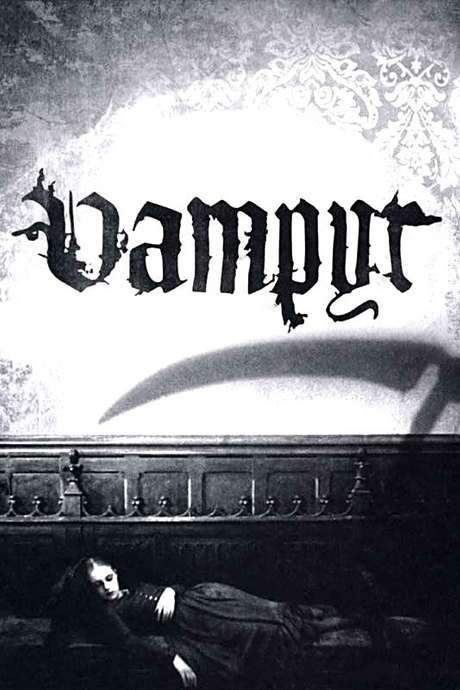
The Vampire (1957) movie poster

Plot Summary

The Vampire (1957) Plot Summary Explained

Release, runtime and language
1957 · 76 mins · English
Directed by
Paul Landres
Starring
Coleen Gray, Herb Vigran, Kenneth Tobey, Lydia Reed, Dabbs Greer, John Beal

A small‑town doctor mistakenly drinks an experimental drug made from vampire‑bat blood, which inexplicably transforms the caring physician into a savage, blood‑thirsty monster. The story follows his terrifying metamorphosis and the town’s struggle against this new kind of killer stalking their streets.

On this page (5)
  1. 1 What happens: full plot
  2. 2 Plot questions answered
  3. 3 Movie threads
  4. 4 Movies like The Vampire
  5. 5 Every angle

Full plot summary · contains spoilers

What Happens in The Vampire: Full Plot Summary

The whole story of The Vampire (1957) explained, from the opening scene to the final frame: every key event, every twist and what it all adds up to. Read it as a quick recap before the sequel, to check a scene you missed, or to finally understand what really happened.

In San Francisco, the shadowy path of horror begins after the celebrated but reclusive Dr. Campbell dies while pursuing experiments with vampire bat blood. Colleague Dr. Paul Beecher discovers a bottle of pills among Campbell’s effects and takes them home, unknowingly stepping into a nightmare of blood and mind. Campbell’s daughter, Betsy Beecher, misplaces or misuses the pills and substitutes vampire-blood capsules for her father’s migraine medicine. Almost at once, Beecher the elder begins to experience alarming blackouts, a creeping loss of control that unsettles his patients and colleagues alike.

During a routine consultation with a patient named Marion Wilkins—who battles a serious congenital heart condition—Beecher himself feels unwell and urges Marion to return the next day. The following morning brings a chilling development: Marion has fallen gravely ill, and when Beecher arrives at her room, she is visibly terrified by his presence, collapsing soon after. A distinctive pair of puncture wounds marks her neck, a sign that something monstrous may be at work.

Desperate for answers, Beecher returns to Campbell’s laboratory, where he runs into the university’s psychiatric chief, Will Beaumont, who oversees Campbell’s controversial research. Beaumont is accompanied by the aloof researcher Henry Winston, who helps interpret Campbell’s progress. Beaumont explains that Campbell’s work sought to regress animal minds to a primitive state and then reverse the process to sharpen intellect—a notion Beecher can barely grasp but cannot ignore. As evening falls, Beaumont retires to a nearby hotel, leaving Beecher alone with his questions about the pills. The next morning, Henry Winston is found dead in much the same way Marion was, his neck bearing the same puncture wounds and his tissues starting to disintegrate, a ghastly deja vu.

The pattern of horror intensifies when Beecher is called to an emergency operation he cannot complete due to a failure to maintain focus in the sterile corridor. Plagued by the blackouts, he confesses to himself that he may be responsible for a string of local murders. To protect Betsy, he sends her to stay with an aunt, stepping back from the danger that lurks in his own hands. He confronts Will Beaumont again, but the psychiatrist dismisses Beecher as delusional. Will agrees to stay by his side, only to lock the pill bottle away in a drawer, perhaps hoping to calm Beecher’s fear.

That night, the transformation Beecher has dreaded becomes a brutal reality: he becomes a vampire and murders Will, disposing of the body in a furnace. The next day, Sheriff Buck Donnelly—now suspicious that Will may have been conducting human experiments—visits the lab and uncovers an audio recorder containing a recording of Will’s murder. At Beecher’s office, his nurse, Carol Butler ( Beecher’s secretary and companion), notices a vial of poison and begins to suspect that Beecher might be plotting suicide. Before she can leave, she witnesses Beecher’s full transformation into a vampire. Buck arrives and sees Carol fleeing with Beecher in pursuit. Carol escapes into a nearby wood, where Beecher closes in and attacks her; Buck rushes after, but Beecher fights back and overpowers him as well.

The chase culminates when Officer Ryan, Sgt. George Ryan, arrives on the scene and shoots Beecher just as the monstrous creature collapses. The body tumbles into a shallow culvert, and as Beecher dies, the monstrous form quickly reverts to a normal human appearance, leaving a grim echo of what the city just endured. The town’s nightmare ends with the unsettling realization that the line between science and something far darker had been crossed—and that a single act of carelessness could unleash consequences beyond anyone’s control.

Last updated: October 09, 2025 at 09:23

Was this helpful?

Plot questions answered

The Vampire Plot Explained: Your Questions Answered

The questions people ask most about The Vampire (1957): what happens in the confusing scenes, why the characters do what they do, the twists, hidden details and what the ending means. Each answer contains spoilers.

Q1

How did Betsy accidentally give her father the vampire pills?

Betsy found or had access to the experimental pills that Paul had brought home from Dr. Campbell's laboratory. When Paul needed his migraine medicine, Betsy mistakenly substituted the vampire-blood capsules for his regular tablets. This accidental mix-up occurred because she didn't know the pills were dangerous experimental drugs, not legitimate medication.

Foreshadowing: The pills were stored among Campbell's effects with no clear labeling, making the mix-up understandable.

  • betsy
  • migraine medicine
  • pill mix-up
  • accidental dosage
Q2

What causes Dr. Beecher to turn into a vampire?

Dr. Beecher transforms into a vampire after repeatedly taking pills made from vampire bat blood. The experimental drug was meant to regress and then advance animal minds, but its side effects include blackouts and a gradual transformation into a bloodthirsty creature. Each dose builds up in his system until he fully transforms.

Foreshadowing: Campbell's research aimed to regress minds to a primitive state, which inadvertently unlocked primitive vampiric impulses.

  • vampire transformation
  • experimental drug
  • bat blood
  • blackouts
Q3

What happened to Marion Wilkins and who killed her?

Marion Wilkins, a patient with a congenital heart condition, died from vampire attack marks on her neck. Dr. Beecher, during one of his pill-induced blackouts, attacked and killed her while in his monstrous state. He had asked her to return the next day during consultation, but by then she had already died.

Foreshadowing: Beecher felt unwell during her appointment and asked her to come back, hinting at his deteriorating condition.

  • marion wilkins
  • patient death
  • puncture wounds
  • vampire attack
Q4

What was Dr. Campbell's research about?

Dr. Campbell conducted experiments with vampire bat blood, attempting to regress animal minds to a primitive state and then reverse the process to enhance intelligence. The research was controversial and kept secretive at the university. The pills Beecher took were a product of this work, designed to manipulate mental states but carrying dangerous side effects.

Foreshadowing: Campbell died pursuing these ambitious experiments, leaving behind the dangerous pills.

  • dr campbell
  • vampire bat research
  • intelligence experiment
  • university lab
Q5

Who killed Henry Winston and how?

Henry Winston was found dead in Campbell's laboratory with the same vampire-style puncture wounds on his neck as Marion Wilkins. Beecher killed him during a blackout episode caused by the accumulating effects of the vampire-blood pills. Winston's death followed the same pattern as the previous murder, confirming the growing threat.

Foreshadowing: Winston was helping interpret Campbell's research, placing him in the same location where the killings occurred.

  • henry winston
  • campbell lab
  • murder
  • vampire killings
Q6

How did Dr. Beaumont die and what happened to his body?

Dr. Will Beaumont was murdered by Paul Beecher during a full vampire transformation. After confronting Beecher about the pills, Beaumont locked them away in a drawer. That night, Beecher transformed and killed Beaumont, disposing of his body in a furnace to hide the evidence.

Foreshadowing: Beaumont's decision to lock away the pills came too late to prevent Beecher's transformation.

  • will beaumont
  • furnace
  • murder
  • vampire attack
Q7

Why does Paul send Betsy to stay with his aunt?

Paul Beecher sends his daughter Betsy to stay with an aunt because he realizes he is responsible for the string of murders and cannot control his transformations. Knowing Betsy is in danger from him, he arranges for her to leave as a protective measure, trying to shield her from the monster he is becoming.

Foreshadowing: This decision shows Paul's remaining paternal instincts despite his condition.

  • betsy
  • aunt
  • protection
  • father daughter
Q8

What evidence does Sheriff Donnelly find at the laboratory?

Sheriff Buck Donnelly discovers an audio recorder at the laboratory that contains a recording of Dr. Beaumont's murder. This recording provides concrete evidence of the crime and helps authorities understand what happened to Beaumont, though by then the investigation has already led to the woods chase.

Foreshadowing: The recorder was likely left by Beecher during his altered state.

  • sheriff buck donnelly
  • recording
  • evidence
  • murder proof
Q9

What does Carol Butler see in Paul's office?

Nurse Carol Butler enters Paul's office and initially suspects he might be planning suicide when she sees a vial of poison. Before she can leave, she witnesses his full transformation into a vampire, confirming her worst fears about what Beecher has become.

Foreshadowing: The poison vial suggested Paul was contemplating ending his own life to stop the killings.

  • carol butler
  • nurse
  • transformation witness
  • poison vial
Q10

What happens during the chase through the woods?

During the climactic sequence, Paul chases Carol Butler into a nearby wood as Sheriff Donnelly pursues them. Carol flees for her life while Beecher, fully transformed, closes in and attacks her. Donnelly tries to stop Beecher but is overpowered in the struggle.

Foreshadowing: The woods provide an isolated setting where Paul's loss of control becomes violently apparent.

  • woods chase
  • carol butler
  • sheriff
  • vampire attack
Q11

Why does Paul's body return to normal after he dies?

When Officer Ryan shoots Paul Beecher, he falls into a shallow culvert and dies. As he dies, his monstrous vampire form reverts to his normal human appearance. This suggests the vampiric transformation was a temporary state caused by the experimental drug, and death releases the body back to its original form.

Foreshadowing: The reversal implies the transformation was chemically induced rather than a permanent condition.

  • death
  • body reversion
  • normal appearance
  • vampire curse
Q12

How does Paul realize he's responsible for the murders?

Paul Beecher realizes he is responsible for the murders after he cannot complete a surgery due to his blackouts and pill-induced lack of focus. The pattern of victims with vampire bite marks, combined with his own missing time and symptoms, leads him to conclude he is the killer. This realization prompts him to send Betsy away for her safety.

Foreshadowing: His failure in surgery is the breaking point where he can no longer deny the truth.

  • blackouts
  • realization
  • guilt
  • self-awareness

Movie threads

More Movies Like The Vampire, by Mood & Story

Curated lists built around what makes The Vampire tick: the same mood, the same kind of story or the same emotional payoff. Each list explains why these movies belong together.

Unwilling monster stories like The Vampire

Good people tragically losing control of their own bodies and minds. If you liked The Vampire, explore more movies about tragic transformations where a good person becomes a monster against their will. These films focus on the internal horror of losing control, the torment of guilt, and the devastating consequences of a changed nature.

  • tragic
  • desperate
  • guilty
  • body horror
  • metamorphosis
  • loss of control
  • Tone: dark, tragic
  • Pacing: steady, deliberate
Why these movies?

The story pattern: The narrative follows a protagonist who, through accident, experimentation, or curse, undergoes a physical and psychological metamorphosis into something monstrous. The core conflict is internal—the struggle between their original humanity and their new, destructive instincts—often culminating in a tragic end where they must be stopped by those they once loved.

Why they belong together: Movies are grouped here for their shared focus on the 'monster within' trope, the heavy emotional weight of involuntary evil, and the bleak, tragic tone that results from the destruction of a sympathetic character by forces beyond their control.

Science gone wrong horror movies like The Vampire

When well-intentioned experiments unleash uncontrollable and deadly forces. Fans of The Vampire will enjoy these similar stories of scientific horror, where a single experiment spirals into a nightmare. These films explore the dangers of playing god, featuring creepy labs, desperate scientists, and monstrous outcomes that threaten entire communities.

  • anxious
  • paranoid
  • gloomy
  • experimentation
  • chaos
  • consequences
  • Tone: dark, paranoid
  • Pacing: steady, methodical
Why these movies?

The story pattern: The plot is triggered by a scientific breakthrough or experiment that goes disastrously wrong. The narrative then follows the escalating consequences as the creation turns on its creator and the surrounding community, forcing a confrontation that highlights the folly of meddling with unknown forces.

Why they belong together: These films share a core theme of scientific overreach, a steady pacing that builds dread as the situation unravels, and a dark, paranoid mood. They often feature a clear cause-and-effect structure where the horror is a direct result of human error.

If you liked this

Movies Like The Vampire

Similar movies to The Vampire: the same genre, themes or kind of story. Each one comes with its own plot summary, timeline and ending explained.

Browse all movie summaries

Every angle

The Vampire (1957) Explained: Plot, Timeline & Characters

Everything about The Vampire in one place: what happens in the plot summary, the timeline in chronological order, the characters and meaning and a spoiler-free summary. What's After the Movie adds the cast, box office and post-credit scenes.

Coming soon on iOS and Android

The Plot Explained Movie Summary App

Plot summaries, endings explained and timelines on your phone. Catch up on any movie in minutes, save your favorites and never miss a twist again.

Be the first to know when we launch. Your email stays private, always.

Learn more about the app