



Plot Explained Spoilers guaranteed!
Plot Explained

Browse by genre

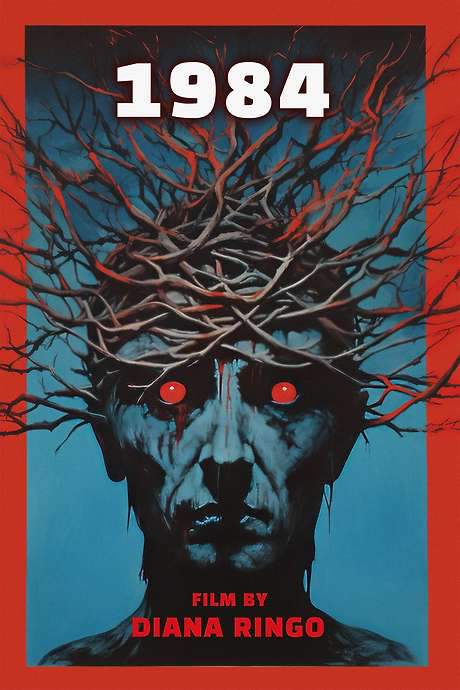
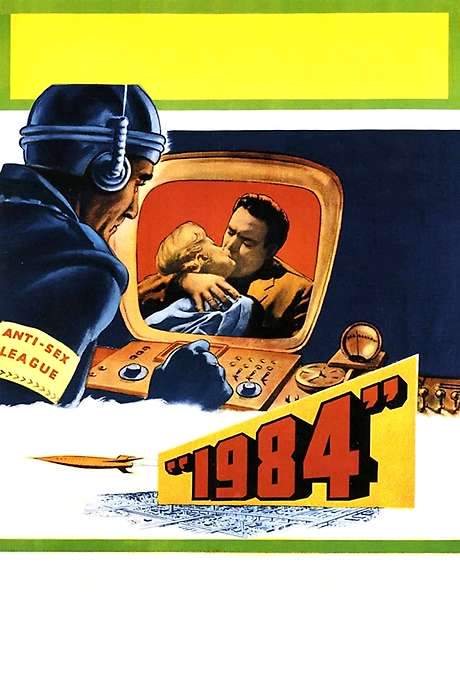
1984 (1956) movie poster

Timeline

1984 (1956) Timeline Explained – Every Event in Order

Release, runtime and language
1956 · 90 mins · English
Directed by
Michael Anderson
Starring
Walter Gotell, John Vernon, Donald Pleasence, Edmond O'Brien, Patrick Troughton, Ernest Clark

Big Brother is Watching. In a totalitarian future society, a man whose daily work is rewriting history tries to rebel by falling in love.

On this page (6)
  1. 1 Where to watch
  2. 2 Events in order (13)
  3. 3 Timeline questions answered
  4. 4 Movie threads
  5. 5 Movies like 1984
  6. 6 Every angle

Where to watch

Where to Watch 1984 (1956)

Where can you watch 1984? Stream, rent or buy it in the US, including on Mometu and Plex: current JustWatch availability with up-to-date prices.

Streaming availability powered by JustWatch

13 events in order · contains spoilers

1984 Timeline: Events in Chronological Order

Every key event of 1984 (1956) in order, scene by scene, with when and where it takes place. Use it to untangle flashbacks, time jumps and parallel storylines, to refresh your memory before the sequel or to find the exact scene you are thinking of.

  1. Winston starts a diary in a surveillance state

    In the spring of 1984, Winston secretly begins writing in a diary after smuggling it past the Eye. He hopes to record his forbidden thoughts and question Big Brother, despite constant surveillance. This small act marks the first concrete step in his personal rebellion.

    When
    Spring 1984
    Where
    Winston's apartment
  2. Selina Parsons denounces Winston

    Selina Parsons, the neighbor girl, enters Winston's apartment to practice denouncing him as a traitor. The scene shows how even a child is manipulated to police others by the state. Winston is briefly questioned by the police as he contemplates his next move.

    When
    Spring 1984
    Where
    Winston's apartment
  3. At the Chestnut Tree Café, suspicion grows

    At the cafe, Winston and Parsons spot Rutherford and Jones, two Outer Party traitors rehabilitated by the Ministry of Love. The encounter reveals how the Party uses public displays to control truth and memory. Winston's sense of danger and mistrust deepens.

    When
    Next day
    Where
    Chestnut Tree Café
  4. A photograph proves a dangerous truth, and is destroyed

    Winston discovers a photo that could prove Jones and Rutherford innocent, but O'Connor orders him to destroy it. The incident exposes the regime's complete control over history and information. Winston realizes the stakes of dissent within the Ministry of Truth.

    When
    The next day
    Where
    Ministry of Truth, Records Department
  5. Julia declares love and plans a secret meeting

    That evening, Julia passes Winston a note professing her love, challenging the Party's prohibitions. They arrange to meet Sunday in a meadow outside London, away from the prying microphones. The moment marks a dangerous personal alliance against Big Brother.

    When
    That evening
    Where
    London rally
  6. Forbidden romance deepens in private quarters

    Two weeks later, Winston proposes renting a room at the junk shop to escape monitors. In their private space, Winston confides that he believes O'Connor may be part of the Underground. Their relationship deepens as they seek physical and intellectual freedom.

    When
    Two weeks later
    Where
    Junk shop room
  7. A note reveals a potential ally and a plan

    One night, Winston finds a note written in O'Connor's handwriting that reads 'down with Big Brother.' Convinced O'Connor is a possible ally, Winston and Julia declare they want to join the Underground. O'Connor instructs Winston to carry an empty briefcase as a sign of membership.

    When
    A few days later
    Where
    O'Connor's apartment
  8. Hate Week rally and the underground’s first proof

    During a rally to launch Hate Week, a man switches Winston's briefcase with another. When Winston opens it, he finds a copy of a treatise by the Underground's leader. The discovery confirms the Underground's existence and raises the stakes for both him and Julia.

    When
    During Hate Week
    Where
    London rally
  9. The arrest and betrayal of the couple

    Back in their secret room, Julia laments that love may be the only force left against Big Brother. A telescreen hidden behind a mirror condemns their sentiments, and the Thought Police burst in to arrest them. Their dream of rebellion is crushed in an instant.

    When
    That night
    Where
    Secret room above junk shop
  10. Winston is interrogated and revealed as an ally of the state

    At the Ministry of Love, Winston is confined and paraded as Parsons's daughter denounces him. O'Connor reveals himself as a covert state agent and subjects Winston to a brutal brainwashing campaign. The process demonstrates the regime's power to reshape loyalty and memory.

    When
    After arrest
    Where
    Ministry of Love
  11. Torture and the breaking point

    Winston endures electroshock and a fear of rats as O'Connor pushes him toward ideological compliance. He finally breaks, renouncing Julia and pledging allegiance to the Party. The torture exposes the fragility of individual autonomy under totalitarian control.

    When
    During interrogation
    Where
    Ministry of Love torture room
  12. Release and the triumph of Big Brother

    Winston is released into the streets and discovers Julia is gone; Big Brother announces battlefield victories to maintain morale. In the final shot, he encounters a cold, indifferent Julia and, brainwashed, cheers 'Long Live Big Brother.' The regime has erased his resistance.

    When
    After release
    Where
    London streets
  13. Alternate ending (shooting) contemplated

    An alternate ending was shot where Winston rebels and shouts 'Down with Big Brother' before being shot. Julia attempts to help him but shares the same fate; the scene presents a stark counterpoint to the canonical ending.

    When
    Alternate ending
    Where
    City streets

Last updated: October 07, 2025 at 08:10

Was this helpful?

Timeline questions answered

1984 Timeline Explained: Your Questions Answered

When does it happen, and why in that order? The questions people ask about the chronology of 1984 (1956): time jumps, flashbacks, cause and effect between scenes and the correct order of events, each answered with spoilers.

Q1

Why does Winston start writing in a diary?

Winston begins writing in a diary as his first act of rebellion against the Party. He wants to record his forbidden thoughts and preserve memories he believes are being erased by the regime. The diary represents his attempt to maintain an inner truth and individual identity in a world where even private thoughts are dangerous.

Foreshadowing: His early scenes of secretive writing establish the foundation for everything that follows.

  • winston smith
  • dairy
  • rebellion
  • big brother
  • thoughtcrime
Q2

Why does Julia give Winston a note declaring her love?

Julia passes Winston the note because she recognizes him as someone who secretly despises the Party. In a world where genuine human connection is prohibited, she seeks a physical and emotional outlet for rebellion. Her note is both a personal declaration and a small act of defiance against the regime's control over love and relationships.

Foreshadowing: This moment establishes Julia as a fellow rebel and sets up their dangerous alliance.

  • julia
  • love note
  • rebellion
  • forbidden love
  • oceania
Q3

Why does O'Connor order Winston to destroy the photograph?

O'Connor forces Winston to destroy the photograph proving Jones and Rutherford innocent because the Party maintains total control over historical truth. Even documented evidence that contradicts the official narrative must be eliminated. This reveals how the Ministry of Truth systematically rewrites the past to serve current political purposes.

Foreshadowing: This scene demonstrates the regime's complete grip on information, foreshadowing the larger mechanisms of control Winston will face.

  • oconnor
  • photograph
  • ministry of truth
  • history manipulation
  • jones rutherford
Q4

Why does O'Connor turn out to be a state agent?

O'Connor was secretly a member of the Thought Police all along. The note reading 'down with Big Brother' was a calculated trap to identify dissenters. By instructing Winston to carry an empty briefcase as a signal, O'Connor lured Winston and Julia into revealing themselves, demonstrating the regime's sophisticated methods of entrapment.

Foreshadowing: The briefcase exchange at the Hate Week rally is the payoff for this infiltration operation.

  • oconnor
  • thought police
  • underground
  • trap
  • betrayal
  • state agent
Q5

Why does Winston betray Julia during interrogation?

Winston breaks when confronted with his worst fear: rats. O'Connor threatens to release rats into Winston's face unless he sacrifices Julia. Unable to bear the torment, Winston begs O'Connor to instead torture Julia, renouncing his love for her. This psychological destruction represents the Party's ultimate goal: destroying every private bond and loyal impulse.

Foreshadowing: Earlier conversations about rats established this as Winston's deepest fear.

  • winston
  • julia
  • rat torture
  • betrayal
  • ministry of love
  • breakdown
Q6

What happens to Winston after he's released from the Ministry of Love?

Winston is released back into London as a broken man. He finds Julia gone and encounters her briefly, where both admit they no longer feel anything for each other. The regime has successfully erased their love and rebellion. Winston now genuinely cheers 'Long Live Big Brother' and has been fully integrated back into society as a model citizen.

Foreshadowing: This final scene confirms the total destruction of Winston's individuality.

  • winston release
  • brainwashed
  • big brother victory
  • julia fate
  • ministry of love
Q7

What is the alternate ending of the 1984 film?

An alternate ending was shot where Winston shouts 'Down with Big Brother' in public before being shot dead by the Thought Police. Julia rushes to his side and is also killed. This provides a stark contrast to the theatrical release ending, offering a more defiant (though equally fatal) conclusion to Winston's rebellion.

  • alternate ending
  • shooting
  • death
  • big brother
  • rebellion ending
Q8

Why does Selina Parsons practice denouncing Winston?

Selina, a neighbor child, enters Winston's apartment to rehearse denouncing him as a traitor. This demonstrates how the Party has indoctrinated even children to monitor and report on adults. The scene highlights the pervasiveness of surveillance, as citizens are trained from a young age to view loyalty reporting as normal behavior.

Foreshadowing: This early scene establishes the omnipresent nature of the surveillance state.

  • selina parsons
  • child surveillance
  • denouncement
  • loyalty test
  • oceania
Q9

Why do Winston and Julia meet at the junk shop?

Winston and Julia choose the room above the junk shop because they believe it's free from telescreens and microphones. They hope to find a private space where their relationship can flourish away from constant surveillance. The junk shop owner seems sympathetic, offering them what appears to be a rare sanctuary in a world of constant monitoring.

Foreshadowing: Their false sense of security makes the eventual revelation of the hidden telescreen more devastating.

  • junk shop
  • room
  • private space
  • surveillance
  • telescreen
  • julia winston
Q10

What is the purpose of Hate Week in the story?

Hate Week is a Party-organized propaganda rally designed to intensify hatred toward Oceania s enemies. During this mass demonstration, the briefcase switch occurs that delivers Winston the Underground's treatise. The rally serves both to channel public emotion and to create chaos that facilitates covert operations like the one targeting Winston.

Foreshadowing: The rally's disorder provides cover for the briefcase exchange.

  • hate week
  • rally
  • propaganda
  • eastasia
  • eurasia
  • oceania

Movie threads

More Movies Like 1984, by Mood & Story

Curated lists built around what makes 1984 tick: the same mood, the same kind of story or the same emotional payoff. Each list explains why these movies belong together.

Movies about futile rebellion in dystopian systems like 1984

Individuals confront overwhelming power in a society designed to break them. If the bleak struggle against an all-powerful state in 1984 captivated you, explore more movies like it. These films depict similar dystopian worlds where individual rebellion is systematically crushed, exploring themes of psychological control, surveillance, and the heavy cost of defiance.

  • oppressive
  • defiant
  • futile
  • somber
  • claustrophobic
  • anxious
  • Tone: bleak, tense
  • Pacing: steady, methodical
Why these movies?

The story pattern: Stories in this thread typically follow a protagonist's journey from passive acceptance to conscious rebellion against an oppressive system. This rebellion, often symbolized by a forbidden act of love or free thought, is met with brutal, calculated force. The narrative arc is one of inevitable defeat, where the system proves its absolute power by not just punishing the body, but by reprogramming the mind, ensuring total submission.

Why they belong together: These movies are grouped by their shared theme of a seemingly unwinnable struggle against institutionalized power. They share a bleak tone, high intensity from psychological tension, and a heavy emotional weight derived from the extinguishing of hope and individuality.
Movies with slow burn psychological dread like 1984

A steady, methodical buildup of unease that culminates in psychological horror. For fans of the methodical, oppressive tension in 1984, this list features similar movies with a slow burn pace. These films masterfully build a sense of claustrophobic dread and psychological unease, leading to emotionally heavy and often bleak conclusions that linger long after the credits.

  • slow burn
  • anxious
  • claustrophobic
  • uneasy
  • somber
  • psychological
  • Tone: bleak, anxious, grim
  • Pacing: steady, slow burn, methodical
Why these movies?

The story pattern: The narrative pattern involves a steady, often linear, progression where a sense of normalcy is slowly peeled back to reveal underlying horror or existential threat. There are few jarring jumps; instead, the tension simmers, building through small details, atmospheric pressure, and the growing awareness of inescapable doom. The climax is typically a release of this built-up psychological pressure, rather than a physical confrontation.

Why they belong together: These films are connected by their masterful control of pacing and mood. They prioritize a steady, immersive build of anxiety and claustrophobia over fast-paced action, creating a deeply unsettling viewing experience defined by its pervasive sense of dread and heavy emotional resonance.

If you liked this

Movies Like 1984

Similar movies to 1984: the same genre, themes or kind of story. Each one comes with its own plot summary, timeline and ending explained.

Browse all movie summaries

Every angle

1984 (1956) Explained: Plot, Timeline & Characters

Everything about 1984 in one place: what happens in the plot summary, the timeline in chronological order, the characters and meaning and a spoiler-free summary. What's After the Movie adds the cast, box office and post-credit scenes.

Coming soon on iOS and Android

The Plot Explained Movie Summary App

Plot summaries, endings explained and timelines on your phone. Catch up on any movie in minutes, save your favorites and never miss a twist again.

Be the first to know when we launch. Your email stays private, always.

Learn more about the app