Plot Explained Spoilers guaranteed!
Plot Explained

Browse by genre

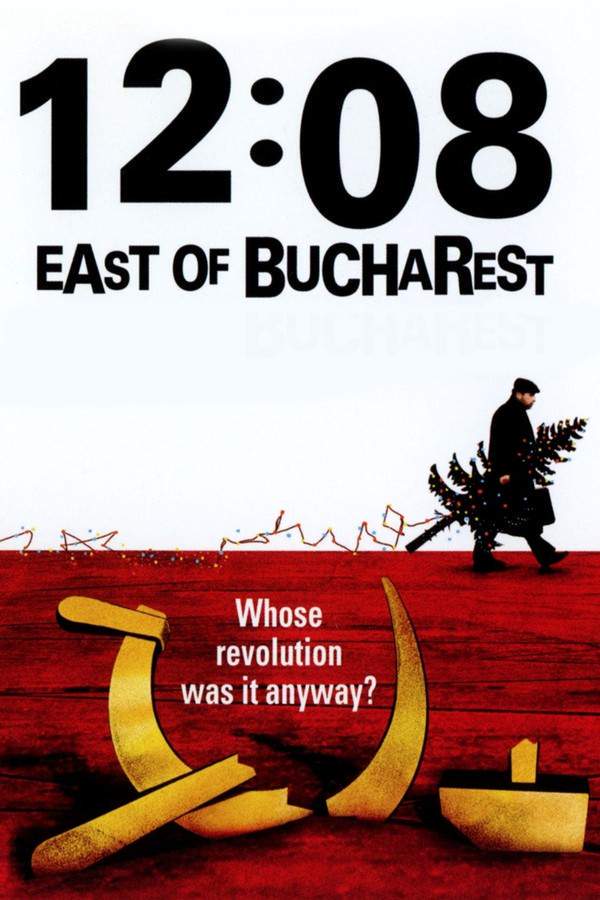
12:08 East of Bucharest (2007) movie poster

Characters & Themes

12:08 East of Bucharest (2007) Characters, Setting & Themes Explained

Release, runtime and language
2007 · 89 min · Romanian
Loading streaming availability…
Directed by
Corneliu Porumboiu

As Christmas nears in Bucharest following the revolution, a television station gathers a diverse group of individuals. They're tasked with recounting their supposed acts of bravery, specifically the moment they reportedly helped topple city hall and famously shouted "Down with Ceausescu!" prior to the dictator's dramatic helicopter departure. The event is revisited, revealing the complexities and potential inaccuracies of collective memory.

On this page (8)
  1. 1 Where to watch
  2. 2 Characters explained (3)
  3. 3 Where & when it takes place
  4. 4 Themes & meaning (3)
  5. 5 Character & meaning questions
  6. 6 Movie threads
  7. 7 Movies like 12:08 East of Bucharest
  8. 8 Every angle
Loading streaming availability…

3 main characters · contains spoilers

12:08 East of Bucharest Characters Explained: Who Is Who

The main characters of 12:08 East of Bucharest (2007), heroes and villains: what drives them, how they change over the course of the story and what each of them reveals about the film's bigger ideas.

  • Virgil Jderescu

    Virgil Jderescu is the ambitious director of the local television station, eager to host a discussion about the revolution. His desire for a meaningful dialogue conflicts with the chaos that unfolds, revealing his own hidden truths and insecurities. Despite his authoritative role, he is depicted as vulnerable and somewhat misguided.

    • 🎤 Television
    • 📺 Director
    • 🧑‍🏫 Journalist
  • Tiberiu Manescu

    Tiberiu Manescu is a down-and-out professor who claims to be a witness to the revolutionary spirit. His bravado and nostalgia clash with reality as he grapples with his authenticity and the skepticism of others. He embodies the theme of memory as he struggles to validate his past.

    • 📚 Education
    • 🗣️ Revolutionary
    • 🧑‍🏫 Professor
  • Emanoil Piscoci

    Emanoil Piscoci is an elderly man marked by paranoia and meticulousness. His transformation from a reticent figure to a central participant in the chaotic discussion reveals deeper insights into the community's psyche. His character serves as an anchor for the absurdities that unfold during the talk show.

    • 👴 Age
    • ☃️ Cultural
    • 🎉 Santa Claus

Last updated: October 22, 2024 at 21:46

Was this helpful?

Setting

Where and When Does 12:08 East of Bucharest Take Place?

The setting of 12:08 East of Bucharest (2007): the year and time period, the places and locations, and how they shape the characters, the mood and the tension of the story.

Time period

Post-Communist Era

The movie takes place in the aftermath of the Communist regime in Romania, a period marked by reflection and reevaluation of past events. Citizens grappled with their memories and the societal changes that followed the fall of dictatorship. This era witnessed the struggle to define the legacy of the revolution and the validity of personal narratives.

Location

Vaslui, Romania

Vaslui is a city in Romania, known for its historical significance and cultural heritage. Following the fall of the Communist regime, it became a center for discussions about the past and the transformations in society. The local television station serves as a platform for the community to engage in dialogue about their revolutionary history.

  • 🏛️ City
  • 🇷🇴 Romania

Last updated: October 22, 2024 at 21:46

Was this helpful?

3 major themes

12:08 East of Bucharest Meaning: Themes & Message Explained

What is 12:08 East of Bucharest (2007) really about? The emotional, social and philosophical themes the film keeps returning to, its symbolism and the message beneath the surface.

  • Memory

    The theme of memory plays a crucial role in the film, as the characters reflect on their past experiences during the revolution. The distinction between personal recollections and historical truth creates tension and conflict. The discourse highlights how collective memory can shape societal identity and influence perceptions of heroism.

  • Identity

    The characters navigate their identities in the new socio-political landscape, questioning who they truly are in the post-revolution context. The protagonist, Virgil Jderescu, embodies the struggle between personal and public identity, as he is revealed to be more than just a journalist. The clash of identities reveals the complexities of social roles in a transitioning society.

  • Truth

    Truth emerges as a central theme as the characters engage in debates about the authenticity of their experiences. The talk show format allows for a confrontation of narratives, leading to chaos and misrepresentation. This exploration of truth reflects the challenges faced by individuals in reconciling their past with the societal need for collective authenticity.

Last updated: October 22, 2024 at 21:46

Was this helpful?

Character & theme questions

12:08 East of Bucharest Characters & Meaning: Your Questions Answered

The questions people ask about 12:08 East of Bucharest (2007): who the characters really are, their relationships, what the symbols mean, where it takes place and what the movie is really about. Each answer contains spoilers.

Q1

Where is the movie set?

The movie takes place in Vaslui, a city in eastern Romania. The entire story unfolds within a local television station there, which serves as the setting for a talk show that forms the backbone of the narrative.

  • vaslui
  • romania
  • television station
  • setting
  • location
Q2

What time period does the film depict?

The film is set in the post-Communist era, several years after the 1989 Romanian Revolution that toppled Nicolae Ceaușescu. This setting allows the story to explore how people reflect on and contest their memories of the revolution.

  • post-communist
  • romanian revolution
  • 1989
  • era
  • time period
Q3

What are the main themes of the film?

The film explores three interconnected themes: Memory, Identity, and Truth. It examines how personal recollections differ from historical fact, how individuals redefine themselves after political upheaval, and how the authenticity of experiences becomes contested in public discourse.

  • memory
  • identity
  • truth
  • themes
  • post-communist
Q4

How does the film handle the theme of memory?

The movie questions the reliability of personal memories, particularly regarding the revolution. Characters recount their supposed heroic acts, but their recollections conflict with each other and with documented facts, showing how collective memory can be distorted or fabricated.

  • memory
  • revolution
  • recollections
  • collective memory
  • history
Q5

What does the film say about truth?

The film uses the talk show format to confront different narratives about the revolution, revealing chaos and misrepresentation. It explores the difficulty of reconciling personal truth with historical accuracy and the societal pressure to construct heroic narratives.

  • truth
  • authenticity
  • narrative
  • revolution
  • historical
Q6

How does the film explore identity?

Characters struggle with their identities in the new Romania, questioning who they truly are after the fall of communism. The protagonist Virgil Jderescu embodies this conflict, as his role as a journalist masks deeper insecurities and hidden truths about his own past.

  • identity
  • post-communist
  • virgil jderescu
  • society
  • transformation
Q7

Who is Virgil Jderescu?

Virgil Jderescu is the director of the local television station in Vaslui. He is ambitious and seeks to host a meaningful discussion about the revolution, but the chaos that unfolds reveals his own vulnerabilities and hidden truths, showing the gap between his public authority and private insecurity.

  • virgil jderescu
  • television director
  • protagonist
  • vaslui
Q8

Who is Tiberiu Manescu?

Tiberiu Manescu is a down-and-out professor who claims to have been a witness to revolutionary events. His bravado and nostalgia clash with reality as he struggles to validate his past, embodying the film's exploration of memory and self-perception.

  • tiberiu manescu
  • professor
  • witness
  • memory
  • authenticity
Q9

Who is Emanoil Piscoci?

Emanoil Piscoci is an elderly man characterized by paranoia and meticulousness. Initially reticent, he becomes a central figure in the talk show discussion, serving as an anchor for the absurdities and deeper insights that emerge about the community's collective psyche.

  • emanoil piscoci
  • elderly
  • paranoia
  • community
  • chaos
Q10

Why is the talk show important to the story?

The talk show serves as the central setting and structural device for the entire film. It provides a public forum where characters confront each other about their version of events, allowing the film to examine how narratives are constructed, contested, and exposed in a post-communist society.

  • talk show
  • television
  • debate
  • narrative
  • confrontation
Q11

What is the tone of the film?

The film blends comedy and melancholy in a bittersweet tone. While it uses satirical and sometimes farcical elements to expose human absurdity, it carries an underlying sadness about a community confronting an unheroic past and the fragility of personal narratives.

  • tone
  • bittersweet
  • satire
  • comedy
  • drama
  • romanian cinema
Q12

What historical event is being discussed in the film?

The film centers on the 1989 Romanian Revolution, specifically whether residents of Vaslui actively participated in toppling the local city hall and shouting "Down with Ceaușescu!" before the dictator's dramatic helicopter departure from the presidential palace.

  • ceausescu
  • revolution
  • 1989
  • romania
  • historical event

Movie threads

More Movies Like 12:08 East of Bucharest, by Mood & Story

Curated lists built around what makes 12:08 East of Bucharest tick: the same mood, the same kind of story or the same emotional payoff. Each list explains why these movies belong together.

Movies about unreliable memory like 12:08 East of Bucharest

Stories where personal and collective histories are called into question. If you enjoyed the way 12:08 East of Bucharest dissects personal and collective history, you'll appreciate these films. They feature characters grappling with the gap between their stories and reality, often in satirical or melancholic dramas that question the very nature of truth and heroism.

  • satirical
  • reflective
  • uncomfortable
  • conversational
  • melancholic
  • ironic
  • Tone: satirical, melancholic, ironic
  • Pacing: steady, conversational
Why these movies?

The story pattern: The narrative typically centers on a retrospective examination of a past event, forcing characters to confront the discrepancies between their recollections. The structure often involves interviews, flashbacks, or a live forum that builds tension not through action, but through the gradual erosion of a fabricated narrative, leading to a bittersweet or ironic conclusion.

Why they belong together: Movies in this thread are grouped by their shared focus on the fallibility of memory and the construction of identity. They share a tone that blends intellectual satire with human melancholy, a steady pacing that allows for character revelations, and a thematic core that questions how we remember and why we lie, especially to ourselves.

Post-revolution satirical dramas like 12:08 East of Bucharest

Films that examine the awkward, disillusioned aftermath of political upheaval. Find more movies like 12:08 East of Bucharest that capture the bittersweet and satirical mood of life after a revolution. These films explore themes of collective memory, media spectacle, and the often unheroic truth behind historical events, blending drama with a sharp, ironic sense of humor.

  • satirical
  • melancholic
  • reflective
  • absurd
  • uneasy
  • political
  • Tone: bittersweet, reflective, absurd
  • Pacing: steady, observational
Why these movies?

The story pattern: Stories unfold in a society grappling with its new identity, often highlighting the absurd disconnect between revolutionary ideals and mundane reality. Characters are frequently seen trying to position themselves in the new order, leading to conflicts that expose hypocrisy, personal frailty, and the complex process of rewriting history. The journey is typically one of collective disillusionment.

Why they belong together: These films are connected by their specific setting and tone. They share a bittersweet, reflective mood born from examining a society's scars and its awkward transition. The pacing is often steady, allowing for observational humor and character-driven drama, with a medium intensity focused on social and psychological tension rather than physical violence.

If you liked this

Movies Like 12:08 East of Bucharest

Similar movies to 12:08 East of Bucharest: the same genre, themes or kind of story. Each one comes with its own plot summary, timeline and ending explained.

Browse all movie summaries

Every angle

12:08 East of Bucharest (2007) Explained: Plot, Timeline & Characters

Everything about 12:08 East of Bucharest in one place: what happens in the plot summary, the timeline in chronological order, the characters and meaning and a spoiler-free summary. What's After the Movie adds the cast, box office and post-credit scenes.

Coming soon on iOS and Android

The Plot Explained Movie Summary App

Plot summaries, endings explained and timelines on your phone. Catch up on any movie in minutes, save your favorites and never miss a twist again.

Be the first to know when we launch. Your email stays private, always.

Learn more about the app