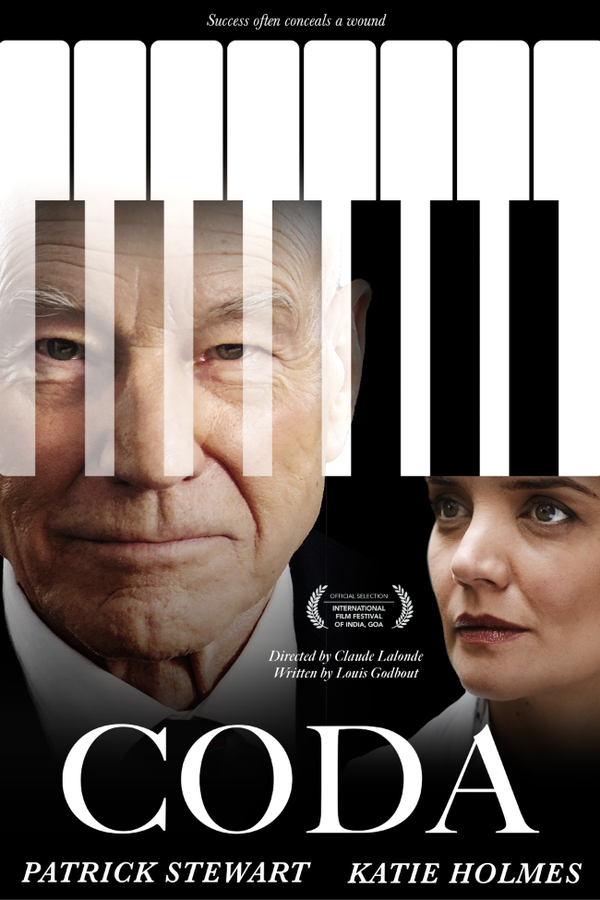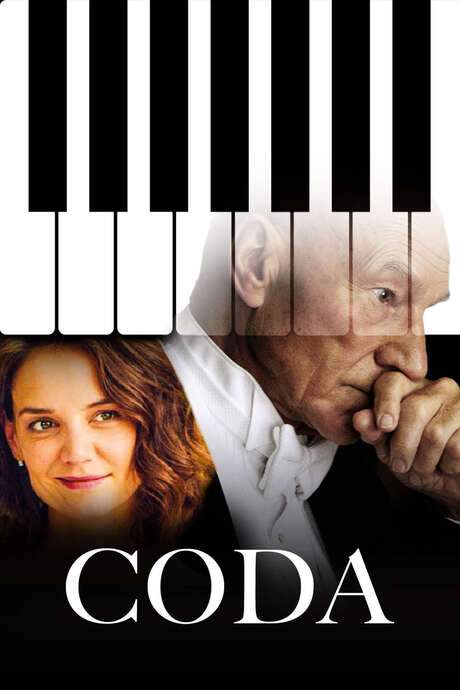
Success often conceals a wound A famous pianist at the twilight of his career meets a free-spirited music critic who soon becomes his rock as his mental state deteriorates.
Warning: spoilers below!
Haven’t seen Coda yet? This summary contains major spoilers. Bookmark the page, watch the movie, and come back for the full breakdown. If you're ready, scroll on and relive the story!
Explore the full timeline and setting of Coda (2019). Follow every major event in chronological order and see how the environment shapes the story, characters, and dramatic tension.
Last updated: February 17, 2026 at 16:50
Meet the key characters of Coda (2019), with detailed profiles, motivations, and roles in the plot. Understand their emotional journeys and what they reveal about the film’s deeper themes.
Last updated: February 17, 2026 at 16:50
Explore the central themes of Coda (2019), from psychological, social, and emotional dimensions to philosophical messages. Understand what the film is really saying beneath the surface.
Last updated: February 17, 2026 at 16:50
Browse frequently asked questions about Coda (2019) focused on characters, relationships, themes, symbols, setting, and story context. This movie info FAQ gives spoiler-aware explanations for character arcs, world details, and thematic interpretation so readers can better understand what the film is really about.
The film takes place across major cultural hubs, with London serving as the primary backdrop for Henry's high-stakes comeback performances, Steinway Hall in New York City anchoring his public-facing struggle, and a Swiss village in the Alps providing a tranquil retreat for therapeutic reflection.
The film is set in the early 2020s, reflecting contemporary celebrity culture and modern mental health awareness. The time period mirrors today's understanding of performer wellness and the pressure faced by aging artists.
Henry Cole is an acclaimed classical pianist at the twilight of his career, portrayed by Patrick Stewart. After his wife's death, he battles stage fright and mounting mental instability. His return to the stage is marked by vulnerability as public attention intensifies the pressure on his comeback.
Helen Morrison is a discerning music critic for The New Yorker, played by Katie Holmes. She becomes a catalyst for Henry's comeback after rescuing him during a panic attack on stage. Her empathy and steadfast belief in his talent help drive him toward recovery and a hopeful trajectory.
The film explores three core themes: mental health and vulnerability, healing through music, and the restorative power of nature and human connection. It emphasizes resilience and the possibility of growth through acknowledging struggles, rather than portraying mental decline sensationally.
The film approaches mental health with empathy, focusing on Henry's battle with stage fright, anxiety, and grief following his wife's death. It emphasizes that acknowledging vulnerability can reveal inner strength, charting a path toward recovery rather than unrelenting despair.
Music serves as a therapeutic force throughout the film. Beethoven's late piano sonatas become a catalyst for emotional steadiness, offering Henry a path to rebuild confidence and reconnect with audiences and himself. Music anchors memory, calms nerves, and renews his sense of purpose.
The Swiss village of Sils Maria in the Alps represents a tranquil retreat where Henry seeks healing through nature and solitude. This setting underscores the shift toward restorative approaches for performers, emphasizing connection over trophies and support networks over solitary struggle.
Paul is Henry's agent, portrayed by Giancarlo Esposito. He fights to salvage the comeback tour amid Henry's deteriorating mental state, negotiating with venues and media while balancing professional duty with compassion for Henry's fragility.
The film portrays vulnerability as a source of genuine artistic strength rather than weakness. Henry's willingness to acknowledge his fragility in public allows him to connect more authentically with audiences, showing that admitting struggle can lead to meaningful growth.
The film's tone is dominantly melancholic, driven by grief and debilitating anxiety, yet it avoids bleakness by charting a hopeful path toward recovery. The pacing is slow and introspective, focusing on internal struggle and gradual therapeutic progress rather than dramatic plot turns.
Solace comes through walks in nature and empathetic encounters with strangers in the Alps. Meaningful conversations with people like a hotel porter help reframe performance as a humane pursuit rather than a solitary ordeal, showing that support networks can sustain a performer through crisis.
Discover curated groups of movies connected by mood, themes, and story style. Browse collections built around emotion, atmosphere, and narrative focus to easily find films that match what you feel like watching right now.
Professionals facing mental collapse during career twilight moments. Movies like Coda exploring creative professionals at breaking points, blending classical arts, mental health struggles, and therapeutic journeys toward healing.
Protagonists at the height of their careers confront debilitating anxiety or grief that threatens their identity and livelihood, following a linear path from crisis toward fragile stability through supportive relationships.
They share a melancholic tone focused on internal struggle, medium emotional intensity, and hopeful trajectories despite serious mental health themes.

Character studies of gradual healing from emotional wounds. If you liked Coda's therapeutic journey, these movies feature quiet character arcs focused on recovery from grief and anxiety through supportive relationships.
Linear narratives centered on one character's mental health crisis and gradual improvement, where secondary characters provide stability without overwhelming romances.
They share straightforward complexity, melancholic but hopeful tones, and focus on therapeutic progress rather than dramatic plot twists.
Don't stop at just watching - explore Coda in full detail. From the complete plot summary and scene-by-scene timeline to character breakdowns, thematic analysis, and a deep dive into the ending - every page helps you truly understand what Coda is all about. Plus, discover what's next after the movie.
Read a complete plot summary of Coda, including all key story points, character arcs, and turning points. This in-depth recap is ideal for understanding the narrative structure or reviewing what happened in the movie.
Track the full timeline of Coda with every major event arranged chronologically. Perfect for decoding non-linear storytelling, flashbacks, or parallel narratives with a clear scene-by-scene breakdown.
What really happened at the end of Coda? This detailed ending explained page breaks down final scenes, hidden clues, and alternate interpretations with expert analysis and viewer theories.